
Global E-commerce Payment Market Growth: Why Digital Checkout Is Becoming the New Retail Standard
Renub Research projects the global e-commerce payment market to rise from US$ 5.14 trillion in 2025 to US$ 14.63 trillion by 2034, powered by online shopping expansion, digital wallets, BNPL, and stronger payment security.


The global e-commerce payment market is no longer a supporting function—it has become a central pillar of modern commerce. As consumers increasingly embrace digital shopping, the way they pay is evolving just as rapidly. According to Renub Research, the market is projected to expand from US$ 5.14 trillion in 2025 to US$ 14.63 trillion by 2034, growing at a CAGR of 12.32% between 2026 and 2034. This remarkable trajectory reflects a deeper transformation in consumer behavior, financial technology, and digital infrastructure worldwide.
At its core, e-commerce payment encompasses all digital systems that facilitate online transactions. These include credit and debit cards, digital wallets, bank transfers, buy-now-pay-later (BNPL) solutions, prepaid instruments, and real-time payment systems. Together, these technologies ensure that transactions are not only fast and convenient but also secure, thanks to advanced encryption, tokenization, and authentication mechanisms.
Market Overview: What Is Driving the Growth?
The rapid rise of e-commerce payments is closely tied to the global expansion of online shopping. With billions of smartphone users worldwide, consumers now have unprecedented access to digital marketplaces. This shift is not limited to developed economies; emerging markets are also witnessing a surge in online purchasing, driven by improved internet connectivity and mobile penetration.
Moreover, the evolution of cross-border e-commerce has significantly increased demand for flexible and globally compatible payment systems. Consumers expect seamless transactions across currencies, languages, and regions. As a result, payment providers are investing heavily in infrastructure that supports international commerce without friction.
Key Growth Drivers Shaping the Market
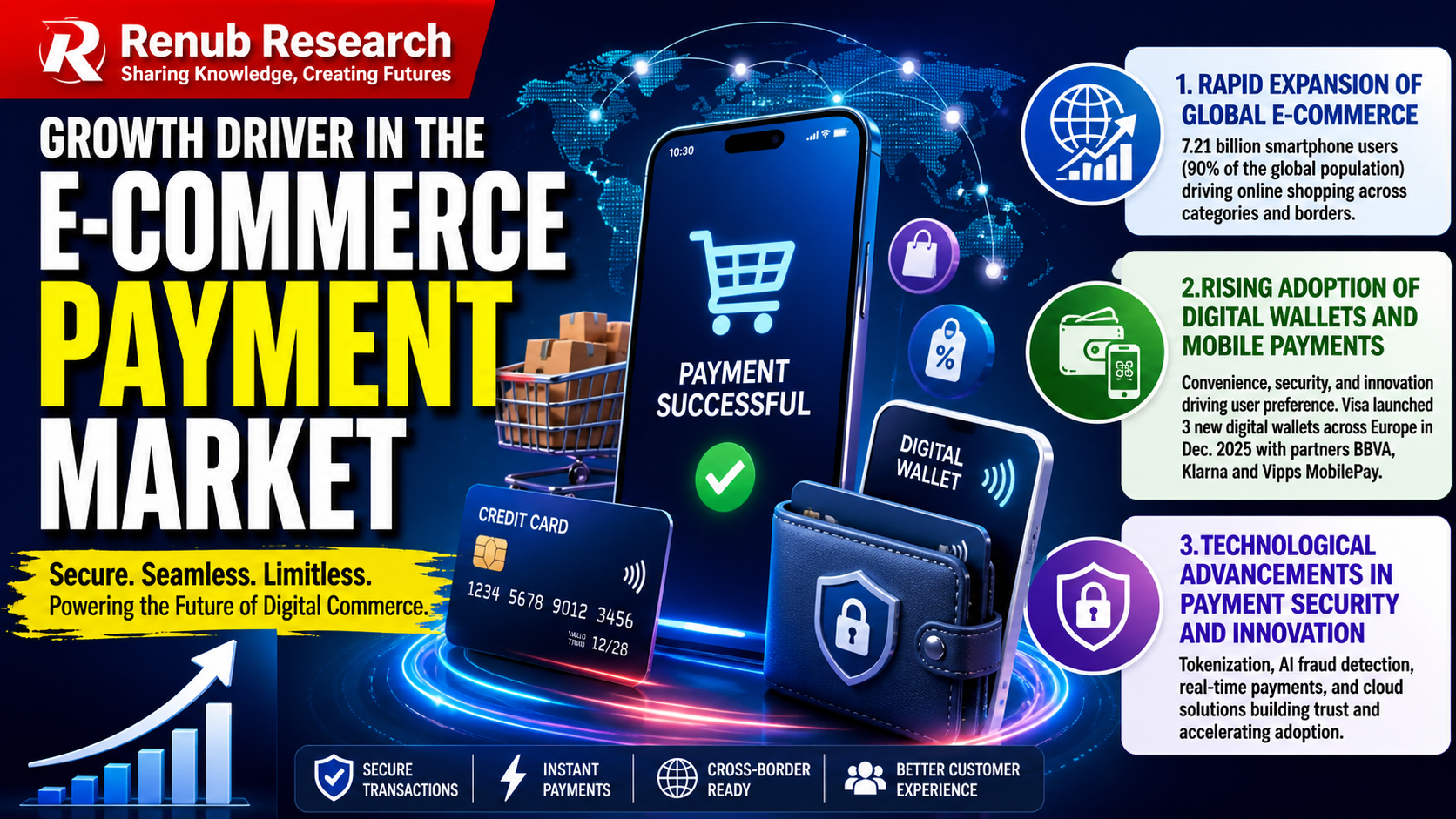
1. Rapid Expansion of Global E-commerce
The growth of e-commerce itself is the primary engine behind the payment market. Online shopping has extended far beyond traditional retail to include food delivery, healthcare services, digital subscriptions, and more. This diversification has created a consistent demand for efficient, reliable payment systems.
The rise of mobile commerce is particularly influential. Consumers are increasingly making purchases through apps and mobile websites, necessitating payment solutions that are optimized for smaller screens and faster interactions. This shift has fundamentally changed expectations around checkout speed and convenience.
2. Rising Adoption of Digital Wallets and Mobile Payments
Digital wallets have emerged as one of the most transformative innovations in the payment landscape. By storing payment credentials securely and enabling one-click or biometric authentication, wallets significantly reduce checkout friction.
Consumers are drawn to their convenience and added features, such as loyalty rewards, instant refunds, peer-to-peer transfers, and BNPL options. These capabilities not only enhance user experience but also encourage repeat purchases. The growing popularity of app-based commerce further reinforces the importance of wallet-driven transactions.
3. Technological Advancements in Payment Security
Security remains a cornerstone of e-commerce payment systems. Innovations such as artificial intelligence-driven fraud detection, tokenization, and real-time transaction monitoring are enhancing trust in digital payments.
Cloud-based platforms and APIs are also playing a crucial role by enabling businesses to integrate payment solutions quickly and scale operations efficiently. These advancements are particularly beneficial for small and medium-sized enterprises looking to expand their online presence without heavy infrastructure investments.
Challenges Impacting Market Growth
1. Cybersecurity Threats and Online Fraud
Despite technological progress, cybersecurity risks remain a major concern. Fraudsters continue to develop sophisticated methods, including phishing attacks, account takeovers, and payment credential theft.
To combat these threats, businesses must invest heavily in security infrastructure and compliance measures. However, increased security can sometimes create friction in the user experience, leading to higher cart abandonment rates. Smaller businesses, in particular, face challenges due to limited resources for advanced fraud prevention systems.
2. Regulatory Complexity and Fragmentation
The global nature of e-commerce introduces regulatory challenges. Different countries have varying rules related to data privacy, consumer protection, and transaction reporting. This fragmentation increases operational complexity for payment providers and merchants.
Additionally, regional differences in payment preferences require businesses to localize their offerings. Failure to do so can hinder market entry and reduce competitiveness in international markets.
Market Segmentation Insights
By Payment Type
The e-commerce payment market is highly diverse, encompassing multiple payment methods:
- Digital Wallets
- Credit Cards
- Debit Cards
- Account-to-Account (A2A) Transfers
- Buy Now Pay Later (BNPL)
- Cash on Delivery (CoD)
- Prepaid Solutions
Each method serves a unique purpose. While digital wallets dominate convenience-driven transactions, credit and debit cards remain essential for high-value purchases. BNPL solutions are gaining traction by offering flexible payment options, while prepaid methods cater to underbanked populations.
By Application
Different e-commerce sectors exhibit distinct payment behaviors:
Electronics & Media: High-value transactions require secure and flexible payment options.
Fashion Accessories: Fast checkout and easy refunds are critical due to impulse buying.
Food & Personal Care: Frequent transactions demand speed and reliability.
Furniture & Appliances: Larger purchases often rely on installment-based payments.
These variations highlight the need for adaptable payment systems that cater to specific industry requirements.
Regional Market Insights
United States
The U.S. market is characterized by advanced technology adoption and a strong focus on omnichannel payment solutions. Innovations in biometric authentication and tokenization are enhancing both security and convenience.
United Kingdom
The UK boasts a highly digitized payment ecosystem, with widespread use of debit cards, mobile payments, and instant bank transfers. The emphasis on secure authentication and seamless user experience continues to drive growth.
China
China leads the world in mobile-first payment systems. QR code-based transactions, super apps, and integrated digital ecosystems have made payments nearly invisible within the user journey.
Brazil
Brazil’s market is expanding rapidly, supported by diverse payment options, including cards, digital wallets, and installment plans. Flexibility and affordability are key factors influencing consumer behavior.
Saudi Arabia
Saudi Arabia is witnessing significant growth due to digital transformation initiatives. Increased smartphone usage and improved infrastructure are driving the adoption of cashless payments.
Competitive Landscape
The e-commerce payment market is highly competitive, with major global players shaping its evolution. Key companies include:
- Amazon.com Inc.
- American Express Company
- Apple Inc.
- Fiserv Inc.
- Mastercard Incorporated
- PayPal Holdings Inc.
- Visa Inc.
These organizations are not only facilitating transactions but also innovating in areas such as security, user experience, and cross-border capabilities.
The Future of E-commerce Payments
Looking ahead, the e-commerce payment market is poised for continued expansion. Emerging technologies such as real-time payments, biometric authentication, and embedded finance are expected to redefine the payment experience.
The integration of financial services into digital platforms will further blur the lines between commerce and banking. As consumers demand faster, safer, and more personalized payment options, companies must continuously innovate to stay competitive.
Final Thoughts
The global e-commerce payment market is undergoing a profound transformation. Driven by technological innovation, changing consumer behavior, and the rapid growth of online commerce, the market is set to reach unprecedented levels.
Renub Research’s forecast of US$ 14.63 trillion by 2034 underscores the scale of this opportunity. However, success in this space will depend on balancing speed, security, and user experience. Companies that can deliver seamless, trustworthy payment solutions will not only capture market share but also define the future of digital commerce.
About the Creator
Enjoyed the story? Support the Creator.
Subscribe for free to receive all their stories in your feed.
Comments
There are no comments for this story
Be the first to respond and start the conversation.