
Global Coffee Market to Reach US$274.96 Billion by 2034 as Premium Coffee Culture and Innovation Drive Worldwide Growth
Growing global coffee consumption, rising demand for specialty beverages, expanding café culture, and sustainable sourcing initiatives are fueling the long-term growth of the global coffee market.

Coffee Continues to Shape Daily Life Across the Globe
Coffee is much more than a morning beverage. It has become an essential part of everyday life, bringing together people across cultures, workplaces, cafés, and homes. Whether enjoyed as a traditional espresso, handcrafted latte, instant coffee, cold brew, or ready-to-drink beverage, coffee remains one of the world's most widely consumed drinks.
Changing consumer lifestyles, increasing urbanization, rising disposable incomes, and the growing popularity of café culture have transformed coffee into a global lifestyle product. Consumers today seek premium-quality beans, sustainable sourcing, convenient brewing formats, and personalized coffee experiences, encouraging continuous innovation throughout the industry.
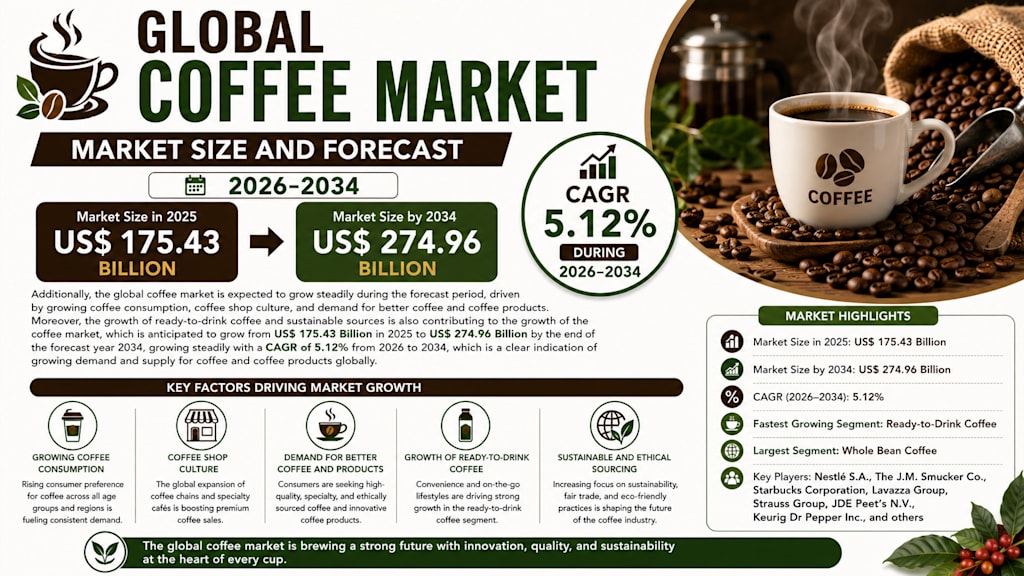
According to the latest market outlook, the Global Coffee Market is projected to grow from US$175.43 billion in 2025 to US$274.96 billion by 2034, registering a compound annual growth rate (CAGR) of 5.12% during 2026–2034. Rising worldwide coffee consumption, specialty coffee demand, and product innovation continue supporting steady long-term market growth.
Coffee Remains One of the World's Favorite Beverages
Coffee is produced primarily from the roasted seeds of Arabica and Robusta coffee plants.
Following harvesting and processing, coffee is transformed into numerous products including whole beans, ground coffee, instant coffee, espresso, coffee pods, capsules, ready-to-drink beverages, and specialty coffee drinks.
Its distinctive aroma, flavor, and natural caffeine content have made coffee one of the world's most popular beverages across households, offices, restaurants, hotels, cafés, and retail outlets.
Today, coffee consumption extends far beyond traditional coffee-drinking nations, reflecting its increasing global appeal.
Rising Global Consumption Continues Driving Market Growth
One of the strongest contributors to coffee market expansion is the steady increase in worldwide coffee consumption.
Coffee has evolved from a simple beverage into an important cultural and social experience enjoyed throughout the day.
Consumers increasingly visit cafés for business meetings, social gatherings, remote work, and relaxation, while home brewing continues growing rapidly due to advances in coffee machines and premium products.
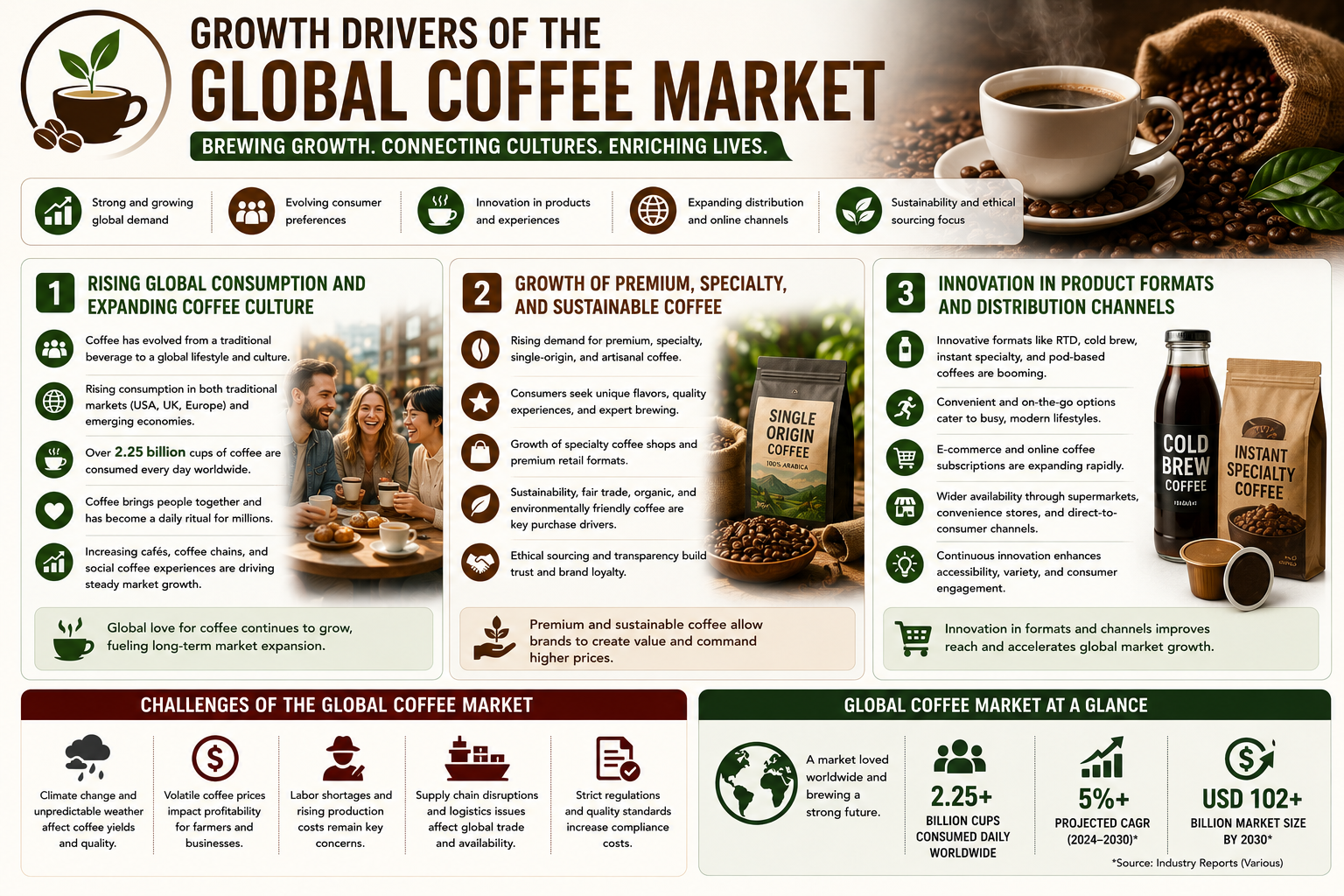
More than 2.25 billion cups of coffee are consumed every day worldwide, demonstrating coffee's extraordinary popularity across developed and emerging economies.
Growing urbanization and changing consumer lifestyles are expected to sustain this upward trend throughout the forecast period.
Premium and Specialty Coffee Gain Momentum
Consumers increasingly prefer premium coffee experiences over conventional products.
Demand continues rising for single-origin beans, specialty roasts, artisan blends, organic coffee, premium espresso, and handcrafted beverages prepared using advanced brewing techniques.
Coffee enthusiasts now pay closer attention to bean origin, roasting methods, flavor profiles, and ethical sourcing when selecting products.
Specialty cafés, independent roasters, and premium coffee retailers continue educating consumers while expanding appreciation for high-quality coffee.
This premiumization trend enables manufacturers and retailers to introduce higher-value products that strengthen overall market growth.
Sustainability Influences Consumer Purchasing Decisions
Environmental responsibility has become one of the defining trends within the global coffee industry.
Consumers increasingly seek coffee produced through sustainable farming methods that protect biodiversity while supporting farming communities.
Organic certification, fair-trade programs, environmentally responsible cultivation, and transparent sourcing practices have become important competitive advantages for coffee brands.
Many companies continue investing in sustainable supply chains, recyclable packaging, and responsible agricultural practices to meet evolving consumer expectations.
Growing awareness regarding environmental protection is expected to further strengthen demand for sustainably sourced coffee.
Ready-to-Drink Coffee Expands Rapidly
Convenience remains one of the biggest growth opportunities within the coffee market.
Ready-to-drink (RTD) coffee products have become increasingly popular among busy consumers seeking premium beverages without preparation time.
Cold brew coffee, bottled lattes, canned espresso drinks, and flavored coffee beverages continue gaining popularity among younger consumers and working professionals.
Manufacturers are introducing innovative formulations featuring reduced sugar, plant-based ingredients, functional nutrition, and premium flavors.
Improved packaging and expanding retail availability continue supporting strong growth within the RTD segment.
Instant Coffee Maintains Strong Global Demand
Instant coffee continues representing an important segment of the global market.
Consumers appreciate instant coffee because of its affordability, convenience, long shelf life, and ease of preparation.
Modern freeze-drying technologies have significantly improved product quality, allowing manufacturers to deliver richer aroma and better flavor than earlier generations of instant coffee.
Premium instant coffee, single-serve sachets, and specialty formulations continue attracting younger consumers while supporting demand across emerging markets.
Ground Coffee Supports Home Brewing
Ground coffee remains highly popular among consumers who prefer freshly brewed beverages.
Home brewing has become increasingly common as consumers invest in drip coffee makers, French presses, espresso machines, and manual brewing equipment.
Growing interest in premium blends and specialty coffee has strengthened demand for high-quality ground coffee products.
Consumers increasingly experiment with different roast profiles, brewing methods, and bean origins to create café-style experiences at home.
Online Retail Transforms Coffee Sales
E-commerce has significantly changed how consumers purchase coffee.
Online platforms provide access to premium brands, specialty roasters, subscription services, and international coffee varieties that may not be available through traditional retail channels.
Direct-to-consumer business models also enable coffee companies to establish stronger relationships with customers through personalized recommendations and recurring subscription deliveries.
Digital platforms continue expanding market reach while providing consumers with greater convenience and product choice.
Convenience Stores Strengthen Everyday Consumption
Convenience stores remain an important retail channel for coffee sales worldwide.
Busy commuters, travelers, students, and professionals increasingly purchase freshly brewed coffee and ready-to-drink beverages during daily routines.
Extended operating hours, convenient locations, and affordable pricing make convenience stores an attractive option for on-the-go coffee consumption.
Many retailers continue upgrading coffee equipment and expanding premium beverage offerings to satisfy evolving customer expectations.
Climate Change Creates Industry Challenges
Despite strong long-term growth prospects, coffee production remains vulnerable to climate change.
Coffee cultivation depends heavily on stable weather conditions, suitable temperatures, and predictable rainfall patterns.
Extreme weather events, droughts, floods, pests, and plant diseases can significantly reduce crop yields while increasing production costs.
Changing climatic conditions also threaten traditional coffee-growing regions, requiring farmers to adopt more resilient agricultural practices.
Continued investment in climate-smart farming will be essential for ensuring long-term supply stability.
Supply Chain and Price Volatility Remain Concerns
Coffee prices remain highly sensitive to fluctuations in global supply and demand.
Transportation disruptions, geopolitical events, labor shortages, rising logistics costs, and currency fluctuations all influence coffee pricing.
Manufacturers must also manage increasing operational costs while maintaining product quality and affordability.
Building resilient supply chains and strengthening relationships with growers remain critical priorities for leading coffee companies.
Regional Markets Continue Driving Global Growth
The United States remains one of the world's largest coffee markets, supported by strong café culture, premium coffee consumption, subscription services, and growing demand for ready-to-drink beverages.
The United Kingdom continues experiencing steady growth through expanding specialty cafés, increasing home brewing, and rising interest in ethically sourced coffee.
India represents one of the fastest-growing coffee markets as urbanization, café expansion, and changing consumer lifestyles encourage higher coffee consumption beyond traditional producing regions.
Saudi Arabia continues strengthening its coffee market through growing demand for premium specialty coffee, expanding café chains, tourism development, and government initiatives supporting domestic coffee cultivation.
Together, these regional markets continue shaping the future of the global coffee industry.
Innovation Will Define the Future of Coffee
The future of the coffee market will be driven by continuous innovation in products, sustainability, and consumer experiences.
Manufacturers are expected to expand plant-based coffee beverages, functional coffee products, personalized brewing systems, smart coffee machines, and environmentally friendly packaging.
Artificial intelligence and consumer analytics will help brands better understand purchasing behavior while accelerating new product development.
Premiumization, digital commerce, and sustainable production practices will remain central themes shaping industry growth over the coming decade.
Final Thoughts
The global coffee market continues demonstrating remarkable resilience as consumers increasingly embrace premium experiences, specialty beverages, and sustainable purchasing habits.
The projected growth from US$175.43 billion in 2025 to US$274.96 billion by 2034, supported by a 5.12% CAGR, reflects expanding global coffee consumption, continuous product innovation, and rising demand across both developed and emerging markets.
Although climate change, supply chain volatility, and sustainability challenges remain important considerations, ongoing investment in premium products, responsible sourcing, digital commerce, and innovative brewing technologies positions the global coffee industry for sustained long-term growth. As coffee continues evolving from a daily beverage into a lifestyle experience, it will remain one of the world's most influential food and beverage industries.
About the Creator
Enjoyed the story? Support the Creator.
Subscribe for free to receive all their stories in your feed.
Comments
There are no comments for this story
Be the first to respond and start the conversation.