
Global Coffee Market Growth: How Coffee Culture, Premiumization, and Innovation Are Brewing a New Era of Demand
Rising global consumption, specialty coffee trends, and digital retail channels are fueling the next phase of growth in the worldwide coffee industry

Coffee is more than just a beverage—it is a global cultural phenomenon. From busy urban cafés and office breakrooms to home kitchens and specialty coffee shops, coffee has become deeply embedded in everyday routines across continents. As consumer preferences evolve and demand for premium experiences increases, the coffee industry is experiencing a period of remarkable transformation.
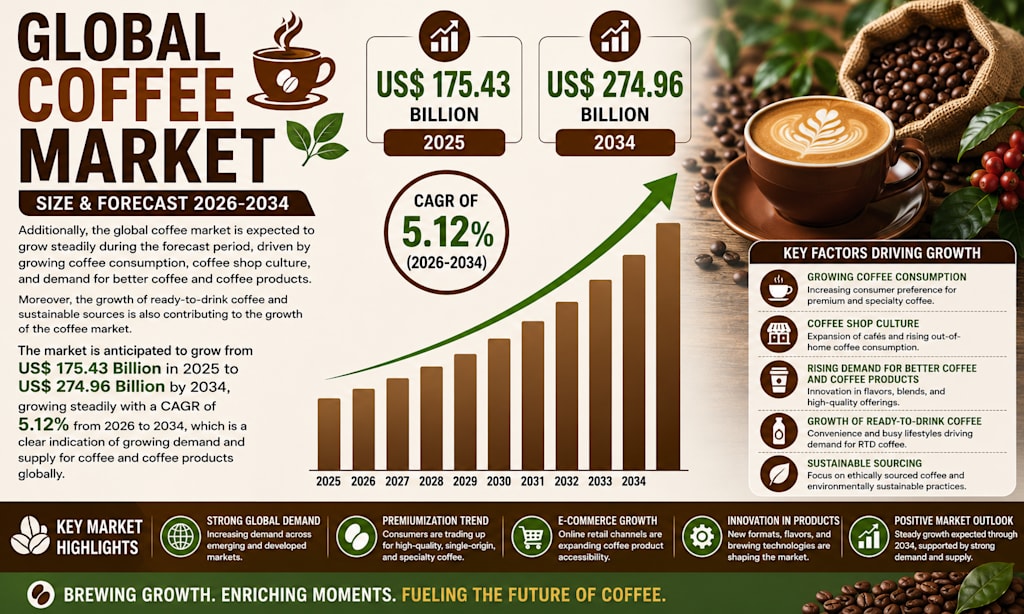
According to Renub Research, the global coffee market is projected to grow from US$ 175.43 billion in 2025 to US$ 274.96 billion by 2034, registering a CAGR of 5.12% between 2026 and 2034. Rising coffee consumption, expanding café culture, increasing demand for premium coffee products, growth in ready-to-drink beverages, and sustainability-focused sourcing practices are among the major factors driving market expansion.
As innovation continues reshaping the beverage sector, coffee is evolving from a traditional morning drink into a lifestyle product that reflects convenience, quality, sustainability, and personal preference.
Coffee's Enduring Global Popularity
Coffee remains one of the most widely consumed beverages in the world. Derived primarily from the seeds of Arabica and Robusta coffee plants, coffee is available in numerous forms including:
- Whole coffee beans
- Ground coffee
- Instant coffee
- Espresso
- Cold brew
- Ready-to-drink coffee
- Coffee pods
The appeal of coffee extends beyond its caffeine content. Consumers value coffee for its rich aroma, flavor diversity, social significance, and ability to fit seamlessly into daily routines.
In many Western countries, coffee has become a central part of workplace culture and social interactions. Meanwhile, emerging economies across Asia-Pacific and Latin America are witnessing strong growth in consumption as urbanization and rising disposable incomes reshape beverage preferences.
Coffee has successfully crossed cultural boundaries, becoming a beverage that unites consumers across generations and geographies.
Rising Global Consumption Continues to Drive Demand
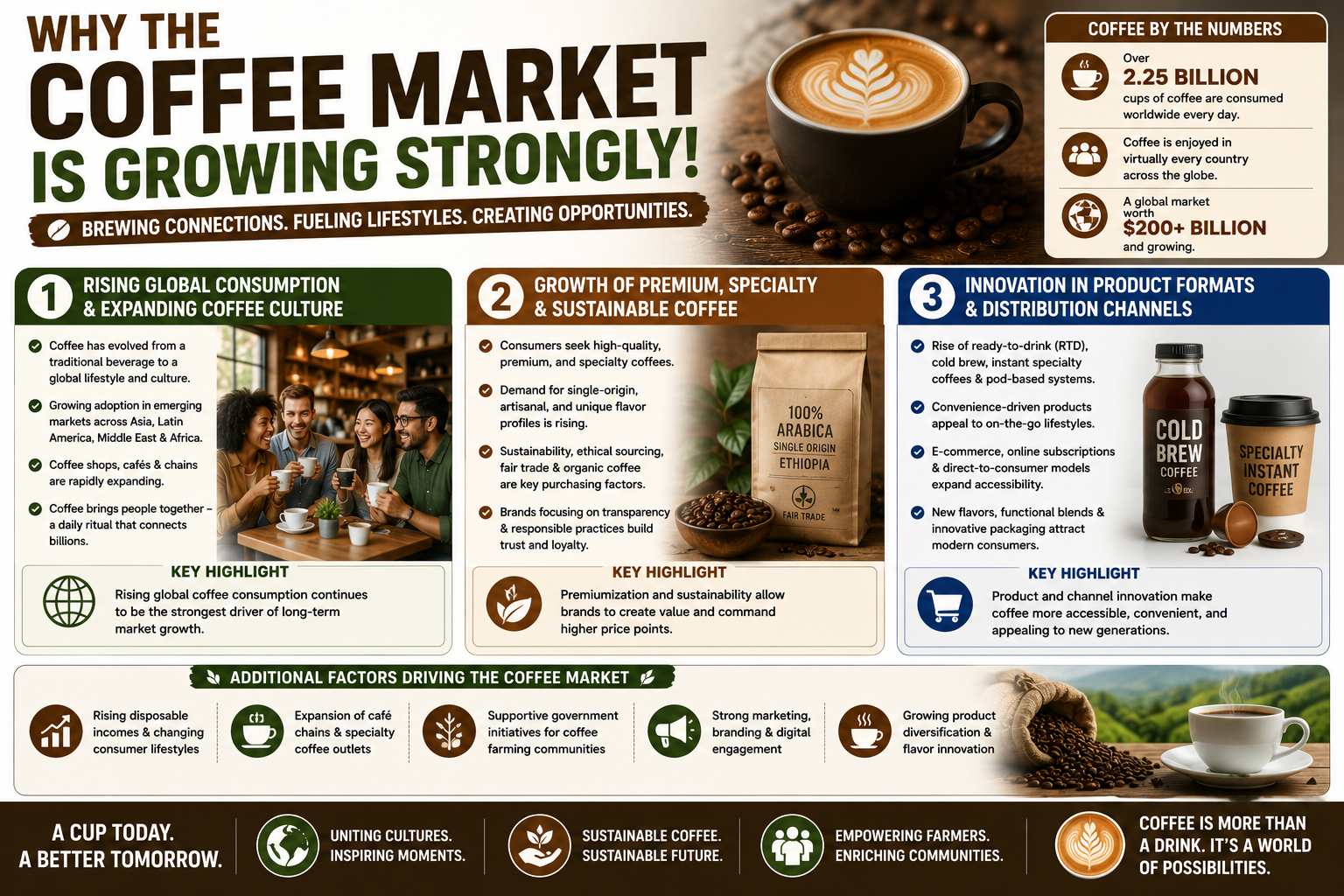
One of the most important growth drivers for the coffee industry is the steady increase in global consumption.
What was once viewed primarily as a traditional beverage has evolved into a daily ritual for billions of people worldwide.
The scale of consumption is remarkable. Industry estimates cited in the report indicate that more than 2.25 billion cups of coffee are consumed every day around the world. This enormous level of demand highlights coffee's unique position within the global beverage market.
Several factors are contributing to increased consumption:
- Growing urban populations
- Expanding middle-class incomes
- Busy lifestyles
- Workplace coffee culture
- Social café experiences
- Rising awareness of premium coffee products
Emerging markets are playing an increasingly important role in global demand growth. Countries where tea traditionally dominated beverage consumption are now witnessing rapid increases in coffee popularity, particularly among younger consumers.
As coffee becomes more integrated into modern lifestyles, overall market demand is expected to continue expanding steadily.
Specialty and Premium Coffee Are Reshaping the Industry
Consumer preferences have shifted significantly over the past decade.
Today's coffee drinkers increasingly seek quality, authenticity, and unique experiences rather than simply caffeine consumption. This trend has fueled rapid growth in the premium and specialty coffee segments.
Consumers are showing greater interest in:
- Single-origin coffees
- Artisan roasting methods
- Specialty brewing techniques
- Traceable sourcing
- Premium blends
- Limited-edition products
The rise of specialty coffee shops and independent cafés has played a major role in educating consumers about coffee origins, flavor profiles, and brewing methods.
Coffee enthusiasts increasingly pay attention to factors such as:
- Bean origin
- Roast level
- Processing techniques
- Sustainability certifications
- Ethical sourcing practices
This shift toward premiumization allows brands to command higher prices while strengthening customer loyalty. Consumers are often willing to pay more for products they perceive as authentic, high quality, and responsibly produced.
As disposable incomes continue rising globally, premium coffee consumption is expected to remain one of the strongest growth segments within the industry.
Sustainability Is Becoming a Competitive Advantage
Environmental responsibility has become increasingly important to coffee consumers.
Many buyers now actively seek products that align with their values regarding sustainability, ethical sourcing, and social responsibility.
As a result, coffee producers and brands are investing heavily in:
- Organic farming
- Fair-trade certifications
- Sustainable cultivation methods
- Water conservation initiatives
- Traceability systems
- Farmer support programs
Consumers increasingly reward brands that demonstrate transparency and environmental stewardship.
Sustainability is particularly important because coffee production faces growing challenges from climate change. Rising temperatures, changing rainfall patterns, and environmental degradation threaten traditional coffee-growing regions around the world.
Companies that successfully integrate sustainability into their operations are not only helping address environmental concerns but also strengthening brand trust and long-term market positioning.
Product Innovation Is Expanding Consumer Choice
Innovation remains one of the most powerful forces driving growth within the coffee market.
Manufacturers are continuously introducing new formats designed to meet changing consumer needs and preferences.
Popular innovations include:
- Ready-to-drink (RTD) coffee
- Cold brew coffee
- Specialty instant coffee
- Coffee pods
- Functional coffee beverages
- Plant-based coffee products
Convenience has become particularly important for modern consumers who seek high-quality coffee experiences without lengthy preparation times.
Ready-to-drink coffee products have gained strong traction because they combine portability, convenience, and consistent quality. Similarly, coffee pods have transformed home brewing by offering café-style beverages with minimal effort.
The industry is also benefiting from innovation in packaging, flavor development, and digital commerce.
As consumer expectations continue evolving, companies that invest in product innovation are likely to maintain competitive advantages.
Instant Coffee Remains a Vital Market Segment
Despite the rise of premium coffee culture, instant coffee continues to play a critical role within the global market.
Its popularity stems from several advantages:
- Convenience
- Affordability
- Long shelf life
- Consistent taste
- Ease of preparation
Instant coffee remains especially important in emerging markets where affordability and accessibility are key purchasing factors.
Manufacturers have significantly improved product quality through advanced processing techniques such as freeze-drying, helping narrow the gap between instant coffee and freshly brewed alternatives.
Premium instant coffee products and single-serve packaging formats are attracting younger consumers who seek convenience without sacrificing quality.
As urban lifestyles become increasingly fast-paced, instant coffee is expected to maintain strong relevance.
Ground Coffee Continues to Appeal to Enthusiasts
Ground coffee remains a favorite among consumers who value traditional brewing methods and flavor customization.
Unlike instant coffee, ground coffee allows users greater control over:
- Brewing strength
- Flavor intensity
- Preparation methods
- Coffee freshness
Popular brewing methods include:
- Drip coffee machines
- French presses
- Pour-over systems
- Manual brewing devices
The segment remains particularly strong in North America and Europe, where home brewing culture is deeply established. Growing interest in specialty coffee and premium bean sourcing continues supporting demand for high-quality ground coffee products.
Although convenience-focused products are expanding rapidly, ground coffee continues to attract consumers seeking a more authentic coffee experience.
E-Commerce Is Transforming Coffee Retail
The rise of online retail has dramatically changed how consumers purchase coffee.
Digital channels provide customers with access to:
- Wider product selections
- Specialty brands
- Subscription services
- Personalized recommendations
- Direct-to-consumer offerings
For coffee companies, e-commerce offers opportunities to build stronger relationships with customers while reducing dependence on traditional retail channels.
Subscription models have become particularly popular because they provide recurring revenue and enhance customer loyalty.
Online platforms also allow consumers to learn more about:
- Coffee origins
- Sustainability practices
- Brewing techniques
- Product reviews
The convenience of online shopping, combined with increasing digital adoption worldwide, has made e-commerce one of the fastest-growing distribution channels in the coffee market.
Challenges Facing the Coffee Industry
Despite strong growth prospects, the global coffee market faces several important challenges.
Price Volatility
Coffee production is highly sensitive to external factors, including:
- Weather conditions
- Climate change
- Pest outbreaks
- Natural disasters
- Geopolitical instability
Disruptions in coffee-growing regions can significantly affect supply levels and create price fluctuations throughout the value chain.
Climate Change
Environmental pressures pose one of the industry's greatest long-term risks.
Changing climate conditions are reducing the suitability of some traditional coffee-growing regions, potentially impacting future production capacity.
Rising Production Costs
Meeting sustainability requirements often requires significant investment in certification programs, environmentally friendly farming practices, and supply chain improvements.
While these investments are necessary, they can increase operational expenses for producers and manufacturers.
Regional Markets Driving Growth
United States
The United States remains one of the world's largest coffee markets. Premiumization, specialty coffee, ready-to-drink beverages, and sustainability-focused products continue driving demand. According to USDA projections cited in the report, U.S. coffee imports were expected to reach approximately 22.3 million bags in response to rising domestic consumption.
United Kingdom
The UK coffee market has expanded rapidly due to strong café culture and increasing consumer preference for coffee over traditional tea, particularly among younger demographics. Approximately 95 million cups of coffee are consumed daily across the country.
India
India represents one of the fastest-growing coffee markets globally. Urbanization, changing lifestyles, café expansion, and growing disposable incomes continue driving demand. The rapid growth of chains such as Third Wave Coffee illustrates the increasing popularity of coffee among younger consumers.
Saudi Arabia
Saudi Arabia's coffee market is benefiting from strong cultural traditions, rising demand for premium coffee experiences, and government initiatives aimed at increasing domestic coffee production. Long-term investments are expected to significantly expand national production capacity in the coming years.
Final Thoughts
The global coffee industry continues to demonstrate remarkable resilience and adaptability as consumer preferences evolve and new growth opportunities emerge.
With the market expected to increase from US$ 175.43 billion in 2025 to US$ 274.96 billion by 2034, coffee remains one of the world's most dynamic and influential beverage categories.
Rising consumption, premiumization, sustainability initiatives, digital commerce, and product innovation are reshaping how coffee is produced, marketed, and consumed worldwide.
Although challenges such as climate change, supply chain disruptions, and price volatility remain significant, the industry's ability to innovate and adapt continues to create strong growth prospects.
From traditional espresso bars and specialty cafés to ready-to-drink beverages and online subscription services, coffee is evolving to meet the needs of modern consumers while preserving its role as one of the most beloved beverages on the planet.
About the Creator
Enjoyed the story? Support the Creator.
Subscribe for free to receive all their stories in your feed.
Comments
There are no comments for this story
Be the first to respond and start the conversation.