
Global Coffee Market Brews Strong Growth as Premium Experiences, Café Culture, and Ready-to-Drink Innovations Fuel Demand
Rising coffee consumption, expanding specialty coffee trends, and growing demand for convenient beverage options are driving sustained growth across the global coffee industry.

Coffee has evolved far beyond a simple morning beverage. Today, it represents a global cultural phenomenon, a social ritual, a premium lifestyle product, and one of the most consumed beverages in the world. From bustling urban cafés and premium artisanal coffeehouses to instant coffee sachets and ready-to-drink cold brews, coffee has become deeply integrated into daily life across nearly every region.
The global coffee industry continues expanding rapidly as consumers embrace premium coffee experiences, experiment with specialty blends, and increasingly seek convenience-driven formats. Rising urbanization, evolving lifestyles, and the growth of café culture in both developed and emerging economies are reshaping consumption habits and creating new opportunities for coffee brands worldwide.
At the same time, innovation in product formats, digital distribution channels, and sustainable sourcing practices is helping companies strengthen customer loyalty and differentiate themselves in an increasingly competitive market.
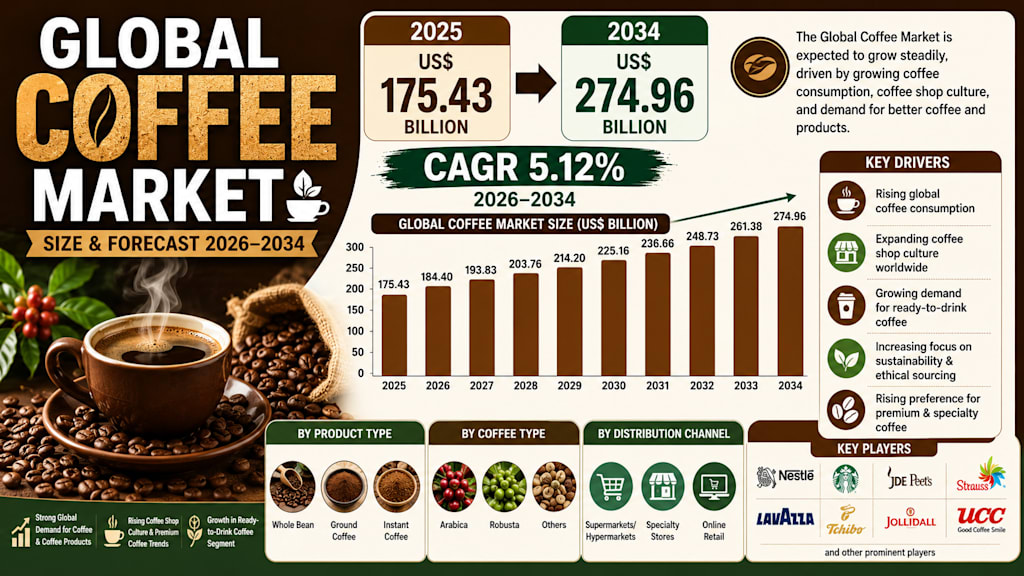
According to Renub Research, the Global Coffee Market is expected to grow from US$175.43 billion in 2025 to US$274.96 billion by 2034, registering a compound annual growth rate (CAGR) of 5.12% between 2026 and 2034. Growing coffee consumption, expanding coffee shop culture, increasing demand for premium products, and rising popularity of ready-to-drink coffee are expected to drive sustained market expansion.
Coffee Has Become a Global Lifestyle Product
Coffee is one of the world's most popular and widely consumed caffeinated beverages.
Produced primarily from Arabica and Robusta coffee beans, coffee is available in multiple forms including whole beans, ground coffee, instant coffee, espresso products, capsules, and ready-to-drink beverages.
While coffee was once viewed mainly as a functional beverage consumed for energy and alertness, it has increasingly become associated with social experiences, lifestyle preferences, and personal identity.
Coffee shops now serve as social gathering places, remote work environments, and cultural hubs in many cities worldwide.
This transformation has elevated coffee from a commodity beverage into a highly diversified and experience-driven global industry.
Global Coffee Consumption Continues to Rise
One of the strongest drivers of market growth is the continued increase in global coffee consumption.
Coffee drinking habits have expanded significantly across both developed and emerging economies.
Traditionally strong coffee markets such as the United States and Europe continue maintaining high per-capita consumption rates, while countries across Asia-Pacific, the Middle East, and Latin America are witnessing rapid increases in coffee demand.
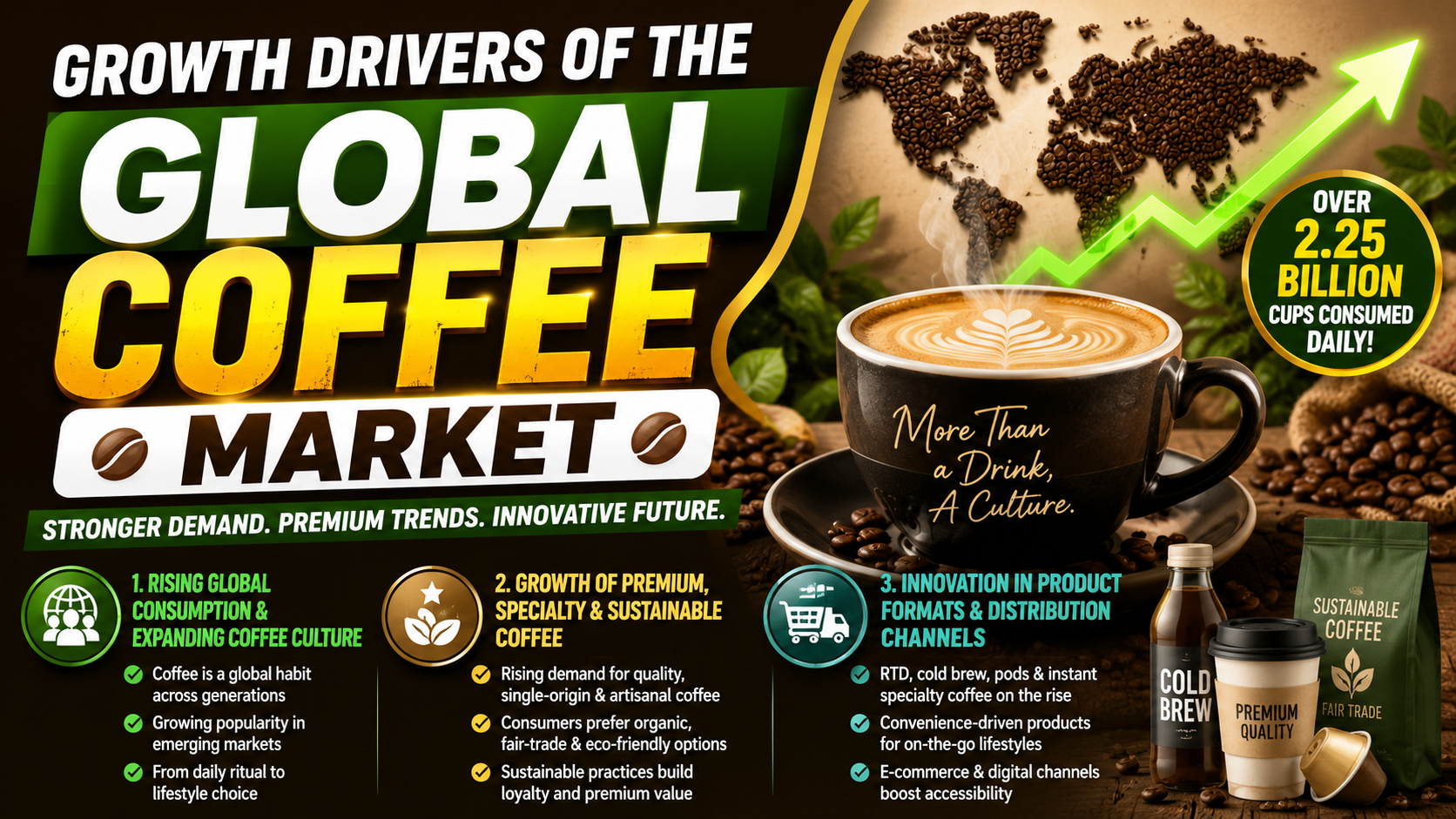
According to industry estimates referenced in the report, more than 2.25 billion cups of coffee are consumed globally every day.
This enormous level of consumption highlights coffee's universal appeal and its deep integration into everyday routines worldwide.
Café Culture Is Transforming Consumer Behavior
The rise of café culture has become one of the most influential trends shaping the global coffee market.
Coffee shops are increasingly viewed as lifestyle destinations where consumers socialize, work remotely, conduct meetings, or simply enjoy premium beverages in comfortable environments.
International coffee chains, independent specialty cafés, and boutique roasters have all contributed to this trend.
Urbanization and changing work habits have accelerated demand for café experiences, particularly among younger consumers.
Emerging economies are experiencing especially strong growth in café culture as rising middle-class populations adopt modern dining and beverage consumption habits.
This evolution continues driving demand for specialty coffee products and premium coffee experiences globally.
Premium Coffee Demand Continues to Expand
Consumers are increasingly prioritizing quality over quantity when purchasing coffee.
Demand for premium and specialty coffee products has grown substantially as consumers seek richer flavors, unique origins, artisanal roasting methods, and customized brewing experiences.
Single-origin coffee, specialty blends, ethically sourced beans, and handcrafted beverages are becoming increasingly popular across multiple demographics.
Consumers are also becoming more knowledgeable about roast profiles, brewing methods, bean varieties, and sustainability practices.
This growing sophistication allows brands to command premium pricing while strengthening customer loyalty.
As premiumization continues influencing consumer preferences, specialty coffee is expected to remain one of the fastest-growing segments within the industry.
Sustainability and Ethical Sourcing Influence Purchasing Decisions
Modern coffee consumers are increasingly concerned about sustainability, environmental responsibility, and ethical sourcing practices.
Many buyers actively seek products that are organic, fair-trade certified, shade-grown, or sustainably produced.
Consumers also expect greater transparency regarding sourcing practices and supply chain ethics.
Coffee brands that demonstrate environmental stewardship and fair treatment of farmers often benefit from stronger customer trust and loyalty.
As climate concerns continue influencing consumer behavior, sustainability initiatives are expected to become even more important competitive differentiators throughout the coffee industry.
Ready-to-Drink Coffee Is Reshaping the Market
One of the fastest-growing segments within the coffee market is ready-to-drink (RTD) coffee.
Consumers increasingly seek convenient beverage options that fit fast-paced lifestyles and mobile consumption habits.
RTD coffee products such as canned cold brew, bottled iced coffee, nitro coffee, and flavored coffee beverages offer convenience without sacrificing quality.
These products appeal particularly to younger consumers and urban professionals who prioritize portability and speed.
Manufacturers continue introducing innovative flavors, healthier formulations, and premium RTD options to attract broader audiences.
As convenience remains a major consumer priority, RTD coffee is expected to remain a critical growth driver for the industry.
Instant Coffee Maintains Strong Global Demand
Despite the rise of premium café experiences, instant coffee continues maintaining a strong global market presence.
Instant coffee remains highly popular because of its affordability, convenience, ease of preparation, and long shelf life.
Emerging markets, in particular, continue generating strong demand for instant coffee products.
Manufacturers are also improving quality through technologies such as freeze-drying and enhanced flavor preservation methods.
Premium instant coffee and single-serve packaging formats are helping attract younger consumers and more quality-conscious buyers.
The segment's accessibility ensures that instant coffee remains an important contributor to overall market growth.
Ground Coffee Appeals to Traditional Enthusiasts
Ground coffee continues to attract consumers who value traditional brewing methods and richer coffee experiences.
Home brewing culture remains particularly strong in North America and Europe, where consumers frequently use drip machines, French presses, espresso systems, and manual brewing techniques.
Interest in specialty coffee and artisanal roasting has strengthened demand for high-quality ground coffee products.
Consumers increasingly experiment with brewing methods and seek customized flavor experiences.
This emphasis on freshness, aroma, and authenticity continues supporting stable demand within the ground coffee segment.
E-Commerce Is Transforming Coffee Distribution
Digital commerce has become an increasingly important sales channel for coffee brands.
Consumers now purchase coffee through online retailers, subscription services, direct-to-consumer platforms, and mobile applications.
E-commerce provides access to a wider variety of products while enabling brands to build direct relationships with consumers.
Coffee subscriptions, personalized recommendations, and home delivery services have become especially popular among younger demographics.
Online platforms also allow smaller specialty brands to compete more effectively on a global scale.
The continued growth of digital retail is expected to remain a major contributor to market expansion.
Convenience Stores Benefit from On-the-Go Consumption
Convenience stores have become increasingly important distribution channels within the coffee market.
Urban lifestyles and busy schedules have strengthened demand for grab-and-go coffee products, including freshly brewed beverages and RTD coffee.
Extended operating hours and convenient locations make convenience stores highly attractive to commuters and mobile consumers.
As on-the-go consumption continues rising, coffee sales through convenience channels are expected to remain strong.
This trend is particularly evident in densely populated urban areas where consumers prioritize speed and accessibility.
Innovation Continues to Drive Consumer Engagement
Product innovation remains one of the most important competitive strategies within the coffee industry.
Manufacturers continue introducing new flavors, brewing technologies, packaging solutions, and beverage formulations.
Cold brew coffee, nitro coffee, flavored latte beverages, plant-based creamers, and functional coffee products are all gaining popularity.
Companies are also experimenting with reduced-sugar formulations, protein-enhanced beverages, and wellness-oriented ingredients.
Innovation helps brands maintain relevance while attracting new customer segments and increasing purchase frequency.
Supply Chain Risks Remain a Major Challenge
Despite strong growth prospects, the global coffee industry faces significant challenges.
Coffee production remains highly vulnerable to climate conditions, pests, natural disasters, and geopolitical disruptions.
Changes in weather patterns can significantly affect crop yields, bean quality, and supply availability.
Supply chain disruptions and transportation challenges may also increase operational costs for manufacturers and retailers.
These risks contribute to price volatility throughout the market and create uncertainty for both producers and consumers.
Climate Change Threatens Long-Term Production
Environmental concerns are becoming increasingly important within the coffee industry.
Climate change threatens traditional coffee-growing regions through rising temperatures, irregular rainfall patterns, and increased pest activity.
Deforestation, water usage, and chemical-intensive farming practices also raise sustainability concerns.
Addressing these environmental challenges requires substantial investment in sustainable farming practices, farmer education, and climate-resilient agricultural systems.
Maintaining long-term coffee production stability will depend heavily on the industry's ability to adapt to changing environmental conditions.
United States Remains a Global Coffee Powerhouse
The United States continues to represent one of the world's largest and most developed coffee markets.
Coffee consumption is deeply integrated into American daily routines and workplace culture.
Premiumization remains a major trend, with consumers increasingly demanding specialty coffee, cold brew beverages, and single-origin products.
The growth of coffee pods, subscription services, and home brewing equipment has further expanded consumption opportunities.
According to the USDA, the United States was expected to import 22.3 million bags of coffee in 2024, reflecting rising domestic demand.
Despite being a mature market, continued innovation and strong brand loyalty support ongoing growth.
United Kingdom Experiences Strong Café Culture Growth
The United Kingdom coffee market has grown rapidly over the past decade.
Younger consumers increasingly prefer coffee over traditional tea, especially in urban areas where café culture has expanded significantly.
Specialty cafés, international coffee chains, and premium at-home brewing products continue driving sales growth.
According to the British Coffee Association, approximately 95 million cups of coffee are consumed daily in the UK, totaling roughly 2.8 billion cups annually. More than 80% of UK adults consume coffee regularly, averaging about three cups per person per day.
These figures demonstrate coffee's growing importance within British consumer culture.
India Emerges as a High-Growth Coffee Market
India's coffee market is expanding rapidly due to urbanization, rising incomes, and changing consumer lifestyles.
While coffee consumption was traditionally concentrated in southern regions, demand has spread significantly across metropolitan and tier-2 cities.
Café culture is growing quickly, particularly among younger consumers and professionals.
In April 2022, Indian coffee chain Third Wave Coffee expanded its operations in Mumbai and announced plans to grow to 150 cafés across more than 20 cities by March 2023.
Instant coffee remains highly popular because of affordability and convenience, while specialty coffee continues gaining traction among urban consumers.
Saudi Arabia Combines Tradition with Premium Experiences
Saudi Arabia's coffee market is strongly influenced by deep-rooted cultural traditions and growing interest in premium international coffee experiences.
Arabic coffee remains culturally significant, while espresso-based beverages and specialty coffee products continue gaining popularity.
Urbanization, tourism growth, and rising café culture are supporting market expansion throughout the Kingdom.
The Saudi government has also introduced ambitious agricultural plans aimed at increasing domestic coffee production capacity from 300 tonnes to 2,500 tonnes annually through strategic investments.
These initiatives highlight the country's growing commitment to strengthening its coffee sector.
Final Thoughts
The global coffee market continues evolving into one of the most dynamic and culturally influential sectors within the food and beverage industry.
Driven by rising consumption, expanding café culture, premiumization trends, ready-to-drink innovation, and digital commerce growth, coffee remains deeply embedded in everyday life worldwide.
With the market projected to grow from US$175.43 billion in 2025 to US$274.96 billion by 2034, substantial opportunities exist for coffee producers, retailers, café operators, technology providers, and investors.
Although challenges related to climate change, supply chain disruptions, and sustainability pressures remain significant, continued innovation and strong consumer demand provide a powerful foundation for long-term industry expansion.
As coffee culture continues spreading globally and consumers seek more personalized, premium, and convenient experiences, the coffee market is poised to remain one of the world's most resilient and fast-evolving beverage industries.
About the Creator
Enjoyed the story? Support the Creator.
Subscribe for free to receive all their stories in your feed.
Comments
There are no comments for this story
Be the first to respond and start the conversation.