
Global Chia Seeds Market Forecast 2026–2034: Why Superfoods and Plant-Based Nutrition Are Driving Rapid Industry Growth
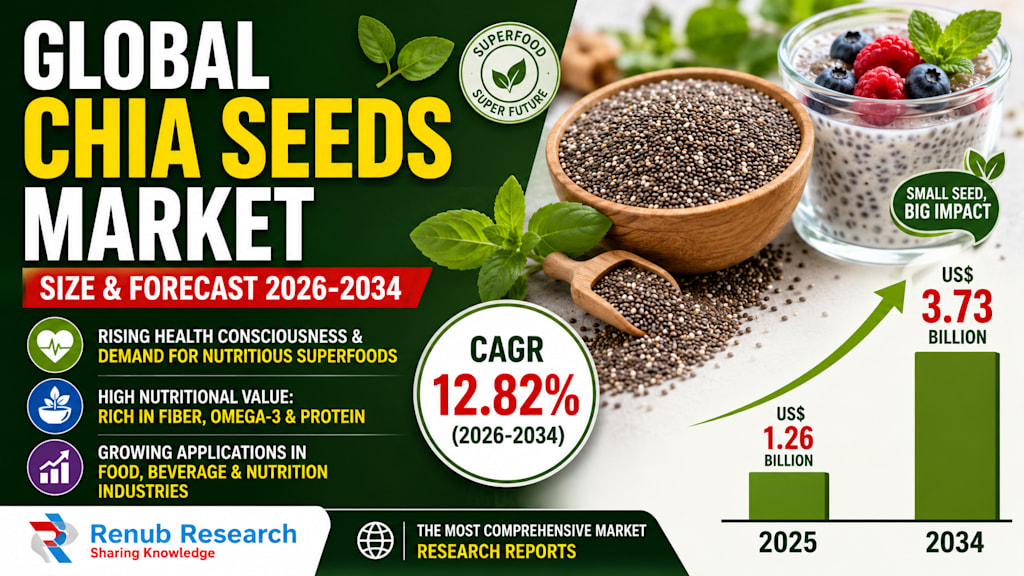
As consumers increasingly prioritize wellness, clean-label nutrition, and plant-based diets, chia seeds are becoming one of the fastest-growing superfoods worldwide. According to Renub Research, the global chia seeds market is expected to grow from US$ 1.26 Billion in 2025 to US$ 3.73 Billion by 2034, expanding at a CAGR of 12.82% during 2026–2034.

The global food industry is undergoing a major transformation as consumers shift away from heavily processed foods and move toward healthier, nutrient-rich alternatives. Among the many ingredients benefiting from this trend, chia seeds have emerged as one of the most popular superfoods in the world. Once considered a niche health product, chia seeds are now widely used in smoothies, yogurts, breakfast cereals, energy bars, bakery products, dietary supplements, and even skincare formulations.
Their popularity is rooted in their nutritional profile. Chia seeds are rich in omega-3 fatty acids, dietary fiber, antioxidants, proteins, vitamins, calcium, magnesium, and iron. They are also naturally gluten-free, plant-based, and suitable for vegan diets, making them highly attractive to modern consumers seeking clean and functional nutrition. As awareness surrounding wellness and preventive health continues to grow, the market for chia seeds is expanding rapidly across both developed and emerging economies.
According to Renub Research, the global chia seeds market is projected to increase from US$ 1.26 Billion in 2025 to US$ 3.73 Billion by 2034, registering a remarkable CAGR of 12.82% during the forecast period from 2026 to 2034.
The market’s growth reflects a larger global shift toward healthier eating habits, functional foods, and natural ingredients. As consumers become more conscious of nutrition, chia seeds are evolving from a specialty product into a mainstream dietary staple.
Chia Seeds Have Become a Modern Superfood
Chia seeds originate from the Salvia hispanica plant, native to Central and South America. Despite their tiny size, they contain an impressive concentration of nutrients that support heart health, digestive function, energy levels, and weight management. One of their most distinctive characteristics is their ability to absorb liquid and form a gel-like texture, which makes them highly versatile for food and beverage applications.
This versatility is a major reason behind their commercial success. Consumers can easily incorporate chia seeds into daily meals without making dramatic dietary changes. They can be sprinkled over salads, blended into smoothies, added to oatmeal, used in puddings, or mixed into bakery recipes. Their neutral taste and functional properties make them suitable for both sweet and savory foods.
In addition to convenience, chia seeds align closely with current wellness trends. Modern consumers are increasingly seeking foods that offer nutritional benefits beyond basic nourishment. Chia seeds meet that demand by delivering fiber, plant protein, and omega-3 content in a natural form. This positioning as a “functional superfood” has helped fuel their popularity globally.
Rising Health Awareness Is Accelerating Demand
One of the biggest growth drivers for the global chia seeds market is the increasing awareness surrounding health, fitness, and preventive nutrition. Consumers are paying closer attention to the role of diet in managing obesity, cardiovascular health, digestive disorders, and overall wellness. As a result, demand for nutrient-dense foods has increased significantly over the past decade.
Health-conscious consumers are particularly attracted to chia seeds because of their fiber and omega-3 fatty acid content. Fiber supports digestion and satiety, while omega-3 fatty acids are associated with heart and brain health. Fitness enthusiasts also view chia seeds as a convenient plant-based protein source that can support active lifestyles.
This trend is especially visible in North America and Europe, where wellness-driven food choices strongly influence purchasing behavior. Superfoods have become part of mainstream grocery shopping, and chia seeds now appear in everything from snack bars to meal-replacement drinks. Renub Research notes that Navitas Organics expanded its organic chia seed product range in 2024 to meet growing demand from health-conscious consumers in North America and Europe.
As awareness about healthy eating continues to spread, the market for chia seeds is expected to maintain strong momentum worldwide.
Plant-Based and Vegan Diets Are Expanding the Market
The rapid rise of plant-based and vegan lifestyles is another major factor contributing to market growth. Consumers across the world are increasingly reducing animal-based food consumption due to health, environmental, and ethical concerns. Chia seeds fit perfectly into this shift because they are naturally vegan, gluten-free, and allergy-friendly.
Food manufacturers are increasingly using chia seeds in plant-based products such as dairy-free yogurts, vegan protein bars, non-dairy beverages, cereals, and baked goods. Their ability to act as a natural thickening and binding agent also makes them useful in vegan recipes, where they are sometimes used as an egg substitute.
The clean-label movement is strengthening this trend further. Modern consumers often prefer products with simple ingredient lists and recognizable natural components. Chia seeds support that demand because they are minimally processed and perceived as wholesome, natural ingredients.
The influence of digital marketing and social media is also shaping consumer behavior. Wellness influencers, nutrition experts, and fitness communities frequently promote chia-based recipes and healthy lifestyle content online. In October 2025, Healthworks launched a digital marketing campaign targeting millennial and Gen Z audiences, emphasizing the health benefits of chia seeds.
As younger consumers continue prioritizing wellness and sustainability, plant-based superfoods like chia seeds are expected to remain in high demand.
Expanding Applications Are Creating New Opportunities
The growing versatility of chia seeds is opening new opportunities across multiple industries. While food and beverages remain the dominant application segment, chia seeds are increasingly being used in nutraceuticals, dietary supplements, and personal care products.
In the food industry, chia seeds are commonly added to cereals, smoothies, bakery items, yogurts, energy bars, ready-to-eat snacks, and functional beverages. Their ability to improve texture and nutritional value makes them especially attractive to manufacturers seeking healthier product formulations.
The nutraceutical sector is also embracing chia seeds because consumers increasingly seek natural alternatives to synthetic supplements. Chia-based oils and concentrated nutritional products are becoming popular among individuals focused on heart health, digestion, and fitness.
Meanwhile, the personal care and cosmetics industry is discovering the value of chia-derived ingredients. Chia oil contains antioxidants and omega-3 fatty acids that support skin hydration and hair care applications. As clean beauty trends expand globally, cosmetic brands are incorporating natural plant-based ingredients into skincare and wellness products.
This diversification across industries strengthens the long-term outlook for the chia seeds market and reduces dependence on a single application category.
Chia Oil and Ready-to-Eat Segments Are Gaining Popularity
Among emerging product categories, chia oil is attracting growing attention. Extracted from chia seeds, this oil is rich in alpha-linolenic acid and serves as a plant-based alternative to fish oil. Consumers looking for vegan omega-3 sources are increasingly adopting chia oil in supplements and premium food products. Although chia oil remains relatively expensive, rising awareness about plant-based nutrition is expected to support continued growth.
Whole chia seeds continue to dominate the market because of their versatility, long shelf life, and minimal processing. Consumers who prefer natural and unprocessed foods are especially drawn to this category. Whole seeds are easy to store and can be incorporated into homemade meals, making them popular among households focused on healthy living.
Another fast-emerging niche is the pre-hydrated chia seeds segment. These ready-to-consume gel products are increasingly used in smoothies, puddings, and convenience foods. Urban consumers with busy lifestyles are driving demand for products that combine nutrition with convenience. Although shelf-life management remains a challenge, ongoing innovation is gradually improving product stability and commercial viability.
Challenges Continue to Affect the Industry
Despite impressive growth potential, the chia seeds market also faces several challenges. One of the most important issues is price volatility. Chia seed production is concentrated in a limited number of countries such as Bolivia, Paraguay, Argentina, and Mexico. Weather conditions, crop yields, transportation costs, and export regulations in these regions can significantly affect global pricing and supply stability.
Supply-chain dependence on a few producing nations creates vulnerability in the market. Climatic disruptions or trade restrictions can quickly impact availability and costs, especially in importing regions.
Another challenge is limited consumer awareness in developing markets. In many countries, chia seeds are still viewed as premium or niche products that cost more than traditional grains and seeds. Consumers unfamiliar with their nutritional benefits may hesitate to incorporate them into daily diets. Additionally, local alternatives such as flaxseed, sesame, and millet often compete with chia seeds in emerging economies.
To overcome these challenges, companies are focusing on educational marketing, wider retail distribution, and affordable product offerings tailored to local markets.
Food and Beverage Applications Continue to Lead
The food and beverage sector remains the largest contributor to the global chia seeds market. Manufacturers are increasingly using chia seeds in functional foods designed to deliver health benefits alongside basic nutrition. Breakfast cereals, snack bars, dairy alternatives, bakery products, and health drinks frequently contain chia ingredients because of their fiber, protein, and omega-3 content.
The growing popularity of functional foods is particularly important for market expansion. Consumers no longer view food simply as a source of calories. Instead, many actively seek products that support immunity, digestion, energy, weight management, and cardiovascular health. Chia seeds align perfectly with this trend.
Their role as a natural texturizer and thickening agent also adds commercial value for manufacturers. In beverages and desserts, chia seeds create unique textures that appeal to consumers looking for innovative health-focused products.
As clean-label and nutrient-dense foods continue gaining market share globally, food and beverage companies are expected to increase their use of chia-based ingredients further.
Regional Markets Are Expanding Rapidly
The United States remains one of the strongest markets for chia seeds due to high awareness surrounding health and wellness. Consumers widely use chia seeds in smoothies, protein bars, bakery items, and nutritional supplements. The popularity of vegan and gluten-free diets continues supporting demand. In March 2025, Benexia introduced its Seeds of Wellness Chia Milk in the United States, further expanding the plant-based product segment.
The United Kingdom market is also expanding steadily, driven by increasing consumer interest in superfoods and functional nutrition. Chia seeds are now commonly found in supermarkets, online stores, and health-food retailers across the country. Flexitarian eating patterns and vegan lifestyles are contributing strongly to demand growth.
India is emerging as a promising growth market as health awareness rises among urban consumers. Chia seeds are increasingly incorporated into traditional Indian foods, smoothies, and modern packaged health products. In March 2023, actress Samantha Ruth Prabhu invested in Nourish You, India’s first domestic producer of quinoa and chia seeds.
Saudi Arabia is another growing market where increasing interest in fitness, weight management, and imported superfoods is supporting adoption. Although still considered a niche category, chia seeds are gaining popularity among higher-income urban consumers focused on healthier lifestyles.
Final Thoughts
The global chia seeds market is experiencing remarkable expansion as consumers increasingly embrace healthier eating habits, plant-based nutrition, and functional foods. According to Renub Research, the market is expected to grow from US$ 1.26 Billion in 2025 to US$ 3.73 Billion by 2034, achieving a CAGR of 12.82% during 2026–2034.
This growth reflects a broader transformation in the global food industry. Consumers today are more informed, wellness-focused, and interested in ingredients that offer both nutritional value and convenience. Chia seeds fit perfectly into this changing landscape because they combine health benefits, versatility, and clean-label appeal.
Although challenges related to pricing, supply dependency, and consumer awareness remain, the long-term outlook for the market remains highly positive. As innovation continues across food, beverages, nutraceuticals, and personal care products, chia seeds are expected to strengthen their position as one of the world’s most influential superfoods.
About the Creator
Enjoyed the story? Support the Creator.
Subscribe for free to receive all their stories in your feed.
Comments
There are no comments for this story
Be the first to respond and start the conversation.