
Global Ceiling Fan Market Growth: Trends, Demand, and Future Outlook
A closer look at how energy efficiency, smart technology, and urbanization are shaping the market through 2034

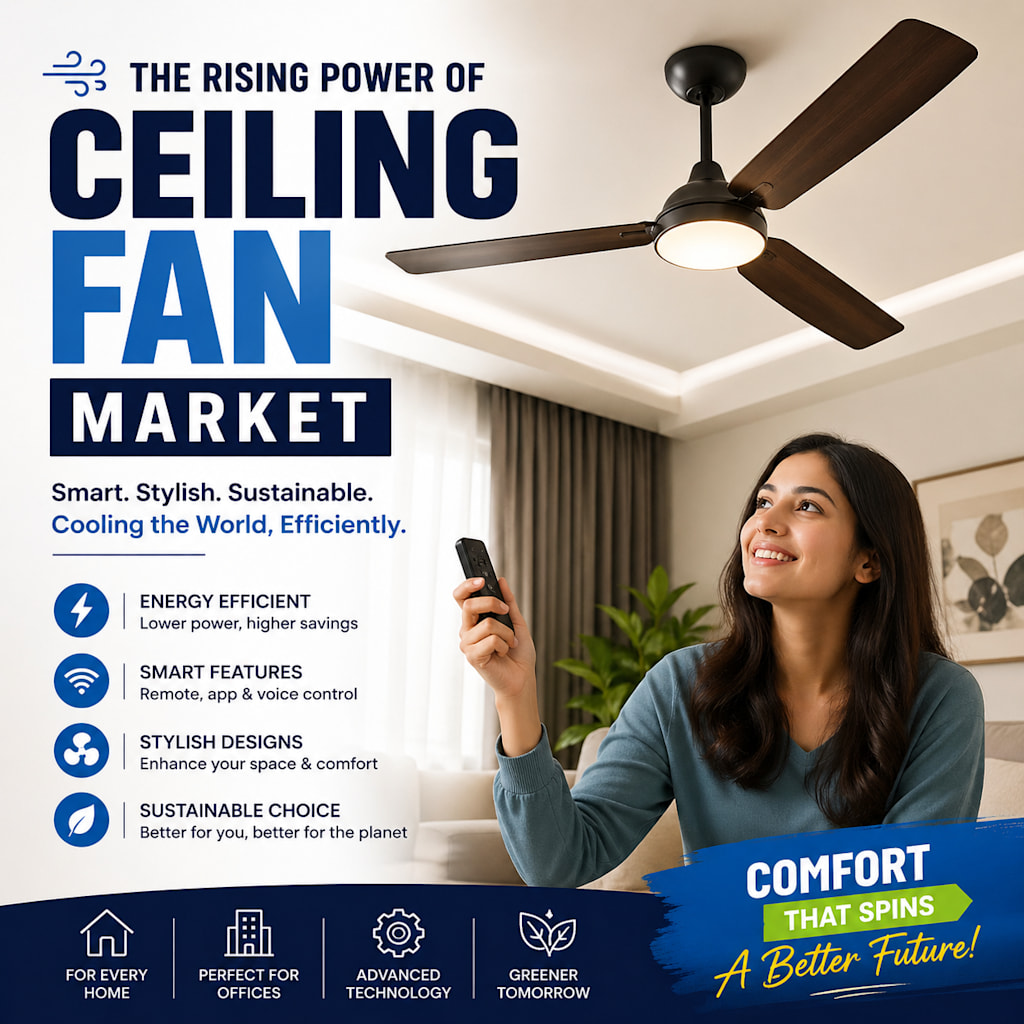
Perhaps in a world of air conditioners and smart coolers‚ ceiling fans might seem to be on their way out․
However‚ reality doesn't necessarily work this way․
Ultimately‚ ceiling fans remain one of the most commonly used cooling devices across the world not because they are customary but because they are efficient‚ economical‚ and more smart than ever․
Despite energy costs and sustainability issues‚ the ceiling fan market has quietly continued to grow and remains a strong part of the appliance market․
A steadily and reliably growing market․
The global ceiling fan market size is expected to grow from an estimated USD 11․6 billion in 2025 to USD 14․9 billion in 2034 at a CAGR of 2․78% during the forecast period․
Although the degree of growth is minor compared to high-tech industries‚ it shows that global demand continues․
Ceiling fans are common fixtures used in millions of homes‚ offices and businesses around the world where air conditioning is too expensive or not widely available․
Why Are Ceiling Fans Still So Popular?
One of the biggest drivers of ceiling fans' continued growth is their low cost․
In many parts of the world‚ air conditioners (AC) are too expensive to install and operate‚ especially in the developing world․ Ceiling fans are a low-cost solution for air cooling‚ using relatively little electricity․
Additionally‚ as global temperatures have risen and heatwaves have increased‚ the demand for some forms of cooling that do not considerably increase electricity demand has been increasing․
Ceiling fans are an example of devices with low energy consumption that provide a high comfort/energy ratio․
The Shift Toward Energy Efficiency
Energy efficiency is now important for most people when buying appliances․
Many modern ceiling fans now use a BLDC (Brushless Direct Current)‚ motor which is more efficient and can use as much as 50% less energy than a regular ceiling fan motor․ These fans are increasingly being used in new builds․
Governments and other organizations are also promoting energy-efficient appliances‚ and the popularity of relatively low-power fans is helping to reduce energy consumption overall․
As consumers grow more educated‚ fans in these cases are selected based on efficiency and sustainability․
Smart ceiling fans are changing consumer expectations
One prominent trend in the ceiling fan market has been the rise of smart ceiling fans․
They're not fans in the usual sense․
These models can now be controlled via:
- Smartphone apps
- Voice assistants
- Remote controls
- Home automation systems
Users can control the speed‚ lighting‚ and scheduling without even touching a switch․
Higher-end units can also automatically adjust based on room temperature and occupancy of the respective room․
Ceiling fans are beginning to be integrated into the smart home driven by the increasing popularity of home automation․
Design Is Becoming Just as Important as Performance
ceiling fans have become an interior design element‚ rather than just an appliance for cooling and air circulation․
As consumers become cognizant of the appearance of their homes‚ ceiling fans are offered for sale as much for aesthetics as for cooling purposes․
Manufacturers are responding with:
- Sleek‚ minimalist designs
- Wooden and metallic finishes
- Customizable blade styles
- Integrated LED lighting
In many modern homes‚ ceiling fans are used as much for ambient design as they are as functional objects․
Urbanization Is Driving Market Growth
Rapid urbanization is another major demand side driver․
As cities adapt to increasing populations and the creation of buildings to house residents‚ the demand for efficient cooling methods will grow․ In new residential developments within hot climates‚ ceiling fans are often the cooling method of choice․
Demand is expected to grow as disposable incomes are increasing‚ and consumers are upgrading from low-end products․
This urbanization and associated lifestyle and consumption changes are supporting long-term market demand‚ albeit with some modifications․
The Most Rapidly Growing Market In The Region
There are regional variations in the ceiling fan market․
China holds over 26% of the global market share‚ helped by low-cost manufacturing capabilities and a large domestic market․
In Asia-Pacific‚ which is more densely populated and urbanized and has strong demand for low-cost equipment‚ demand is growing faster․
Meanwhile in the United States demand is steady due to household renovation‚ smart home devices and a focus on energy efficiency․
With environmental awareness increasing‚ ceiling fans are becoming increasingly common in Europe as a greener alternative to other cooling methods․
Other areas‚ such as Latin America and the Middle East‚ have the potential to grow as infrastructure improves and temperatures rise․
A highly competitive and innovative industry․
It's a far more competitive industry than you think․
Brands are forever reformulating to differentiate themselves in an increasingly crowded marketplace․ Today‚ companies compete on more than just price․
- Energy efficiency
- Smart features
- Design aesthetics
- Durability and performance
Manufacturers are also expanding their distribution channels‚ both online and offline‚ to reach more customers․
Routine product launches‚ partnerships‚ and technology updates are now standard in this industry․
Challenges That Could Influence the future
The market continues to grow‚ though some difficulties remain․
In much of the urbanized world‚ it is still the case that air conditioners are dominant and due to higher incomes‚ ceiling fans are generally used as secondary sources of cooling․
Manufacturers must also comply with energy and sustainability regulations‚ which may increase the cost of production․
These problems have‚ however‚ led manufacturers to produce more clever‚ efficient and attractive products․
The Future of Ceiling Fans: Smarter‚ Greener‚ and More Stylish
The ceiling fan market is expected to continue to progress into the future․
Future developments will likely include:
- Greater integration with smart home ecosystems
- Improved energy efficiency technologies
- Silent operation with improved airflow performance
- More personalized and customizable designs
Although their low profile and understated operation have made them the least written about technology‚ ceiling fans have quietly adapted․
Final Thoughts
The ceiling fan is a perfect example of a product that has managed to survive under conditions of constant change․
Low-cost‚ high-efficiency and innovative‚ ceiling fans are a major part of global cooling efforts․
As consumers now expect appliances to be more energy-efficient and affordable‚ the ceiling fan industry still survives․
And in much of the rest of the world‚ it remains one of the most practical forms․
About the Creator
Robert
Senior Market Researcher at IMARC Group, specializing in global market analysis, industry trends, and data-driven insights across diverse sectors.
Enjoyed the story? Support the Creator.
Subscribe for free to receive all their stories in your feed.
Comments
There are no comments for this story
Be the first to respond and start the conversation.