
Gigacasting Presses Market Size Is Growing Faster Than Most Expect
How high-pressure aluminum casting is reshaping EV manufacturing — and the companies racing to scale it.
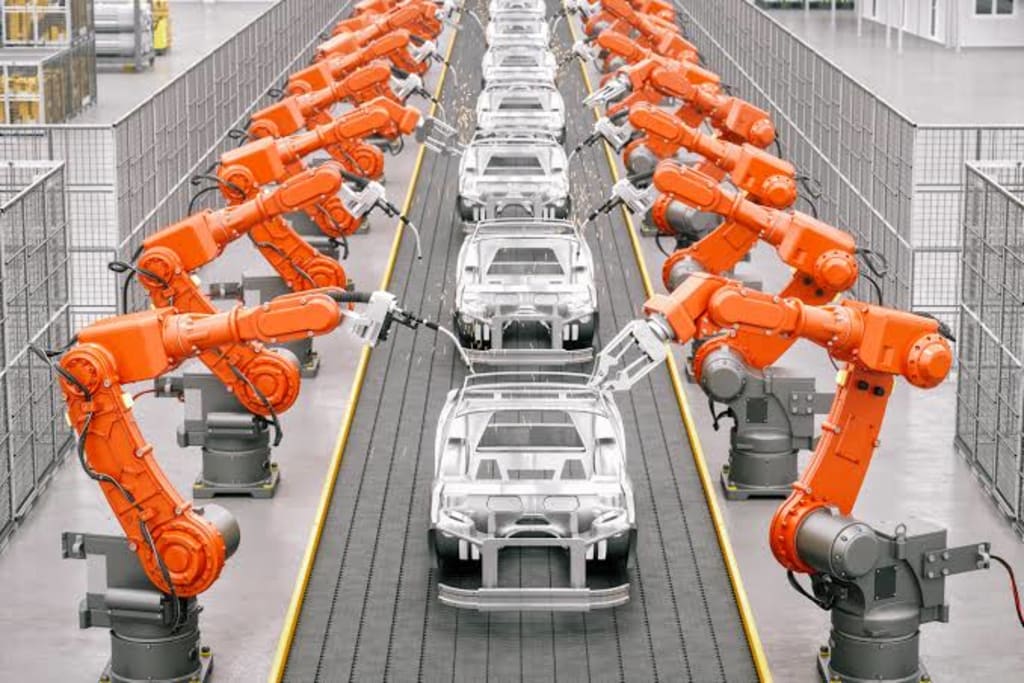
One Press, One Car: How Gigacasting Is Rewriting Auto Manufacturing Economics
A car's underbody used to be assembled from roughly 70 individual stamped and welded components. Tesla's Gigafactory in Fremont, California now produces that same structure in a single injection — one aluminum casting, shot under 6,000 to 9,000 tons of pressure, in under two minutes. That shift is not just an engineering footnote. It is the central story of how the Gigacasting Presses Market size has more than doubled in projected value over a single decade, and why manufacturers from Shanghai to Stuttgart are scrambling to follow.
The scale of investment behind this technology is worth understanding in context. A detailed breakdown of adoption trends, regional production patterns, and competitive positioning is available in this gigacasting presses industry research overview.
The Machine Behind the Machine
Gigacasting — sometimes called megacasting in European manufacturing circles — refers to high-pressure die casting at clamping forces above 6,000 tons. The machines themselves are architectural in scale. IDRA Group's OL 9000 CS, the press installed at Tesla's Texas facility, weighs 410 metric tons and occupies a footprint larger than a typical suburban home. These are not tools you bolt to a factory floor over a weekend. Facilities require new foundations, purpose-built cooling systems, and months of process calibration before a single production part ships.
That complexity is, paradoxically, part of the appeal. The barriers to entry are high enough that manufacturers who master gigacasting early build structural cost advantages that take years for competitors to replicate.
A Market Moving at an Uncommon Pace
The numbers behind this sector reflect genuine momentum rather than speculative hype. The gigacasting presses market was valued at approximately USD 1,025.5 million in 2025 and is projected to reach USD 3,330.1 million by 2035 — a compound annual growth rate of 12.5%. That pace of expansion is faster than most capital equipment categories. It reflects a rare convergence: the electric vehicle transition is creating structural demand for lighter, more integrated vehicle platforms, and gigacasting is one of the few manufacturing processes that can deliver both weight reduction and lower per-unit assembly cost simultaneously.
Analysts tracking the gigacasting presses market share note that Asia-Pacific currently dominates production capacity, with China leading installations across both domestic EV manufacturers and multinational joint ventures. BYD, Nio, and Li Auto have each invested in casting cells capable of producing front and rear structural subframes in single shots. Europe is accelerating, with Volvo committing to gigacasting at its Belgian Ghent plant and Volkswagen Group trialing the process for its upcoming Scout brand SUV platform.
Why the Traditional Approach Is Running Out of Road
Conventional body-in-white manufacturing relies on dozens of stamped steel panels joined by robotic welding — a mature, well-understood process that has been refined over six decades. It is also increasingly mismatched to what modern vehicle programs demand. EV platforms require low floor tunnels, specific battery enclosure geometries, and tightly integrated crash structures. Achieving all three through traditional stamping and welding means more parts, more welds, more tooling, and more quality inspection points. More cost.
Gigacasting collapses that equation. Where a rear underbody structure might have previously required 80 components and 700 welds, a gigacast unit reduces that to a single part — eliminating assembly time, reducing potential failure points, and shaving significant mass in the process. Toyota, long a holdout favoring incremental process improvements over radical manufacturing shifts, publicly acknowledged in 2023 that its next-generation platform would incorporate gigacasting for select body nodes. That announcement carried weight precisely because Toyota had resisted the approach longest.
What Comes After Scale
The next phase of this technology's evolution is already visible at the prototype stage. Several manufacturers are experimenting with casting full vehicle floor assemblies — combining what today are separate front body, battery floor, and rear body castings into a single part. The technical challenge is not the casting itself but rather the alloy development and process control required to maintain consistent properties across a much larger shot envelope. Foundry specialists like Novelis and Constellium are working alongside press manufacturers to develop aluminum alloys with better flow characteristics and more predictable post-cast dimensional stability.
The question is not whether gigacasting becomes standard automotive production practice. That outcome now appears close to certain. The more interesting question is where the technology migrates next — aerospace structural components, rail car frames, industrial housing applications — and which press manufacturers positioned themselves correctly when the market was still being defined.
About the Creator
Mark K. Belton
I’m Mark K. Belton, 26 years old, currently working as a Digital Marketing Intern. I have a strong interest in digital marketing and have been developing my skills in SEO, social media marketing, content creation, and online campaign
Enjoyed the story? Support the Creator.
Subscribe for free to receive all their stories in your feed.
Comments
There are no comments for this story
Be the first to respond and start the conversation.