
GCC Outbound Travel and Tourism Market | International Travel Demand Rising
How Rising Disposable Income, Experiential Travel Demand, and Digital Platforms Are Driving Market Expansion.

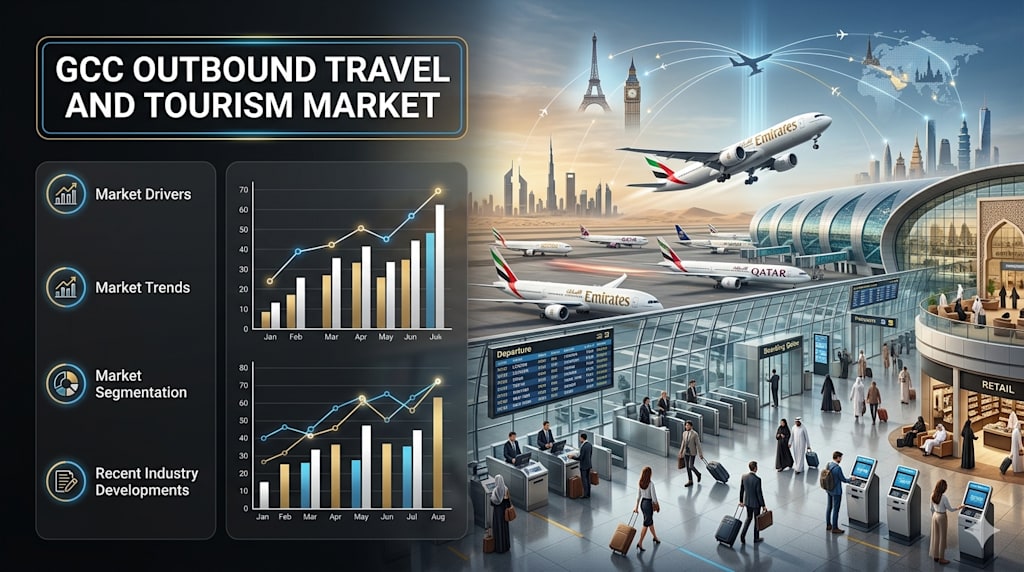
Market Overview
The outbound travel and tourism market in the GCC region is experiencing strong growth, driven by increasing international travel demand, high disposable incomes, and expanding airline connectivity. GCC residents are increasingly traveling abroad for leisure, business, education, and medical purposes, contributing to the steady expansion of the market.
According to analysis by IMARC Group, the GCC outbound travel and tourism market was valued at USD 75.5 billion in 2025 and is projected to grow significantly, reaching approximately USD 139.3 billion by 2034. This reflects a compound annual growth rate (CAGR) of 6.84% during 2026–2034.
This growth is primarily driven by rising income levels, easier visa policies, and increasing access to international destinations through strong airline networks.
As global travel becomes more accessible, the market is evolving into a premium, experience-driven, and digitally enabled ecosystem.
Analyze Market Potential with Expert Insights — Download the Sample
Key Drivers Fueling Market Growth
- High Disposable Income and Luxury Travel Demand
GCC countries have high per capita income levels, enabling consumers to spend more on international travel, luxury accommodations, and premium experiences.
- Expansion of Airline Connectivity
Major regional airlines such as Emirates, Qatar Airways, and Etihad Airways are enhancing global connectivity, making international travel more convenient and frequent.
- Favorable Visa Policies and Global Access
Visa-on-arrival and simplified travel regulations are encouraging outbound travel to Europe, Asia, and North America.
Role of Technology and Innovation
- Growth of Digital Booking Platforms
Online travel agencies (OTAs), mobile apps, and AI-powered platforms are transforming how travelers research, compare, and book trips.
- AI-Driven Personalization
Travel platforms are using big data and AI to offer personalized recommendations, dynamic pricing, and customized itineraries.
- Virtual Experiences and Smart Planning Tools
Technologies such as virtual tours and interactive itineraries are helping travelers plan trips more efficiently and confidently.
GCC Outbound Travel Industry Trends & Drivers
The market is being reshaped by a strong shift toward experiential and luxury travel. Travelers are increasingly seeking unique experiences such as cultural immersion, adventure tourism, wellness retreats, and culinary journeys.
Additionally, younger generations (Gen Z and Millennials) are playing a key role in market growth, driven by social media influence and a preference for personalized travel experiences.
Seasonal factors, such as extreme summer temperatures in the GCC, are also encouraging residents to travel abroad to cooler destinations.
Sustainability is another emerging trend, with travelers increasingly opting for eco-friendly accommodations and responsible tourism options.
GCC Outbound Travel and Tourism Market Segmentation
Analysis by Tourism Type:
- Leisure
- Religious
- Cultural Tourism
- Medical Tourism
- Sports and Adventure
- MICE Tourism
- Others
Analysis by Spending Type:
- Air Tickets
- Hotels
- Insurance
- Others
Analysis by Age Group:
- Generation Z
- Millennials
- Generation X
- Baby Boomers
Analysis by Booking Method:
- Online
- Offline
Country Analysis:
- Saudi Arabia
- UAE
- Qatar
- Bahrain
- Kuwait
- Oman
Competitive Landscape
The GCC outbound travel market is highly competitive, with airlines, travel agencies, and online platforms competing through service quality, pricing strategies, and digital innovation.
Companies are focusing on personalized travel packages, loyalty programs, and premium services to attract high-spending travelers. Additionally, partnerships with global tourism providers are expanding offerings and improving customer experience.
Market Outlook
The GCC outbound travel and tourism market is expected to witness steady growth through 2034, supported by rising global mobility, digital transformation, and increasing demand for luxury and experiential travel.
As travelers continue to seek personalized, immersive, and sustainable experiences, companies will need to focus on innovation, digital engagement, and customer-centric services.
In the coming years, the market will continue to evolve—becoming more premium-focused, technology-driven, and integral to the global tourism ecosystem.
About the Creator
Jackleen Jackleen
Hi, I’m Jackleen Jackleen, a passionate content writer who loves creating clear, engaging, and value-driven content. I enjoy turning ideas into impactful stories that connect with readers.
Enjoyed the story? Support the Creator.
Subscribe for free to receive all their stories in your feed.
Comments
There are no comments for this story
Be the first to respond and start the conversation.