
GCC Electric Vehicles Market Report 2026–2034 | EV Adoption Driving Growth
Government Incentives, Charging Infrastructure Expansion, and Sustainability Goals Accelerating GCC Electric Vehicles Market Growth

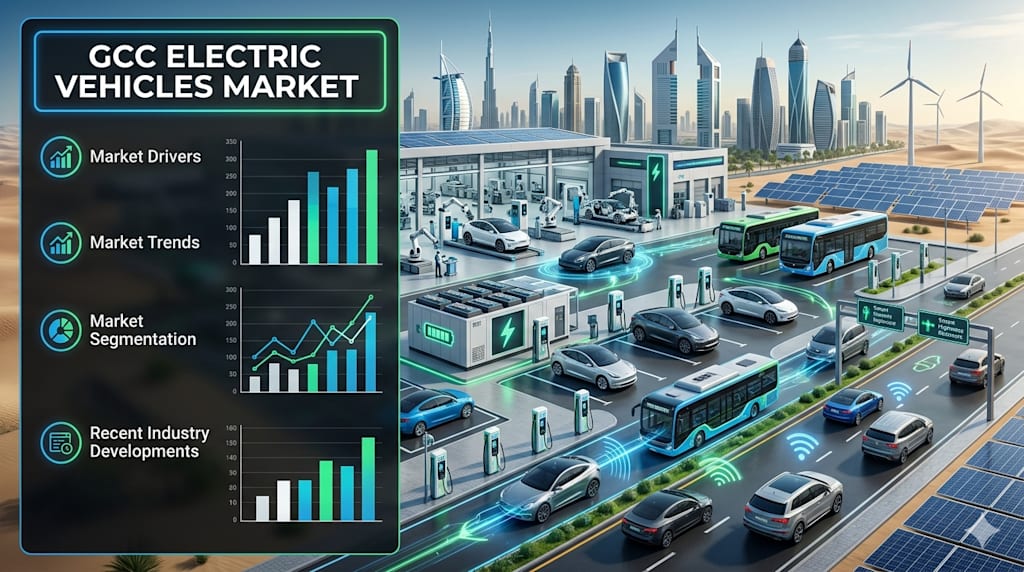
Market Overview
The electric vehicles (EV) market in the GCC is witnessing rapid growth, driven by government initiatives promoting sustainable transportation, increasing environmental awareness, and significant investments in EV charging infrastructure. Electric vehicles are becoming an integral part of the region’s transition toward cleaner mobility solutions, supporting long-term economic diversification and carbon reduction objectives.
The GCC electric vehicle market reached 44.0 thousand units in 2025 and is projected to grow substantially, reaching approximately 98.7 thousand units by 2034. This reflects a compound annual growth rate (CAGR) of 9.11% during 2026–2034.
This growth is primarily supported by favorable government policies, expanding charging networks, technological advancements in battery systems, and rising consumer demand for environmentally friendly transportation. As the automotive sector continues to evolve, the market is becoming increasingly technology-driven, sustainable, and innovation-focused.
Analyze Market Potential with Expert Insights — Download the Sample
Key Drivers Fueling Market Growth
Strong Government Support and Policy Initiatives
Governments across the GCC are introducing subsidies, tax incentives, infrastructure investments, and sustainability programs to encourage EV adoption. National strategies focused on reducing carbon emissions and promoting green mobility are significantly supporting market expansion.
Rapid Expansion of Charging Infrastructure
The increasing deployment of public charging stations, fast-charging networks, and smart charging solutions is reducing range anxiety and improving accessibility for EV users. Public and private sector investments are accelerating the development of charging ecosystems across the region.
Rising Environmental Awareness
Growing awareness regarding climate change, air pollution, and sustainable transportation is encouraging consumers and businesses to adopt electric mobility solutions. EVs are increasingly viewed as a practical and environmentally responsible alternative to conventional vehicles.
Role of Technology and Innovation
Advanced Battery Technologies
Continuous improvements in battery energy density, charging speed, driving range, and overall performance are making electric vehicles more attractive to consumers. Advances in lithium-ion batteries and emerging battery technologies are enhancing vehicle efficiency and affordability.
Smart Charging Solutions
The integration of smart charging systems, digital payment platforms, and connected charging infrastructure is improving user convenience and supporting efficient energy management across EV networks.
AI and Connected Mobility
Automotive manufacturers are increasingly incorporating artificial intelligence, connected vehicle technologies, predictive maintenance systems, and intelligent navigation solutions to improve safety, efficiency, and driving experiences.
GCC Electric Vehicles Industry Trends & Drivers
The market is being reshaped by the growing adoption of battery electric vehicles (BEVs), increasing investments in charging infrastructure, and the implementation of ambitious sustainability initiatives across GCC countries. Governments and private stakeholders are working together to accelerate the transition toward electric mobility.
Additionally, advancements in battery technology, expansion of public transportation electrification programs, and increasing corporate sustainability commitments are positively influencing market growth. Automotive manufacturers are introducing new EV models with enhanced range, performance, and affordability to attract a broader consumer base.
The rising focus on smart cities, renewable energy integration, and low-carbon transportation systems is further strengthening the GCC electric vehicles industry outlook.
GCC Electric Vehicles Market Segmentation
Breakup by Component:
- Battery Cells and Packs
- On-Board Charger
- Fuel Stack
Breakup by Charging Type:
- Slow Charging
- Fast Charging
Breakup by Propulsion Type:
- Battery Electric Vehicle (BEV)
- Fuel Cell Electric Vehicle (FCEV)
- Plug-In Hybrid Electric Vehicle (PHEV)
- Hybrid Electric Vehicle (HEV)
Breakup by Vehicle Type:
- Passenger Vehicles
- Commercial Vehicles
- Others
Breakup by Country:
- Saudi Arabia
- UAE
- Qatar
- Bahrain
- Kuwait
- Oman
Competitive Landscape
The GCC electric vehicles market is highly competitive, with the presence of global automotive manufacturers, EV technology providers, battery suppliers, charging infrastructure companies, and emerging regional players. Competition is driven by vehicle performance, battery efficiency, charging accessibility, technological innovation, pricing strategies, and sustainability commitments.
Industry participants are increasingly investing in research and development, advanced battery technologies, smart mobility solutions, and charging infrastructure expansion to strengthen their market position. Strategic partnerships, localization initiatives, and manufacturing investments are also contributing to market competitiveness.
Market Outlook
The GCC electric vehicles market is expected to witness substantial growth through 2034, supported by government sustainability programs, increasing environmental awareness, expanding charging infrastructure, and continuous technological innovation. The region’s commitment to economic diversification and clean energy adoption will continue to create favorable conditions for EV market expansion.
As consumers and businesses increasingly prioritize sustainable mobility solutions, industry participants will need to focus on innovation, affordability, infrastructure development, and customer experience to remain competitive.
In the coming years, the GCC electric vehicles market will continue to evolve—becoming more technologically advanced, digitally connected, environmentally sustainable, and aligned with the region’s long-term transportation, energy transition, and net-zero development goals.
About the Creator
Jackleen Jackleen
Hi, I’m Jackleen Jackleen, a passionate content writer who loves creating clear, engaging, and value-driven content. I enjoy turning ideas into impactful stories that connect with readers.
Enjoyed the story? Support the Creator.
Subscribe for free to receive all their stories in your feed.
Comments
There are no comments for this story
Be the first to respond and start the conversation.