
Fuel Station Market in Saudi Arabia: Transportation Demand & Demand Drivers
How expanding vehicle fleets, non-fuel retail integration, and digital payment innovations are transforming service models, revenue streams, and customer experience across the Saudi Arabia Fuel Station Market.
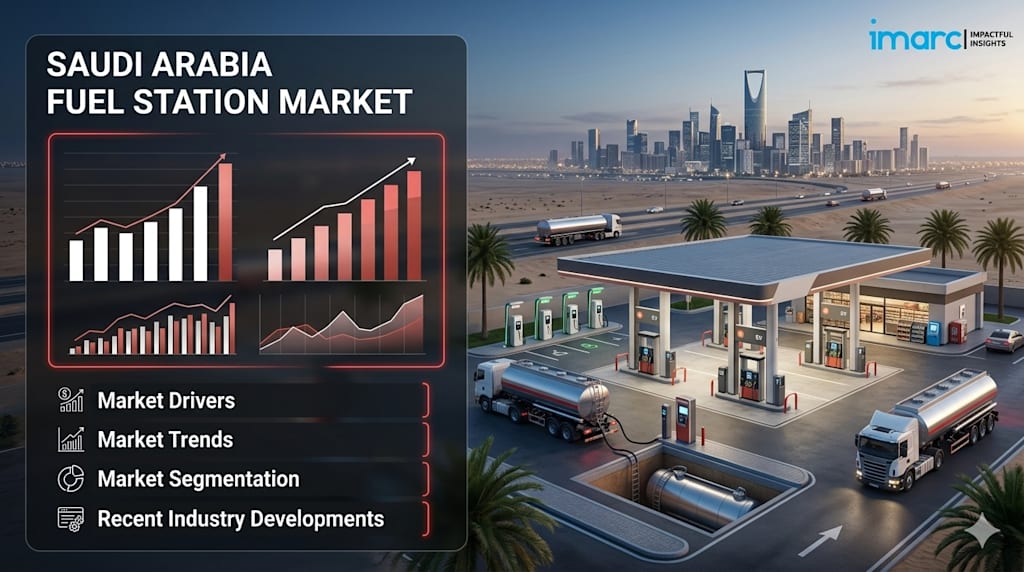
According to IMARC Group's latest research publication, Saudi Arabia fuel station market size reached USD 871.8 Million in 2025. The market is projected to reach USD 1,122.7 Million by 2034, exhibiting a growth rate (CAGR) of 2.85% during 2026-2034.
How AI is Reshaping the Future of Saudi Arabia Fuel Station Market
- Smart Payment and Transaction Systems: AI-powered digital payment platforms enable seamless cashless transactions, biometric authentication, and loyalty program integration, reducing wait times and enhancing customer convenience at fuel stations across the kingdom.
- Predictive Inventory Management: Machine learning algorithms forecast fuel demand patterns based on traffic flow, weather, and seasonal trends, optimizing stock levels and preventing shortages while minimizing storage costs for operators.
- Automated Fuel Dispensing and Monitoring: AI-driven sensors detect fuel quality issues, monitor dispenser performance in real-time, and enable unmanned operations, improving safety standards and reducing operational labor costs significantly.
How Vision 2030 is Revolutionizing Saudi Arabia Fuel Station Industry
Vision 2030's economic transformation framework is fundamentally reshaping the fuel station landscape through privatization, regulatory modernization, and infrastructure expansion. The government's planned investment of SR10 Billion in establishing 18 new logistics zones is expected to significantly boost traffic flow and freight activity, directly increasing demand for strategically positioned fuel stations along new transport corridors. Privatization of fuel distribution networks has attracted major international operators and local investors, bringing capital, expertise, and global best practices to the sector. Regulatory reforms streamlining licensing processes have accelerated the establishment of modern, multi-service fuel stations that integrate convenience retail, dining options, and automotive services. The emphasis on economic diversification is driving development of fuel stations as integrated service hubs rather than simple refueling points, creating new revenue streams and employment opportunities throughout the kingdom.
Download the Sample Report to Understand Market Trends and Outlook
Saudi Arabia Fuel Station Market Trends & Drivers:
The Saudi fuel station market is riding a wave of growth fueled by rising vehicle ownership among a young, affluent population. Approximately 60% of Saudi Arabia's population is under 30, representing an aspirational demographic with increasing disposable incomes and strong preference for private mobility. This demographic shift is translating directly into higher vehicle sales and, consequently, greater demand for accessible fueling infrastructure. The expansion of vehicle financing options and entry of international automotive brands have democratized car ownership beyond traditional segments. Modern consumers expect more than just fuel—they want convenience stores, food courts, car washes, and digital payment options all under one roof. This evolving consumer behavior is pushing operators to transform traditional pump-and-go stations into comprehensive service destinations that cater to diverse needs and maximize time spent on-site.
Urbanization and infrastructure development are accelerating at unprecedented rates, with 92.12% of Saudi Arabia's population now living in urban areas, totaling 31,842,626 individuals. This concentration creates dense traffic corridors, longer commutes, and sustained demand for conveniently located fuel stations across metropolitan networks. The government's massive infrastructure investments in highways, metro systems, and new cities like NEOM are creating entirely new mobility patterns and fueling zones. Mixed-use urban planning models now position fuel stations as essential nodes within integrated transport ecosystems, often co-located with retail complexes, logistics hubs, and residential developments. The expansion of road networks connecting urban centers to industrial zones and ports is generating consistent demand for both urban and highway fuel stations, supporting operators' strategic expansion plans across previously under-served regions.
Modernization initiatives are reshaping industry standards following revelations that 440 out of 1,219 petrol stations along Saudi highways failed to meet operational and safety benchmarks. This compliance gap has triggered comprehensive regulatory overhauls focused on improving service quality, safety protocols, and infrastructure reliability. Operators are responding by investing heavily in automation, digital payment systems, real-time monitoring technologies, and customer-centric design upgrades. Electronic payments now represent 70% of total retail consumer payments, up from 62% the previous year, reflecting rapid digital adoption across the fuel retail sector. New stations feature automated dispensers, integrated surveillance systems, mobile app connectivity, and data analytics platforms that optimize operations while reducing labor dependency. This technology-driven transformation is not only improving compliance and efficiency but also elevating customer experience standards across the entire market
Saudi Arabia Fuel Station Market Industry Segmentation:
The report has segmented the market into the following categories:
Fuel Type Insights:
- Petrol
- Diesel
- Gas
End Use Insights:
- Road Transport Vehicle
- Air Transport Vehicle
- Water Transport Vehicle
Regional Insights:
- Northern and Central Region
- Western Region
- Eastern Region
- Southern Region
Competitive Landscape:
The competitive landscape of the industry has also been examined along with the profiles of the key players.
Recent News and Developments in Saudi Arabia Fuel Station Market
- January 2025: ENOWA, the energy and water subsidiary of NEOM, inaugurated Saudi Arabia's first heavy-duty hydrogen refueling station at Petromin Corporation in partnership with Hydrogen Refueling Solutions, distributing approximately 500 kg of hydrogen within just 12 weeks of operation.
- January 2024: Saudi Automotive Services Co. (SASCO) announced plans to launch the kingdom's largest gas station along King Fahd Road, connecting Riyadh with Al-Qassim Province as part of the SASCO Al-Jazeera 1 mega-project.
- March 2025: Ministry of Energy implemented updated fuel quality standards requiring all stations to upgrade dispensing equipment and storage facilities, improving safety compliance and environmental performance across the retail network.
Note: If you require specific details, data, or insights that are not currently included in the scope of this report, we are happy to accommodate your request. As part of our customization service, we will gather and provide the additional information you need, tailored to your specific requirements. Please let us know your exact needs, and we will ensure the report is updated accordingly to meet your expectations.
About the Creator
Shubham Sharma
Market research enthusiast sharing insights on global industries, emerging trends, growth opportunities, and data-driven analysis across diverse markets.
Enjoyed the story? Support the Creator.
Subscribe for free to receive all their stories in your feed.
Comments
There are no comments for this story
Be the first to respond and start the conversation.