
Frozen Vegetables Market Set for Steady Growth as Convenience, Nutrition, and Food Waste Reduction Drive Global Demand
Rising demand for ready-to-cook foods, advances in freezing technology, and expanding retail and foodservice sectors are fueling growth across the global frozen vegetables industry.

Introduction: Frozen Vegetables Become a Modern Kitchen Essential
As modern lifestyles become increasingly busy, consumers around the world are looking for food options that combine convenience, nutrition, affordability, and long shelf life. Frozen vegetables have emerged as a practical solution that meets all these requirements, making them a staple in households, restaurants, and food manufacturing facilities alike.
Once viewed merely as a backup to fresh produce, frozen vegetables have evolved into a preferred choice for many consumers due to improvements in freezing technologies and growing awareness of their nutritional value. They provide year-round access to vegetables, help reduce food waste, and offer significant time-saving benefits in meal preparation.
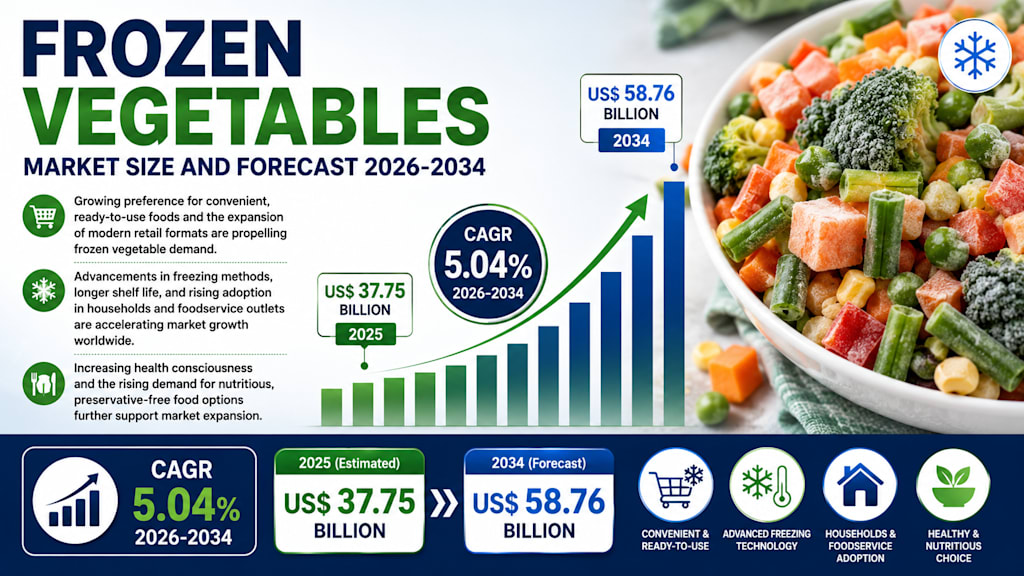
According to Renub Research, the Global Frozen Vegetables Market is expected to grow from US$ 37.75 billion in 2025 to US$ 58.76 billion by 2034, expanding at a compound annual growth rate (CAGR) of 5.04% from 2026 to 2034. Rising consumer demand for convenience foods, improvements in freezing technologies, and the expansion of modern retail and foodservice channels are supporting market growth worldwide.
As consumers increasingly seek practical and nutritious food solutions, frozen vegetables are becoming an indispensable part of modern food consumption patterns.
Understanding Frozen Vegetables and Their Benefits
Frozen vegetables are fresh vegetables that are washed, cut, blanched, and rapidly frozen shortly after harvest. This process preserves flavor, texture, color, and nutritional value while significantly extending shelf life.
Unlike fresh produce, which can spoil within days, frozen vegetables can remain safe and high quality for several months when stored properly. Because freezing naturally slows microbial activity and spoilage, preservatives are generally unnecessary.
One of the biggest advantages of frozen vegetables is their ability to maintain nutritional quality. Since vegetables are often frozen soon after harvesting, many nutrients remain intact, making them comparable to or sometimes even more nutritious than fresh produce that spends extended periods in transportation and storage.
These benefits continue to attract consumers seeking healthy and convenient meal solutions.
Convenience Remains the Market's Biggest Growth Driver
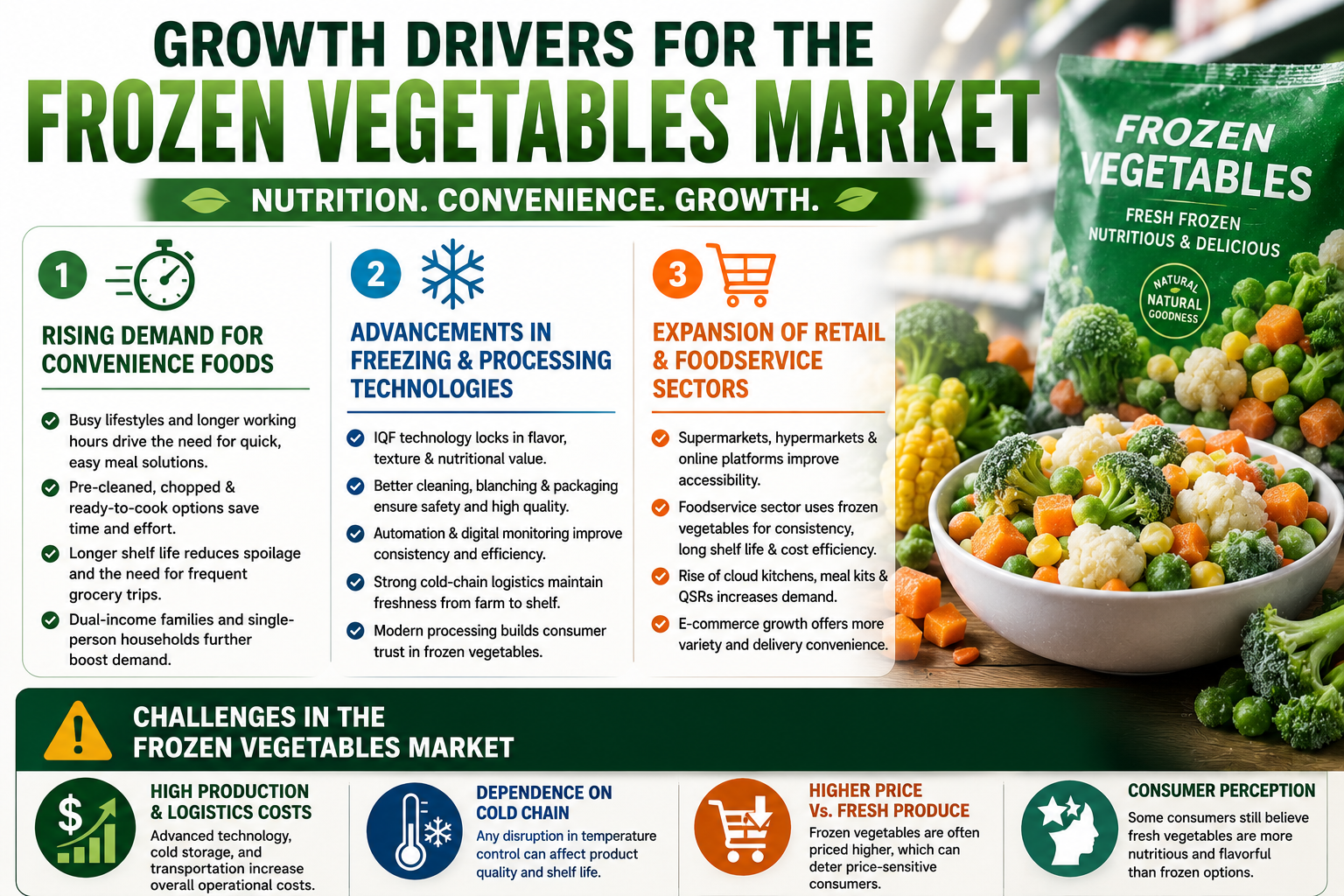
One of the most important factors fueling growth in the frozen vegetables market is the increasing demand for convenience foods.
Modern consumers frequently balance demanding work schedules, family responsibilities, and busy lifestyles. As a result, they increasingly seek food products that reduce preparation time without compromising quality or nutrition.
Frozen vegetables fit perfectly within this trend because they are pre-cleaned, pre-cut, and ready to cook. Consumers can quickly incorporate them into meals without the washing, peeling, or chopping typically required with fresh vegetables.
The rise of dual-income households and growing numbers of single-person households have further increased demand for convenient cooking ingredients.
As consumers continue prioritizing efficiency and flexibility in meal preparation, frozen vegetables are expected to remain a popular choice worldwide.
Advanced Freezing Technologies Are Improving Product Quality
Technological innovation has significantly transformed the frozen vegetables industry.
Modern freezing methods, particularly Individual Quick Freezing (IQF) technology, allow manufacturers to freeze vegetables rapidly while preserving their original texture, color, flavor, and nutritional content. IQF technology freezes each vegetable piece individually, preventing clumping and improving overall product quality.
Advancements in processing equipment have also improved cleaning, blanching, packaging, and food safety standards.
In addition, digital monitoring systems and automated production technologies help manufacturers maintain consistent product quality while improving operational efficiency.
These innovations have helped overcome outdated perceptions regarding frozen food quality and strengthened consumer confidence in frozen vegetable products.
As technology continues evolving, product quality is expected to improve even further.
Food Waste Reduction Supports Market Expansion
Reducing food waste has become a major priority for consumers, businesses, and governments worldwide.
Fresh vegetables often have limited shelf lives and can spoil before being consumed, resulting in significant food waste. Frozen vegetables provide a practical alternative because they can be stored for extended periods and used only as needed.
Consumers appreciate the ability to use specific portions while keeping the remaining product frozen for future meals.
Restaurants, cafeterias, and foodservice operators also benefit from reduced spoilage and improved inventory management.
As awareness regarding sustainability and responsible food consumption continues growing, frozen vegetables are increasingly viewed as an effective tool for minimizing waste throughout the food supply chain.
Retail Expansion Is Increasing Consumer Access
The growth of modern retail infrastructure has played a significant role in expanding frozen vegetable sales.
Supermarkets, hypermarkets, convenience stores, and online grocery platforms now dedicate larger sections to frozen food products. Improved product visibility and broader selection are helping attract new consumers and encourage repeat purchases.
Retailers increasingly promote frozen vegetables as healthy, convenient, and cost-effective alternatives to fresh produce.
The growth of e-commerce has also made frozen foods more accessible. Consumers can now order frozen vegetables online and receive home deliveries, creating additional convenience and expanding market reach.
As retail channels continue evolving, accessibility is expected to remain a major growth driver for the industry.
Foodservice Industry Continues to Boost Demand
The foodservice sector represents an important source of demand for frozen vegetables.
Restaurants, hotels, cafeterias, catering companies, and institutional kitchens rely heavily on frozen vegetables because they offer consistency, ease of storage, and reduced preparation requirements.
Frozen vegetables help foodservice operators control costs by reducing waste and ensuring year-round product availability regardless of seasonal limitations.
The rise of quick-service restaurants, cloud kitchens, meal delivery services, and catering operations has further strengthened demand.
As the global foodservice industry continues expanding, frozen vegetables are expected to remain a key ingredient in commercial food preparation.
Corn Remains a Popular Frozen Vegetable Category
Frozen corn continues to represent one of the most widely consumed product segments within the market.
Consumers value frozen corn for its versatility, sweetness, and convenience. It is commonly used in soups, salads, side dishes, casseroles, and prepared meals.
Corn's popularity extends across both household and foodservice applications, making it a consistent contributor to market growth.
Advances in freezing technology have improved product quality and taste retention, further strengthening consumer demand.
As convenience food consumption increases globally, frozen corn is expected to maintain a strong market position.
Green Peas and Broccoli Experience Strong Demand
Frozen green peas and broccoli are among the fastest-growing categories within the market.
Both vegetables are highly valued for their nutritional content and versatility. Consumers increasingly seek nutrient-rich foods that can be quickly prepared and incorporated into balanced diets.
Broccoli is especially popular among health-conscious consumers due to its association with wellness and healthy eating habits.
Green peas remain a staple ingredient in numerous cuisines and are commonly used in soups, rice dishes, vegetable mixes, and ready-made meals.
As healthy eating trends continue gaining momentum, demand for frozen nutrient-dense vegetables is expected to increase.
Retail Customers Drive Household Consumption
Retail customers continue to represent one of the largest end-user groups within the frozen vegetables market.
Households increasingly rely on frozen vegetables because they offer convenience, affordability, and year-round availability. Unlike fresh produce, frozen products provide flexibility and allow consumers to keep vegetables on hand without worrying about spoilage.
The growing popularity of home cooking, meal planning, and healthy eating has further contributed to retail demand.
Consumers appreciate the ability to prepare nutritious meals quickly while minimizing food waste and grocery expenses.
This trend is expected to continue supporting market growth throughout the forecast period.
Supermarkets and Hypermarkets Remain Key Distribution Channels
Supermarkets and hypermarkets continue to dominate frozen vegetable distribution worldwide.
These retail formats offer extensive freezer space, broad product selection, promotional activities, and convenient shopping experiences that encourage consumer purchases.
Many large retailers actively promote frozen vegetables as affordable and nutritious meal ingredients.
Improved refrigeration systems and inventory management technologies have enhanced product availability and quality.
As modern retail infrastructure continues expanding across emerging economies, supermarkets and hypermarkets are expected to remain important contributors to market growth.
Regional Markets Show Strong Growth Potential
United States
The United States remains one of the largest frozen vegetables markets globally. Strong demand for convenience foods, well-developed cold-chain infrastructure, and widespread adoption of online grocery services continue driving growth.
Health-conscious consumers increasingly appreciate the nutritional benefits and convenience offered by frozen vegetables.
Germany
Germany's market benefits from strong consumer trust in processed foods, advanced cold-chain systems, and increasing awareness regarding food waste reduction.
The country's growing number of single-person households and busy lifestyles support demand for convenient frozen food products.
China
China represents one of the fastest-growing frozen vegetables markets due to rapid urbanization, rising incomes, and the expansion of e-commerce grocery platforms.
Consumers increasingly seek convenient food solutions that align with fast-paced urban lifestyles.
Saudi Arabia
Saudi Arabia's market continues expanding due to changing consumer lifestyles, modern retail growth, and increasing participation of women in the workforce.
Frozen vegetables provide a reliable alternative to fresh produce in a region where climatic conditions can limit local agricultural production.
Challenges Continue to Impact Market Growth
Despite positive growth prospects, the frozen vegetables industry faces several challenges.
One major obstacle is the lack of adequate cold-chain infrastructure in certain developing regions. Reliable refrigeration is essential throughout transportation, storage, and retail distribution. Temperature fluctuations can negatively affect product quality and safety.
Another challenge involves persistent consumer misconceptions regarding frozen food nutrition. Some consumers incorrectly believe frozen vegetables are less nutritious than fresh alternatives despite scientific evidence demonstrating comparable nutrient retention.
Educational initiatives and effective marketing will be important for addressing these perceptions and encouraging broader market adoption.
Leading Companies Driving Industry Growth
The frozen vegetables market includes several major food manufacturers focused on innovation, sustainability, and product diversification.
Key companies highlighted in the report include General Mills Inc., Conagra Brands, Hormel Foods, Unilever PLC, The Kraft Heinz Company, Nomad Foods Ltd., B&G Foods Inc., and Greenyard.
These organizations continue investing in advanced freezing technologies, sustainable sourcing practices, and new product development to meet evolving consumer expectations.
Final Thoughts
The global frozen vegetables market is entering a period of steady growth driven by convenience, technological innovation, sustainability concerns, and changing consumer lifestyles.
With the market projected to increase from US$ 37.75 billion in 2025 to US$ 58.76 billion by 2034, frozen vegetables are becoming an increasingly important part of global food consumption. Rising demand for quick meal solutions, improved freezing technologies, expanding retail access, and growing awareness of food waste reduction are creating favorable conditions for long-term market expansion.
While challenges related to cold-chain infrastructure and consumer perceptions remain, the industry's future outlook remains highly positive. As consumers continue seeking practical, nutritious, and sustainable food options, frozen vegetables are expected to play an increasingly significant role in modern diets worldwide
About the Creator
Enjoyed the story? Support the Creator.
Subscribe for free to receive all their stories in your feed.
Comments
There are no comments for this story
Be the first to respond and start the conversation.