
Frozen Bakery Products Market Growth: Artisan Styles, Convenience Foods & Growth Forecast
How demand for artisanal, ready-to-bake, and specialty frozen bakery products is reshaping manufacturing and marketing approaches

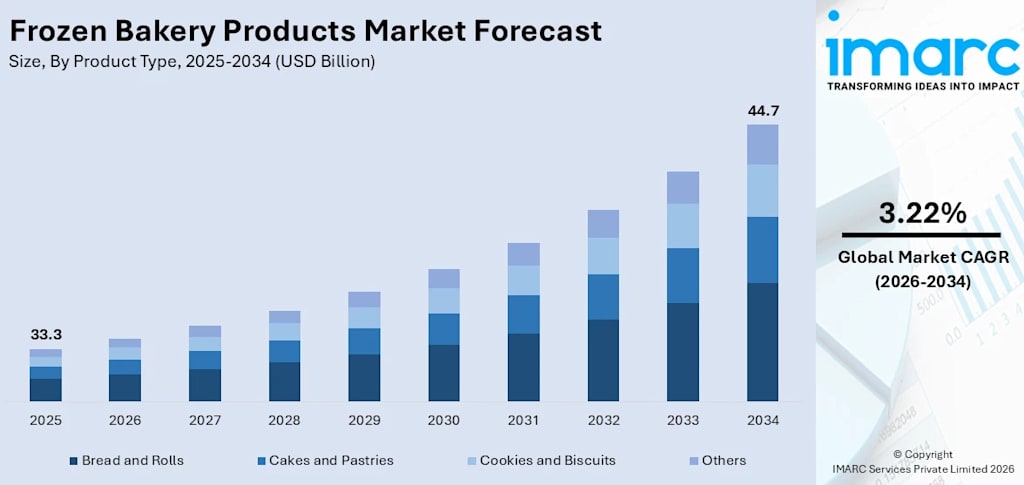
The global frozen bakery products market is evolving rapidly as a core solution for both retail convenience and foodservice efficiency. Driven by advancements in flash-freezing technology and a growing appetite for gourmet-quality "ready-to-bake" items, the industry has become a staple in modern diets. According to IMARC Group’s latest data, the global frozen bakery products market size was valued at USD 25.4 Billion in 2025. Looking forward, IMARC Group estimates the market to reach USD 34.2 Billion by 2034, exhibiting a CAGR of 3.2% from 2026-2034.
Frozen bakery items have transitioned from simple emergency backups to high-quality essentials that minimize food waste and labor costs. Retailers and quick-service restaurants (QSRs) increasingly rely on par-baked and frozen dough formats to offer fresh-from-the-oven aromas without the need for on-site master bakers. This shift is supported by a robust cold-chain infrastructure that now ensures artisanal textures and flavors are preserved from the factory to the kitchen. Key categories including frozen breads, pizza crusts, and breakfast pastries are seeing significant traction as consumers prioritize time-saving solutions that do not compromise on nutritional value or taste.
Get the Latest "Frozen Bakery Products Market" Industry Analysis – Free Download!
Frozen Bakery Products Market Growth Drivers:
- Growing Integration in Foodservice and QSR Sectors
The massive expansion of quick-service restaurants and cafes is a primary engine for growth. These outlets utilize frozen dough and par-baked goods to maintain menu consistency across thousands of locations while drastically reducing preparation time. By using frozen formats, a cafe can serve a fresh croissant in minutes with minimal skilled labor. Currently, the foodservice segment accounts for over 50% of the market share in several regions, as operators look to hedge against rising labor costs and ingredient volatility. This operational flexibility allows for better portion control and significantly less daily inventory waste.
- Consumer Shift Toward Convenience and Fresh-Frozen Quality
Modern, fast-paced lifestyles have made "ready-to-bake" products a household necessity. Unlike traditional long-life bread, frozen bakery items provide the sensory experience of fresh baking at home with a much longer shelf life often up to 12 months. This allows households to reduce frequent grocery trips while maintaining a stock of high-quality rolls, pizzas, and desserts. Statistical insights show that nearly 40% of consumers now prefer frozen bakery options over fresh ones for their ability to prevent food spoilage, especially in multi-generational households where meal times vary throughout the day.
- Technological Advancements in Cold Chain and Freezing
Innovation in "Hydro-Freezing" and blast-freezing technologies has bridged the gap between fresh and frozen quality. These methods prevent the formation of large ice crystals that usually damage the cellular structure of dough, ensuring that the final baked product remains fluffy and crisp. Furthermore, government initiatives, such as India’s Pradhan Mantri Kisan Sampada Yojana (PMKSY) which allocated approximately USD 780 million for cold-chain infrastructure in 2025, are facilitating better distribution. These logistics improvements allow manufacturers to reach emerging urban markets where demand for Western-style bakery products is surging due to globalization and rising disposable incomes.
Frozen Bakery Products Market Trends:
- Rising Demand for Health-Centric and Clean-Label Variants
Today’s shoppers are scrutinizing labels more than ever, leading to a surge in frozen bakery products featuring ancient grains, high fiber, and zero preservatives. The "clean-label" movement has forced manufacturers to reformulate frozen dough to remove artificial dough conditioners. We are seeing a significant uptick in gluten-free and organic frozen bread launches, which grew by nearly 15% in the last year alone. Brands are successfully positioning these as premium "guilt-free" indulgences, catering to specific dietary needs like keto or veganism, which were previously underserved in the frozen aisle.
- Premiumization and Artisanal Product Innovation
There is a distinct move away from "mass-produced" aesthetics toward artisanal, stone-baked, and sourdough varieties in the frozen segment. Consumers are willing to pay a premium for products that tell a story or offer a gourmet experience, such as authentic French brioche or Italian focaccia. This trend is supported by the "premiumization" of private labels in supermarkets, where retailers launch high-end frozen bakery lines to compete with specialty bakeries. Industry data suggests that premium frozen pastry segments are expanding faster than standard categories, as shoppers treat home-baked gourmet goods as a luxury yet affordable daily indulgence.
- Sustainability in Packaging and Production
Environmental impact is now a top-of-mind factor for nearly a third of frozen food purchasers. Brands are transitioning to 100% recyclable or biodegradable films and reducing the thickness of plastic packaging to lower their carbon footprint. Beyond packaging, companies are investing in energy-efficient freezing tunnels and sourcing ingredients through sustainable farming practices. This trend is not just about ethics; it is a response to strict regional regulations regarding plastic waste. Companies that highlight their "green" supply chain are seeing higher brand loyalty, particularly among younger demographics who prioritize eco-conscious consumption in their urban lifestyles.
Recent News and Developments in Frozen Bakery Products Market
- August 2025: Grupo Bimbo expanded its frozen manufacturing capacity in North America with a new automated facility specifically designed to produce par-baked artisanal breads, meeting the 20% increase in demand from local retail chains.
- September 2025: Nestlé’s frozen food division launched a "Nature-First" frozen bakery line, utilizing carbon-neutral flour and compostable packaging to target the growing segment of environmentally conscious consumers in Europe.
- September 2025: General Mills announced a breakthrough in frozen dough technology that allows for "No-Thaw" baking, cutting down the preparation time for commercial bakeries by 30% and eliminating the need for specialized proofing equipment.
Note: If you require specific details, data, or insights that are not currently included in the scope of this report, we are happy to accommodate your request. As part of our customization service, we will gather and provide the additional information you need, tailored to your specific requirements. Please let us know your exact needs, and we will ensure the report is updated accordingly to meet your expectations.
About the Creator
Andrew Sullivan
Hello, I’m Andrew Sullivan. I have over 9+ years of experience as a market research specialist.
Enjoyed the story? Support the Creator.
Subscribe for free to receive all their stories in your feed.
Comments
There are no comments for this story
Be the first to respond and start the conversation.