
From Sushi to Supermarkets: Why the Global Tuna Market Continues to Thrive in a Health-Conscious World
Growing demand for protein-rich foods, innovations in canned and frozen seafood, sustainability initiatives, and expanding global trade are keeping tuna at the center of the modern seafood industry.

Few seafood products enjoy the universal popularity and commercial importance of tuna. Found in everything from gourmet sushi restaurants and premium seafood counters to supermarket shelves and household pantries, tuna has become one of the most widely consumed fish species in the world.
Its appeal goes far beyond taste alone. Tuna offers a unique combination of high-quality protein, omega-3 fatty acids, vitamins, minerals, and versatility. Whether consumed fresh, frozen, canned, or incorporated into ready-to-eat meals, tuna continues to meet the needs of consumers seeking convenient and nutritious food options.
As global populations grow, lifestyles become increasingly fast-paced, and health awareness continues to rise, tuna is maintaining its position as one of the world's most valuable seafood commodities.
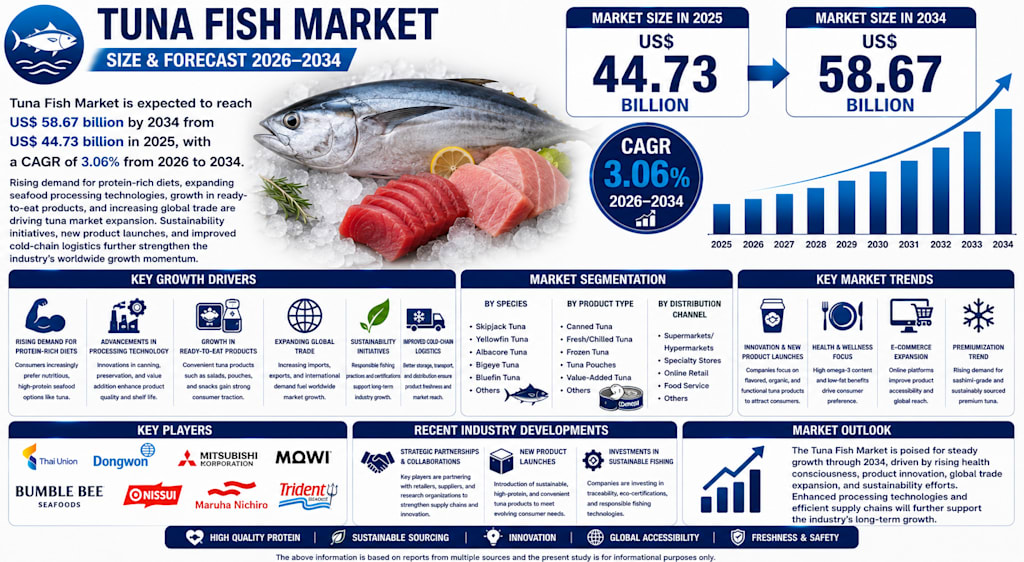
According to Renub Research, the Global Tuna Fish Market is expected to grow from US$ 44.73 billion in 2025 to US$ 58.67 billion by 2034, expanding at a compound annual growth rate (CAGR) of 3.06% between 2026 and 2034. Rising demand for protein-rich diets, improvements in seafood processing technologies, expansion of ready-to-eat products, sustainability initiatives, and strengthening global trade networks continue to drive market growth.
As consumer preferences evolve and seafood innovation accelerates, tuna remains a cornerstone of the global food industry.
Understanding the Global Importance of Tuna
Tuna is a saltwater fish belonging to the mackerel family and is among the most commercially valuable seafood species worldwide.
Several varieties dominate global markets, including:
Skipjack, yellowfin, albacore, bigeye, and bluefin tuna.
Each species serves different consumer segments and culinary applications.
Bluefin tuna is highly prized in premium sushi and sashimi markets, while skipjack and yellowfin are widely used in canned and processed seafood products.
Tuna's popularity stems from its exceptional nutritional profile.
Rich in protein and omega-3 fatty acids, tuna supports heart health, muscle development, brain function, and overall wellness.
The fish is consumed in numerous forms, including fresh steaks, frozen fillets, canned products, ready-to-eat meals, salads, sandwiches, sushi, and specialty seafood dishes.
Its versatility and nutritional value continue to support strong demand across diverse markets worldwide.
Health-Conscious Consumers Are Fueling Demand
One of the strongest drivers behind tuna market growth is increasing global awareness regarding healthy eating.
Consumers are actively seeking foods that provide high nutritional value while fitting into busy lifestyles.
Tuna meets these expectations exceptionally well.
It offers lean protein, beneficial fatty acids, vitamins, and essential minerals without the high saturated fat content associated with many alternative protein sources.
As more consumers adopt fitness-oriented lifestyles, high-protein diets, and wellness-focused eating habits, tuna consumption continues to rise.
Healthcare professionals frequently recommend seafood as part of balanced diets, further supporting demand.
Growing awareness of cardiovascular health and the benefits of omega-3 fatty acids also contributes to tuna's popularity.
This combination of nutrition, convenience, and versatility positions tuna as a preferred protein source for millions of consumers.
Frozen Tuna Products Are Expanding Market Opportunities
The frozen seafood segment has become one of the most dynamic areas of market growth.
Consumers increasingly seek convenient meal solutions that require minimal preparation while maintaining nutritional quality.
Modern freezing technologies have significantly improved product quality, allowing frozen tuna products to retain freshness, flavor, and nutritional value.
Manufacturers are responding by introducing value-added frozen offerings designed for convenience and versatility.
A notable example occurred in December 2024 when Spanish seafood company Echebaster expanded its Alakrana product line by launching frozen tuna mini burgers and nuggets in Spain.
These products target consumers seeking quick, protein-rich meal options suitable for home cooking and family dining.
Frozen innovations are helping attract younger consumers and expanding tuna's appeal beyond traditional seafood buyers.
As convenience remains a major purchasing factor, frozen tuna products are expected to play an increasingly important role in market expansion.
Canned Tuna Remains a Global Staple
Despite innovation in other categories, canned tuna continues to represent one of the most important segments within the global market.
Its popularity stems from several key advantages:
Long shelf life, affordability, portability, convenience, and broad culinary versatility.
Households worldwide rely on canned tuna as a practical source of protein that can be incorporated into salads, sandwiches, pasta dishes, wraps, casseroles, and numerous other recipes.
Institutional buyers, schools, military organizations, and foodservice operators also depend heavily on canned tuna products.
Emerging markets are particularly important growth drivers.
As urbanization accelerates and disposable incomes rise, consumers increasingly seek affordable, nutritious, and convenient packaged foods.
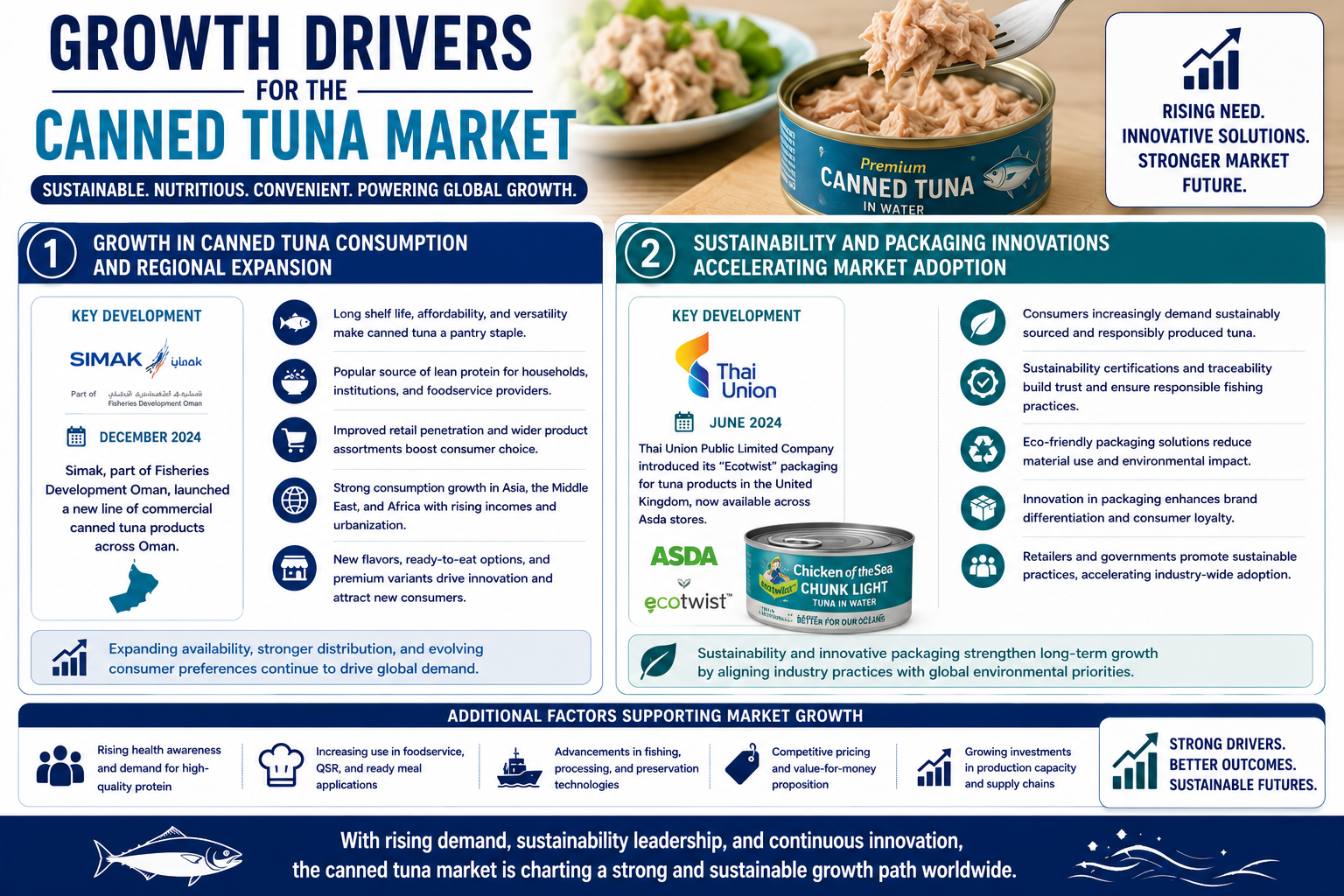
In December 2024, Simak, a subsidiary of Fisheries Development Oman, launched a new range of commercial canned tuna products throughout Oman to meet growing regional demand and strengthen seafood self-sufficiency.
The continued expansion of canned tuna consumption reinforces its central role within the global seafood industry.
Sustainability Is Becoming a Competitive Advantage
Environmental responsibility has become one of the most important factors influencing consumer purchasing decisions.
Concerns regarding overfishing, marine biodiversity, and ocean health are encouraging seafood companies to adopt more sustainable practices.
Certification programs, traceability systems, responsible fishing methods, and transparent sourcing policies are becoming increasingly important.
Consumers now actively seek assurances that seafood products are harvested responsibly.
Manufacturers and retailers are responding by investing in sustainability initiatives designed to build trust and differentiate products.
Packaging innovation is also playing a key role.
In June 2024, Thai Union Public Limited Company introduced its environmentally friendly "Ecotwist" packaging for tuna products in the United Kingdom.
The new packaging reduces material usage while addressing growing consumer expectations regarding sustainability and waste reduction.
As environmental awareness continues increasing, sustainability will remain a critical factor shaping the future of the tuna market.
Ready-to-Eat Products Are Changing Consumption Habits
Consumer lifestyles are becoming increasingly busy, creating strong demand for convenient food solutions.
Ready-to-eat and ready-to-cook tuna products are benefiting significantly from this trend.
Manufacturers are introducing flavored tuna pouches, meal kits, protein snacks, prepared salads, and portion-controlled products designed for convenience and portability.
These offerings appeal particularly to younger consumers, working professionals, and health-conscious individuals seeking nutritious meal solutions without extensive preparation.
The ability to combine convenience with high nutritional value has made tuna an attractive ingredient within the growing convenience-food sector.
As time-saving meal solutions become more important, ready-to-eat tuna products are expected to gain additional market share.
Global Trade Networks Support Market Expansion
The tuna industry operates within one of the most extensive seafood trade networks in the world.
Tuna harvested in one region is often processed, packaged, and consumed in entirely different parts of the globe.
Advancements in cold-chain logistics, transportation infrastructure, and seafood preservation technologies have significantly improved supply chain efficiency.
These improvements allow fresh, frozen, and processed tuna products to reach consumers year-round regardless of geographic location.
International trade agreements and expanding distribution networks further support market growth by increasing product availability and market access.
As global seafood consumption continues rising, strong trade infrastructure will remain essential for maintaining reliable supply.
Premium Bluefin Tuna Continues to Attract Attention
While canned and processed tuna dominate volume sales, premium bluefin tuna remains one of the most valuable seafood products globally.
Demand from luxury restaurants, sushi establishments, and high-end foodservice operators continues driving interest in this segment.
The strength of premium tuna demand was demonstrated in January 2024 when a single 238-kilogram bluefin tuna sold for approximately JPY 114 million, or around US$760,000, during Japan's first tuna auction of the year.
Such events highlight the enduring prestige and commercial value associated with premium tuna species.
Although this segment represents a small portion of overall market volume, it contributes significantly to industry visibility and profitability.
Regional Markets Driving Growth
United States
The United States remains one of the world's largest tuna-consuming markets.
Consumers value tuna for its convenience, affordability, and nutritional profile.
Demand remains strong across canned products, tuna pouches, ready-to-eat meals, salads, sandwiches, and sustainable seafood offerings. Increasing interest in traceability and responsible sourcing continues shaping purchasing behavior.
Germany
Germany's tuna market benefits from growing interest in healthy eating and sustainable seafood.
Consumers frequently use tuna in salads, sandwiches, pasta dishes, and convenience meals.
Certified sustainable products enjoy particularly strong demand due to environmental awareness among German consumers.
China
China represents one of the fastest-growing tuna markets globally.
Urbanization, rising incomes, and increasing seafood consumption are driving strong demand.
Tuna is particularly popular within sushi, sashimi, and premium seafood categories, while canned tuna continues gaining traction among younger consumers.
Saudi Arabia
Saudi Arabia continues experiencing growth in tuna consumption due to increasing demand for convenient and shelf-stable protein sources.
Health-conscious consumers increasingly incorporate tuna into balanced diets, while modern retail channels improve accessibility nationwide.
Challenges Facing the Industry
Despite positive growth prospects, the tuna industry faces several significant challenges.
Overfishing remains one of the most pressing concerns.
Maintaining sustainable fish populations requires strict management practices, regulatory compliance, monitoring systems, and responsible harvesting methods.
Meeting sustainability requirements often increases operational costs and adds complexity to supply chain management. Environmental organizations and regulatory agencies continue exerting pressure on industry participants to adopt responsible fishing practices.
Price volatility presents another major challenge.
Factors such as fuel costs, weather patterns, climate change, catch quotas, transportation expenses, and trade regulations can significantly influence supply and pricing.
Supply chain disruptions, port congestion, labor shortages, and changing ocean conditions further complicate market dynamics.
Successfully managing these challenges will be critical for long-term industry stability.
Innovation Is Expanding the Future of Seafood
Innovation continues creating exciting opportunities throughout the tuna market.
One emerging area involves alternative seafood production.
In April 2025, BlueNalu expanded its partnership with Nomad Foods to advance commercialization of cell-cultivated seafood products across the United Kingdom and European Union.
The initiative reflects growing consumer interest in sustainable alternatives to traditional seafood harvesting methods.
Although conventional tuna remains dominant, alternative protein technologies may play an increasingly important role in addressing future sustainability challenges.
Final Thoughts
The global tuna market continues demonstrating remarkable resilience and adaptability in an evolving food landscape.
Driven by rising health consciousness, expanding convenience-food categories, sustainability initiatives, product innovation, and growing international trade, tuna remains one of the world's most important seafood products.
Consumers increasingly value foods that combine nutrition, convenience, versatility, and environmental responsibility—all qualities that tuna continues to provide.
With the market projected to grow from US$ 44.73 billion in 2025 to US$ 58.67 billion by 2034, opportunities for innovation and expansion remain substantial.
As the seafood industry embraces new technologies, sustainable practices, and changing consumer preferences, tuna is poised to remain a cornerstone of global nutrition and one of the most influential products in the international food market for years to come.
About the Creator
Enjoyed the story? Support the Creator.
Subscribe for free to receive all their stories in your feed.
Comments
There are no comments for this story
Be the first to respond and start the conversation.