
From Plants to Products: How Chance AI Solves Everyday Visual Problems Instantly
Turn everyday curiosity into instant answers with visual AI
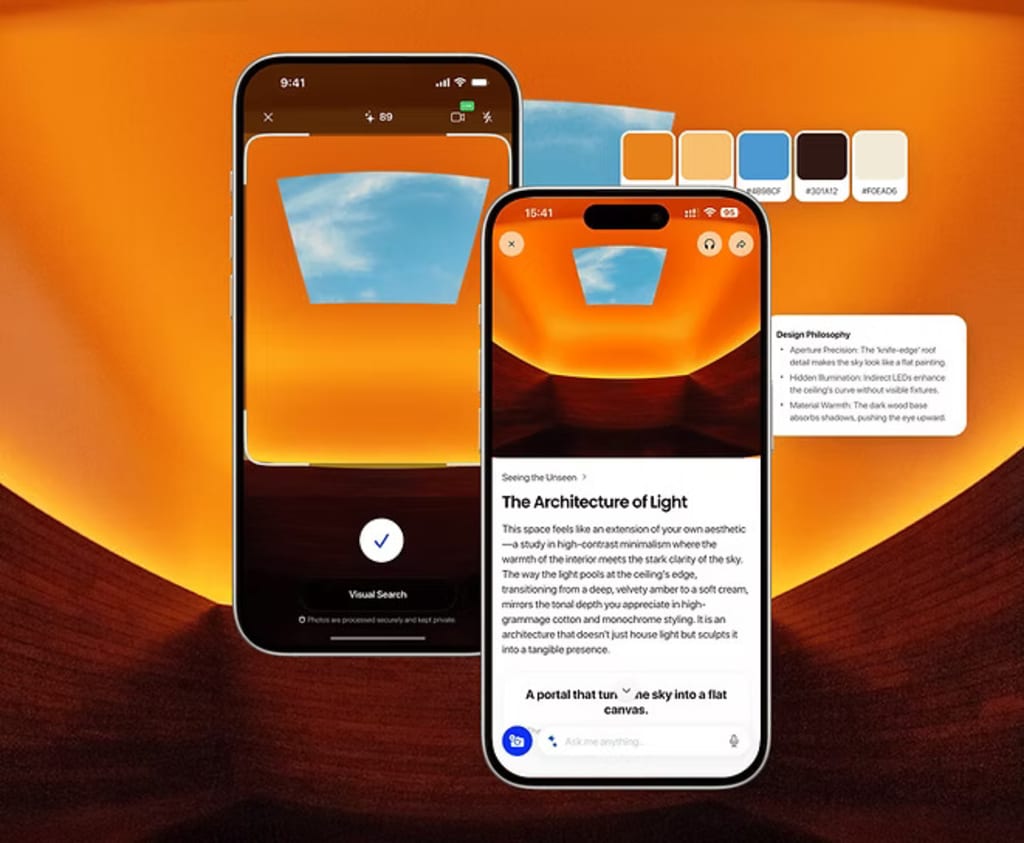
You’ve probably had that moment standing in front of something unfamiliar, curious but stuck. Maybe it’s a plant you spotted on a walk, a gadget you don’t recognize, or a product without a label. You pull out your phone, but typing a description feels impossible. What do you even search for?
This is where visual intelligence changes everything. Instead of describing the world with words, you simply point your camera at it. That’s the space where Chance AI quietly transforms everyday confusion into instant clarity.
The Gap Between Seeing and Knowing
Human curiosity is deeply visual. We notice things first, then try to understand them. But traditional search tools were built for text, not for what we actually experience.
Think about it:
- You see a plant but don’t know its name
- You find a product but can’t identify the brand
- You come across an object and don’t even know how to describe it
In all these situations, the problem isn’t lack of information, it's the inability to translate what you see into words. Chance AI removes that friction by letting the image itself become the query.
From Plants: Turning Nature into Knowledge
Imagine you’re walking through a park and notice a beautiful plant. You’re curious, is it medicinal, ornamental, or just a weed?
With Chance AI, you don’t need botanical knowledge or guesswork. You simply capture the image, and within seconds, you get relevant information. Not just a name, but context: what it is, where it’s commonly found, and why it matters.
This transforms everyday moments into learning opportunities. A casual walk becomes interactive. Curiosity doesn’t get postponed, it gets satisfied instantly.
And it’s not just about plants. The same approach applies to insects, landmarks, food items, and more. The world becomes searchable in a way that feels natural.
To Products: Making Sense of What You See
Now shift to a different scenario. You’re at a café, and someone nearby is using a sleek gadget. Or you’re scrolling through social media and spot a product you like but there’s no link, no description, nothing to go on.
Traditionally, this leads to frustration. You either give up or spend time guessing keywords.
Chance AI flips this experience. You point your camera (or upload a screenshot), and the system identifies what you’re looking at. It bridges the gap between interest and action.
This is especially useful in:
- Shopping decisions
- Identifying electronics or accessories
- Understanding unfamiliar tools or objects
Instead of searching for something, you’re searching with something the image itself.
Real-Time Problem Solving in Daily Life
What makes this powerful isn’t just accuracy, it's speed and convenience. Everyday problems are often small but frequent. Individually, they don’t feel worth the effort of deep research. But collectively, they shape how we interact with the world.
Chance AI fits into these micro-moments:
- “What is this?”
- “Is this useful?”
- “Where can I find it?”
By answering these instantly, it reduces friction in decision-making. You don’t need to pause your day or switch contexts. The answer comes to you, right when you need it.
Learning Without Effort
One underrated aspect of visual AI is how it changes the way we learn. Instead of sitting down to study, learning becomes embedded in daily life.
You’re not actively trying to memorize facts. You’re just curious and that curiosity gets rewarded immediately.
Over time, this builds a natural awareness of your surroundings:
- You start recognizing objects more easily
- You remember details because they were discovered in context
- You become more observant and engaged
It’s learning driven by interest, not obligation.
A Shift from Search to Discovery
Traditional search is intentional. You know what you’re looking for, and you go find it.
Visual AI introduces something different. You don’t always know what you’re looking at, but you still want to understand it.
This shift matters because most real-world interactions are unplanned. You stumble upon things. You notice details. You get curious at the moment.
Chance AI supports this behavior instead of forcing you into structured queries. It aligns with how curiosity actually works.
Why This Matters Going Forward
We’re moving toward a world where AI doesn’t just respond to commands it understands context. And context often starts with what we see.
The ability to instantly interpret visual input has implications beyond convenience:
- It reduces reliance on prior knowledge
- It makes information more accessible to everyone
- It bridges gaps between different domains (nature, tech, lifestyle)
In simple terms, it lowers the barrier between encountering something and understanding it.
The Bigger Picture
From plants in a park to products in a store, everyday life is full of small unknowns. Most of them go unanswered not because they’re unimportant, but because they’re inconvenient to explore.
Chance AI changes that dynamic. It turns fleeting curiosity into immediate insight. It makes the world feel more interactive, more understandable, and more connected.
You’re no longer limited by what you can describe. You’re empowered by what you can see.
And that’s a subtle but powerful shift from guessing to knowing, from searching to simply looking.
About the Creator
Enjoyed the story? Support the Creator.
Subscribe for free to receive all their stories in your feed.
Comments
There are no comments for this story
Be the first to respond and start the conversation.