
France Crab Market to Reach US$ 221.1 Million by 2033 as Premium Seafood Demand Accelerates
Growing Health Awareness, Culinary Traditions, and Expanding Imports Are Reshaping France's Crab Industry

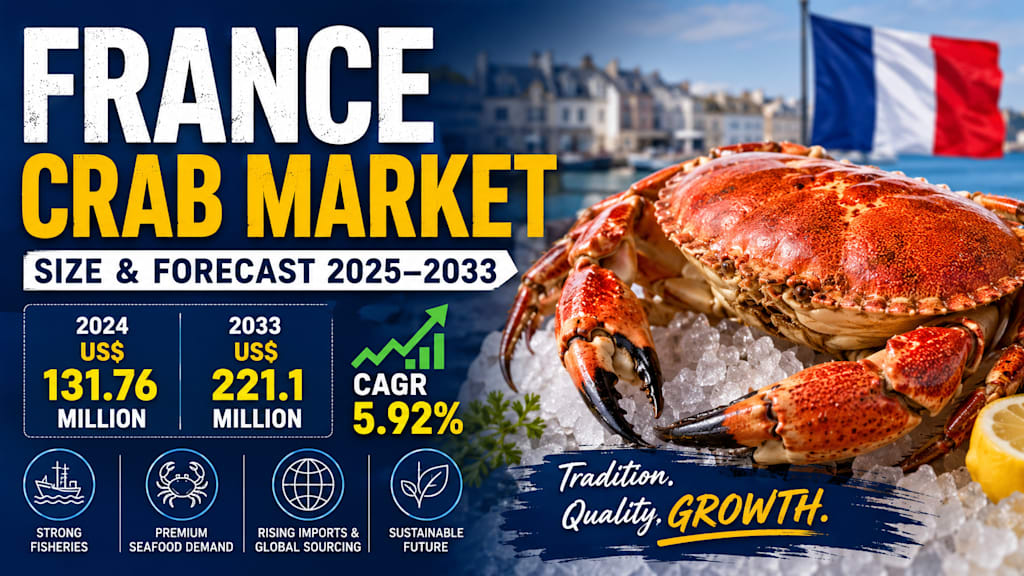
France Crab Market Forecast 2025–2033: A Seafood Industry Built on Tradition and Premium Demand
France has long been recognized as one of Europe's most influential seafood-consuming nations. From coastal fishing villages in Brittany to luxury restaurants in Paris, seafood occupies a central place in French culinary culture. Among the country's diverse seafood offerings, crab continues to emerge as a premium and increasingly sought-after product.
According to Renub Research, the France Crab Market is projected to grow from US$ 131.76 million in 2024 to US$ 221.1 million by 2033, expanding at a CAGR of 5.92% between 2025 and 2033.
The market's expansion is being supported by strong consumer demand for nutritious seafood, rising imports of premium crab species, growing restaurant consumption, and increasing awareness regarding sustainable fishing practices. Despite environmental and operational challenges, France's crab industry remains well-positioned to benefit from changing consumer preferences and the country's enduring seafood traditions.
France's Deep Connection with Crab Consumption
France's relationship with seafood is deeply rooted in its culture and gastronomy. Crab, particularly brown crab (Cancer pagurus), has long been featured in traditional coastal cuisine.
The country's Atlantic coastline and English Channel waters provide ideal habitats for brown crab populations, making domestic harvesting an important contributor to the market. Regions such as Brittany and Normandy have become synonymous with quality seafood production and continue to support local economies through sustainable fishing operations.
Crab is highly valued for its delicate flavor and versatility. It appears in seafood platters, gourmet salads, soups, bisques, and premium restaurant dishes. During festive seasons, particularly Christmas and New Year celebrations, demand rises significantly as consumers seek luxurious seafood experiences.
This strong cultural attachment continues to provide a stable foundation for market growth.
Market Size and Growth Outlook
The French crab industry is expected to experience healthy expansion throughout the forecast period.
Market Value
Year Market Size
2024 US$ 131.76 Million
2033 US$ 221.1 Million
CAGR (2025–2033)
5.92%
Several factors are expected to contribute to this growth:
Increasing seafood consumption
Rising health consciousness
Expansion of premium seafood retail channels
Growth in restaurant and hospitality sectors
Improved cold-chain infrastructure
Rising imports of king crab and snow crab
As consumer demand becomes more sophisticated, crab products are increasingly viewed as premium protein options that align with modern dietary preferences.
Brown Crab Remains the Backbone of Domestic Production
Brown crab remains France's most important domestically harvested crab species.
Fishermen operating along the Atlantic and English Channel coastlines rely primarily on pots and traps to catch brown crab while minimizing environmental impact. These harvesting methods support sustainable fishery management and reduce bycatch compared to other fishing techniques.
French consumers appreciate locally sourced seafood, and brown crab benefits from a reputation for freshness, quality, and traceability. The species remains widely available through seafood markets, restaurants, and specialty retailers.
While domestic production remains essential, local harvest volumes alone cannot satisfy growing demand, creating opportunities for imports.
Rising Imports Are Expanding Consumer Choice
One of the most important developments in France's crab market is the increasing availability of imported crab products.
French importers source premium crab varieties from countries such as:
Canada
Norway
Russia
United States
Various Asian seafood exporters
Imported species include:
King Crab
Snow Crab
Blue Crab
Other specialty crab varieties
These imports allow retailers and foodservice operators to offer a broader selection throughout the year, helping meet consumer demand regardless of domestic harvesting cycles.
Improved logistics and cold-chain technology have further enhanced the availability and quality of imported crab products across France.
Health-Conscious Consumers Are Driving Demand
Health and wellness trends are significantly influencing seafood purchasing behavior across France.
Consumers are increasingly seeking foods that offer:
High protein content
Low saturated fat
Essential minerals
Omega-3 fatty acids
Natural nutritional value
Crab aligns perfectly with these preferences.
As flexitarian and pescatarian lifestyles continue gaining popularity, many French consumers are replacing red meat with seafood alternatives. Crab offers an attractive combination of nutrition, flavor, and culinary versatility.
This shift has contributed to rising retail sales of:
Fresh crab
Frozen crab
Ready-to-eat seafood meals
Crab salads
Processed crab products
Health-focused marketing campaigns are further strengthening consumer awareness regarding the benefits of seafood consumption.
Innovation in Processing and Packaging
Modern processing technologies are helping expand crab consumption beyond traditional fresh seafood channels.
Manufacturers are introducing:
Frozen Crab Products
Frozen offerings provide convenience, longer shelf life, and year-round availability.
Ready-to-Eat Solutions
Busy consumers increasingly prefer pre-cooked crab products requiring minimal preparation.
Vacuum-Sealed Packaging
Improved packaging technology helps maintain freshness while reducing food waste.
Value-Added Products
Crab-based salads, prepared meals, and gourmet seafood products continue gaining popularity among urban consumers.
These innovations are helping broaden the market's appeal across multiple consumer segments.
Sustainability Is Becoming a Key Purchasing Factor
French consumers are becoming more environmentally conscious when selecting seafood products.
As a result, sustainability certifications are gaining importance throughout the supply chain.
Eco-labels such as:
Marine Stewardship Council (MSC)
Responsible fisheries certifications
Traceability programs
are increasingly influencing purchasing decisions.
Restaurants, retailers, and seafood distributors are emphasizing sustainable sourcing practices to appeal to environmentally aware consumers.
This trend is encouraging fisheries to adopt more responsible harvesting methods while strengthening long-term resource management.
Challenges Facing the France Crab Industry
Despite positive growth prospects, the industry faces several significant obstacles.
Climate Change and Environmental Pressure
Climate change is affecting marine ecosystems throughout Europe.
Rising ocean temperatures can disrupt:
Crab migration patterns
Reproduction cycles
Habitat stability
Population distribution
Additionally, coastal pollution and harmful algal blooms may negatively impact crab quality and availability.
If environmental pressures continue to intensify, domestic production could face increasing uncertainty over the coming years.
Rising Operating Costs
French fishermen face growing financial challenges.
Major cost pressures include:
Higher fuel prices
Equipment maintenance expenses
Labor shortages
Vessel modernization requirements
These factors reduce profitability, particularly for smaller fishing operators.
Increased competition from imported products can further pressure domestic producers attempting to maintain market share.
Regulatory Compliance
French fisheries operate under strict national and European Union regulations designed to protect marine resources.
These regulations include:
Catch quotas
Minimum size requirements
Seasonal closures
Sustainability reporting obligations
While these measures support long-term fishery health, compliance often creates administrative and financial burdens for fishermen.
Balancing sustainability goals with economic viability remains an ongoing challenge.
Regional Analysis of the France Crab Market
Paris Region
Although Paris does not produce crab, it serves as France's largest seafood consumption hub.
Premium restaurants, luxury hotels, gourmet retailers, and wholesale markets generate substantial demand for high-quality crab products.
The famous Rungis International Market plays a crucial role in seafood distribution across the country.
Auvergne-Rhône-Alpes
Cities such as Lyon and Grenoble contribute significantly to inland seafood consumption.
The region's renowned culinary culture supports strong demand for premium crab products, particularly within upscale dining establishments.
Nouvelle-Aquitaine
Located on France's southwestern Atlantic coast, Nouvelle-Aquitaine benefits from active seafood trade and distribution networks.
Coastal tourism, local cuisine, and seafood-focused hospitality businesses support consistent demand for crab products throughout the year.
Market Segmentation
By Type
Blue Crab
Chinese Mitten Crab
Gazami Crab
Other Crab Types
By Form
Frozen
Canned
Other Forms
By Region
Paris Region
Auvergne-Rhône-Alpes
Nouvelle-Aquitaine
Hauts-de-France
Occitanie
Provence-Alpes-Côte d'Azur
Grand Est
Others
10 Recent Developments Among Key Companies
1. Bumble Bee Foods LLC
The company continues expanding its premium seafood portfolio, focusing on sustainable sourcing initiatives and enhanced traceability across seafood products.
2. Supreme Crab & Seafood Inc.
The company has strengthened international seafood distribution partnerships to improve market penetration across Europe.
3. Maine Lobster Now
Maine Lobster Now continues investing in e-commerce capabilities and direct-to-consumer seafood delivery solutions.
4. Millennium Ocean Star Corporation
The company has expanded frozen seafood exports while enhancing quality assurance and cold-chain logistics.
5. Phil-Union Frozen Foods Inc.
Phil-Union continues strengthening seafood processing operations to support increasing international demand.
6. JM Clayton Seafood Company
The company has focused on improving sustainable seafood harvesting and processing efficiencies.
7. RGE Agridev Corporation
RGE Agridev continues expanding seafood export capabilities while investing in product quality improvements.
8. Siam Canadian Group Limited
The company has enhanced global seafood sourcing networks to meet growing demand from European import markets.
9. Handy Seafood
Handy Seafood continues launching value-added seafood products designed for convenience-focused consumers.
10. Industry-Wide Sustainability Investments
Leading seafood companies are increasingly pursuing certification programs, responsible sourcing standards, and digital traceability solutions to meet evolving consumer expectations.
Competitive Landscape
Competition within France's crab market is becoming increasingly dynamic.
Key success factors include:
Sustainable sourcing
Product quality
Cold-chain efficiency
Brand reputation
Import capabilities
Retail partnerships
Value-added product innovation
Companies capable of balancing premium quality with sustainability commitments are expected to gain a competitive advantage during the forecast period.
Final Thoughts
France's crab market represents a compelling combination of culinary heritage, premium seafood demand, and evolving consumer preferences. With the market forecast to grow from US$ 131.76 million in 2024 to US$ 221.1 million by 2033, the industry is positioned for sustained expansion.
Health-conscious consumers, increasing seafood consumption, product innovation, and expanding imports are creating favorable conditions for growth. At the same time, sustainability initiatives and responsible fisheries management will play a critical role in ensuring long-term industry success.
While challenges such as climate change, rising operating costs, and regulatory complexity remain, France's strong seafood culture and commitment to quality continue to provide a solid foundation for the future of the crab industry.
About the Creator
Enjoyed the story? Support the Creator.
Subscribe for free to receive all their stories in your feed.
Comments
There are no comments for this story
Be the first to respond and start the conversation.