
France Convenience Store Market Set to Surge as Urban Lifestyles Redefine Retail Shopping Habits
Rising Demand for Quick Shopping, Fresh Food, and Digital Payments Pushes France’s Convenience Store Industry Toward Strong Growth Through 2034

France’s retail sector is undergoing a rapid transformation, and convenience stores are emerging as one of the biggest winners of this shift. Once seen as small neighborhood outlets for emergency purchases, convenience stores in France are now becoming central to daily shopping habits. Consumers increasingly seek speed, accessibility, fresh meals, and flexible shopping hours—and convenience stores are stepping up to meet those demands.
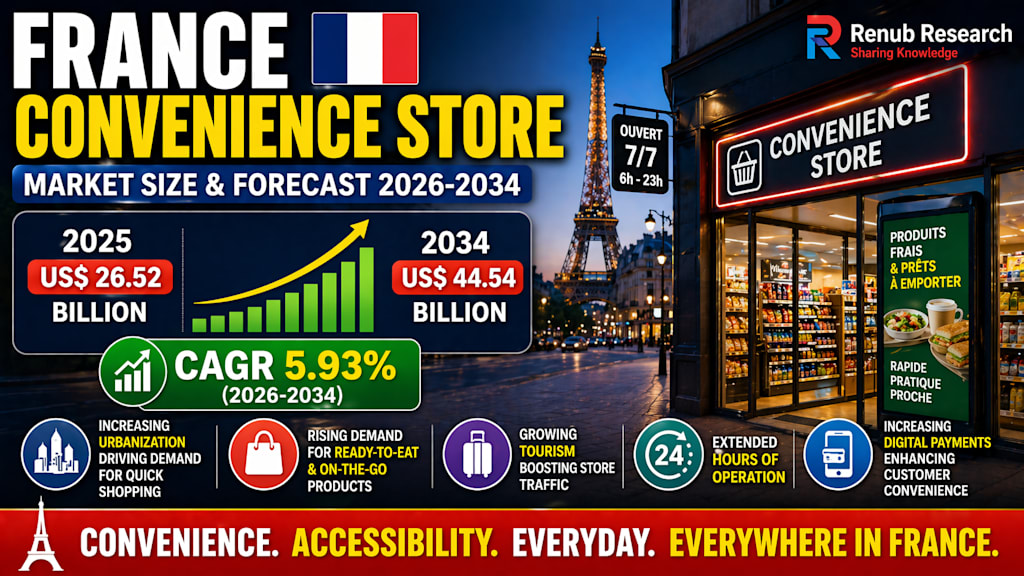
According to Renub Research, the France Convenience Store Market is projected to grow from US$ 26.52 Billion in 2025 to US$ 44.54 Billion by 2034, expanding at a CAGR of 5.93% from 2026 to 2034. This robust growth highlights how deeply consumer behavior is changing across French cities and towns.
From Paris to Marseille, from students to professionals, from tourists to busy families, millions of people are embracing smaller, faster, and smarter retail formats.
Convenience Stores Are No Longer Just “Corner Shops”
Traditional supermarkets and hypermarkets still dominate large grocery purchases, but convenience stores are winning in one important category: time.
French consumers today live faster-paced lives than ever before. Many urban workers commute daily, manage packed schedules, and prefer making quick stops rather than weekly bulk shopping trips. Convenience stores allow them to buy what they need instantly—snacks, beverages, ready meals, fresh bakery items, toiletries, or household essentials—without navigating large retail spaces.
This shift is especially visible in busy urban centers where time is a premium commodity. Small-format stores located near metro stations, offices, universities, and residential districts are becoming indispensable.
Convenience is no longer a luxury—it is now an expectation.
Urbanization Is Fueling Market Expansion
France is one of Europe’s most urbanized nations. Approximately 82% of the population lives in urban areas, and this number continues to rise. As more people move into densely populated cities, access to large suburban supermarkets becomes less practical.
That reality creates a perfect environment for convenience stores.
Cities such as Paris, Lyon, Marseille, Toulouse, Lille, Strasbourg, and Nice are seeing stronger demand for neighborhood retail outlets where consumers can quickly purchase everyday essentials close to home or work.
Smaller households are also contributing to this trend. Single professionals and couples often shop in smaller quantities more frequently, making convenience stores ideal for their lifestyles.
Fresh Food Is Changing the Industry
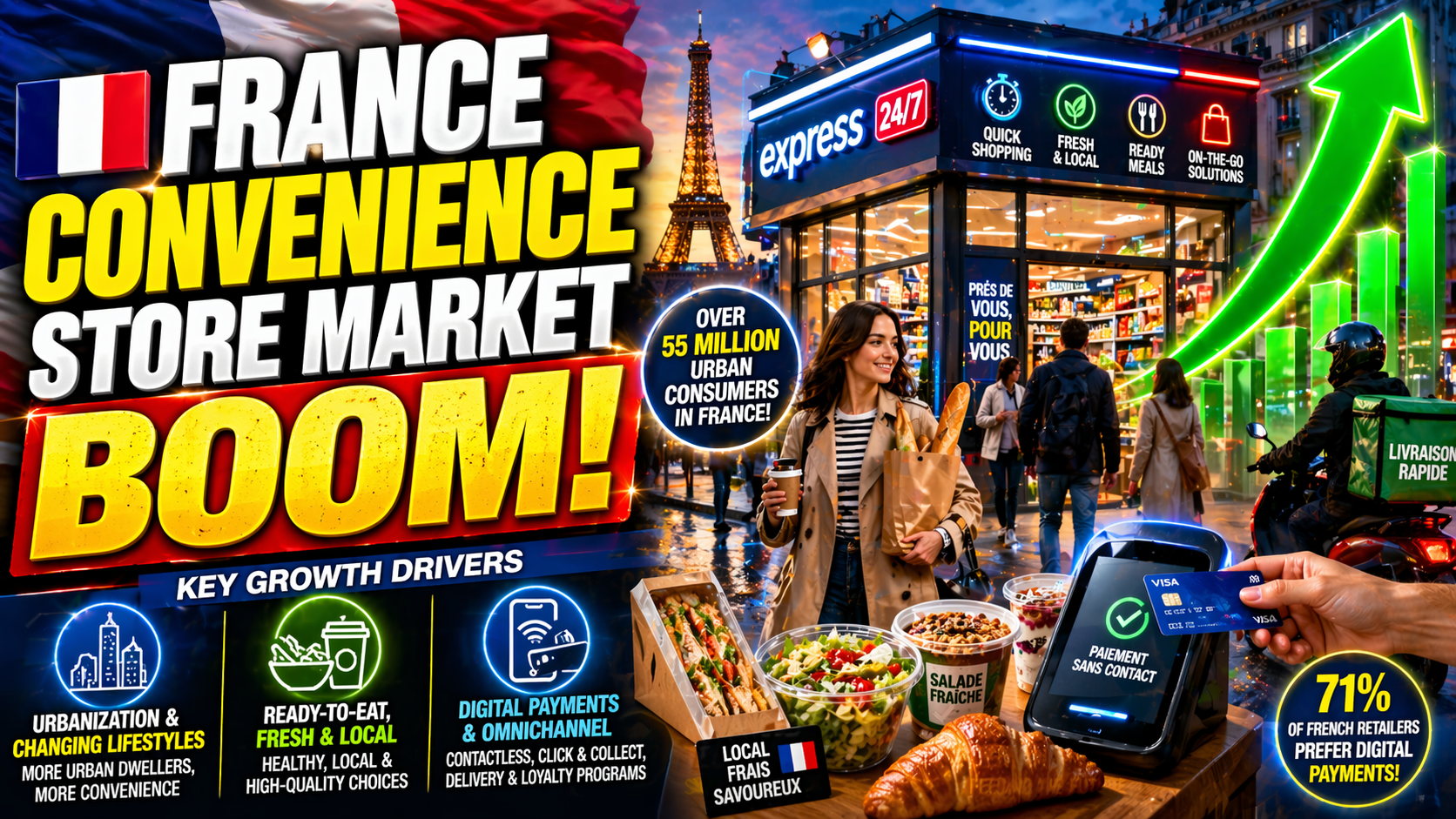
One of the biggest myths about convenience stores is that they only sell packaged snacks and soft drinks. In France, that perception is changing fast.
Today’s French convenience stores increasingly offer:
- Fresh sandwiches
- Salads
- Fruit cups
- Fresh pastries
- Baguettes
- Organic snacks
- Regional specialties
- Ready-to-eat meals
- Healthy beverages
French consumers value quality, freshness, and authenticity. Retailers understand that success depends on combining speed with premium food choices.
Many stores now partner with local bakers, food suppliers, and regional producers to bring high-quality fresh items into compact retail formats. This strategy also helps stores compete with larger supermarket chains.
As health awareness rises, demand for natural ingredients, eco-friendly packaging, and minimally processed foods is expected to grow even further.
Digital Payments Are Reshaping Customer Experience
Technology is becoming a major growth driver in France’s convenience retail market.
Modern convenience stores are rapidly adopting:
- Contactless card payments
- Mobile wallets
- Self-checkout systems
- Loyalty apps
- Click-and-collect services
- Online ordering integration
- Delivery app partnerships
France is among Europe’s leaders in digital payment adoption. Consumers increasingly prefer cards and mobile transactions over cash because of speed and convenience.
For convenience stores, faster checkout means shorter lines, better customer satisfaction, and higher repeat visits.
This digital transformation is helping even small-format stores compete in a rapidly modernizing retail environment.
Tourism Adds Another Layer of Growth
France remains one of the world’s most visited countries, attracting millions of tourists annually. Visitors often rely on convenience stores for quick purchases such as bottled water, snacks, travel essentials, local treats, and ready meals.
Stores located near:
- Tourist attractions
- Airports
- Railway stations
- Hotels
- Beaches
- Historic districts
benefit significantly from visitor spending.
This is particularly true in Paris, Marseille, Nice, and Strasbourg, where tourism activity directly supports convenience store revenues.
Paris Leads the Market
Paris is France’s most dynamic convenience store market.
The city’s dense population, large commuter base, tourism traffic, and premium consumer expectations make it a prime location for neighborhood retail stores.
Parisians often seek:
- Fresh organic products
- Premium coffee
- Gourmet snacks
- Healthy ready meals
- Late-night shopping access
Because of this demand, convenience retailers in Paris continuously upgrade store layouts, product quality, and customer experience.
Marseille and Strasbourg Show Regional Strength
Marseille
Marseille’s convenience market reflects its multicultural population and Mediterranean lifestyle. Consumers look for fresh produce, affordable meals, and culturally diverse food options including Mediterranean and North African flavors.
Seasonal tourism and port activity also create extra retail demand.
Strasbourg
As a major administrative and European business hub, Strasbourg benefits from students, professionals, and tourists. Demand is strong for bakery items, ready meals, organic foods, and local specialties.
Its compact urban design also favors pedestrian-friendly neighborhood stores.
Challenges Facing the Market
Despite strong momentum, the sector still faces several challenges.
High Operating Costs
Urban rents, wages, and energy costs in France can be expensive. Convenience stores operate in smaller spaces with tighter margins, making profitability more challenging.
Competition from Supermarkets
Large supermarket chains are launching smaller city-center formats that directly compete with independent convenience stores.
Fresh Food Waste
Selling perishable products like salads, dairy, sandwiches, and produce requires excellent inventory management. Overstocking leads to waste, while understocking disappoints customers.
Supply Chain Pressure
Frequent deliveries are needed because stores have limited storage space. Any disruption can quickly affect product availability.
Product Categories Driving Growth
Several categories are helping convenience stores expand in France:
Frozen Food
Frozen meals, vegetables, desserts, and pastries offer convenience plus longer shelf life.
Meat and Poultry
Packaged deli meats and ready-to-cook poultry remain popular among smaller households.
Cereal-Based Products
Bread, croissants, cereals, snack bars, and biscuits align perfectly with France’s bakery culture.
Raw Foods
Fresh fruits, vegetables, herbs, and quick-cook ingredients appeal to health-conscious consumers.
Why Investors and Retailers Are Watching Closely
The France convenience store market is attractive because it combines several long-term trends:
- Urbanization
- Busy lifestyles
- Demand for speed
- Growth in digital payments
- Premium food consumption
- Tourism recovery
- Smaller households
- Frequent shopping behavior
Retailers who adapt quickly with smart store locations, better food offerings, and seamless technology will likely capture major gains over the next decade.
Final Thoughts
France’s convenience store industry is no longer a secondary retail channel—it is becoming a core part of modern daily life.
As French consumers prioritize speed, freshness, and convenience, these stores are evolving into sophisticated mini-retail hubs that blend grocery shopping, foodservice, and digital commerce.
With the market forecast to reach US$ 44.54 Billion by 2034, the future looks highly promising. Convenience stores that embrace technology, local food culture, and changing lifestyles are set to thrive in France’s next retail chapter.
About the Creator
Enjoyed the story? Support the Creator.
Subscribe for free to receive all their stories in your feed.
Comments
There are no comments for this story
Be the first to respond and start the conversation.