
Food Service Pasta Market Expands Rapidly with Premium Dining Trends
The Food Service Pasta Market is experiencing steady growth driven by increasing demand for convenient, versatile, and affordable meal options across restaurants, cafés, hotels, and catering services.

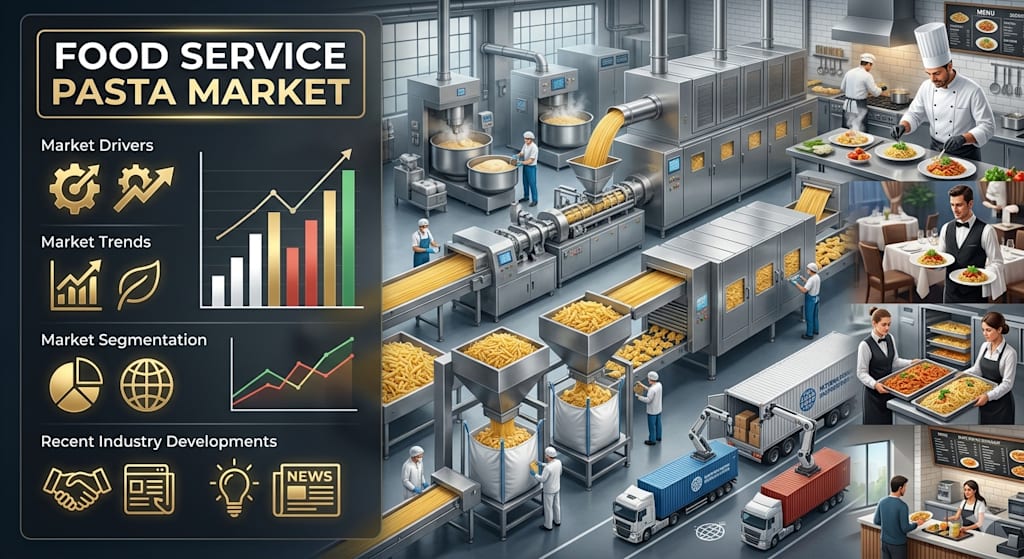
According to IMARC Group's latest research, The global food service pasta market size reached USD 5,355.2 Million in 2025. Looking forward, IMARC Group expects the market to reach USD 6,724.8 Million by 2034, exhibiting a growth rate (CAGR) of 2.60% during 2026-2034.
How AI is Reshaping the Future of the Food Service Pasta Market
- Inventory Management and Demand Forecasting: AI-powered systems analyze ordering patterns, seasonal trends, and restaurant preferences to predict pasta demand accurately. Foodservice operators using these tools achieve 30 percent improvement in inventory turnover, reducing waste and storage costs while maintaining consistent supply availability.
- Automated Quality Control and Consistency: Machine learning algorithms monitor pasta texture, color, and cooking performance across production batches in real-time. AI systems detect quality deviations instantly, ensuring every shipment meets foodservice kitchen standards for consistent cooking results and customer satisfaction.
- Supply Chain Optimization and Logistics: AI platforms track shipments across distribution networks, predicting delivery delays and optimizing routing efficiency. Real-time monitoring reduces spoilage risk by approximately 20 percent while improving on-time delivery performance for restaurants and catering operations.

Food Service Pasta Industry Overview
Europe dominates global food service consumption with Italy leading at 23 kilograms per capita annually, while cultural heritage drives robust pasta demand across full-service restaurants, hotels, and catering establishments. Italy's rich culinary tradition influences international foodservice standards, with 17 percent of Italian consumers eating pasta six to seven times weekly. Strong tourism industries across European regions generate institutional food service demand for hotels, restaurant chains, and event catering, solidifying Europe's market leadership position.
Food Service Pasta Market Trends and Drivers
Explosive Growth of Takeout and Delivery Services: Online food delivery platforms are transforming foodservice pasta consumption globally. The worldwide online food delivery market reached USD 134.9 Billion and continues accelerating, creating substantial demand for high-quality pasta suitable for packaging and transport. Restaurants leverage pasta's adaptability and convenience, making it a preferred delivery option that maintains quality during transit.
Rising Consumer Demand for Healthier Pasta Options: Health-conscious consumers drive rapid adoption of organic, gluten-free, vegan, and low-carbohydrate pasta varieties across foodservice channels. Manufacturers responding to wellness trends report strong performance in premium segments, with consumers willing to pay higher prices for nutritious alternatives. This shift encourages restaurants to expand menu offerings beyond traditional wheat-based products.
Sustainability and Premium Positioning in Foodservice: Foodservice establishments increasingly emphasize eco-friendly practices and artisanal product positioning. Sustainable packaging, locally-sourced ingredients, and premium organic pasta appeal to environmentally conscious diners. European restaurants particularly benefit from positioning authentic, responsibly-sourced pasta as core menu differentiators, driving stronger customer loyalty and premium pricing.
Food Service Pasta Market Segmentation
By Product Type
- Dry Pasta: Dominant segment representing largest market share; offers extended shelf life, cost-efficiency, and versatility for commercial kitchens
- Fresh Pasta: Premium segment appealing to full-service restaurants emphasizing quality and authenticity
- Frozen Pasta: Growing segment including filled pasta, simple varieties, and ready-meal options meeting convenience-driven foodservice demand
By Foodservice Channel
- Full-Service Restaurants: Largest channel segment with diverse pasta menu offerings and premium positioning
- Hotels and Leisure: Significant segment serving institutional dining, banquets, and guest restaurants
- Quick Service Restaurants: High-volume segment demanding consistent, quick-cooking pasta products
- Social and Commercial Catering: Expanding segment serving events, corporate functions, and group dining
- Travel Catering: Growing channel serving airlines, trains, and hospitality venues
- Cash and Carry: Wholesale segment serving independent restaurants and small operators
- Bars and Cafes: Emerging segment offering pasta as casual dining options
Leading Companies Operating in the Global Food Service Pasta Industry
- Ajinomoto Co. Inc.
- Altoni Pasta
- Armanino Foods of Distinction, Inc.
- Barilla G. E R. Fratelli Spa
- Dakota Growers Pasta Company, Inc.
- Ebro Foods S.A.
- F.lli De Cecco di Filippo SpA
- M. Dias Branco
- MAKFA
- Nestle
- Pasta Foods
- Pierino Frozen Foods
- TreeHouse Foods Inc.
Recent News and Developments in the Food Service Pasta Market
- March 2025: Egglife Foods launched POWER PASTA at Expo West, featuring high-protein, low-carbohydrate fresh pasta with twice the protein and 90 percent fewer carbohydrates than conventional varieties. This innovation addresses growing consumer demand for healthier pasta options in both retail and foodservice channels.
- January 2026: Ebro Foods completed acquisition of remaining stake in Bertagni, an Italian fresh pasta maker, strengthening its premium fresh and filled pasta portfolio. The strategic move integrates artisanal production capabilities and enhances Ebro's position in the high-margin fresh pasta foodservice segment.
- May 2025: Barilla relaunched its premium Al Bronzo pasta range with refreshed packaging, new shapes, and production relocated to Italy. The campaign featured collaboration with celebrity influencers, emphasizing heritage and artisanal craftsmanship to attract upscale foodservice establishments and premium restaurant segments.
- March 2025: Grupo Bimbo acquired Rustici Foods, a major US pasta manufacturer, marking strategic entry into North American foodservice markets. This acquisition expands Grupo Bimbo's international presence while strengthening distribution capabilities for established pasta brands serving restaurants and catering operations.
November 2024: Nestle and General Mills partnered to co-manufacture and distribute Annie's Homegrown organic pasta brands, combining resources to increase market reach and operational efficiency. This collaboration strengthens supply chain capabilities serving growing foodservice demand for certified organic pasta products.
Note: If you require specific details, data, or insights not currently included in the scope of this report, we are happy to accommodate your request. As part of our customization service, we will gather and provide the additional information you need, tailored to your specific requirements. Please let us know your exact needs, and we will ensure the report is updated accordingly to meet your expectations.
About the Creator
Michael Richard
Michael Richard is a Market Research Expert specializing in market intelligence, competitive analysis, and data-driven insights. He helps organizations understand trends and emerging opportunities through in-depth research.
Enjoyed the story? Support the Creator.
Subscribe for free to receive all their stories in your feed.
Comments
There are no comments for this story
Be the first to respond and start the conversation.