
Food Packaging Market Outlook: Sustainable Solutions and Growth Opportunities
The Food Packaging Market is experiencing strong growth driven by increasing demand for safe, convenient, and sustainable packaging solutions across the food industry.

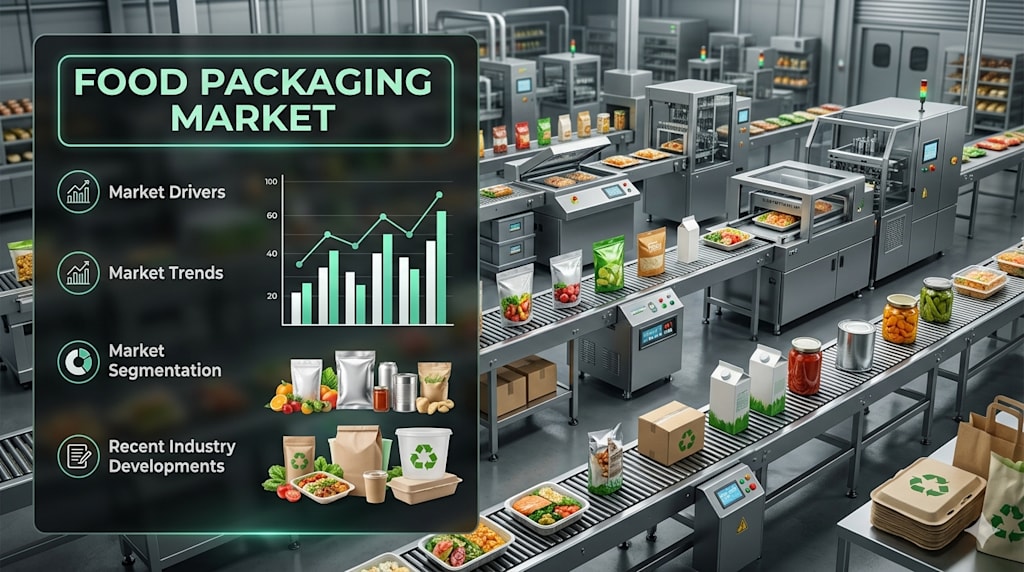
According to IMARC Group's latest research publication, The global food packaging market size was valued at USD 405.44 Billion in 2024. The market is projected to reach USD 651.66 Billion by 2033, growing at a CAGR of 4.86% from 2025-2033.
How AI is Reshaping the Future of Food Packaging Market
- Real-Time Freshness Monitoring and Spoilage Prevention: Machine learning systems analyze data from embedded sensors to predict food spoilage with over 95% accuracy, reducing waste by up to 30% in pilot programs. AI-powered freshness indicators automatically change color based on chemical changes, alerting consumers and retailers before products expire.
- Automated Quality Control and Defect Detection: Computer vision systems powered by deep learning achieve 99.9% defect detection rates on packaging production lines. These automated inspection systems identify packaging flaws, labeling errors, and contamination at speeds impossible for manual inspection, reducing customer complaints by 50% while cutting inspection costs by 80%.
- Sustainable Material Design and Optimization: AI algorithms test thousands of packaging design variations to minimize material usage while maintaining structural integrity. Companies using AI-driven optimization have achieved 18% reductions in plastic usage and 25% decreases in carbon footprint while ensuring package durability across varying environmental conditions.
Food Packaging Industry Overview
Sustainability imperatives and regulatory pressures are fundamentally reshaping the global food packaging landscape. Global emissions from plastics account for 3.3% of total emissions, approximately 54.6 Billion Tons of CO2 equivalent, driving unprecedented investment in eco-friendly alternatives. Major corporations pledged over 2 Billion USD toward sourcing food-grade recycled plastics and creating marketplaces for recycled materials. Consumers demonstrate willingness to pay 1 to 3 percent premiums for sustainable packaging across different regions, while governments implement strict regulations mandating recyclable and biodegradable materials, accelerating industry transition from traditional plastics toward plant-based polymers and compostable solutions.
Food Packaging Market Trends & Drivers
The explosive growth of e-commerce and home delivery is revolutionizing packaging requirements across food sectors. India's online food ordering market reached USD 28.3 Billion and continues expanding rapidly as digital platforms transform consumer purchasing behavior. Ready-to-eat meals, meal kits, and direct-to-consumer food brands require specialized packaging featuring tamper-evident seals, temperature control, spill-proof designs, and stackable formats optimized for last-mile delivery. In February 2024, Amcor partnered with Stonyfield Organic launching the first all-polyethylene spouted pouch for yogurt using AmPrima Plus film, modernizing traditional packages while increasing sustainability and recyclability. Heat-retaining containers, single-serve portions, and microwavable packaging address convenience needs while lightweight designs reduce shipping costs. This delivery-driven demand creates opportunities for innovative packaging solutions balancing functionality, safety, and environmental responsibility across expanding urban markets.
Technological breakthroughs in smart and active packaging are creating entirely new product categories beyond traditional protective containers. In May 2024, Tetra Pak partnered with the University of Georgia opening North America's first Tetra Recart trial facility, enabling food companies to test environmentally friendly alternatives to conventional canning. Intelligent packaging incorporating freshness indicators, QR codes, temperature monitoring, and antimicrobial agents extends shelf life while providing real-time quality information to consumers and supply chain operators. In January 2025, INEOS Styrolution successfully demonstrated mechanically recycled polystyrene for yogurt cups through advanced sorting, hot washing, and pelletizing processes requiring cross-value chain collaboration. Active packaging systems releasing oxygen scavengers or moisture absorbers maintain optimal food conditions, while NFC-enabled prototypes extend perishable seafood shelf life by 14 days through automated antimicrobial release. These innovations address food safety concerns, reduce waste, and align with consumer expectations for transparency and quality assurance in packaged products.
Government initiatives and industry partnerships are accelerating sustainable packaging adoption across major markets worldwide. In April 2025, India's Ministry of Health launched a national sustainable food packaging initiative unveiling guidelines and labeling systems for eco-friendly materials, with over 1,500 stakeholders participating in Mumbai consultations. The program finalized recycled PET usage standards while promoting industry collaboration toward recyclable and biodegradable alternatives. In January 2025, Kraft Heinz inaugurated its Global Packaging Innovation Challenge soliciting sustainable flexible solutions that are recyclable, compostable, durable, and user-friendly from startups, universities, and businesses worldwide. Chennai-based startups are transforming packaging through bagasse, cornstarch, and areca leaf products as businesses prioritize eco-conscious practices. In May 2025, Diamond Edge Ventures invested in Canadian startup Fresher Sustainable Technologies developing FreshrPack technology integrating natural antimicrobial agents onto compostable, recyclable films for fresh proteins. These collaborative efforts between governments, corporations, and innovators demonstrate growing commitment toward circular economy principles and environmental stewardship in food packaging.
Leading Companies Operating in the Global Food Packaging Industry
- Amcor PLC
- Crown Holdings Incorporated
- Owens-Illinois Inc.
- Tetra Pak Ltd.
- American Packaging Corporation
- Ball Corporation
Food Packaging Market Report Segmentation
By Packaging Type:
- Flexible Packaging
- Paper and Paperboard Packaging
- Rigid Plastic Packaging
- Glass Packaging
- Metal Packaging
- Others
Flexible packaging holds the biggest market with a share of 49.5% due to its versatility, affordability, and excellent performance across multiple food applications.
By Application:
- Bakery, Confectionary, Pasta, and Noodles
- Dairy Products
- Sauces, Dressings, and Condiments
- Snacks and Side Dishes
- Convenience Foods
- Meat, Fish, and Poultry
- Fruits and Vegetables
- Others
Bakery, confectionery, pasta, and noodles represent the largest market with a share of 24.4%, driven by widespread consumption and increasing requirements for practical packaging solutions.
Regional Insights:
- North America (United States, Canada)
- Asia Pacific (China, Japan, India, South Korea, Australia, Indonesia, Others)
- Europe (Germany, France, United Kingdom, Italy, Spain, Russia, Others)
- Latin America (Brazil, Mexico, Others)
- Middle East and Africa
North America exhibits a clear dominance in the food packaging market with a share of 31.0% due to increased customer demand for processed foods and various advancements in packaging technology sectors.
Recent News and Developments in Food Packaging Market
- May 2025: Diamond Edge Ventures (Mitsubishi Chemical Group's corporate venture wing) participated in an oversubscribed seed funding round for Canadian startup Fresher Sustainable Technologies, accelerating scale-up of their active food packaging extending shelf life and reducing waste. Freshr's proprietary FreshrPack technology integrates natural antimicrobial agents onto packaging films offering compostable, recyclable, moisture-resistant solutions tailored for fresh proteins like fish, supporting Mitsubishi Chemical's KAITEKI Vision 35 strategy and global expansion initiatives.
- April 2025: India's Ministry of Health and Family Welfare, coordinating with FSSAI, launched a national initiative promoting sustainable food packaging, unveiling new guidelines and labeling systems identifying eco-friendly materials. The initiative includes finalized recycled PET usage in food packaging, announced during Mumbai stakeholder consultation attended by over 1,500 participants, emphasizing industry collaboration, regulatory alignment, and innovation transitioning away from conventional plastics toward recyclable and biodegradable alternatives.
- January 2025: Kraft Heinz, collaborating with the Rethinking Materials summit, inaugurated its Global Packaging Innovation Challenge soliciting sustainable flexible packaging solutions that are recyclable, compostable, durable, and user-friendly for food products. The competition targets startups, universities, and businesses worldwide, reflecting growing industry commitment toward environmental responsibility and circular economy principles in packaging development.
- February 2024: Amcor partnered with Stonyfield Organic and Cheer Pack North America launching the first all-polyethylene spouted pouch for YoBaby yogurt, using AmPrima Plus film and Vizi caps to increase sustainability and recyclability. The innovative design modernized traditional layered packaging while maintaining high performance and reducing plastic usage, demonstrating feasibility of mono-material solutions for dairy applications.
- April 2024: American Packaging Corporation launched new recyclable technology for pet food packaging, replacing non-recyclable laminates with polyethylene-based materials. APC utilizes modern materials and processes accommodating varying package sizes following recyclability guidelines, addressing growing demand for environmentally responsible packaging across pet care categories while maintaining product protection standards.
Note: If you require specific details, data, or insights that are not currently included in the scope of this report, we are happy to accommodate your request. As part of our customization service, we will gather and provide the additional information you need, tailored to your specific requirements. Please let us know your exact needs, and we will ensure the report is updated accordingly to meet your expectations.
About the Creator
Michael Richard
Michael Richard is a Market Research Expert specializing in market intelligence, competitive analysis, and data-driven insights. He helps organizations understand trends and emerging opportunities through in-depth research.
Enjoyed the story? Support the Creator.
Subscribe for free to receive all their stories in your feed.
Comments
There are no comments for this story
Be the first to respond and start the conversation.