
Flavors And Fragrances Market Expands Rapidly with Natural Innovations
The flavors and fragrances market is growing due to rising demand for enhanced sensory experiences in food, beverages, and personal care products worldwide.

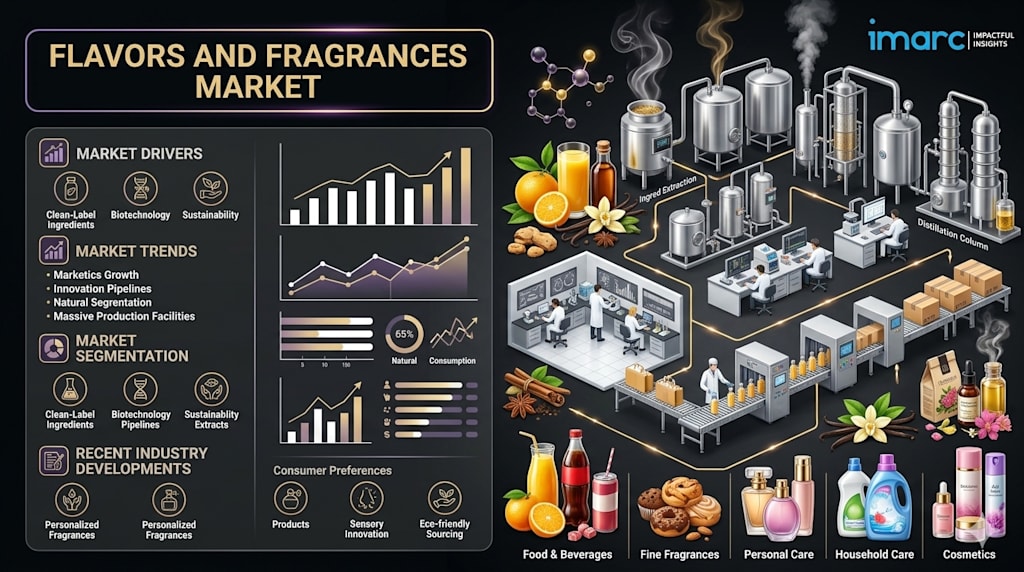
According to IMARC Group's latest research publication, the global flavors and fragrances market reached USD 34.3 Billion, with projections to expand to USD 45.2 Billion, driven by expanding F&B industries and rising consumer demand for natural, premium-quality sensory experiences.
How AI is Transforming the Flavors and Fragrances Industry
- Predictive Formulation and Scent Profiling: AI algorithms analyze consumer preference patterns and seasonal trends to predict demand for specific flavor and fragrance profiles. Companies using AI-driven formulation tools achieve faster product development cycles and deliver customized scents aligned with emerging consumer preferences and market opportunities.
- Automated Quality and Purity Testing: Machine learning-powered sensory analysis systems detect inconsistencies in flavor profiles and fragrance batches by analyzing chemical compound ratios in real-time. This automation minimizes substandard products, ensures batch consistency, and reduces costly manual quality control procedures.
- Supply Chain Traceability for Natural Ingredients: AI combined with blockchain technology tracks sourcing of botanicals and essential oils from origin through production, verifying sustainability claims and ingredient authenticity. This end-to-end visibility builds consumer trust and ensures compliance with clean-label and organic certifications.
Industry Overview
The flavors and fragrances sector has become integral to the food and beverage, personal care, and household product industries. The rising consumer preference for natural and clean-label ingredients reflects a broader shift toward health-conscious purchasing decisions. Companies are investing heavily in sustainable sourcing practices, with a focus on biodegradable ingredients and environmentally responsible production. The industry is experiencing notable consolidation, with major players acquiring smaller, innovation-focused firms to expand product portfolios. Government initiatives promoting natural product development, combined with stricter regulations on synthetic additives, are reshaping manufacturing standards globally, creating opportunities for companies offering certified organic and sustainably sourced flavors and fragrances.
Market Trends & Drivers
The expanding personal care industry remains the primary growth engine for fragrances. As consumers increasingly invest in self-care, premium beauty products, and wellness routines, fragrance demand in skincare, haircare, and cosmetics continues to surge. Fragrances serve multiple functions—they enhance sensory appeal, build brand identity, and create emotional connections with consumers. Luxury fragrance segments have seen particularly strong growth, with consumers willing to pay premium prices for niche, artisanal scents. The rise of social media influencers and beauty brands collaborating with fragrance houses has amplified demand, especially among younger consumers exploring personalized and distinctive scent profiles that reflect their lifestyle and values.
Continuous innovation in food and beverage manufacturing is spurring demand for novel and sophisticated flavor profiles. Manufacturers are responding to health-conscious consumers by developing better-tasting functional beverages, plant-based protein drinks, and low-sugar alternatives that require precisely formulated flavor masking. The premium beverage segment—including craft sodas, botanical drinks, and ready-to-drink cocktails—demands complex, distinctive flavors unavailable in commodity solutions.
Consumers increasingly demand transparency about ingredient sourcing and environmental impact, fundamentally reshaping the flavors and fragrances landscape. Synthetic ingredients face growing scrutiny, driving investment in natural and nature-identical alternatives derived from sustainable sources. Companies launching eco-friendly packaging and biodegradable formulations gain competitive advantage, particularly among Gen Z consumers willing to pay premiums for sustainable products. The sustainable packaging collaboration innovations demonstrate industry commitment to reducing carbon footprints.
Leading Companies Operating in the Global Flavors and Fragrances Industry:
- ADM
- Bell Flavors & Fragrances, Inc.
- DSM-Firmenich
- Givaudan S.A.
- International Flavors & Fragrances Inc.
- Kerry Group plc
- Mane SA
- Robertet Group
- Sensient Technologies Corporation
- Symrise AG
- T. Hasegawa USA Inc.
- Takasago International Corporation
- Vigon International, Inc.
Flavors and Fragrances Market Report Segmentation:
By Product Type:
- Nature-Identical (largest segment - cost-effective synthetic compounds chemically identical to natural flavors)
- Artificial
- Natural
By Form:
- Liquid (dominant form - offers better solubility and dispersion)
- Dry
By Application:
- Beverages (largest application)
- Dairy and Frozen Desserts
- Bakery and Confectionary Products
- Savories and Snacks
- Others
Global Fragrances Market:
By Application:
- Soap and Detergents (largest segment)
- Cosmetics and Toiletries
- Fine Fragrances
- Household Cleaners and Air Fresheners
Others
By Ingredients:
- Synthetic (largest segment - cost-effective and consistent)
- Natural
Regional Insights:
By Region:
- North America
- Europe
- Asia Pacific
- Latin America
- Middle East and Africa
North America exhibits clear market dominance, accounting for the largest flavors and fragrances market share due to the region's highly developed food and beverage industry, presence of major multinational corporations, and affluent consumer base seeking premium and specialty products.
Recent News and Developments in Flavors and Fragrances Market
- Takasago International Corporation has accelerated research and development initiatives leveraging artificial intelligence and computational science to create innovative flavors and fragrances with reduced environmental impact. The company is pioneering efficient synthesis processes using catalytic and flow manufacturing technologies to minimize waste and production costs.
- Firmenich SA, the world's largest privately-owned perfume and taste company, unveiled its 2030 Conscious Perfumery initiative targeting a portfolio comprising 99% ultimately or partially biodegradable ingredients. This commitment reflects industry-wide momentum toward sustainability and cleaner formulations.
- V. MANE FILS SA launched revolutionary eco-friendly fragrance microcapsules for fabric softeners, providing consumers with sustainable alternatives to traditional encapsulation methods. The company is simultaneously leveraging biotechnology and new synthetic molecules to expand its portfolio of natural flavors and fragrances.
Note: For detailed specifications, additional data, regional breakdowns, or customized insights tailored to your specific market segment or business requirements, we're happy to customize this report further. Please let us know your exact needs, and we'll ensure the content is updated accordingly.
About the Creator
sujeet. imarcgroup
With 2 years of hands-on experience at IMARC Group, I have conducted in-depth market research and analysis across diverse industries including technology, healthcare, agriculture, and consumer goods.
Enjoyed the story? Support the Creator.
Subscribe for free to receive all their stories in your feed.
Comments
There are no comments for this story
Be the first to respond and start the conversation.