
Flavored Milk Market Is Booming as Consumers Seek Healthier and Convenient Beverage Choices
Rising demand for nutritious ready-to-drink beverages, product innovation, and youth-focused consumption trends are driving strong global market growth

The global beverage industry is rapidly evolving as consumers become more health-conscious while still demanding convenience, taste, and variety. Among the categories experiencing strong momentum, flavored milk has emerged as one of the most attractive segments within the dairy industry. Combining nutrition with enjoyable flavors, flavored milk has become increasingly popular among children, teenagers, young adults, and even working professionals looking for healthier alternatives to sugary carbonated drinks.
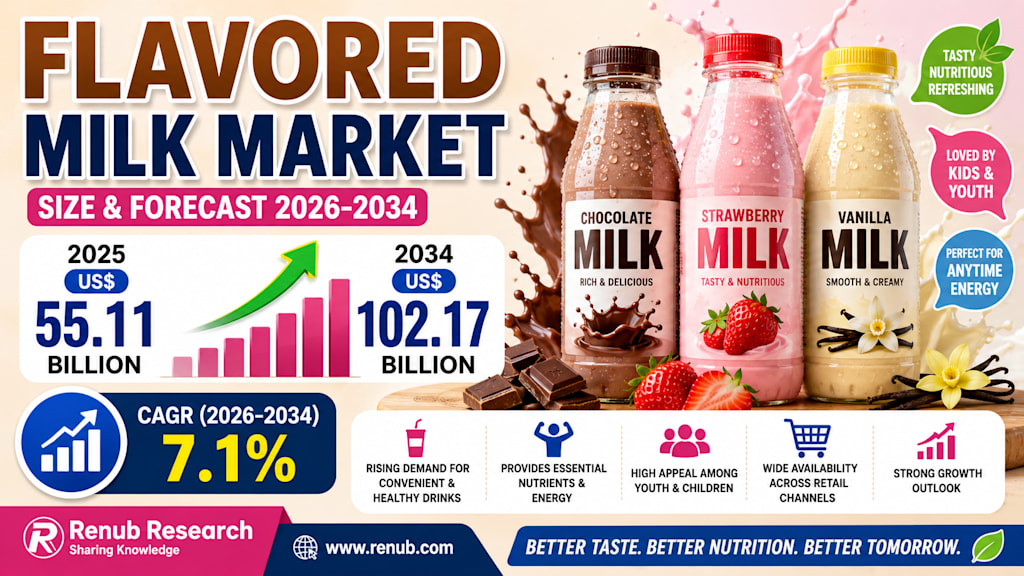
According to Renub Research, the flavored milk market is expected to grow from US$ 55.11 Billion in 2025 to US$ 102.17 Billion in 2034, registering a Compound Annual Growth Rate (CAGR) of 7.1% during 2026–2034. The growth is being fueled by increasing consumer demand for convenient and nutritious beverages, rapid product innovation, expanding retail distribution, and rising awareness about healthy lifestyles.
As modern lifestyles continue to become busier and consumers prioritize on-the-go nutrition, flavored milk is transforming from a children-focused product into a mainstream functional beverage category with global appeal.
What Makes Flavored Milk So Popular?
Flavored milk is a dairy-based beverage made by blending milk with flavors such as chocolate, strawberry, vanilla, banana, and other natural or artificial ingredients. Many products are also fortified with vitamins, minerals, and additional nutrients to improve their nutritional profile. In addition to taste, flavored milk offers essential nutrients such as calcium, protein, potassium, and vitamins D and B12, making it attractive to consumers seeking both flavor and health benefits.
One of the biggest advantages of flavored milk is its ability to make dairy consumption more appealing to people who may dislike the taste of regular milk. Children and teenagers, in particular, often prefer flavored varieties, helping parents and schools encourage milk intake while still providing essential nutrients for growth and development.
Flavored milk is now available in multiple formats including ready-to-drink bottles, cartons, powdered mixes, and premixes. This flexibility has widened its appeal across homes, schools, offices, gyms, cafes, and convenience stores.
Convenience and Nutrition Are Fueling Market Growth
A major growth driver behind the flavored milk market is the increasing demand for beverages that are both convenient and nutritious. Modern consumers want products that fit into busy routines without sacrificing health benefits. Flavored milk meets this need by combining portability, taste, and nutrition into a single ready-to-drink solution.
Parents are increasingly replacing carbonated soft drinks with flavored milk because it provides essential nutrients while still being enjoyable for children. This shift is part of a broader movement toward healthier consumption habits, especially in households where nutrition awareness is rising.
Packaging innovation is also supporting this trend. Convenient single-serve bottles and cartons make flavored milk easy to carry, store, and consume during school, travel, work, or exercise. As urban lifestyles continue to accelerate globally, demand for portable dairy beverages is expected to rise even further.
The report also highlights product launches such as Lactalis’ organic flavored milk range introduced in August 2025, targeting health-conscious consumers and aligning with growing demand for natural and organic products.
Children and Young Consumers Are Driving Demand
Youth-focused consumption remains one of the strongest pillars supporting the flavored milk industry. Children, teenagers, and young adults are naturally attracted to sweet flavors, colorful packaging, and innovative beverage experiences. Unlike plain milk, flavored milk offers variety and excitement while still delivering important nutrients.
Schools and educational institutions continue to play a significant role by incorporating flavored milk into meal programs. This not only encourages dairy consumption but also supports nutritional intake during critical growth stages.
Marketing campaigns aimed at younger demographics are also helping brands strengthen engagement. Attractive packaging, social media promotions, and flavor innovations have made flavored milk more appealing than ever before.
Manufacturers are constantly introducing new options such as chocolate, strawberry, vanilla, caramel, banana, and mixed fruit variants to maintain consumer interest. The report mentions the launch of new flavors including Chocolate, Strawberry, and Vanilla under the “Clover the Rainbow Milk with a Splash of Flavour” range in May 2023.
As younger populations continue to grow in many emerging economies, demand from this consumer segment is expected to remain a major growth engine for the market.
Product Innovation Is Transforming the Industry
Innovation is becoming increasingly important in the flavored milk market as brands compete for consumer attention. Companies are introducing low-sugar, organic, fortified, high-protein, and functional variants to meet evolving consumer preferences.
Health-conscious consumers are no longer satisfied with traditional flavored milk products that contain high sugar levels. Instead, they are looking for beverages that balance taste with wellness benefits. As a result, manufacturers are experimenting with natural sweeteners, added protein, probiotics, vitamins, and reduced-calorie formulations.
Packaging innovation is also playing a role in market expansion. Modern consumers increasingly prefer resealable, portable, and visually appealing packaging formats that support convenience and freshness.
Retail expansion is equally important. Flavored milk products are now widely available across supermarkets, convenience stores, vending machines, cafes, specialty stores, and online platforms. E-commerce has especially become a powerful distribution channel because consumers can compare brands, flavors, and prices more easily.
The report notes that Coca-Cola strengthened its flavored milk distribution network in Southeast Asia in October 2025 to capitalize on rising dairy demand in the region.
Sugar Concerns Remain a Key Challenge
Despite strong growth opportunities, the flavored milk market faces increasing scrutiny regarding sugar content. Many flavored milk products contain added sugars to improve taste, raising concerns among health-conscious consumers, parents, and health organizations.
Growing awareness about obesity, diabetes, and dental health is making consumers more selective about sugary beverages. Governments and public health agencies are also encouraging reduced sugar consumption, which could affect future demand for traditional flavored milk products.
This challenge is pushing manufacturers to innovate aggressively. Low-sugar, low-calorie, and naturally sweetened alternatives are becoming increasingly important as brands attempt to maintain consumer trust while preserving flavor appeal.
Balancing taste and health will likely remain one of the industry’s most important priorities over the next decade.
Plant-Based Alternatives Are Intensifying Competition
Another major challenge for the flavored milk industry is the rapid rise of plant-based beverages such as almond milk, oat milk, soy milk, and coconut milk. These products are increasingly marketed as healthier, environmentally friendly, and suitable for consumers with lactose intolerance or vegan preferences.
The growth of veganism and plant-based lifestyles is encouraging more consumers to explore dairy alternatives. Beverage companies are heavily promoting these products, intensifying competition for traditional dairy-based flavored milk.
In response, dairy companies are diversifying product portfolios and introducing healthier formulations, cleaner labels, and sustainability-focused branding to remain competitive.
The ability to adapt to changing consumer preferences will play a major role in determining long-term market leadership.
Flavored Fresh Milk Segment Continues to Expand
The flavored fresh milk market is gaining popularity because consumers increasingly associate fresh dairy products with better taste and higher nutritional quality. Fresh flavored milk is widely consumed by children, teenagers, and adults as a healthier beverage option.
The expansion of supermarket chains and refrigerated distribution networks has improved product accessibility across urban and semi-urban markets. As consumers continue prioritizing fresh and minimally processed food products, this segment is expected to experience steady growth.
Flavored Milk Powder Offers Longer Shelf Life
Flavored milk powder is another important segment within the market. Its longer shelf life, affordability, and ease of transportation make it especially attractive in regions with limited refrigeration infrastructure.
Flavored milk powder is widely used in homes, schools, food service industries, and rural markets because it can be conveniently mixed with water when needed. Manufacturers are also introducing fortified variants with enhanced nutritional profiles to attract health-conscious consumers.
This segment is particularly important in developing economies where cost-effective dairy products remain in high demand.
Plastic Packaging Continues Dominating the Market
Plastic-based packaging remains a dominant packaging choice within the flavored milk market because of its durability, convenience, lightweight nature, and affordability. Plastic bottles are easy to transport and often feature resealable caps that improve convenience for consumers.
The rise of ready-to-drink beverages has further strengthened demand for practical and portable packaging formats. Supermarkets, vending machines, convenience stores, and travel retailers continue to rely heavily on plastic-packaged flavored milk products.
However, sustainability concerns may gradually push the industry toward more recyclable and eco-friendly packaging alternatives in the future.
Convenience Stores and Online Platforms Are Expanding Reach
Convenience stores remain one of the most important distribution channels for flavored milk because they support impulse purchases and quick consumption. Students, office workers, commuters, and travelers frequently purchase single-serve flavored milk products from these outlets.
Online retail is also growing rapidly due to expanding internet penetration, smartphone adoption, and improved logistics systems. Consumers increasingly appreciate the ability to browse multiple products, compare prices, read reviews, and receive home delivery.
Subscription models and bulk purchase discounts are also helping e-commerce platforms attract repeat customers.
Regional Markets Are Showing Strong Momentum
The United States flavored milk market remains well-established due to high dairy consumption and strong consumer awareness regarding nutrition. Educational institutions, convenience stores, and supermarkets continue driving widespread availability.
The United Kingdom market is growing steadily as consumers increasingly seek healthier alternatives to carbonated beverages. Innovative product launches and indulgent flavor trends are helping brands capture attention.
India is emerging as one of the fastest-growing flavored milk markets because of urbanization, rising disposable incomes, and strong dairy production capabilities. Growing awareness about nutrition and demand for ready-to-drink products are fueling expansion.
Saudi Arabia is also witnessing steady growth due to rising health awareness, a young population, and increasing demand for cooling dairy beverages in the region’s hot climate.
Key Companies Continue Investing in Innovation
The flavored milk market includes several major global dairy and food companies actively investing in product innovation, branding, and distribution expansion. Key players covered in the report include Danone SA, Arla Foods, Saputo Inc., The Hershey Company, Fonterra Co-operative Group, Nestlé S.A., Meiji Holdings Co. Ltd., and Amul Industries Pvt Ltd.
These companies are focusing heavily on healthier formulations, premium products, regional expansion, and attractive packaging to strengthen competitive positioning.
Final Thoughts
The flavored milk market is evolving into a highly dynamic and innovation-driven segment within the global beverage industry. Consumers increasingly want beverages that combine convenience, nutrition, taste, and lifestyle appeal, and flavored milk fits perfectly into that demand pattern.
The market’s projected growth from US$ 55.11 Billion in 2025 to US$ 102.17 Billion by 2034 highlights the category’s strong long-term potential.
Although challenges related to sugar content and plant-based competition remain significant, ongoing innovation in healthier products, packaging, and retail accessibility is helping the industry maintain strong momentum.
About the Creator
Enjoyed the story? Support the Creator.
Subscribe for free to receive all their stories in your feed.
Comments
There are no comments for this story
Be the first to respond and start the conversation.