
Facial Care Market Size Is Heading Toward $217 Billion
How science-forward consumers, Asian skincare culture, and personalization tech are reshaping a global industry.
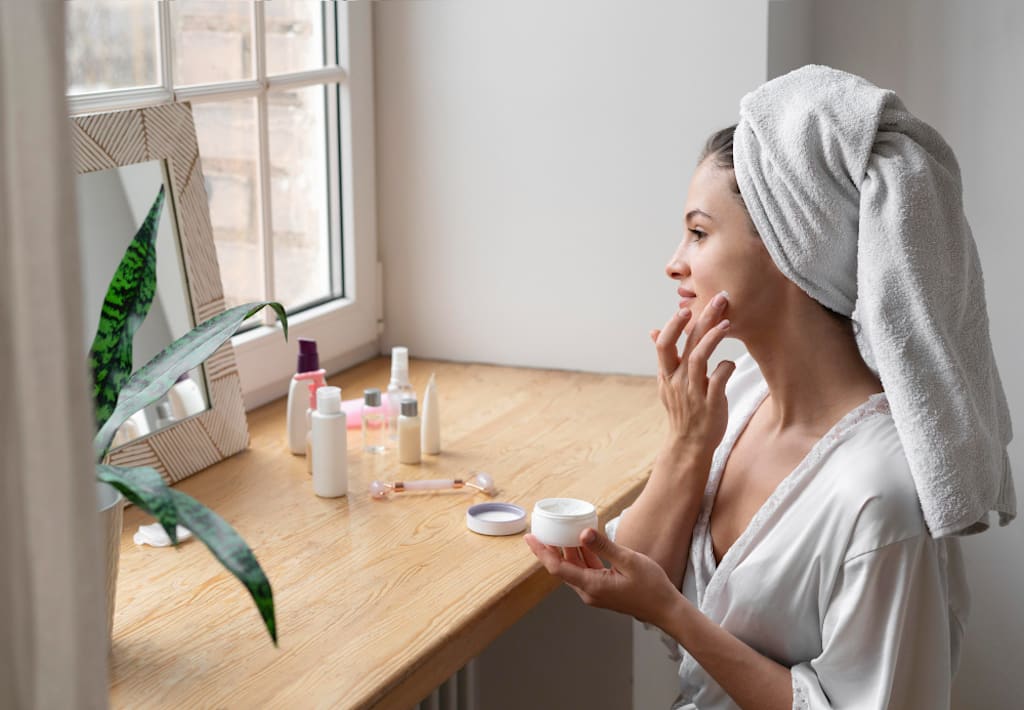
Why Your Face Is Now a $217 Billion Industry
Every morning, before coffee or conversation, hundreds of millions of people wash, tone, moisturize, and treat their faces. That ritual — seemingly personal, even intimate — has quietly become one of the most lucrative categories in global consumer goods. The global Facial Care Market size, currently valued at around $125.3 billion in 2025, is projected to nearly double to $217.1 billion by 2035, growing at a steady compound annual rate of 5.7%. That isn't a bubble. It's a structural shift in how people across the world think about skin health, aging, and self-presentation. Segment-level data on this expansion, including breakdowns by product type and region, is documented in this facial care industry market overview.
The Science-First Shopper
Something changed in how people buy face products. For decades, the category ran on aspiration — beautiful models, prestige packaging, vague promises about "radiance" and "youth." That era isn't over, but it's been complicated by a new kind of buyer: one who reads ingredient labels, follows dermatologists on social media, and asks what a product actually does at the molecular level.
Brands adapted accordingly. L'Oréal, which has operated a dedicated research center for cosmetic science since the 1980s, now publishes peer-reviewed data to support its skincare claims. Minimalist, the Indian direct-to-consumer brand that launched in 2020 with ingredient-led formulations and deliberately plain packaging, reached a reported valuation exceeding $100 million within two years. Its growth was almost entirely driven by consumers who wanted percentages and mechanisms, not marketing copy. The message from these examples is consistent: the modern shopper wants receipts.
Retinoids, niacinamide, peptide complexes, and barrier-support ceramides have become household vocabulary in markets as different as South Korea, Germany, and Brazil. This democratization of dermatological knowledge has expanded the addressable market considerably — people who previously avoided skincare as too complicated or too expensive are now active participants.
Why Asia Continues to Set the Tone
No conversation about facial care growth is complete without examining Asia-Pacific. South Korea's "skincare-first" cultural philosophy — the idea that prevention is far more valuable than correction — has influenced formulation trends worldwide. Korean beauty brands popularized multi-step routines, essence textures, and sun protection as a daily non-negotiable long before Western brands caught up. Japan's approach, rooted in minimalism and pharmaceutical-grade quality standards, has similarly shaped what global consumers expect from premium products.
China is perhaps the most consequential growth story in the decade ahead. A rising middle class, increasing urbanization, and high smartphone penetration — which feeds beauty content consumption — have created a domestic market that global brands cannot afford to ignore. Domestic Chinese brands like Proya Cosmetics have responded to this moment by aggressively investing in anti-aging and brightening formulations specifically tuned to regional skin concerns and preferences.
What's Driving the Numbers Beyond Asia
The Facial Care Market growth story is not geographically singular. North America and Europe are experiencing their own demand shifts, particularly around what's being called "preventative skincare" among younger demographics — the Gen Z cohort that began building skincare routines in their early teens. This earlier adoption creates longer customer lifetimes and more consistent repurchase patterns.
Men's facial care is no longer a footnote. It has become a meaningful and fast-growing sub-segment, particularly in urban markets across the U.S., U.K., and Southeast Asia. The stigma that once kept men away from moisturizers and serums has eroded substantially, and brands from Clinique to independent direct-to-consumer players have built dedicated men's lines that perform at scale.
Sustainability is pressing in from a different angle. Consumers — especially in Western markets — are increasingly scrutinizing the ecological footprint of their routines. Waterless formulations, refillable packaging, and ingredient transparency are no longer premium differentiators. For a growing share of buyers, they're table stakes.
The Road From Here
What's ahead for facial care may be defined less by ingredients than by intelligence. AI-powered skin analysis tools, personalized subscription serums, and microbiome-based formulations are all moving from niche curiosity toward mainstream commercialization. Companies like Proven Skincare and Function of Beauty have already demonstrated that algorithm-driven personalization can retain customers in a way that standardized products cannot. As diagnostic tools grow more accessible — through smartphones, in-store devices, and wearable sensors — the relationship between a consumer and their skincare routine may become a continuous, data-driven conversation rather than a seasonal shelf refresh.
About the Creator
Mark K. Belton
I’m Mark K. Belton, 26 years old, currently working as a Digital Marketing Intern. I have a strong interest in digital marketing and have been developing my skills in SEO, social media marketing, content creation, and online campaign
Enjoyed the story? Support the Creator.
Subscribe for free to receive all their stories in your feed.
Comments
There are no comments for this story
Be the first to respond and start the conversation.