
Facade Market Benefits from Innovation in Advanced Cladding Systems
How high-performance glazing, lightweight materials, and innovative cladding systems are enhancing durability, efficiency, and design flexibility in facades

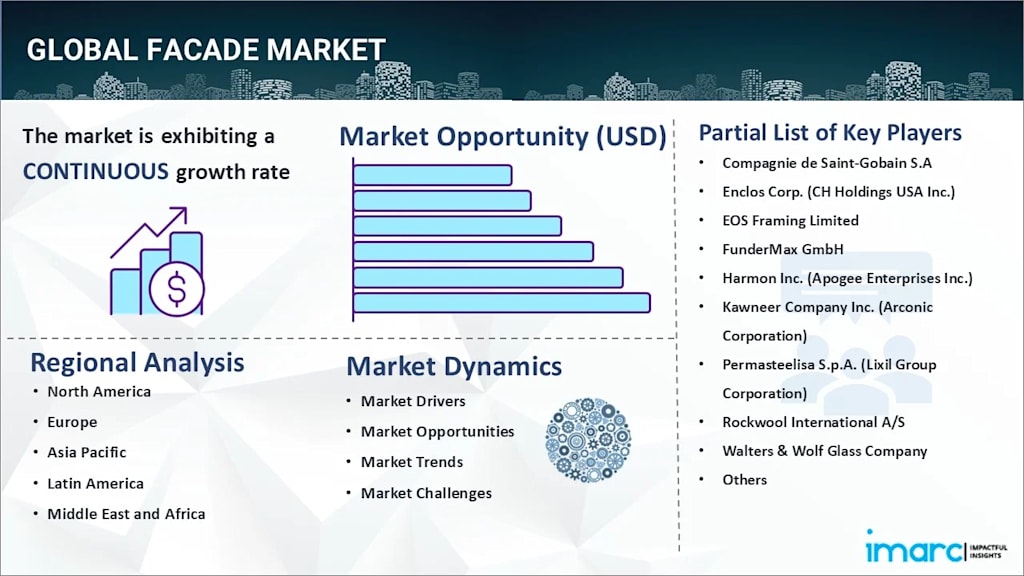
Rapid urbanization, major investments in public infrastructure, and an escalating focus on building energy efficiency are driving facade demand, supported by green building regulations, smart material innovation, and extensive remodeling activities worldwide. According to IMARC Group’s latest data, The global facade market size was valued at USD 311.4 Billion in 2025. Looking forward, IMARC Group estimates the market to reach USD 549.7 Billion by 2034, exhibiting a CAGR of 6.32% from 2026-2034.
Facades now represent a multi-billion-dollar global market exceeding hundreds of billions of dollars and exhibiting steady year-on-year expansion. Demand is driven by rising structural modernization, busy commercial real estate development that favors premium aesthetics, and increased interest in durable, sustainable exterior solutions. Regulatory compliance for carbon reduction, private-label structural developments, and advanced component fabrication for thermal control, insulation, and acoustic performance are further accelerating uptake. Major segments include ventilated, non-ventilated, and other specialty systems utilizing glass, metal, plastic, fiber, and natural stones, with developers prioritizing long-term durability, structural safety, and climate resilience.
Facade Market Growth Drivers:
- Rapid Urbanization and Structural Development
Accelerating global urbanization continues to prompt substantial investments in major building projects, ranging from corporate complexes and residential structures to municipal institutions. This shift creates a vast need for premium exterior building envelopes that protect interior environments from extreme wind, rain, and heat. The global sector, backed by intensive commercial real estate expansion, relies heavily on high-durability installations to secure long-term structural value. Industry stakeholders invest in modern solutions to establish strong architectural identities for high-rise buildings, catering directly to city developers who need reliable weathering barriers.
- Escalating Focus on Energy Efficiency
Stringent environmental rules and a worldwide push for sustainability lead developers to prioritize highly efficient thermal envelopes over standard building covers. This massive transformation boosts demand for intelligent exterior paneling systems that naturally regulate interior building temperatures and reduce heavy reliance on heating and cooling machines. Real-world applications indicate that high-performance panels significantly cut corporate operating expenses while fulfilling international green building standards. Property owners actively utilize advanced multi-layered cladding setups to lower carbon footprints, meeting modern structural certifications across dense metropolitan commercial districts.
- Rising Infrastructure Remodeling and Refurbishment
Aging architectural infrastructure across older urban districts creates an immediate demand for extensive deep retrofitting and structural updating projects. Property management firms frequently replace worn, inefficient structural claddings with lighter, advanced alternative components to extend overall building lifespans without full rebuilding costs. The sector benefits enormously from these modernization workflows, which allow older commercial facilities to meet contemporary structural safety laws and aesthetic preferences. Consequently, widespread facility updates across key urban sectors maintain steady procurement rates for durable protective paneling and lightweight metal installations.
Facade Market Trends:
- Integration of Smart Materials and Glass Technologies
Architectural networks prioritize smart glass innovations, self-cleaning panels, and built-in photovoltaic panels to create highly responsive building structures. These engineering steps allow modern commercial facilities to capture clean solar power directly through external walls, turning basic protection layers into active energy generators. Leading construction firms implement dynamic tinting technologies that adjust shading based on real-time sunlight levels to optimize internal visibility. This technological movement supports everyday sustainable design, giving corporate offices a clear tool to manage lighting demands while drastically modernizing structural profiles.
- Widespread Adoption of Ventilated Facade Systems
Modern builders increasingly select ventilated cladding configurations over standard flat designs to gain superior moisture management and advanced acoustic isolation. This design trend provides an effective open air gap between external shields and internal walls, creating natural air movement that keeps insulation layers entirely dry. Structural engineers specify these architectural frameworks for high-exposure corporate projects to minimize structural degradation risks from mold or condensation. The operational value of these configurations makes them a preferred setup for high-end residential towers and busy transportation hubs.
- Shift Toward Lightweight and Recyclable Materials
Industrial procurement trends highlight a decisive movement toward utilizing lightweight materials like engineered aluminum, sustainable composites, and natural fiber elements. Builders choose these specialized components to lower structural weight loads on tall buildings, accelerating field assembly workflows while cutting overall transportation fuels. Major fabrication firms focus on producing fully recyclable components to comply with emerging circular economy manufacturing policies worldwide. This practical material choice supports large-scale developments, ensuring that high-profile structures remain structurally sound while satisfying stringent regional waste reduction goals.
Recent News and Developments in Facade Market
- August 2025: Compagnie de Saint-Gobain S.A. announced a strategic partnership with a leading smart building technology provider to launch a new line of active, energy-generating building facades, capitalizing on surging demand for solar-integrated structures and positioning the company to capture greater market share among eco-conscious commercial developers globally.
- September 2025: Enclos Corp. rolled out a company-wide operational initiative to significantly integrate low-carbon recycled aluminum profiles across its structural custom design portfolio, responding to heightened institutional demand for highly sustainable structural elements and aligning with broader industry shifts toward transparent, eco-friendly material sourcing.
- November 2025: Rockwool International A/S expanded its global production lines dedicated to manufacturing non-combustible stone wool exterior insulation components, providing structural developers with enhanced fire-resistant safety choices that easily comply with updated international construction safety mandates.
Note: If you require specific details, data, or insights that are not currently included in the scope of this report, we are happy to accommodate your request. As part of our customization service, we will gather and provide the additional information you need, tailored to your specific requirements. Please let us know your exact needs, and we will ensure the report is updated accordingly to meet your expectations.
About the Creator
Andrew Sullivan
Hello, I’m Andrew Sullivan. I have over 9+ years of experience as a market research specialist.
Enjoyed the story? Support the Creator.
Subscribe for free to receive all their stories in your feed.
Comments
There are no comments for this story
Be the first to respond and start the conversation.