
Europe Snack Bar Market Expands as Consumers Prioritize Convenient and Functional Nutrition
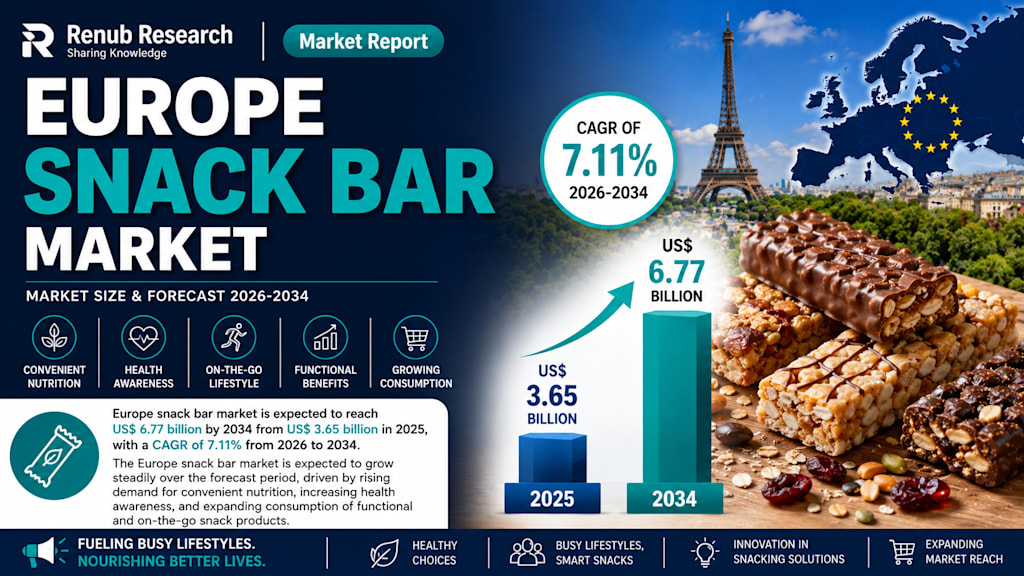
Europe’s snack bar industry is witnessing strong momentum as consumers increasingly seek healthier, portable, and protein-rich snack options. The market is projected to grow from US$ 3.65 billion in 2025 to US$ 6.77 billion by 2034, registering a CAGR of 7.11% during the forecast period.

Europe’s snack bar market is becoming a major part of modern eating habits
The Europe snack bar market has transformed significantly over the last decade. What was once considered a niche product aimed mainly at athletes and fitness enthusiasts has now evolved into a mainstream convenience food category consumed by millions of Europeans every day. Snack bars are increasingly replacing traditional snacks as consumers look for products that combine portability, taste, nutrition, and convenience in a single package.
Today’s snack bar category includes protein bars, cereal bars, fruit and nut bars, and functional nutrition bars designed for specific health benefits such as energy support, weight management, muscle recovery, or meal replacement. The market’s appeal has expanded because these products fit naturally into modern lifestyles where consumers often prefer quick, smaller meals rather than large traditional eating occasions. Busy schedules, urban lifestyles, and the rise of on-the-go consumption are all contributing to the growing demand for snack bars across Europe.
According to Renub Research, the Europe Snack Bar Market is expected to reach US$ 6.77 billion by 2034, up from US$ 3.65 billion in 2025, growing at a compound annual growth rate of 7.11% from 2026 to 2034. This steady expansion reflects the strong shift toward healthier snacking habits and the increasing importance of functional nutrition products in everyday diets.
Convenience continues to drive consumer demand
One of the strongest growth drivers for the Europe snack bar market is convenience. Modern consumers are busier than ever, and many are looking for food options that can easily fit into fast-paced schedules. Snack bars offer a practical solution because they are portable, require no preparation, and can be consumed almost anywhere.
Working professionals, students, travelers, and gym-goers are among the biggest consumers of snack bars because these products provide quick energy and nutritional value without requiring time-consuming meal preparation. The growing trend of eating multiple smaller meals throughout the day instead of traditional large meals has also increased the popularity of snack bars across Europe.
Urbanization is another contributing factor. As more Europeans live in cities and maintain hectic schedules, the demand for fast yet nutritious food continues to increase. Snack bars are positioned perfectly within this trend because they combine convenience with nutritional functionality. Long shelf life, easy storage, and widespread retail availability further strengthen their appeal.
Health and wellness trends are reshaping the category
Health awareness is playing a critical role in the expansion of the snack bar market across Europe. Consumers are paying closer attention to ingredient quality, sugar levels, protein intake, and overall nutritional value. This shift is encouraging manufacturers to develop products that align with wellness-focused lifestyles.
Protein bars and functional snack bars have become especially popular among consumers looking for healthier alternatives to traditional confectionery snacks. Products containing high protein, fiber, vitamins, minerals, and plant-based ingredients are attracting attention from both fitness-focused and general health-conscious consumers. Snack bars designed for specific dietary preferences, such as vegan, gluten-free, keto-friendly, and low-sugar formulations, are also expanding rapidly across the region.
The clean-label movement is further influencing product development. Consumers increasingly prefer products made with recognizable and natural ingredients while avoiding artificial additives and excessive processing. In response, manufacturers are reformulating products to include organic ingredients, nuts, seeds, oats, fruits, and plant-based proteins.
Preventive healthcare trends are also contributing to market growth. Many consumers now view nutrition as an essential part of maintaining long-term health, leading them to replace traditional snacks with functional products that support energy, wellness, and active lifestyles. This shift has allowed snack bars to move beyond fitness-specific consumption and become part of everyday nutrition routines.
Product innovation remains a major competitive advantage
Innovation continues to shape the competitive landscape of the Europe snack bar market. Manufacturers are constantly introducing new flavors, ingredient combinations, and nutritional profiles to attract consumers and differentiate themselves in a crowded market.
Plant-based snack bars are among the fastest-growing categories, reflecting the broader shift toward sustainable and vegan-friendly diets in Europe. Brands are also experimenting with exotic flavors, superfoods, functional ingredients, and improved textures to create products that stand out on retail shelves. Low-sugar and high-protein variants are becoming particularly important as consumers seek healthier indulgence without sacrificing taste.
Packaging innovation is another important area of focus. Resealable packs, sustainable packaging materials, and visually appealing branding are helping companies improve shelf visibility and strengthen consumer engagement. Attractive packaging has become essential in a market where visual presentation strongly influences purchasing decisions.
Marketing strategies have also evolved significantly. Influencer marketing, fitness partnerships, social media campaigns, and athlete endorsements are increasingly being used to connect with younger and wellness-oriented consumers. Digital marketing has become particularly effective in promoting new launches and educating consumers about nutritional benefits.
Retail and e-commerce expansion are improving accessibility
Retail distribution continues to play a crucial role in the growth of Europe’s snack bar market. Supermarkets, hypermarkets, convenience stores, and specialty health stores remain key sales channels because they allow consumers to purchase snack bars during routine shopping trips.
At the same time, e-commerce has emerged as a major growth engine. Online platforms allow brands to showcase a broader product range, target niche dietary segments, and reach consumers directly. Subscription models and direct-to-consumer sales are becoming increasingly common, especially among premium and functional snack bar brands.
Digital retail channels also provide manufacturers with valuable consumer data that can be used to personalize product offerings and improve marketing strategies. As online grocery shopping continues to expand across Europe, e-commerce is expected to become even more influential within the snack bar category.
Key challenges facing the market
Despite strong growth potential, the Europe snack bar market faces several challenges. One of the biggest issues is intense competition. The market includes numerous international brands, regional companies, private-label products, and niche startups, all competing for shelf space and consumer attention. This level of saturation makes differentiation increasingly difficult.
Frequent product launches and aggressive pricing strategies can reduce profit margins and create pressure on manufacturers to constantly innovate. Maintaining brand loyalty in such a competitive environment requires consistent investment in product quality, marketing, and consumer engagement.
Consumer skepticism regarding certain snack bars also presents a challenge. While snack bars are often marketed as healthy products, some consumers remain cautious about sugar content, artificial ingredients, and high levels of processing. Products perceived as overly processed or nutritionally imbalanced may struggle to maintain consumer trust.
To overcome these concerns, manufacturers must focus on transparency, simplified ingredient lists, and clear nutritional labeling. Building credibility around health claims will remain essential for long-term success in the European market.
Country-level trends across Europe
France is witnessing growing demand for organic and natural snack bars, particularly among urban consumers and professionals seeking healthier snacking options. French consumers generally value high-quality ingredients and clean-label products, which is encouraging manufacturers to focus on premium offerings.
Germany remains one of the most important snack bar markets in Europe due to its strong fitness culture and high level of health awareness. Consumers in Germany actively seek protein-rich, low-sugar, and plant-based products, making the country highly attractive for functional nutrition brands.
Italy’s snack bar market is growing steadily as younger consumers adopt more convenience-oriented eating habits. Although traditional food culture remains strong, increasing awareness of balanced nutrition and fitness trends is supporting demand for healthier snacks. Spain is also seeing rising consumption, particularly among active consumers looking for quick and nutritious snack alternatives.
Across Europe, demand for premium and specialized snack bars is expected to continue rising as consumers become more selective about ingredients, nutritional value, and product functionality.
10 Recent Developments in the Europe Snack Bar Market
Kellogg Company expanded its protein-focused snack portfolio across Europe in 2025, increasing emphasis on healthier cereal and protein bars with improved nutritional profiles.
Mars Incorporated accelerated innovation in functional snack products, introducing new high-protein and lower-sugar variants targeting wellness-focused consumers across European markets.
Nestlé SA continued investing in plant-based and functional snack bar development, focusing on clean-label formulations and sustainable ingredient sourcing.
Mondelēz International strengthened its healthy snacking strategy in Europe, expanding product offerings aimed at balancing indulgence with nutritional benefits.
PepsiCo Inc. increased investments in convenient nutrition categories, particularly through healthier snack bar innovations and functional ingredient integration.
General Mills expanded its European natural snack portfolio, focusing on bars containing organic ingredients, nuts, seeds, and reduced sugar formulations.
Ferrero International SA explored healthier snack positioning, introducing products that combine premium taste experiences with portion-controlled nutrition.
Abbott Laboratories continued strengthening its functional nutrition product lines, particularly in performance and meal-support snack categories.
Halo Foods Ltd increased manufacturing capabilities in Europe, supporting rising demand for private-label and branded functional snack bars.
The Hershey Company expanded better-for-you snack offerings in Europe, responding to growing consumer demand for convenient but healthier snacking solutions.
Sustainability and clean ingredients are becoming essential
Sustainability is increasingly influencing purchasing decisions in the European snack bar market. Consumers are paying closer attention to packaging waste, ingredient sourcing, and environmental impact. As a result, companies are adopting recyclable packaging materials, responsible sourcing practices, and sustainable production methods.
Plant-based products are also benefiting from sustainability trends because many consumers associate them with lower environmental impact. Brands that successfully combine health benefits with environmental responsibility are likely to gain stronger consumer loyalty over the coming years.
Final thoughts
The Europe snack bar market is evolving from a convenience-driven category into a broader functional nutrition industry. Consumers are no longer looking only for quick snacks — they want products that align with their health goals, dietary preferences, and busy lifestyles. This shift is creating strong opportunities for manufacturers that can deliver convenience, nutrition, taste, and transparency simultaneously.
Renub Research’s forecast highlights the market’s strong long-term potential. As health awareness continues to rise and demand for on-the-go nutrition expands across Europe, snack bars are expected to remain one of the fastest-growing segments within the broader packaged food industry.
About the Creator
Enjoyed the story? Support the Creator.
Subscribe for free to receive all their stories in your feed.
Comments
There are no comments for this story
Be the first to respond and start the conversation.