
Europe’s Organic Food Revolution Is Reshaping the Future of Sustainable Eating
Growing Health Awareness, Sustainable Farming, and Clean-Label Demand Are Driving the Europe Organic Food Market

The way Europeans think about food is changing dramatically. Consumers are no longer focused solely on taste and convenience; they are increasingly evaluating how food is produced, its impact on personal health, and its effect on the environment. This shift in consumer behavior has propelled organic food from a niche category into one of the fastest-growing segments of the European food industry.
Across supermarkets, specialty stores, online platforms, and convenience outlets, demand for organic products continues to rise. From fresh fruits and vegetables to dairy products, bakery items, cereals, and packaged foods, consumers are embracing products that align with healthier lifestyles and sustainable values.
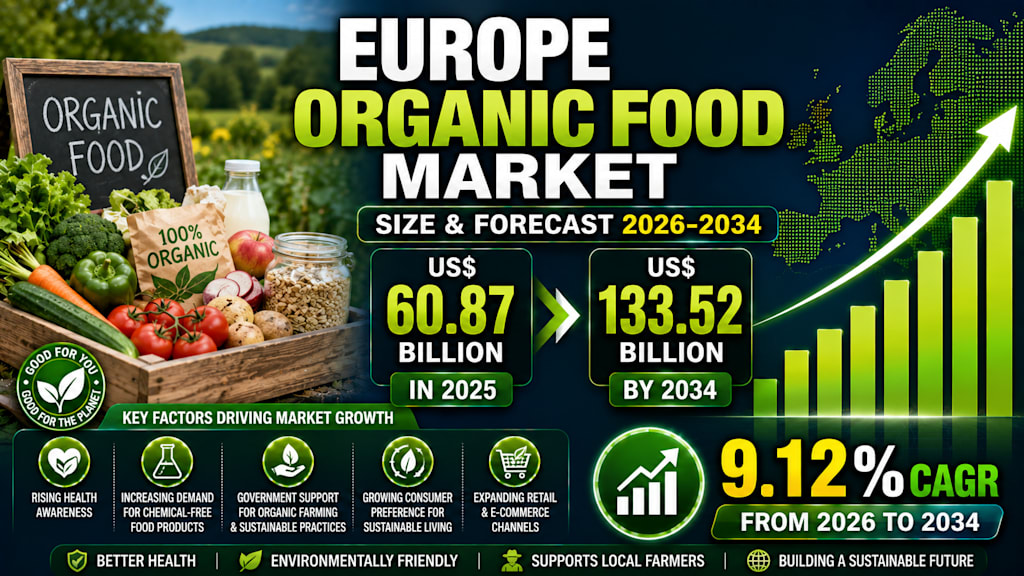
According to Renub Research, the Europe Organic Food Market was valued at US$ 60.87 billion in 2025 and is expected to reach US$ 133.52 billion by 2034, growing at a compound annual growth rate (CAGR) of 9.12% between 2026 and 2034. The market's expansion is being driven by rising health awareness, growing demand for chemical-free food products, and strong government support for organic farming practices across the region.
As sustainability becomes a defining priority for consumers, businesses, and policymakers alike, organic food is emerging as a central pillar of Europe's evolving food ecosystem.
Why Organic Food Is Gaining Unprecedented Popularity
Organic food refers to agricultural products grown and processed without the use of synthetic fertilizers, pesticides, genetically modified organisms (GMOs), artificial additives, or growth hormones.
Organic farming relies on natural methods such as crop rotation, composting, biological pest control, and soil conservation practices to maintain productivity while protecting environmental health.
Consumers increasingly perceive organic food as safer, healthier, and more environmentally responsible than conventionally produced alternatives.
This perception has significantly influenced purchasing behavior across Europe.
Growing awareness about food quality, nutritional value, and long-term health outcomes is encouraging consumers to choose products that contain fewer synthetic ingredients and undergo less industrial processing.
As trust in food transparency becomes increasingly important, organic certification systems continue helping consumers make informed purchasing decisions.
Health-Conscious Consumers Are Driving Market Growth
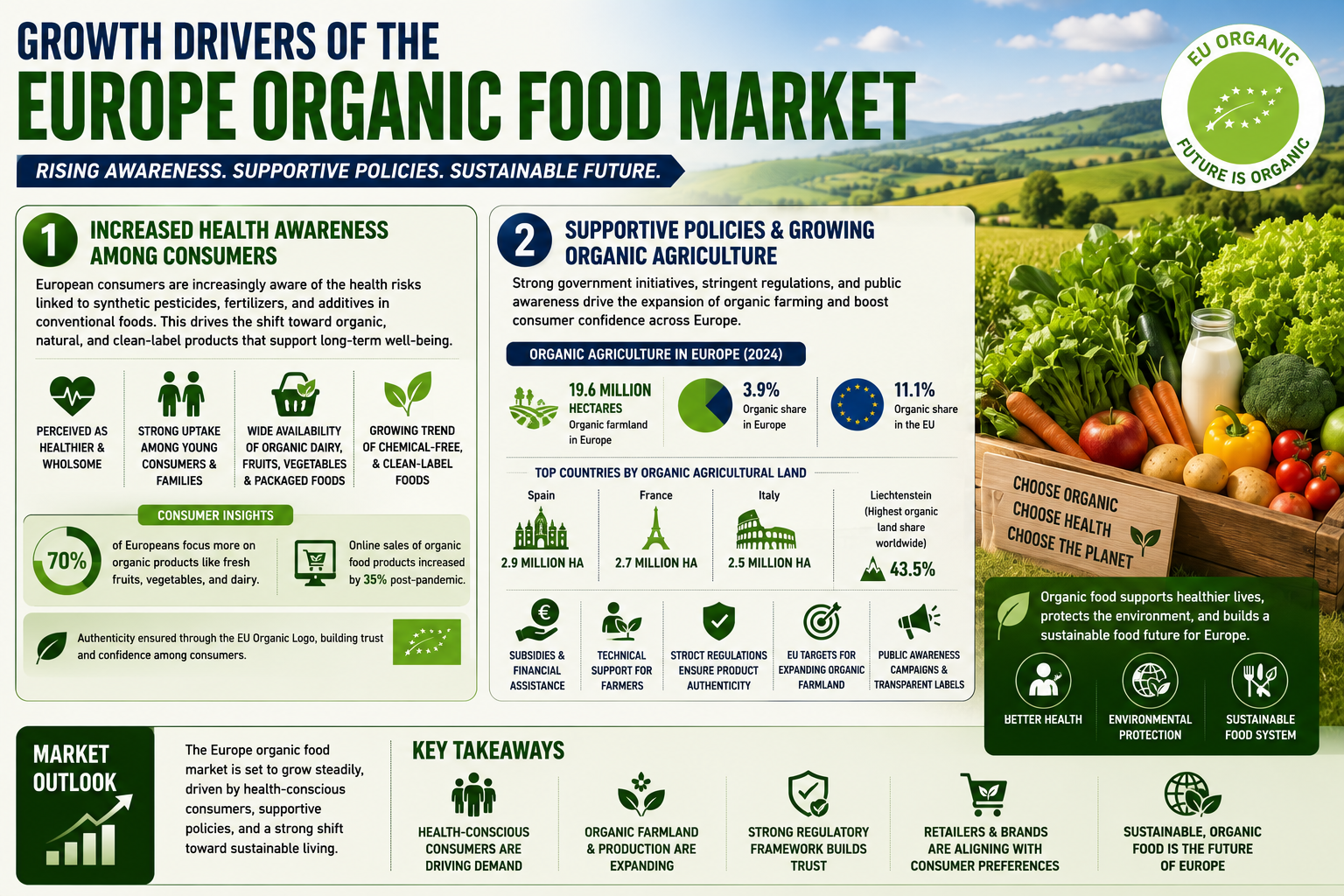
One of the strongest drivers behind Europe's organic food boom is increasing consumer awareness regarding health and wellness.
Modern consumers are becoming more informed about the ingredients used in food production and the potential risks associated with excessive chemical exposure.
Many consumers believe organic products offer a cleaner and more natural alternative to conventionally produced food.
This trend is particularly strong among younger generations, families with children, and urban populations who prioritize preventive health and nutrition.
The growing prevalence of lifestyle-related health concerns has further accelerated interest in healthier dietary choices.
Consumers are increasingly seeking foods free from artificial preservatives, synthetic additives, and pesticide residues.
Organic products align closely with these preferences, making them attractive options for health-conscious households.
As awareness of nutrition and wellness continues expanding, demand for organic food products is expected to grow steadily throughout Europe.
Sustainability Is Reshaping Consumer Preferences
Environmental concerns have become a powerful force influencing food purchasing decisions.
Climate change, biodiversity loss, soil degradation, and water scarcity have increased public awareness regarding the environmental impact of conventional agricultural practices.
Organic farming offers a more sustainable approach by promoting biodiversity, improving soil health, and reducing reliance on synthetic chemicals.
Many European consumers actively support products that align with environmental values and contribute to sustainable food systems.
The connection between organic farming and environmental stewardship has become a key selling point for producers and retailers.
Consumers increasingly view organic food purchases as a way to support responsible agriculture while reducing their ecological footprint.
As sustainability continues moving to the forefront of public discourse, organic food is likely to remain one of the most attractive options for environmentally conscious shoppers.
Government Support Is Strengthening the Industry
Government policies and regulatory frameworks play a significant role in supporting Europe's organic food market.
European governments actively encourage organic farming through subsidies, financial incentives, technical assistance, and educational programs.
The European Union has established ambitious goals aimed at expanding organic agricultural land and promoting sustainable farming practices.
Strict certification standards ensure product authenticity and help maintain consumer confidence in organic labeling systems.
Programs designed to increase awareness of organic farming benefits are further supporting market growth.
Government initiatives not only assist farmers transitioning to organic production but also encourage consumers to make informed purchasing decisions.
The combination of regulatory oversight and financial support creates a favorable environment for long-term market expansion.
Organic Farming Continues to Expand Across Europe
Europe has become one of the world's leading regions for organic agriculture.
Millions of hectares of farmland are now managed according to organic farming principles, reflecting strong institutional support and growing market demand.
Countries such as Spain, France, and Italy maintain some of the largest areas dedicated to organic farming.
The expansion of organic agriculture is helping improve supply availability while creating economic opportunities for farmers.
Organic farming also contributes to rural development by supporting local economies and encouraging sustainable land management practices.
As governments continue investing in agricultural transformation, organic farmland is expected to expand further throughout the coming decade.
This growth will play a crucial role in meeting rising consumer demand for organic products.
Organic Fruits and Vegetables Lead Consumer Demand
Among all product categories, organic fruits and vegetables remain one of the most popular segments within the European organic food market.
Consumers increasingly prioritize fresh produce because of its direct connection to health and nutrition.
Organic fruits and vegetables appeal to shoppers seeking food products free from synthetic pesticides and chemical residues.
The growing popularity of plant-based diets and clean eating lifestyles has further accelerated demand within this category.
Retailers continue expanding their organic produce offerings to meet consumer expectations.
Improved availability and broader product selection are helping make organic fruits and vegetables more accessible to mainstream consumers.
As health awareness continues growing, this segment is expected to remain a cornerstone of the organic food market.
Organic Meat Is Benefiting from Ethical Consumption Trends
Consumer attitudes toward meat production are evolving.
Increasing awareness regarding animal welfare, food safety, and environmental sustainability is creating demand for ethically sourced protein products.
Organic meat is produced without synthetic hormones, routine antibiotics, or genetically modified feed.
These attributes appeal to consumers seeking greater transparency and higher production standards.
Premiumization trends are also supporting market growth, as many consumers are willing to pay higher prices for products perceived as healthier and more responsibly produced.
Retailers continue expanding organic meat offerings to satisfy changing consumer preferences.
As ethical consumption becomes increasingly important, the organic meat segment is expected to experience continued growth.
Organic Bakery Products Are Entering the Mainstream
Europe's rich baking traditions are creating strong opportunities for organic bread and bakery products.
Consumers increasingly seek bakery items made with natural ingredients, whole grains, and organic raw materials.
Organic bread, pastries, and baked goods appeal to shoppers looking for healthier alternatives to highly processed products.
The growing popularity of vegan diets, clean-label foods, and specialty nutrition trends is further supporting demand.
Food manufacturers are introducing innovative organic bakery products that combine traditional recipes with modern health-conscious formulations.
As consumer interest in natural ingredients continues rising, organic bakery products are expected to gain an even larger share of the market.
Online Retail Is Transforming Organic Food Distribution
Digital commerce is becoming an increasingly important channel for organic food sales across Europe.
Consumers appreciate the convenience of online shopping, home delivery services, and access to a broader selection of products.
Online platforms provide detailed product information, certification details, and ingredient transparency, helping build trust among consumers.
The COVID-19 pandemic accelerated online grocery adoption, creating lasting changes in shopping behavior.
Cold-chain logistics improvements have further enhanced the ability to deliver fresh organic products directly to consumers.
As e-commerce continues expanding, online retail is expected to play a central role in future organic food distribution strategies.
Convenience Stores Are Expanding Accessibility
Convenience stores are helping bring organic products closer to consumers.
Busy lifestyles and urban living patterns have increased demand for quick and accessible shopping options.
Retailers are responding by expanding organic product offerings within convenience formats.
Ready-to-eat organic meals, snacks, beverages, and packaged products are becoming increasingly common.
This increased accessibility is helping organic food move beyond specialty markets and reach broader consumer audiences.
As convenience continues influencing purchasing behavior, this distribution channel is expected to support ongoing market growth.
Challenges Facing the Organic Food Market
Despite impressive growth, the industry faces several important challenges.
High Production Costs
Organic farming is often more labor-intensive than conventional agriculture.
Lower yields, higher labor requirements, and strict production standards can increase costs significantly.
These higher costs are frequently reflected in retail pricing, making organic products less accessible to some consumers.
Certification and Supply Constraints
Transitioning from conventional to organic farming requires substantial time and investment.
Farmers must comply with strict certification requirements before products can be marketed as organic.
These complexities can limit supply growth, particularly as consumer demand continues rising.
Ensuring adequate supply while maintaining quality standards remains an important challenge for the industry.
Key Markets Driving European Growth
Germany
Germany remains one of Europe's largest organic food markets, supported by strong consumer demand, extensive retail availability, and government support for sustainable agriculture.
United Kingdom
The UK organic food market continues expanding as consumers prioritize health, sustainability, and plant-based nutrition.
Netherlands
The Netherlands is benefiting from innovation in sustainable agriculture and strong government initiatives supporting organic production and consumption.
Belgium
Belgium's growing focus on local food, environmental responsibility, and healthy lifestyles continues supporting demand for organic products.
Final Thoughts
Organic food is no longer a niche movement in Europe—it has become a major force shaping the future of agriculture, retail, and consumer lifestyles.
According to Renub Research, the Europe Organic Food Market is expected to grow from US$ 60.87 billion in 2025 to US$ 133.52 billion by 2034, reflecting strong consumer demand and expanding institutional support.
Driven by health consciousness, sustainability goals, ethical consumption, and government initiatives, organic food is becoming an increasingly important part of everyday life across the continent.
As consumers continue seeking products that support both personal well-being and environmental responsibility, Europe's organic food revolution is likely to accelerate even further. The future of food in Europe is not simply about eating—it is about making choices that promote health, sustainability, and long-term value for society as a whole.
About the Creator
Enjoyed the story? Support the Creator.
Subscribe for free to receive all their stories in your feed.
Comments
There are no comments for this story
Be the first to respond and start the conversation.