
Europe Ready-to-Drink Coffee Market: Why Is RTD Coffee Becoming Europe’s Favorite On-the-Go Beverage?
Changing lifestyles, growing coffee culture among younger consumers, product innovation, and expanding retail accessibility are fueling rapid growth in the Europe ready-to-drink coffee market through 2034.

Coffee has long been an essential part of European culture. From traditional Italian espresso bars and French cafés to modern specialty coffee shops in London and Berlin, coffee remains deeply embedded in daily routines across the continent. However, changing lifestyles and evolving consumer preferences are reshaping how Europeans consume coffee.
Today’s consumers increasingly seek convenience, portability, and premium experiences without sacrificing quality. As a result, ready-to-drink (RTD) coffee has emerged as one of the fastest-growing beverage categories in Europe. Bottled iced coffees, canned cold brews, flavored lattes, and functional coffee beverages are becoming common sights in supermarkets, vending machines, convenience stores, and online retail platforms.
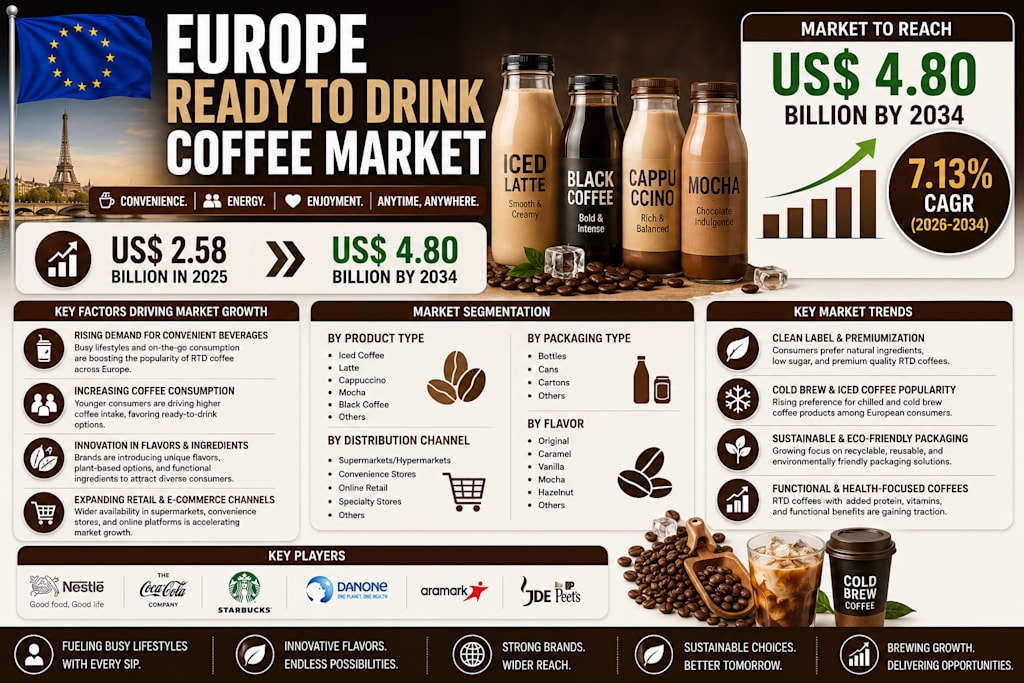
According to Renub Research, the Europe Ready-to-Drink Coffee Market is expected to grow from US$ 2.58 billion in 2025 to US$ 4.80 billion by 2034, registering a CAGR of 7.13% between 2026 and 2034. Rising demand for convenient beverages, increasing coffee consumption among younger consumers, and continuous innovation in flavors, ingredients, and packaging are expected to drive significant growth throughout the forecast period.
Understanding the Ready-to-Drink Coffee Market
Ready-to-drink coffee refers to pre-prepared coffee beverages packaged in convenient formats such as bottles, cans, cartons, and other portable containers. These products eliminate the need for brewing or preparation, allowing consumers to enjoy coffee immediately.
RTD coffee includes various formats such as cold brew coffee, iced coffee, cappuccino, latte, espresso-based beverages, flavored coffee drinks, and functional coffee products.
Manufacturers frequently enrich these beverages with ingredients such as milk, cream, plant-based alternatives, vitamins, proteins, sweeteners, and flavorings to enhance consumer appeal.
The category appeals particularly to consumers seeking convenience without compromising quality, making it highly relevant in today’s fast-paced environment. As coffee consumption habits evolve, RTD coffee is increasingly viewed as a practical extension of Europe’s established coffee culture.
Convenience Culture Drives Market Expansion
One of the strongest growth drivers within the European RTD coffee market is the increasing demand for convenience.
Modern consumers lead increasingly busy lifestyles characterized by long working hours, commuting, travel, education commitments, and active social schedules. Many individuals seek products that fit seamlessly into these routines.
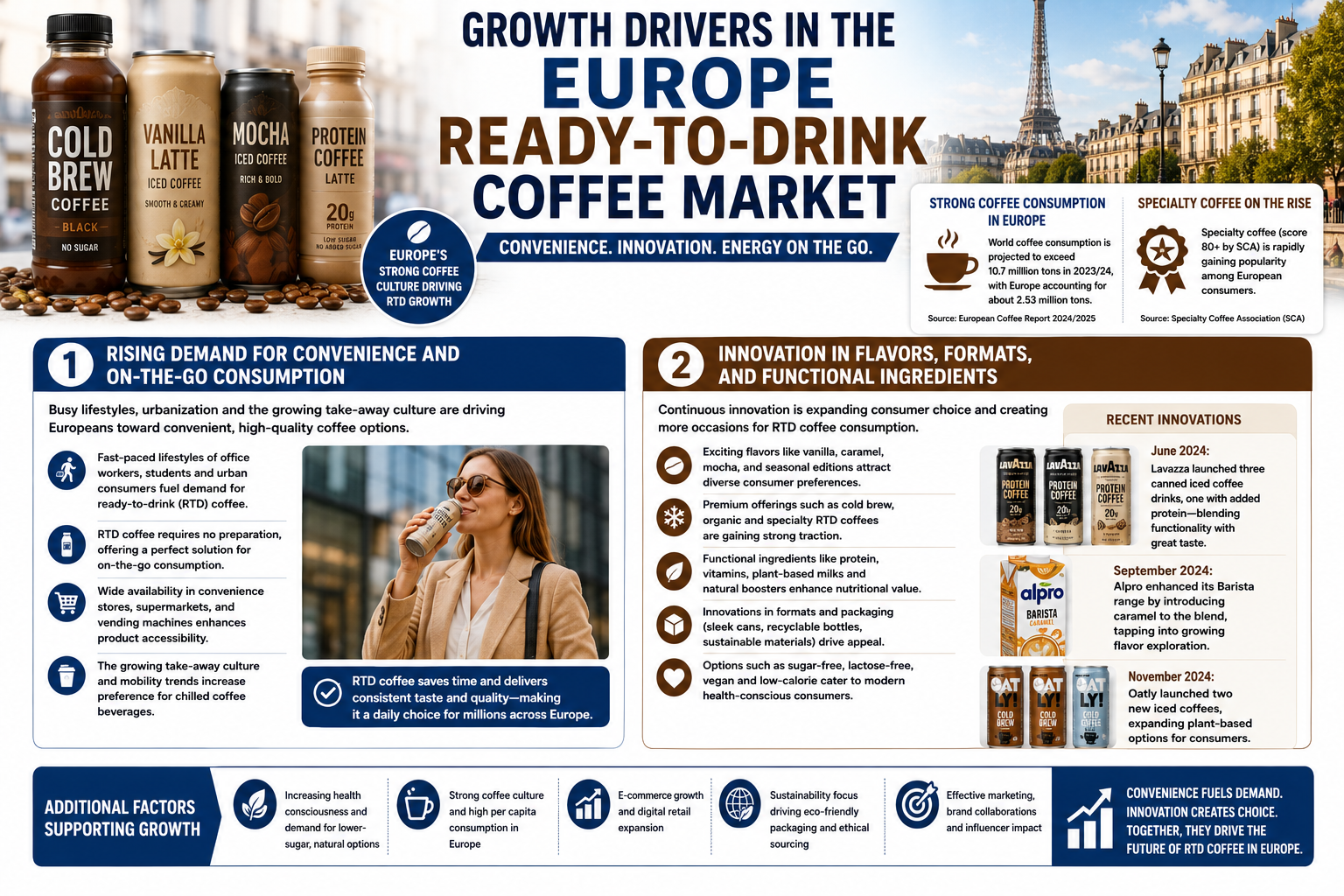
RTD coffee provides a solution by eliminating preparation time while delivering a consistent coffee experience. Consumers can easily purchase and consume RTD beverages while commuting, studying, working, shopping, or traveling.
The growing popularity of take-away culture has further accelerated adoption. Instead of waiting in cafés or preparing coffee at home, consumers can conveniently access RTD coffee products from retail outlets and vending machines.
This emphasis on convenience continues to create strong growth opportunities throughout Europe.
Europe's Deep Coffee Culture Supports Demand
Europe remains one of the world's largest coffee-consuming regions.
According to the European Coffee Report 2024/2025, global coffee consumption is projected to exceed 10.7 million tons during the 2023/24 period, with Europe accounting for approximately 2.53 million tons of that total volume. This extensive coffee-drinking tradition provides a strong foundation for RTD coffee growth.
Consumers increasingly view RTD coffee not as a replacement for traditional coffee but as an additional consumption occasion. While many individuals continue to enjoy freshly brewed coffee at home or in cafés, RTD products offer flexibility for situations where preparation is impractical.
The popularity of specialty coffee has also influenced RTD product development. Consumers increasingly expect high-quality ingredients, premium flavor profiles, and authentic coffee experiences, encouraging manufacturers to innovate continuously.
Millennials and Gen Z Fuel Category Growth
Younger consumers represent one of the most important customer groups within the RTD coffee market.
Millennials and Generation Z consumers value convenience, personalization, innovation, and visual appeal. RTD coffee products align closely with these preferences.
Younger buyers are often more willing to experiment with new flavors, specialty coffee varieties, and functional ingredients. Attractive packaging, sustainable materials, and social-media-friendly branding further enhance product appeal.
Urbanization has also contributed to demand among younger demographics. Fast-paced lifestyles and increasing mobility encourage consumption of portable beverages that can be enjoyed throughout the day.
In February 2025, Emmi introduced its Caffè Latte Zero range in the United Kingdom, featuring no added sugar and sustainability-focused production methods designed to appeal to younger consumers.
Product Innovation Creates New Consumption Opportunities
Innovation remains one of the most important factors shaping the future of Europe’s RTD coffee market.
Manufacturers continuously introduce new products designed to attract consumers seeking variety and unique experiences. Flavor innovation has become especially important, with offerings extending beyond traditional coffee profiles.
Popular options now include vanilla, caramel, mocha, chocolate, hazelnut, seasonal specialties, and premium café-inspired beverages.
In addition to flavor innovation, companies increasingly incorporate functional ingredients such as proteins, vitamins, plant-based milk alternatives, adaptogens, and reduced-sugar formulations.
In June 2024, Lavazza launched three canned iced coffee beverages, including one enriched with protein, highlighting the growing overlap between coffee and functional nutrition categories.
These innovations help brands differentiate themselves while creating new occasions for RTD coffee consumption.
Functional Coffee Emerges as a Fast-Growing Segment
The convergence of wellness and convenience is driving demand for functional RTD coffee products.
Consumers increasingly seek beverages that deliver benefits beyond caffeine and refreshment. Functional RTD coffees may include added protein, vitamins, minerals, plant extracts, energy-support ingredients, or wellness-focused formulations.
Health-conscious consumers appreciate products that contribute to nutritional goals while fitting into busy lifestyles.
Manufacturers are responding by creating beverages that address specific consumer needs such as energy enhancement, recovery support, weight management, and daily nutrition.
This trend is expected to remain a major growth driver over the coming decade.
Cold Brew Coffee Gains Strong Momentum
Cold brew coffee has become one of the most dynamic categories within the RTD coffee market.
Unlike traditional brewing methods, cold brew coffee is prepared by steeping coffee grounds in cold water over an extended period. This process produces a smoother, less acidic flavor profile that appeals to many consumers.
Cold brew products are particularly popular among younger consumers and specialty coffee enthusiasts who appreciate premium beverage experiences.
Manufacturers continue introducing innovative cold brew variations featuring plant-based ingredients, reduced sugar content, and functional enhancements.
Growing awareness of cold brew's smoother taste and perceived health benefits continues to support category expansion across Europe.
Sustainability Influences Purchasing Decisions
Environmental concerns are increasingly shaping consumer preferences within the beverage industry.
European consumers place growing importance on sustainable packaging, ethical sourcing, and environmentally responsible production practices. RTD coffee manufacturers are responding by adopting recyclable materials, reducing packaging waste, and emphasizing sustainability initiatives.
PET bottles remain popular due to their lightweight properties and convenience. At the same time, manufacturers continue improving recycling capabilities and increasing the use of recycled materials.
Many brands also promote responsibly sourced coffee beans and environmentally friendly supply chains to strengthen consumer trust and brand loyalty.
Sustainability has become a key competitive differentiator within the market.
Retail Expansion Supports Accessibility
The growth of RTD coffee is closely linked to expanding retail availability.
Consumers can now purchase RTD coffee through supermarkets, hypermarkets, convenience stores, vending machines, cafés, specialty retailers, and online platforms.
Supermarkets and hypermarkets remain particularly important because they provide broad product selection, competitive pricing, and promotional opportunities.
Private-label RTD coffee products have also gained popularity as retailers seek to offer affordable alternatives while maintaining quality standards.
Improved distribution networks continue making RTD coffee more accessible across both urban and rural areas throughout Europe.
E-Commerce Opens New Growth Channels
Online retail has emerged as an increasingly important distribution channel for RTD coffee products.
Consumers appreciate the convenience of browsing extensive product selections, comparing brands, reading reviews, and arranging home delivery.
Subscription services, bulk purchasing options, and personalized recommendations further enhance the online shopping experience.
Manufacturers are investing heavily in digital marketing campaigns, influencer partnerships, and direct-to-consumer strategies to strengthen online engagement.
As e-commerce adoption continues growing across Europe, digital channels are expected to become an increasingly important contributor to market growth.
Automated Vending Expands Consumer Access
Automated vending represents another important distribution channel within the RTD coffee market.
Modern vending machines are increasingly located in offices, airports, universities, transportation hubs, hospitals, and public spaces.
Technological advancements such as contactless payments, digital interfaces, and improved inventory management systems have enhanced the vending experience.
Consumers benefit from immediate access to RTD coffee products without needing to visit cafés or retail stores.
The continued expansion of automated retail infrastructure is expected to support market growth in high-traffic environments.
Challenges Facing the Europe RTD Coffee Market
Growing Health Concerns Regarding Sugar Content
One of the primary challenges facing the industry involves consumer concerns regarding sugar and additives.
Many RTD coffee beverages contain added sugars, flavorings, and preservatives that may conflict with evolving health preferences. Rising awareness regarding obesity, diabetes, and overall wellness is encouraging consumers to scrutinize ingredient labels more carefully.
Manufacturers must balance taste, convenience, and nutritional value while responding to consumer demand for healthier formulations.
Reduced-sugar, sugar-free, and natural ingredient products are becoming increasingly important as companies adapt to changing preferences.
Intense Market Competition
The European RTD coffee market is highly competitive.
International beverage companies, specialty coffee brands, dairy manufacturers, and private-label retailers all compete for consumer attention. This crowded marketplace creates pricing pressures and requires continuous investment in innovation, branding, and marketing.
Consumers in some markets also continue to prefer freshly brewed coffee prepared at home or purchased from cafés, creating additional competition for RTD products.
Maintaining differentiation and profitability remains a significant challenge for industry participants.
Germany Leads Regional Development
Germany represents one of Europe’s most important RTD coffee markets.
The country's strong coffee culture, large urban population, and growing preference for convenient beverages support category growth. Young professionals and students increasingly rely on RTD coffee products to meet their daily caffeine needs.
In 2022 alone, RTD coffee sales in Germany reached approximately 50 million units, highlighting the segment's growing popularity.
United Kingdom Market Continues Rapid Expansion
The United Kingdom remains one of the fastest-growing RTD coffee markets in Europe.
Busy lifestyles, strong café culture influence, and increasing demand for innovative beverages continue driving growth. Consumers show particular interest in iced coffees, plant-based formulations, low-sugar products, and premium RTD offerings.
Strong retail infrastructure and widespread online availability further support market development.
France Adopts Premium RTD Coffee Experiences
France is gradually embracing RTD coffee products despite its strong traditional café culture.
Younger consumers and urban professionals increasingly seek convenient premium coffee solutions that fit modern lifestyles. Specialty RTD products, cold brews, and low-sugar formulations are gaining traction among French consumers.
Innovation and evolving consumption habits are expected to support continued growth within the market.
Future Outlook
The future of the Europe ready-to-drink coffee market appears exceptionally promising.
Rising demand for convenience, growing coffee consumption among younger demographics, expanding functional beverage trends, and ongoing product innovation will continue driving growth through 2034.
Manufacturers that successfully combine premium quality, health-conscious formulations, sustainability, and convenience will be best positioned to capture future opportunities.
As consumer lifestyles become increasingly mobile and wellness-oriented, RTD coffee is expected to become an even more integral part of Europe's beverage landscape.
Final Thoughts
The Europe ready-to-drink coffee market has evolved from a niche convenience category into one of the most dynamic segments within the broader beverage industry. Consumer demand for portability, premium experiences, innovative flavors, and functional benefits continues to reshape the market.
With the industry projected to grow from US$ 2.58 billion in 2025 to US$ 4.80 billion by 2034, RTD coffee manufacturers, retailers, and ingredient suppliers have significant opportunities ahead. Companies that prioritize innovation, sustainability, convenience, and consumer-centric product development will be best positioned to thrive in this rapidly expanding market.
About the Creator
Enjoyed the story? Support the Creator.
Subscribe for free to receive all their stories in your feed.
Comments
There are no comments for this story
Be the first to respond and start the conversation.