
Europe Ready-to-Drink Coffee Market to Reach US$ 4.80 Billion by 2034 as Convenience Culture and Premium Beverage Innovation Fuel Growth
Rising demand for on-the-go beverages, expanding coffee culture among younger consumers, and innovation in flavors and functional ingredients are accelerating the Europe RTD coffee market

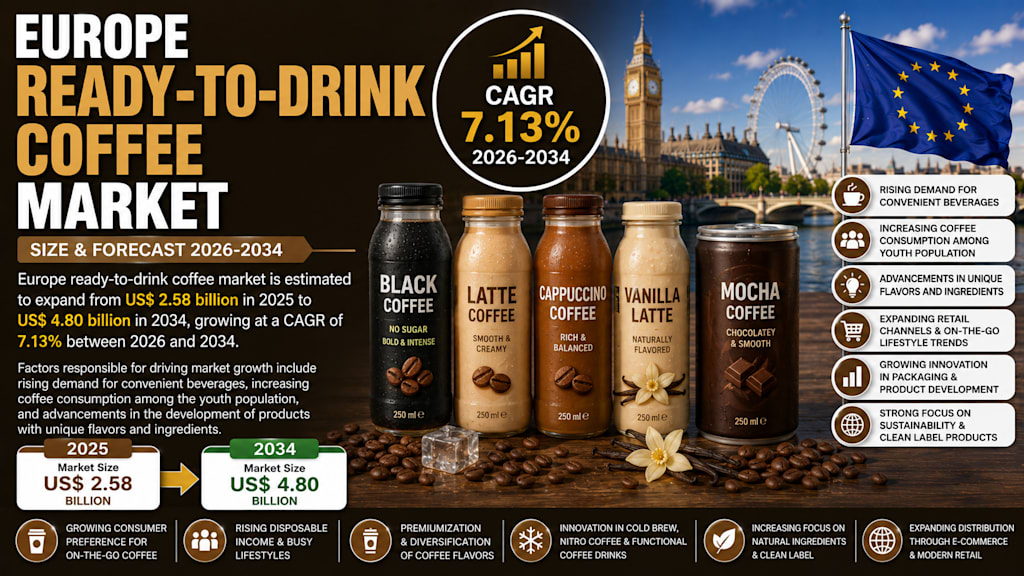
The Europe ready-to-drink coffee market is expected to witness strong growth over the coming decade as consumers increasingly seek convenient, premium, and functional beverage options that fit fast-paced lifestyles. According to Renub Research, the Europe ready-to-drink coffee market is projected to grow from US$ 2.58 billion in 2025 to US$ 4.80 billion by 2034, registering a CAGR of 7.13% from 2026 to 2034. Rising coffee consumption among younger consumers, expansion of retail channels, increasing demand for portable beverages, and continuous product innovation are among the major factors driving market growth across Europe.
Ready-to-drink coffee products are pre-packaged coffee beverages available in convenient formats such as cans, bottles, cartons, and PET containers. These beverages include cold brew coffee, iced coffee, cappuccino, latte, flavored coffee, and functional coffee drinks enriched with proteins, vitamins, or plant-based ingredients.
The market has evolved rapidly as modern European consumers increasingly prioritize convenience without sacrificing flavor or quality. RTD coffee products now appeal not only to office workers and students but also to health-conscious consumers seeking premium beverages with added nutritional and functional benefits.
Convenience and On-the-Go Consumption Are Driving Market Expansion
One of the strongest drivers of the Europe ready-to-drink coffee market is the increasing demand for convenience-oriented beverages.
Modern consumers across Europe lead increasingly busy lifestyles and often seek beverages that can be consumed instantly without preparation. RTD coffee products fit perfectly into this trend because they provide quick access to coffee while maintaining consistent taste and portability.
Office workers, commuters, college students, and travelers increasingly prefer bottled or canned coffee beverages that can easily be consumed during work, travel, or leisure activities.
The report highlights that Europe accounts for approximately 2.53 million tons of global coffee consumption, demonstrating the region’s deep-rooted coffee culture and growing demand for specialty coffee products.
The rise of take-away culture and urban mobility has also strengthened RTD coffee demand. Consumers increasingly choose ready-made beverages over traditional café-prepared coffee because they save time while offering convenience and accessibility.
Expanding retail distribution through supermarkets, convenience stores, vending machines, and online platforms continues making RTD coffee products more accessible across European markets.
Innovation in Flavors and Functional Ingredients Is Reshaping the Industry
Product innovation remains one of the most important growth factors within the Europe RTD coffee market.
Manufacturers continue launching premium coffee beverages featuring unique flavors, specialty coffee blends, plant-based ingredients, and added functional benefits designed to attract health-conscious and younger consumers.
Popular flavor innovations now include:
- Vanilla coffee
- Caramel latte
- Mocha beverages
- Seasonal flavors
- Specialty cold brews
- Organic coffee drinks
Functional ingredients are also increasingly common in RTD coffee products. Manufacturers are incorporating proteins, vitamins, plant-based milk alternatives, and low-sugar formulations to position RTD coffee as both an energy beverage and a wellness product.
The report highlights a major development from June 2024, when Lavazza launched three canned iced coffee drinks, including a protein-enhanced coffee beverage that reflects the growing overlap between functional nutrition and coffee consumption.
Plant-based innovation is another important trend. In September 2024, Alpro introduced a caramel-enhanced version of its Barista range, while Oatly launched two new iced coffee products in November 2025.
These innovations are helping companies differentiate themselves in an increasingly competitive market while creating new consumption occasions for RTD coffee products.
Younger Consumers and Café Culture Are Accelerating Demand
Europe’s younger population is playing a major role in driving RTD coffee market expansion.
Millennials and Gen Z consumers increasingly prefer premium, visually appealing, and flavor-diverse coffee beverages that align with modern lifestyle trends. RTD coffee products appeal strongly to these demographics because they combine convenience, café-style experiences, and product innovation.
Cold coffee beverages such as iced lattes and cold brew drinks are especially popular among younger consumers who seek alternatives to traditional hot coffee.
Social media trends and café culture have further strengthened consumer interest in aesthetically packaged, premium RTD coffee beverages.
The report highlights that in February 2025, Emmi launched the Caffè Latte Zero range in the United Kingdom, featuring no added sugar formulas and sustainable production methods designed to appeal to environmentally conscious Gen Z consumers.
Younger consumers are also more willing to experiment with:
- Vegan coffee products
- Plant-based milk alternatives
- Low-sugar beverages
- Functional coffee drinks
- Specialty cold brew products
These evolving preferences continue shaping the future direction of the European RTD coffee industry.
Cold Brew Coffee Is Becoming One of the Fastest-Growing Segments
The Europe cold brew RTD coffee market is expanding rapidly as consumers increasingly seek smoother and less acidic coffee experiences.
Cold brew coffee is prepared by steeping coffee grounds in cold water for extended periods, creating a smoother, richer, and less bitter flavor profile compared to traditional hot-brewed coffee.
Younger consumers and specialty coffee enthusiasts are especially attracted to cold brew beverages because of their premium positioning and milder taste characteristics.
Health-conscious consumers also increasingly perceive cold brew coffee as a better alternative because it tends to have lower acidity levels.
Manufacturers are actively introducing innovative cold brew products featuring:
- Plant-based milk blends
- Reduced sugar formulas
- Functional ingredients
- Premium specialty beans
- Organic coffee sourcing
Growing availability across supermarkets, cafés, vending machines, and online retail channels continues supporting the rapid growth of the cold brew segment throughout Europe.
PET Packaging and Sustainable Solutions Are Supporting Market Growth
Packaging innovation is becoming increasingly important within the Europe RTD coffee market.
PET bottle packaging remains highly popular because it offers convenience, portability, durability, and lightweight transportation benefits.
Consumers particularly value PET-packaged RTD coffee for outdoor activities, commuting, travel, and on-the-go consumption.
At the same time, sustainability concerns are influencing packaging strategies across the industry. Manufacturers increasingly use recyclable PET materials, aluminum cans, and eco-friendly packaging solutions to address environmental concerns and strengthen brand positioning.
Packaging design also plays a major role in attracting younger consumers. Eye-catching labels, premium bottle aesthetics, and sustainable branding help differentiate products in crowded retail environments.
As sustainability awareness continues growing across Europe, environmentally responsible packaging will remain a key competitive factor.
Supermarkets and Hypermarkets Continue Dominating Distribution
Supermarkets and hypermarkets remain the largest distribution channels for RTD coffee products across Europe.
Consumers value these retail environments because they provide wide product variety, promotional offers, and easy product comparison across multiple brands.
Private-label RTD coffee products are also gaining popularity because they offer lower prices while maintaining acceptable quality standards.
Promotional campaigns, in-store visibility, and expanding shelf space continue strengthening RTD coffee sales across major retail chains.
At the same time, convenience stores, vending machines, and foodservice outlets are becoming increasingly important distribution channels due to rising demand for immediate beverage access.
The report highlights growing importance of automated vending systems in offices, airports, universities, and public spaces where consumers increasingly seek quick access to coffee beverages.
E-Commerce Platforms Are Expanding Rapidly
The Europe RTD coffee e-commerce market is experiencing rapid growth as online shopping habits continue expanding.
Consumers increasingly purchase RTD coffee online because of the convenience of home delivery, wider product variety, and access to premium or niche brands.
Subscription services and bulk purchasing options are also becoming increasingly popular among regular consumers.
Digital marketing, mobile commerce, and online payment technologies continue improving accessibility and customer engagement within the online RTD coffee segment.
Manufacturers are increasingly using e-commerce platforms to launch new products, build brand awareness, and directly engage with younger consumers.
As online grocery shopping becomes more normalized across Europe, e-commerce is expected to become an even more important sales channel for RTD coffee products.
Health Concerns Related to Sugar and Additives Remain Challenges
Despite strong growth prospects, the Europe RTD coffee market faces several important challenges.
One of the biggest concerns is growing consumer awareness regarding sugar content and artificial additives found in many RTD coffee beverages.
Consumers increasingly seek healthier beverages with reduced sugar, cleaner ingredient lists, and fewer preservatives because of rising concerns related to obesity, diabetes, and overall wellness.
This trend is forcing manufacturers to reformulate products while maintaining taste quality and shelf stability.
Balancing flavor, convenience, and health expectations remains a major challenge for RTD coffee producers.
Brands that fail to adapt to clean-label and low-sugar trends may struggle to maintain consumer loyalty in the coming years.
Intense Competition and Price Sensitivity Are Increasing Pressure
The Europe RTD coffee market is highly competitive, with both multinational corporations and local brands aggressively expanding product portfolios.
The report notes that private-label products offered by supermarkets are intensifying pricing pressure across several European markets.
Consumers in some countries remain price-sensitive and may prefer freshly brewed coffee at home or lower-cost café alternatives instead of premium RTD beverages.
Continuous innovation, marketing campaigns, flavor development, and packaging improvements also increase operating costs for manufacturers.
As competition intensifies, brands must balance affordability, premiumization, innovation, and sustainability in order to remain competitive.
Germany Remains One of Europe’s Largest RTD Coffee Markets
Germany represents one of Europe’s most important RTD coffee markets because of its strong coffee culture and highly developed retail infrastructure.
Young professionals and urban consumers increasingly seek convenient coffee beverages that fit busy lifestyles. RTD coffee products are widely available across supermarkets, convenience stores, and vending machines throughout the country.
The report highlights that Germany recorded approximately 50 million RTD coffee sales units in 2022, reflecting strong consumer demand for portable coffee products.
German consumers also increasingly prioritize sustainability and premium quality, encouraging growth in organic, fair-trade, and environmentally friendly RTD coffee products.
United Kingdom Market Benefits from Convenience Trends
The United Kingdom RTD coffee market is growing rapidly because of rising demand for convenient beverages among younger consumers and working professionals.
Consumers increasingly prefer iced coffee beverages, flavored lattes, and functional coffee drinks that can be consumed quickly during busy daily routines.
The UK’s advanced retail and e-commerce infrastructure supports broad product accessibility across supermarkets, convenience stores, and online channels.
Growing interest in low-sugar, plant-based, and wellness-oriented beverages is also encouraging continuous innovation within the British RTD coffee market.
France Continues Supporting Premium RTD Coffee Growth
France’s RTD coffee market is expanding steadily despite the country’s traditionally café-centered coffee culture.
Young consumers and business professionals increasingly purchase RTD coffee because of convenience and changing urban lifestyles.
Premium cold brew beverages and specialty RTD coffee products are gaining popularity among French consumers seeking café-style experiences in portable formats.
The report highlights that in June 2022, Starbucks expanded its RTD coffee line in France by launching the limited-edition Frappuccino Toffee Honeycomb packaged in recyclable glass bottles.
France’s emphasis on premium food quality and innovative beverage experiences continues supporting steady RTD coffee market growth.
Russia RTD Coffee Market Is Expanding Gradually
Russia’s RTD coffee market remains in an early growth stage but continues expanding steadily due to rising urbanization and changing beverage preferences.
Although tea remains highly popular in Russia, coffee consumption is increasing significantly among younger urban consumers.
Western café culture influences, retail expansion, and increasing preference for convenient beverages are all contributing to stronger RTD coffee adoption.
Manufacturers continue developing different flavor options and packaging formats designed to attract cost-conscious consumers while improving accessibility across Russian retail channels.
Key Companies Operating in the Europe Ready-to-Drink Coffee Market
Major companies operating in the Europe ready-to-drink coffee market include Arla Foods, Crediton Dairy, Emmi AG, illycaffè, Lavazza, Nestlé, PepsiCo, Rauch Fruchtsäfte, Sodiaal, and The Coca-Cola Company.
These companies compete through flavor innovation, functional beverage development, premium coffee positioning, sustainable packaging, and strong retail distribution strategies across Europe.
Final Thoughts
The Europe ready-to-drink coffee market is entering a period of sustained expansion as consumers increasingly seek convenient, premium, and wellness-oriented beverage options.
Growing demand for on-the-go coffee, strong café culture influence, rising popularity of cold brew beverages, and continuous innovation in flavors and functional ingredients are all reshaping the market landscape. According to Renub Research, the market is projected to reach US$ 4.80 billion by 2034, highlighting the strong long-term potential of RTD coffee across Europe.
At the same time, manufacturers must navigate rising competition, health-related concerns regarding sugar content, and increasing sustainability expectations. Companies that successfully combine convenience, flavor innovation, healthier formulations, and environmentally responsible packaging are likely to lead the next phase of growth within Europe’s evolving ready-to-drink coffee industry.
About the Creator
Enjoyed the story? Support the Creator.
Subscribe for free to receive all their stories in your feed.
Comments
There are no comments for this story
Be the first to respond and start the conversation.