
Europe Functional Water Market Is Surging as Consumers Choose Healthier and Smarter Hydration Options
Rising health awareness, fitness culture, and demand for low-calorie beverages are transforming the future of the European functional water industry.

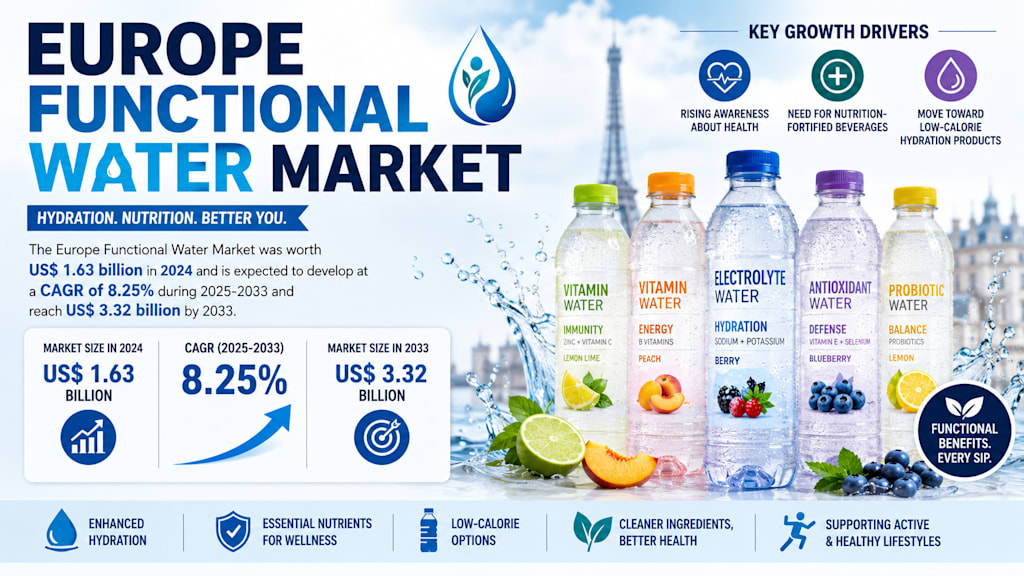
The European beverage industry is undergoing a major transformation as consumers increasingly move away from sugary soft drinks and toward healthier hydration alternatives. Among the fastest-growing segments in this shift is functional water — a category that combines hydration with added nutritional and wellness benefits.
Across Europe, health-conscious consumers are seeking beverages that do more than simply quench thirst. They want products that support immunity, energy, fitness recovery, digestion, beauty, and overall wellness.
Functional water has successfully positioned itself at the center of this trend.
These beverages are enriched with vitamins, minerals, electrolytes, proteins, herbal extracts, antioxidants, and other beneficial ingredients designed to improve health while maintaining low-calorie and clean-label appeal.
According to Renub Research, the Europe Functional Water Market was valued at US$ 1.63 billion in 2024 and is expected to reach US$ 3.32 billion by 2033, expanding at a CAGR of 8.25% during 2025–2033.
This impressive growth reflects how consumer lifestyles, sustainability priorities, and wellness-focused habits are reshaping Europe’s beverage landscape.
What Is Functional Water?
Functional water is enhanced bottled water that contains additional nutrients or health-supporting ingredients beyond basic hydration.
Unlike traditional bottled water, functional water is specifically formulated to provide wellness benefits such as:
Energy support, Immune system enhancement, Electrolyte replenishment, Digestive health, Muscle recovery, Beauty and skin support.
The category includes several product types such as:
Vitamin-infused water, Electrolyte water, Mineral water, Protein water, Herbal-infused water, CBD-infused water, Antioxidant-enriched beverages.
Consumers increasingly view functional water as a healthier alternative to sugary soft drinks, artificial juices, and energy drinks.
This shift is helping the market expand rapidly across Europe.

Health Awareness Is Fueling Market Growth
One of the strongest drivers behind Europe’s functional water market is rising health and wellness awareness.
European consumers are becoming more conscious about sugar consumption, obesity, diabetes, and lifestyle-related diseases.
As a result, many people are reducing their intake of carbonated soft drinks and turning toward healthier hydration options.
Functional water offers several advantages:
Low calorie content, Nutritional enrichment, Hydration benefits, Natural ingredients, Sugar-free formulations.
This combination appeals strongly to modern consumers seeking healthier everyday beverage choices.
Vitamin-fortified water products containing nutrients such as Vitamin C, Vitamin D, Vitamin E, and B-complex vitamins are becoming especially popular among wellness-focused consumers.
Government campaigns across Europe aimed at reducing sugar consumption have also encouraged people to explore healthier beverage alternatives.
In March 2023, Vitaminwater expanded its zero-sugar product range with the introduction of new flavors and reformulated products designed to attract health-conscious consumers.
This reflects the growing demand for functional beverages that combine nutrition with enjoyable taste experiences.
Europe’s Fitness Culture Is Driving Electrolyte Water Demand
The growing sports and fitness culture across Europe is another major factor supporting market growth.
More people are participating in:
Gym workouts, Running and marathons, Cycling, Yoga, Outdoor fitness activities, Home workout routines.
As fitness participation rises, consumers increasingly seek hydration products that support performance and recovery.
Electrolyte-infused water has become especially popular among athletes and active individuals because it helps replenish minerals lost through sweat.
These beverages often contain:
Potassium, Magnesium, Sodium, Calcium.
Performance-oriented hydration products are now considered essential by many consumers involved in endurance sports and active lifestyles.
In February 2024, Liquid Death expanded its beverage lineup with the launch of “Death Dust,” an electrolyte drink mix available in multiple flavors.
This launch demonstrates the growing popularity of sports hydration products across global markets, including Europe.
Sustainability Is Reshaping the Industry
Sustainability has become one of the most important purchasing factors in Europe’s beverage market.
European consumers increasingly prefer brands that prioritize:
Eco-friendly packaging, Ethical sourcing, Carbon reduction, Recyclable materials, Sustainable production methods.
As a result, functional water companies are investing heavily in sustainable packaging innovations.
Many brands now use:
Recyclable PET bottles, Aluminum cans, Biodegradable materials, Refillable bottle systems.
Premium brands are also promoting locally sourced ingredients and environmentally responsible manufacturing practices.
This focus on sustainability has become a major competitive advantage in Europe’s highly environmentally conscious consumer market.
The growing premiumization trend within beverages is also encouraging brands to combine health benefits with sustainability messaging.
Vitamin-Infused Water Is Becoming Extremely Popular
Vitamin-infused water is among the fastest-growing segments in Europe’s functional water market.
Consumers increasingly prefer beverages that support:
Immunity, Energy levels, Mental focus, Skin health, Overall wellness.
Vitamin-enriched water products often contain nutrients such as:
Vitamin C, Vitamin B12, Vitamin D, Vitamin E.
The COVID-19 pandemic significantly increased awareness regarding immune health, accelerating demand for wellness-oriented beverages.
Unlike traditional vitamin supplements, functional water offers a convenient and enjoyable way to consume nutrients throughout the day.
Many brands are also using natural fruit extracts and botanical ingredients to create cleaner and more natural formulations.
This aligns with Europe’s strong clean-label and natural ingredient trends.
Mineral-Infused Water Is Supporting Wellness Trends
Mineral-infused functional water is another rapidly growing category.
These products contain naturally occurring or added minerals that support:
Bone health, Muscle function, Hydration, Detoxification, Electrolyte balance.
Consumers increasingly associate mineral water with wellness and premium hydration.
Alkaline and pH-balanced waters are also gaining attention among health-conscious consumers seeking enhanced hydration experiences.
Naturally sourced European spring water continues to support strong demand for premium mineral-based beverages.
The popularity of wellness tourism and spa culture across Europe has also contributed to increased consumer interest in mineral-rich hydration products.
Berry and Tropical Flavors Are Leading Consumer Preferences
Flavor innovation has become a key factor in the functional water industry.
Consumers increasingly seek beverages that deliver refreshing taste experiences without artificial sugars or additives.
Berry-flavored functional water has become especially popular due to its antioxidant-rich image and naturally refreshing taste.
Popular berry flavors include:
Strawberry, Raspberry, Blueberry, Acai.
These beverages are often marketed as immunity-boosting and antioxidant-rich hydration products.
Meanwhile, tropical flavors such as:
Pineapple, Mango, Coconut, Passionfruit.
are gaining popularity because of their exotic taste and association with natural wellness.
Tropical functional water products are frequently combined with electrolytes and vitamins, making them attractive for both everyday hydration and post-workout recovery.
Packaging Innovation Is Becoming Essential
Packaging has become a major competitive factor in the Europe functional water market.
PET Bottles Still Dominate
PET bottles continue to dominate due to their convenience, portability, and affordability.
However, growing environmental concerns have pushed companies to adopt more sustainable PET solutions, including recycled plastic and bio-based materials.
Brands are under pressure to reduce plastic waste while maintaining cost efficiency.
Aluminum Cans Are Growing Rapidly
Aluminum cans are emerging as a strong alternative to plastic packaging.
Consumers increasingly view canned beverages as more environmentally friendly because aluminum is highly recyclable.
Functional water in cans also carries a premium and modern brand image.
Many companies are launching sparkling and flavored functional water products in sleek aluminum packaging to attract younger and eco-conscious consumers.
Supermarkets and Online Stores Drive Sales
Supermarkets and hypermarkets remain the largest retail channel for functional water sales across Europe.
Retail chains such as:
Tesco, Carrefour, Aldi.
offer extensive product selections and promotional pricing.
Consumers often purchase functional water in bulk through supermarkets due to convenience and affordability.
At the same time, online retail is growing rapidly.
E-commerce platforms allow consumers to access niche and premium functional water brands that may not be widely available in physical stores.
Online retailers also offer:
Subscription services, Personalized hydration plans, Home delivery convenience, Exclusive product bundles.
Digital marketing and influencer promotions have further accelerated online sales growth.
France Is Embracing Premium Functional Water
France’s functional water market is strongly influenced by premium hydration trends and consumer preference for natural products.
French consumers often favor:
Natural mineral water, Botanical infusions, Organic hydration products, Clean-label beverages.
In September 2024, premium sustainable water company BE WTR launched an automated circular bottling facility in Paris aimed at serving luxury hotels and upscale restaurants.
This development highlights how sustainability and premiumization are becoming deeply connected in Europe’s beverage industry.
Germany Leads in Sports Hydration and Sustainability
Germany represents one of Europe’s largest functional water markets.
German consumers strongly prefer:
Electrolyte-enhanced water, Alkaline water, Vitamin-fortified beverages, Sustainable packaging.
The country’s active fitness culture and environmental awareness support strong demand for functional hydration products.
In February 2024, Haus Cramer Group expanded into the bottled water industry with the launch of its mineral water brand “El Puro.”
This reflects the growing interest among beverage companies in healthier hydration categories.
The United Kingdom Market Is Expanding Quickly
The UK functional water market is growing rapidly as consumers increasingly reduce consumption of sugary beverages.
British consumers actively seek:
Low-calorie drinks, Sugar-free hydration, Naturally flavored beverages, Vegan-friendly products.
Supermarkets and online stores are major sales channels across the UK.
Sustainability is also highly important in the British market.
In February 2024, Water Almighty launched the United Kingdom’s first functional water packaged entirely in aluminum.
The brand positioned itself as an eco-friendly alternative to plastic bottled beverages.
This demonstrates how sustainability innovation is becoming central to competitive positioning in the market.
Major Challenges Facing the Industry
Competition from Other Health Beverages
Functional water faces intense competition from several other beverage categories including:
Kombucha, Coconut water, Herbal teas, Sports drinks, Plant-based beverages, Flavored sparkling water.
Consumers seeking wellness benefits have many alternatives available.
This creates strong competition and makes market differentiation challenging for functional water brands.
High Production and Packaging Costs
Functional water production often requires advanced formulations, premium ingredients, and sustainable packaging materials.
Organic ingredients, vitamins, botanical extracts, and biodegradable packaging significantly increase manufacturing costs.
As a result, functional water products are often priced higher than standard bottled water.
This can limit appeal among price-sensitive consumers.
Final Thoughts
The Europe functional water market is entering a powerful growth phase driven by health awareness, sustainability trends, fitness culture, and changing beverage preferences.
Consumers increasingly want drinks that combine hydration with functional wellness benefits while maintaining low-calorie and natural ingredient profiles.
At the same time, eco-friendly packaging and clean-label formulations are becoming essential competitive advantages across the market.
Although challenges related to pricing and market competition remain, the long-term outlook for functional water in Europe remains highly positive.
With the market projected to reach US$ 3.32 billion by 2033, functional water is expected to become one of the most influential segments in the future of Europe’s health and wellness beverage industry.
About the Creator
Enjoyed the story? Support the Creator.
Subscribe for free to receive all their stories in your feed.
Comments
There are no comments for this story
Be the first to respond and start the conversation.