
Europe Confectionery Market Expected to Reach US$ 102.91 Billion by 2034 as Premium and Seasonal Demand Drives Growth
Rising appetite for premium chocolates, festive gifting traditions, and healthier confectionery innovations continue to reshape Europe’s sweet industry.

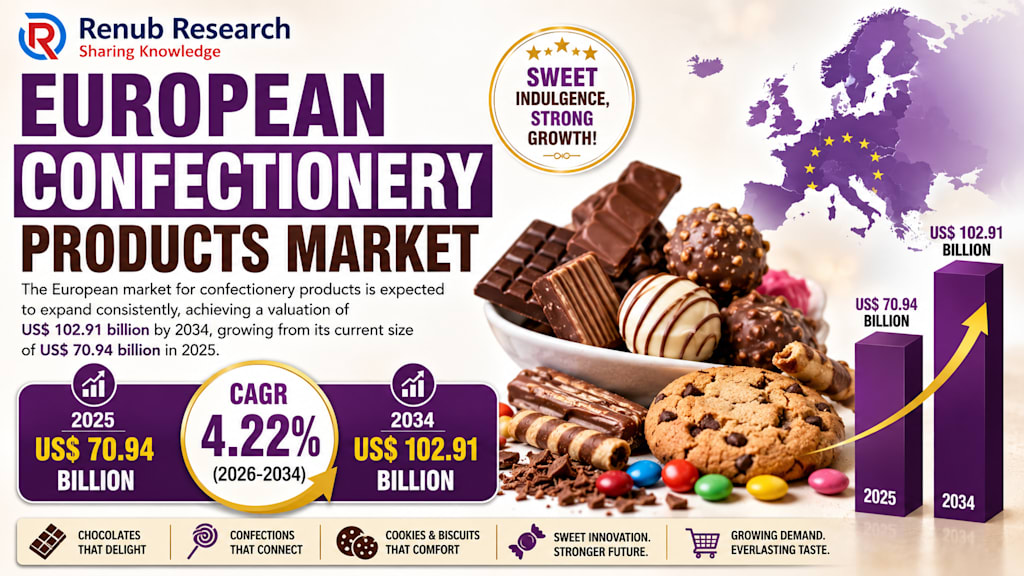
Europe’s confectionery industry is entering a new phase of sustained growth as consumers continue embracing premium chocolates, festive treats, and innovative sweet products that balance indulgence with evolving health preferences.
According to Renub Research, the Europe confectionery market is projected to grow from US$ 70.94 billion in 2025 to US$ 102.91 billion by 2034, expanding at a CAGR of 4.22% during 2026–2034.
The European confectionery sector has long held deep cultural significance across the region. Chocolates, candies, chewing gums, gummies, lollipops, and snack bars remain integral parts of celebrations, gifting traditions, and everyday indulgence.
Today, however, the market is evolving beyond traditional consumption habits. Modern consumers are increasingly seeking premium experiences, healthier formulations, sustainable sourcing, and innovative flavors that align with changing lifestyles.
Premium Chocolates and Artisanal Sweets Are Driving Consumer Interest
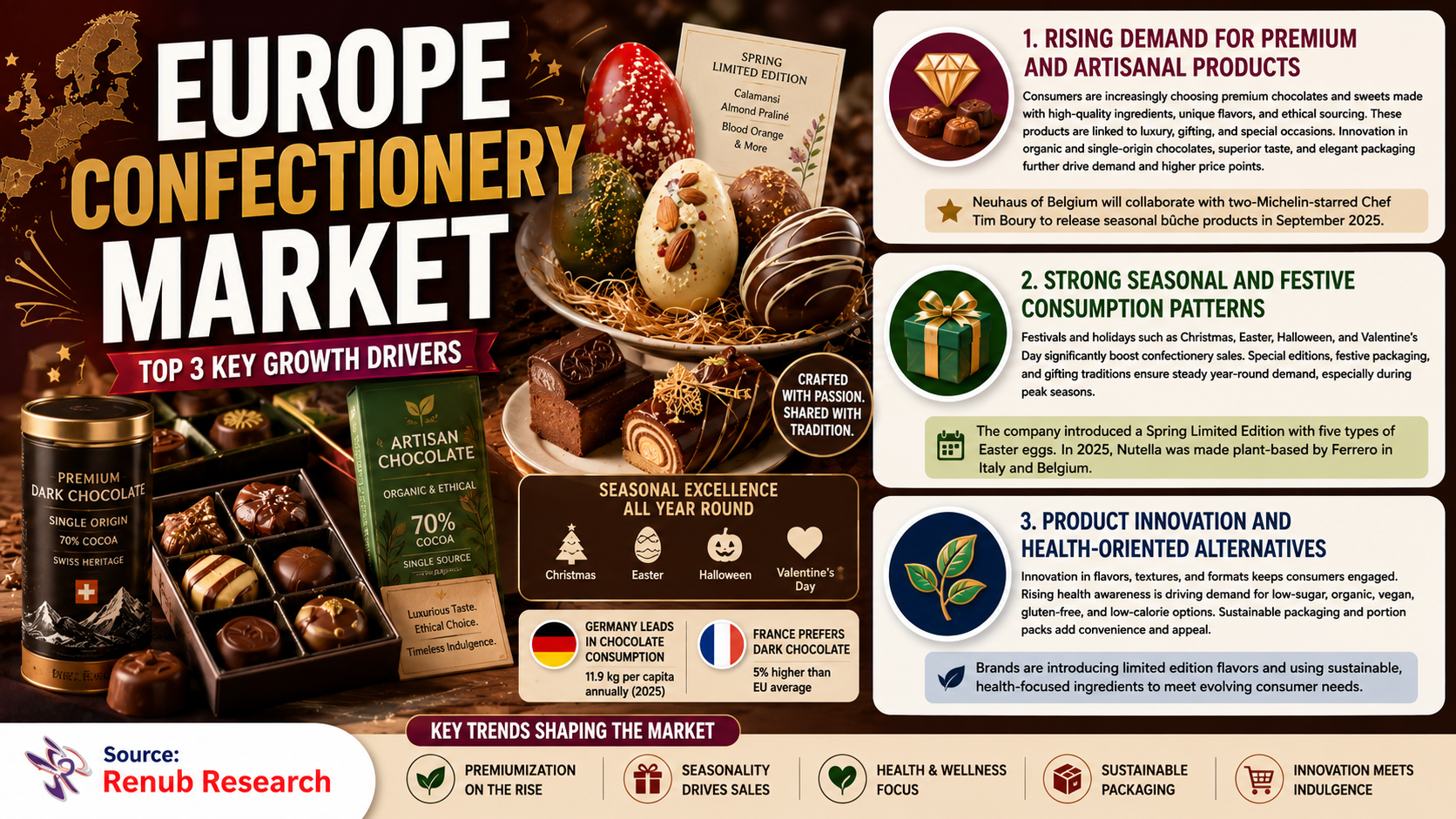
One of the strongest growth drivers in the European confectionery market is the rising demand for premium and artisanal products.
Consumers across Europe are increasingly willing to spend more on high-quality confectionery items that offer:
- Superior ingredients
- Unique flavor combinations
- Ethical sourcing
- Luxury packaging
- Craftsmanship appeal
Premium confectionery products are strongly associated with gifting culture, celebrations, and personal indulgence.
Countries with deep-rooted chocolate-making traditions such as Belgium, Switzerland, France, Germany, and Italy continue to dominate premium product demand across Europe.
Consumers are especially drawn to:
- Single-origin chocolates
- Organic confectionery
- Handcrafted sweets
- Limited-edition products
- Gourmet flavor combinations
Innovation is becoming increasingly important in maintaining consumer excitement.
For example, confectionery brands are planning special-edition launches featuring flavors such as Shortbread and Tokyo Matcha, combining Swiss heritage with modern experimentation in markets like the United Kingdom and Germany.
Meanwhile, Belgium’s Neuhaus partnered with two-Michelin-starred Chef Tim Boury for its seasonal bûche collection launch in 2025, demonstrating the growing importance of luxury collaborations in the confectionery sector.
Seasonal Celebrations Continue to Fuel Market Growth
Festive consumption remains one of the defining characteristics of Europe’s confectionery market.
Demand for confectionery products rises significantly during holidays and special occasions such as:
- Christmas
- Easter
- Valentine’s Day
- Halloween
Consumers frequently purchase chocolates and sweets as gifts, festive decorations, and family treats.
Seasonal packaging, limited-edition collections, and holiday-themed flavors create excitement and encourage impulse buying.
Chocolate eggs, festive candies, pralines, and decorative gift boxes remain especially popular during major celebrations.
Manufacturers strategically align product launches and marketing campaigns with seasonal consumption trends to maximize sales opportunities.
For instance, companies have introduced Spring Limited Edition confectionery collections featuring flavors such as:
- Calamansi
- Almond praline
- Blood orange
to extend seasonal demand and maintain premium pricing strategies.
Germany remains one of Europe’s strongest confectionery markets, with annual chocolate consumption reaching approximately 11.9 kilograms per person.
The predictable nature of seasonal consumption also allows companies to optimize production planning and inventory management.
Healthier Alternatives Are Transforming the Industry
Although indulgence remains central to confectionery consumption, health awareness is beginning to reshape consumer expectations.
European consumers are increasingly interested in products that offer:
- Reduced sugar
- Organic ingredients
- Vegan formulations
- Gluten-free alternatives
- Portion-controlled packaging
Growing concerns surrounding obesity, diabetes, and excessive sugar intake are encouraging manufacturers to reformulate traditional confectionery products.
Governments and health organizations across Europe are also increasing pressure on food manufacturers through:
- Sugar taxation policies
- Marketing restrictions
- Nutritional labeling requirements
As a result, companies are investing heavily in healthier product innovation.
Reduced-sugar chocolates, plant-based candies, sugar-free chewing gum, and functional snack bars are becoming more common throughout European retail shelves.
Packaging innovation is also playing a role, with environmentally friendly materials and portioned snack packs gaining popularity among consumers seeking convenience and moderation.
Chocolate Continues to Dominate the Market
Chocolate confectionery remains the largest and most influential segment within the European confectionery industry.
European consumers maintain strong preferences for various chocolate categories, including:
- Dark chocolate
- Milk chocolate
- White chocolate
- Premium artisan chocolate
- Organic chocolate
Demand for dark chocolate has grown particularly strongly in several European countries due to perceived health benefits and richer flavor profiles.
French consumers, for example, reportedly prefer dark chocolate at rates approximately 5% higher than the broader European Union average.
Innovation within the chocolate segment continues to accelerate through:
- New flavor combinations
- Vegan chocolate products
- Reduced-sugar formulations
- Sustainable cocoa sourcing
- Fair-trade certification
Packaging and branding also remain critical competitive factors in attracting premium buyers.
Bubble Gum and Lollipop Segments Continue to Evolve
The bubble gum segment in Europe remains stable, supported by strong demand among both younger consumers and nostalgic adult buyers.
Manufacturers are increasingly focusing on:
- Sugar-free gum
- Oral-care functionality
- Resealable packaging
- Flavor innovation
Health awareness surrounding sugar consumption has accelerated demand for sugar-free chewing gum alternatives.
Similarly, the lollipop market continues to grow steadily due to affordability, child-friendly appeal, and impulse purchases.
Brands are introducing:
- Organic lollipops
- Vitamin-enhanced products
- Seasonal-themed candies
- Sugar-free options
to attract health-conscious parents and younger consumers alike.
Innovative packaging and creative flavor profiles are also helping brands maintain market relevance.
Online Retail Is Changing Consumer Purchasing Habits
E-commerce has become a major growth driver within Europe’s confectionery industry.
Consumers increasingly prefer online shopping because it offers:
- Product convenience
- Access to luxury brands
- Personalized gifting options
- Subscription services
- International confectionery selections
Online platforms also allow consumers to access niche and premium products that may not be available in traditional retail outlets.
Gift confectionery and customized sweet products are especially popular through digital channels.
The COVID-19 pandemic accelerated online purchasing habits across Europe, and many consumers have continued using e-commerce platforms for confectionery purchases.
Improved logistics and protective packaging solutions have further supported the growth of online confectionery retailing.
Digital marketing campaigns, influencer promotions, and social media advertising are also playing important roles in driving online engagement.
Rising Raw Material Costs Continue to Pressure Manufacturers
Despite steady market growth, confectionery producers face major operational challenges.
One of the most significant concerns is the volatility of raw material prices.
Ingredients such as:
- Cocoa
- Sugar
- Dairy products
are heavily affected by factors including:
- Climate conditions
- Geopolitical instability
- Supply chain disruptions
- Transportation costs
Rising energy and logistics expenses have also increased production costs for manufacturers.
Although companies can attempt to offset higher expenses through premium pricing, excessive price increases may reduce demand among price-sensitive consumers.
Balancing profitability while maintaining product affordability remains a key challenge for the industry.
Germany Remains Europe’s Largest Confectionery Market
Germany continues to dominate the European confectionery industry due to its strong manufacturing base, high consumption rates, and global export presence.
German consumers show strong demand for:
- Premium chocolates
- Organic confectionery
- Sugar-free products
- Seasonal sweets
Christmas and Easter remain especially important sales periods within the country.
Germany’s advanced retail infrastructure, including supermarkets, discount chains, and specialty stores, supports extensive product distribution.
In March 2026, Nestlé SA announced plans to launch a confectionery product in Germany using a cocoa substitute developed by Planet A Foods.
This reflects the growing focus on sustainability and ingredient innovation within the market.
The United Kingdom Continues to Embrace Snack Culture
The United Kingdom’s confectionery market continues expanding due to strong snack consumption habits and high demand for chocolate products.
British consumers increasingly seek:
- Vegan chocolates
- Low-sugar confectionery
- Organic sweets
- Premium treats
- Retail development has strengthened product accessibility across:
- Supermarkets
- Convenience stores
- Online platforms
Private-label products also remain highly important in attracting budget-conscious consumers.
Sustainability and ethical sourcing practices are becoming increasingly influential purchasing factors among UK consumers.
In February 2026, Nestlé Confectionery launched its new Aero Caramel Flavour Bubbles product in the UK market.
France Maintains Its Reputation for Luxury Confectionery
France’s confectionery market remains strongly associated with premium quality and culinary craftsmanship.
Consumers continue favoring:
- Artisan chocolates
- Gourmet sweets
- Luxury confectionery gift boxes
Organic and reduced-sugar confectionery products are also gaining popularity as health awareness grows.
Specialty boutiques and chocolatier stores remain highly important distribution channels in France.
In October 2025, Mars Incorporated announced that its M&M’S brand would become the official supplier of the Tour de France and Tour de France Femmes with Zwift for the next three years.
This partnership highlights the growing importance of experiential branding within the confectionery sector.
Russia’s Market Remains Driven by Affordability and Tradition
Russia’s confectionery market continues to show stable demand driven by affordability and traditional consumer preferences.
Chocolates, candies, and biscuits remain popular across various demographic groups.
While premium imported products are gaining popularity in urban areas, affordability continues to influence purchasing behavior for many consumers.
Seasonal gifting traditions also contribute significantly to market demand throughout the year.
The expansion of supermarkets and convenience stores has improved product accessibility across the country.
Major Companies Operating in the Market
Several leading companies continue shaping the European confectionery industry, including:
- Ferrero International SA
- Mars Incorporated
- Mondelēz International Inc.
- Nestlé SA
- Perfetti Van Melle BV
- Chocoladefabriken Lindt & Sprüngli AG
- Confiserie Leonidas SA
These companies continue investing in sustainability, product innovation, premiumization, and digital retail expansion to strengthen their competitive positions.
Final Thoughts
The Europe confectionery market continues evolving as consumer preferences shift toward premium experiences, healthier ingredients, and sustainable products.
While traditional festive demand remains central to the industry’s success, innovation is becoming increasingly important in maintaining consumer engagement.
Premium chocolates, healthier alternatives, online retail expansion, and luxury collaborations are helping reshape the future of Europe’s confectionery landscape.
Although challenges such as sugar regulations and volatile raw material costs remain significant, the long-term market outlook remains highly positive.
As consumers continue balancing indulgence with wellness and sustainability, Europe’s confectionery sector is expected to maintain strong and stable growth through 2034.
About the Creator
Enjoyed the story? Support the Creator.
Subscribe for free to receive all their stories in your feed.
Comments
There are no comments for this story
Be the first to respond and start the conversation.