
Ethnic Foods Market Outlook: Global Cuisine Popularity and Growth Opportunities
The Ethnic Foods Market is experiencing strong growth driven by increasing consumer interest in diverse global cuisines and authentic culinary experiences.

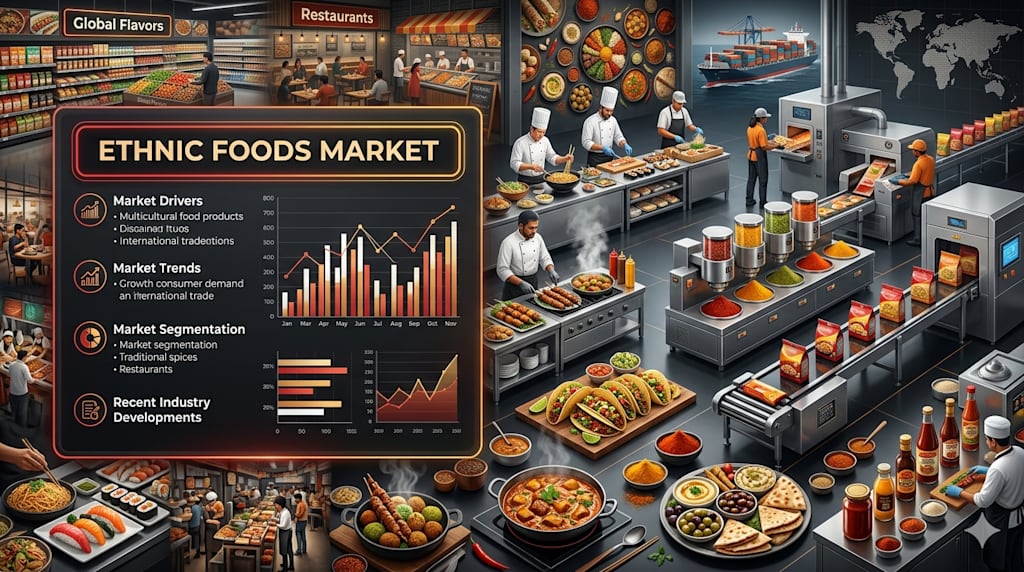
According to IMARC Group's latest research publication, The global ethnic foods market size reached USD 62.8 Billion in 2025. Looking forward, IMARC Group expects the market to reach USD 118.7 Billion by 2034, exhibiting a growth rate (CAGR) of 7.10% during 2026-2034.
How AI is Reshaping the Future of Ethnic Foods Market
- Demand Forecasting and Inventory Management: Machine learning algorithms analyze purchasing patterns, seasonal trends, and cultural celebrations to predict demand for ethnic ingredients with precision. Food companies implementing AI-powered forecasting have improved accuracy by up to 40%, ensuring optimal stock levels during festivals like Diwali, Lunar New Year, or Ramadan while minimizing waste of perishable specialty ingredients.
- Quality Control in Ethnic Food Production: Computer vision systems equipped with AI detect authenticity markers, ingredient consistency, and packaging defects in ethnic food manufacturing. These automated inspection systems verify spice blends, sauce viscosity, and traditional recipe adherence at speeds impossible for manual checks, ensuring that authentic flavors and quality standards reach consumers across global markets.
- Supply Chain Transparency and Traceability: AI technologies combined with blockchain enable end-to-end visibility for ethnic ingredients sourced globally from specialized farms and producers. Predictive analytics identify potential disruptions in international supply networks, helping distributors maintain consistent availability of region-specific products while building consumer trust through verified origin and quality certification.

Ethnic Foods Industry Overview
Globalization and migration patterns are fundamentally reshaping the ethnic foods landscape worldwide. The U.S. Census Bureau projects the foreign-born population will reach nearly 17% by 2060, up from 14% previously, while the multiracial population surged 276% from 9 million to 33.8 million between 2010 and 2020. Strong investor interest is driving expansion, with companies raising USD 3.4 million for ethnic product supermarkets and USD 425 million for global distribution scaling, demonstrating robust commercial momentum.
Ethnic Foods Market Trends & Drivers
The explosive growth of multicultural populations and culinary exploration is the primary driver of ethnic foods demand globally. According to Yelp's Top 100 Places to Eat in the United States, approximately 25% of featured independent restaurants serve Asian or Asian fusion cuisine, while global demand for Asian ingredients surged by around 20% compared to the previous year. The Asian segment captured significant market share due to widespread migration creating large diaspora communities craving regional ethnic cuisines. Social media platforms enable consumers to share unique culinary experiences, amplifying appetite for diverse ethnic foods, while Western influences in developing regions prompt individuals to explore innovative international cuisines, sustaining consistent demand across multiple dining occasions.
Digital transformation and e-commerce expansion are reshaping how ethnic foods reach consumers beyond traditional retail channels. Online grocery platforms and food delivery services eliminate geographic barriers, allowing customers to access diverse ethnic cuisines from any location. Companies are leveraging AI-powered systems for dynamic pricing and personalized recommendations, driving higher basket values through strategic product bundling and cross-selling. The convenience economy is creating new demand channels through cloud kitchens and delivery-only models, enabling ethnic food suppliers to serve broader geographic markets through distributed networks. These digital-first business models democratize access to ethnic products, reaching customers in secondary cities and residential neighborhoods previously underserved by traditional brick-and-mortar ethnic grocery stores.
Retail sector expansion, health consciousness trends, and sustainability initiatives are creating additional growth avenues for ethnic foods. Modern supermarkets and hypermarkets are expanding ethnic food sections to capture 38.5% market share, offering premium specialty products including authentic spices, sauces, ready-to-eat meals, and frozen ethnic entrees targeting home consumption occasions. Rising disposable incomes and growing middle-class households increase purchases of convenient ethnic foods for home preparation, particularly among working professionals seeking time-saving meal solutions. Industry commitment to environmental responsibility appeals to eco-conscious consumers through sustainable packaging innovations, while manufacturers focus on convenient ready-to-eat formats and healthier ingredient formulations. Transportation network improvements reduce delivery times and increase serviceable market areas for ethnic food distributors, while standardized food safety regulations across regions create favorable market conditions benefiting established producers and facilitating market entry for innovative ethnic food products.
Leading Companies Operating in the Global Ethnic Foods Industry
- Ajinomoto Co. Inc.
- Asli Fine Foods
- McCormick & Company Inc.
- MTR Foods Pvt. Ltd. (Orkla ASA)
- Natco Foods Ltd.
- Old El Paso (General Mills)
- Santa Maria UK Ltd. (Paulig Group)
- TRS Ltd.
Ethnic Foods Market Report Segmentation
By Cuisine Type:
- American
- Chinese
- Japanese
- Mexican
- Italian
- Others
Chinese represents the largest class, driven by global popularity and widespread acceptance of dishes like fried rice, stir-fries, and dumplings across diverse consumer segments.
By Food Type:
- Vegetarian
- Non-Vegetarian
Based on the type of food, the market has been segmented into vegetarian and non-vegetarian, where non-vegetarian captures the majority share at 62.3%.
By Distribution Channel:
- Food Services
- Retail Stores
Retail stores have the largest market share owing to widespread presence, consumer preference for tangible shopping experiences, and ability to offer diverse ethnic food varieties.
Regional Insights:
- North America (United States, Canada)
- Asia Pacific (China, Japan, India, South Korea, Australia, Indonesia, Others)
- Europe (Germany, France, United Kingdom, Italy, Spain, Russia, Others)
- Latin America (Brazil, Mexico, Others)
- Middle East and Africa
Asia Pacific exhibits a clear dominance in the ethnic foods market due to diverse culinary traditions, rapid urbanization, and large growing populations with increasing disposable income.
Recent News and Developments in Ethnic Foods Market
- January 2025: McCormick unveiled Aji Amarillo as the 2025 Flavor of the Year, launching new seasoning products and hosting Miami Flavor Night Market to promote the Peruvian pepper expected to achieve 59% menu growth over four years, demonstrating commitment to ethnic flavor innovation.
- October 2024: Nestle announced strategic expansion into the USD 110 billion global cuisine market through enhanced Mexican and Asian food brand offerings, reflecting the company's commitment to capturing ethnic food growth opportunities across multiple international segments.
- June 2024: DDC Enterprise, Ltd., a leading multi-brand Asian consumer food company, acquired Omsom, an Asian food brand. The acquisition aims to accelerate product innovation, cutting research and development timelines by 50% while creating operational synergies to enhance efficiency and financial performance.
- May 2024: General Mills completed the acquisition of Blue Diamond Growers' nutrition business for USD 375 million, adding nut-based snacks and plant-based protein offerings to its ethnic foods portfolio, strengthening its position in the premium convenience segment.
- April 2024: Gymkhana Fine Foods, the Indian restaurant retail venture associated with Gymkhana London formed between JKS Restaurants and former Mars executive Gulrez Arora, secured USD 3 million in seed funding led by venture capital firm CAVU Consumer Partners to expand availability of premium Indian recipes in retail stores.
Note: If you require specific details, data, or insights that are not currently included in the scope of this report, we are happy to accommodate your request. As part of our customization service, we will gather and provide the additional information you need, tailored to your specific requirements. Please let us know your exact needs, and we will ensure the report is updated accordingly to meet your expectations.
About the Creator
Michael Richard
Michael Richard is a Market Research Expert specializing in market intelligence, competitive analysis, and data-driven insights. He helps organizations understand trends and emerging opportunities through in-depth research.
Enjoyed the story? Support the Creator.
Subscribe for free to receive all their stories in your feed.
Comments
There are no comments for this story
Be the first to respond and start the conversation.