
Electric Vehicle Battery Housing Market Is Set for Massive Growth by 2034
Rising EV sales, lightweight materials, and next-generation battery technologies are driving rapid expansion across the global battery housing industry.

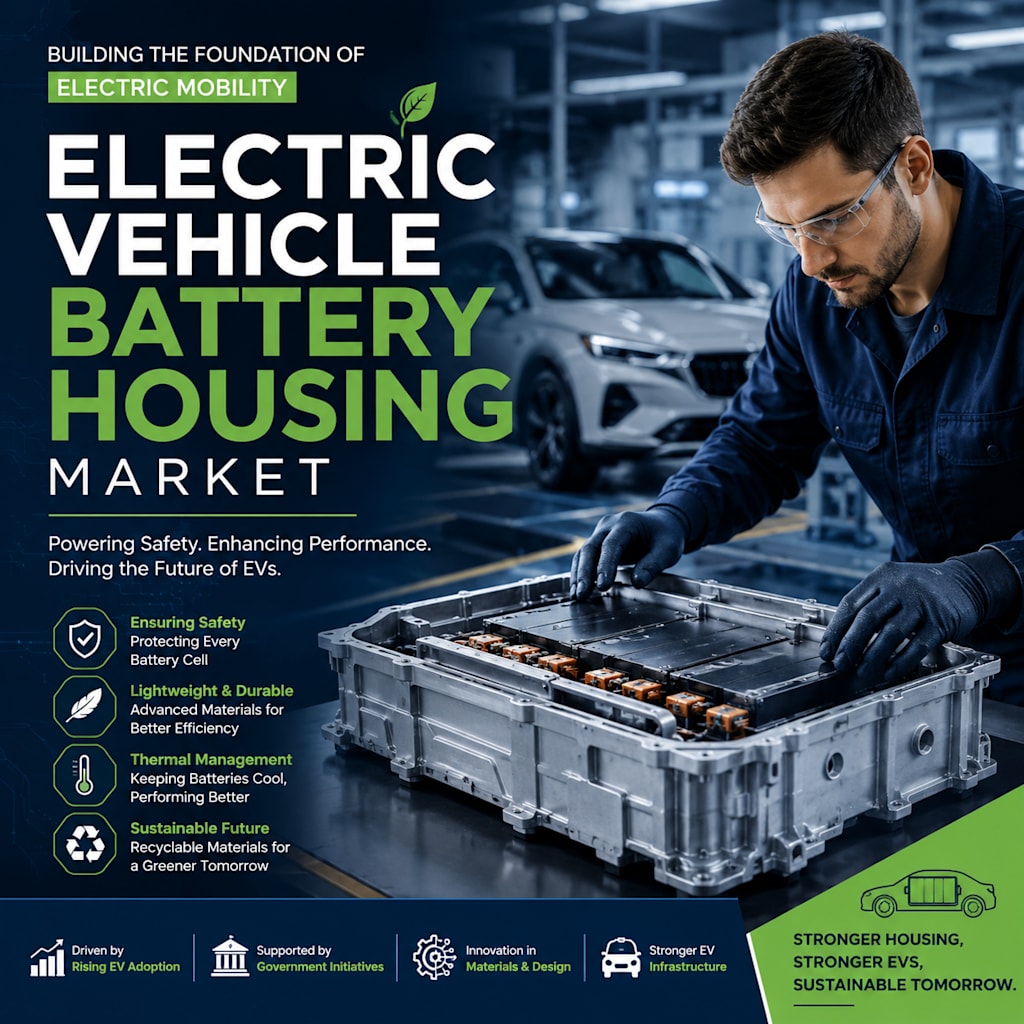
The global electric vehicle market is growing at an unprecedented rate. Governments are pouring billions of dollars into clean transportation, automakers are expanding their EV production lines, and consumers are turning their backs on traditional combustion engines.
However, with so much attention placed on batteries, charging infrastructure, and the vehicle range, there's another crucial part to electric mobility that’s rapidly becoming indispensable- EV battery housing.
EV battery housing may not be the most glamorous part of an electric vehicle, but it plays a massive part in a vehicle’s safety, efficiency, durability and performance. As EV technology develops, manufacturers are increasingly investing more effort into producing stronger, lighter, more thermally efficient enclosures.
A market growing at an exponential rate
The global EV battery housing market size was worth USD 3.1 billion in 2025 and will rocket to USD 23.9 billion in 2034-representing a phenomenal CAGR of 24.79 percent from 2026 to 2034.
This boom shows how crucial battery housing has become in modern EVs. As EVs become increasingly common on our roads globally, so does the need for increasingly safe and advanced protective systems for the vehicle's batteries.
Battery housings are no longer just protective casings; they are engineered systems designed to help boost thermal management, reduce the overall weight of a vehicle, and improve the safety of passengers.
Why battery housing is more important than ever
An electric vehicle battery pack is one of the most valuable and vulnerable parts of an EV.
Battery housings act as protective shells to prevent the battery cells inside from exposure to the surrounding environment:
- The heat and ambient temperatures.
- Any mechanical shocks and vibrations.
- Water, dust and various environmental contaminants.
- Risks associated with fire, thermal runaway, and more.
Efficient housing systems are crucial, otherwise it could seriously compromise a vehicle's performance and safety. The more powerful and energy-dense EVs become, the more the manufacturers are forced to find housings that can manage a higher thermal load while keeping its weight and strength at optimal levels.
Global EV boom fuels demand
The biggest factor driving market growth is the rapid increase in the number of electric vehicle sales worldwide. Countries across North America, Europe and Asia are seeing exceptional EV uptake due to stricter emission regulations being imposed and consumers' eagerness for more eco-friendly vehicles.
Markets such as Europe, the USA and China are already dominated by EV models, with India also showing rapid growth, especially in two-wheeler and three-wheeler markets. The sheer number of electric vehicles on the roads across the globe ensures the ongoing demand for robust battery housings, with every single EV requiring a housing and the size and need for advanced housing increasing with every new model.
Government policies are shaping the future
The influence government policies are having on the EV battery housing market is significant, with many countries providing:
- Subsidies for EV purchases.
- Tax relief benefits.
- Investments for charging infrastructure.
- Financial support for local battery manufacturing.
The United States has federal programs designed to boost domestic EV manufacturing, encouraging companies to develop high-performance battery systems locally. Likewise, Europe’s ambition to reach carbon neutrality and China’s expansionist approach to the EV market are driving massive investment into EV supply chains. The effects of these government policies have a direct impact on battery housing market demand through increased EV manufacturing capacity.
Lightweight materials a competitive advantage
Weight reduction is the key aim of most electric vehicles currently in development, and lighter EVs are more fuel-efficient and capable of a longer driving range. Because of this battery housings are beginning to move away from the heavy conventional materials they were once constructed from, and they're embracing lighter alternatives instead.
Of all the materials that are available aluminum has become the most common, thanks to a number of important benefits:
- Lightweight design.
- Excellent thermal conductivity.
- Resistance to corrosion.
- Good recyclability.
Many companies are also investigating advanced composite and carbon fiber materials to further enhance the efficiency and safety of EV batteries, which has already increased the range of many vehicles without a compromise in structural integrity.
Thermal management comes to the fore
Thermal management is arguably the greatest challenge for EV design. Lithium-ion batteries emit significant heat while both charging and operating; failure to regulate this heat can lead to degradation in performance and life span, as well as safety concerns.
Modern battery housings feature integral thermal management systems that allow for highly efficient heat control. High-performance cooling systems, fire-resistant materials and designs that dissipate heat easily are all standard in next-generation battery housings, with this likely to be a major area of research going forward.
Asia-Pacific is leading the market
Asia-Pacific currently leads the way in terms of EV battery housing market share, making up more than 50% of the total market, due to the overwhelming size of China’s EV manufacturing sector and the heavy government backing for electric mobility. Major battery makers and EV firms in the region are heavily investing in better battery technology and lightweight housings, with the rapid emergence of India as a key growth market further solidifying the dominance of the region. South Korea and Japan are continuing to contribute to the market through innovation and manufacturing of both batteries and their respective housings.
North America and Europe are also experiencing major growth
North America is quickly catching up with huge increases in EV production and government investment in charging infrastructure and clean transportation. Leading companies such as Ford, Tesla, and General Motors are expanding their battery manufacturing capacity, and consequently demand for their own high-performance battery housings. Environmental policies and ambitious climate targets in Europe have led to an accelerated rate of EV adoption and a focus on recyclable and green housing materials.
Innovation drives competition
The competition in the EV battery housing market is intensifying as companies seek to offer more advanced safety and efficiency solutions, with increased investment into:
- advanced aluminum alloys
- composite materials
- structural battery pack integration
- smart thermal management systems
- fire-resistant technologies
There's also been a rise in strategic alliances and joint ventures between automotive firms, battery producers, and component suppliers, as they attempt to fast-track the development of cutting-edge battery housings.
Challenges remain
Although the market is growing extremely quickly, there are still a number of hurdles that the EV battery housing market needs to overcome. The housings themselves need to meet extremely rigorous safety standards, but still retain their lightweight qualities, as well as their low cost of manufacture. Unforeseen price hikes in raw materials, coupled with potential supply chain disruptions, can also affect the efficiency of production. Another key challenge lies in the ever-increasing rate at which battery technology is advancing, which demands constant innovation in housing systems for new battery designs and increased energy density.
The future of EV battery housing
The next generation of EV battery housings will reflect the increasing advancement of electric vehicles. Future possibilities include:
- Ultra-lightweight composite enclosures.
- AI systems that manage battery temperature.
- Entirely recyclable housing materials.
- Integrated structural battery packs embedded directly into vehicle chassis.
- Superior fire protection systems.
Battery housings are now a far more crucial component to the electric vehicle’s efficiency, safety and performance than they previously have been, and their evolution will continue with that of the vehicles themselves.
Conclusion
The global shift towards electric vehicles will revolutionize the car industry, and one of its key supporting technologies will be EV battery housing. As more nations champion cleaner transportation and consumers embrace electric mobility, the demand for sophisticated battery protection will undoubtedly increase.
About the Creator
Robert
Senior Market Researcher at IMARC Group, specializing in global market analysis, industry trends, and data-driven insights across diverse sectors.
Enjoyed the story? Support the Creator.
Subscribe for free to receive all their stories in your feed.
Comments
There are no comments for this story
Be the first to respond and start the conversation.