
Electric passenger cars: The Quiet Revolution Happening in Every Parking Lot Near You
Electric passenger cars are no longer a niche experiment — and the numbers behind their rise will genuinely surprise you

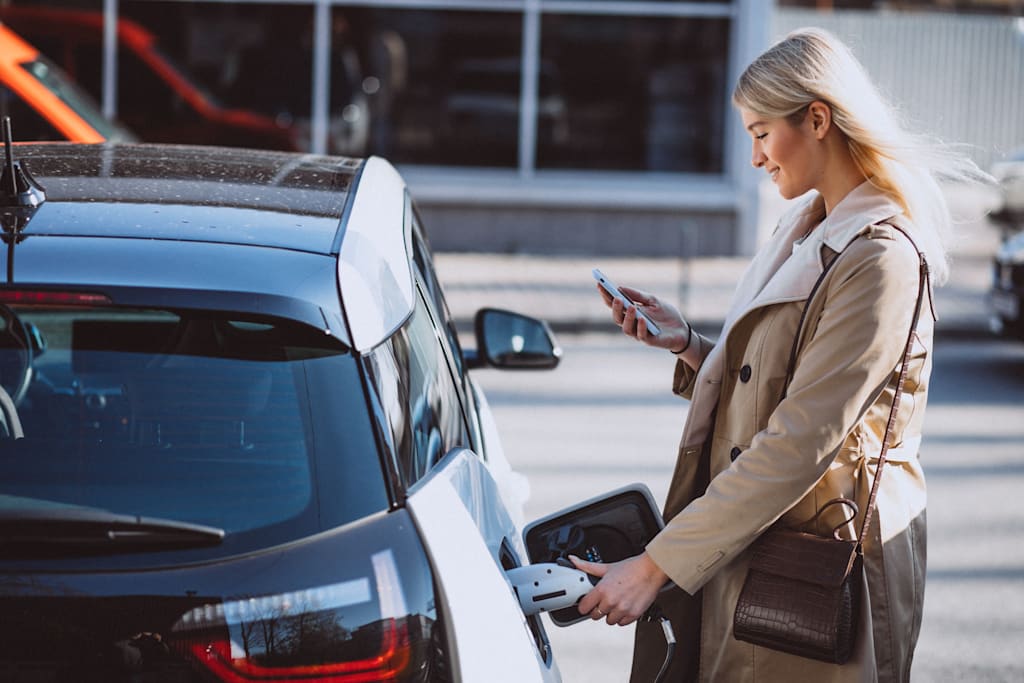
Something shifted in the way people talk about cars. Not long ago, buying an electric vehicle meant explaining yourself at dinner parties. People wanted to know about range anxiety, about charging times, about whether you had really thought this through. Today, the conversation has flipped. Now it is the person still buying a petrol car who gets the questions.
That shift in dinner table conversation is backed by something far more concrete — a global market transformation that is moving faster than almost anyone predicted just five years ago.
The Number That Puts It in Perspective
The global electric passenger cars market was valued at USD 512.81 billion in 2025. By 2035, analysts project it will reach USD 13,032.78 billion — growing at a compound annual rate of 38.2%. That is not a typo. A market growing at nearly 40% per year, sustained over a decade, is the kind of trajectory that rewrites entire industries.
To understand why that number is believable — not just optimistic — you have to look at what is actually driving it. It is not one thing. It is five or six things happening at the same time, reinforcing each other.
Battery costs have dropped more than 80% over the past decade. The cars themselves are becoming genuinely competitive with petrol alternatives on price, not just on running costs. Charging networks are expanding at a pace that makes the infrastructure anxiety of five years ago look quaint. And governments across Europe, Asia, and North America have set regulatory deadlines that make the direction of travel non-negotiable for automakers.
Researchers tracking this transformation in detail — including the team behind the Electric Passenger Cars Market report at Evolvance Market Research — have mapped this shift across vehicle types, regional markets, and competitive dynamics through 2035. What they found is a market not just growing but accelerating.
What People Are Actually Buying
Here is something worth knowing: when people choose electric, they overwhelmingly choose fully battery-powered vehicles over hybrids. Battery Electric Vehicles held a 72.4% share of the electric passenger car market in 2025. The reason is simpler than most analysis suggests — people who have made the switch do not want a half-measure. No engine, no oil changes, no complexity. Just charge and drive.
Compact SUVs lead on body style, which will surprise nobody who has walked through a car park recently. The electric compact SUV hits the sweet spot that buyers across markets consistently gravitate toward — enough space for real life, manageable in a city, affordable enough to justify the switch.
Sedans follow, attracting buyers who care about efficiency and performance. Hatchbacks serve urban buyers for whom the smaller price tag and easier parking matters more than anything else.
The Geography of the Shift
Asia Pacific holds 44.6% of the global electric passenger cars market — and China is the engine of that dominance. The combination of domestic manufacturing scale, government subsidies, and the world's largest consumer base has made China the undisputed leader in EV adoption. When Chinese automakers like BYD entered European markets with competitive pricing, it was not a surprise to anyone who had been watching the trajectory.
Europe is moving fast for a different reason — regulation. The EU's 2035 deadline on new petrol and diesel car sales is not a suggestion. Every major automaker on the continent is building their future around electric platforms, not because they necessarily want to, but because they have no alternative.
North America is accelerating, driven by federal tax credits and billions in investment from Ford, General Motors, and Tesla's continued expansion. The temporary slowdown in US EV sales in 2024 — partly driven by policy uncertainty — is exactly that: temporary. The structural forces pushing electrification forward are not going to reverse.
The Two Things Still Holding People Back
Range anxiety gets the most attention, and it is real but shrinking. Most affordable electric cars now deliver 150 to 250 miles per charge, which covers the vast majority of daily driving for most people. The anxiety is rarely about the commute — it is about the long drive to see family twice a year. As fast-charging infrastructure expands along major corridors, that anxiety loses its grip.
Charging time is the other genuine friction point. Twenty to forty minutes for an 80% charge on a fast charger is not five minutes at a petrol station. For daily drivers with home charging, this is irrelevant — you plug in overnight and wake up to a full battery. For everyone else, it remains a legitimate consideration that the industry is actively solving.
What almost nobody talks about is the ownership experience once the switch is made. Lower fuel costs. No oil changes. Regenerative braking that barely wears out brake pads. Software updates that add features to a car you already own. People who go electric tend to stay electric — and that retention dynamic is one of the reasons the market's growth trajectory is so durable.
Where It Goes From Here
Solid-state batteries — which promise 30 to 50% more energy storage per unit of weight — are moving from research labs toward production timelines. Several major automakers are targeting commercial deployment before 2030. When those batteries arrive, the remaining objections about range and charging time will largely dissolve.
Artificial intelligence is already transforming the in-car experience, with energy management systems that learn individual driving patterns and optimize charging schedules to use off-peak electricity rates. Vehicle-to-grid technology — which lets your car sell stored power back to the grid during peak demand — is beginning to turn the EV from a cost center into something that pays you back.
The full picture of where this market is heading — segmented by vehicle type, region, propulsion technology, and competitive landscape through 2035 — is covered in the Electric Passenger Cars Market research published by Evolvance.
The dinner table conversation has already changed. The market data is just catching up with what people already sense — that the electric car is not coming. It is here.
About the Creator
Suge kun
Research Analyst passionate about data & market insights. I turn complex information into clear, actionable strategies. Detail-driven & results-focused — helping businesses make smarter decisions. — Suge Kun
Enjoyed the story? Support the Creator.
Subscribe for free to receive all their stories in your feed.
Comments
There are no comments for this story
Be the first to respond and start the conversation.