
Egypt Textiles and Apparel Market: Size, Trends, and Growth Outlook
How Sustainable Fashion, Digital Transformation, and Export Expansion Are Driving Market Growth.

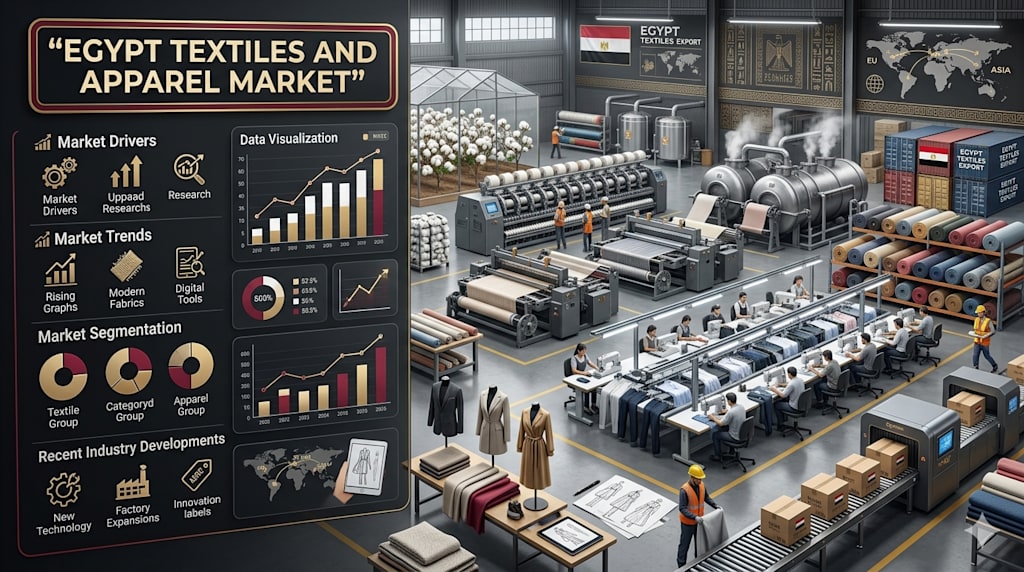
Market Overview
The textiles and apparel market in Egypt is witnessing steady growth, driven by rising domestic demand, increasing exports, and strong government support for the textile industry. Egypt has a long-established textile heritage, supported by its globally recognized high-quality cotton production and expanding manufacturing capabilities.
According to analysis by IMARC Group, the Egypt textiles and apparel market reached USD 24,745.8 million in 2025 and is projected to grow significantly, reaching approximately USD 37,974.6 million by 2034. This reflects a compound annual growth rate (CAGR) of 4.73% during 2026–2034.
This growth is primarily driven by increasing consumer demand for fashionable and affordable clothing, modernization of textile manufacturing facilities, and expanding international trade opportunities.
As the industry evolves, the market is becoming more technology-driven, export-oriented, and sustainability-focused.
Analyze Market Potential with Expert Insights — Download the Sample
Key Drivers Fueling Market Growth
- Strong Demand for Fashionable and Affordable Apparel
Rising disposable incomes and changing fashion preferences are increasing demand for modern clothing and apparel products across Egypt.
- Government Support and Industrial Investments
Government initiatives focused on modernizing textile factories and establishing industrial zones are strengthening production capabilities and attracting investments.
- Expansion of Export Opportunities
Trade agreements and Egypt’s strategic geographic location are supporting textile and apparel exports to Europe, the Middle East, and North America.
Role of Technology and Innovation
- Digitalization in Textile Manufacturing
Technologies such as computer-aided design (CAD), automation, robotics, and AI-powered analytics are improving production efficiency and customization capabilities.
- Sustainable and Eco-Friendly Textile Production
Manufacturers are increasingly adopting organic materials, recycled fibers, and eco-friendly production methods to align with global sustainability trends.
- Growth of Smart Manufacturing Techniques
New textile facilities are integrating smart manufacturing systems and IoT-enabled production management to improve operational transparency and productivity.
Egypt Textiles and Apparel Industry Trends & Drivers
The market is being reshaped by growing consumer awareness regarding sustainable and ethically produced clothing. Demand for eco-friendly fabrics and responsible manufacturing practices is steadily increasing.
Additionally, the rapid expansion of e-commerce platforms is transforming the retail landscape, enabling brands and manufacturers to reach wider audiences through digital channels.
The revival of locally made fashion and traditional Egyptian textiles is also gaining momentum, particularly among younger consumers seeking authenticity and cultural identity in apparel products.
Furthermore, investments in industrial modernization projects and textile hubs are enhancing Egypt’s competitiveness in global textile markets.
Egypt Textiles and Apparel Market Segmentation
Material Type Insights:
- Natural
- Cotton
- Silk
- Others
- Synthetic
- Nylon
- Polyester
- Others
Application Insights:
- Clothing Textiles
- Technical Textiles
- Fashion Textiles
- Home-Decor Textiles
- Others
Regional Insights:
- Greater Cairo
- Alexandria
- Suez Canal
- Delta
- Others
Competitive Landscape
The Egypt textiles and apparel market is highly competitive, with manufacturers and apparel brands focusing on product quality, sustainable production, and export expansion.
Competition is driven by fabric quality, pricing strategies, manufacturing efficiency, and technological innovation. Companies are increasingly investing in automation, eco-friendly production, and digital retail channels to strengthen their market position.
Market Outlook
The Egypt textiles and apparel market is expected to witness steady growth through 2034, supported by rising apparel demand, industrial modernization, and expanding export capabilities.
As sustainability, fashion innovation, and digital commerce continue to influence the industry, companies will need to focus on advanced manufacturing, eco-friendly practices, and global competitiveness.
In the coming years, the market will continue to evolve—becoming more technologically advanced, export-driven, and aligned with modern consumer and sustainability trends.
About the Creator
Jackleen Jackleen
Hi, I’m Jackleen Jackleen, a passionate content writer who loves creating clear, engaging, and value-driven content. I enjoy turning ideas into impactful stories that connect with readers.
Enjoyed the story? Support the Creator.
Subscribe for free to receive all their stories in your feed.
Comments
There are no comments for this story
Be the first to respond and start the conversation.