
Egypt Renewable Energy Market Report 2026–2034 | Green Energy Investments on the Rise
Government Renewable Energy Initiatives, Solar Power Investments, and Energy Diversification Accelerating Egypt Renewable Energy Market Growth

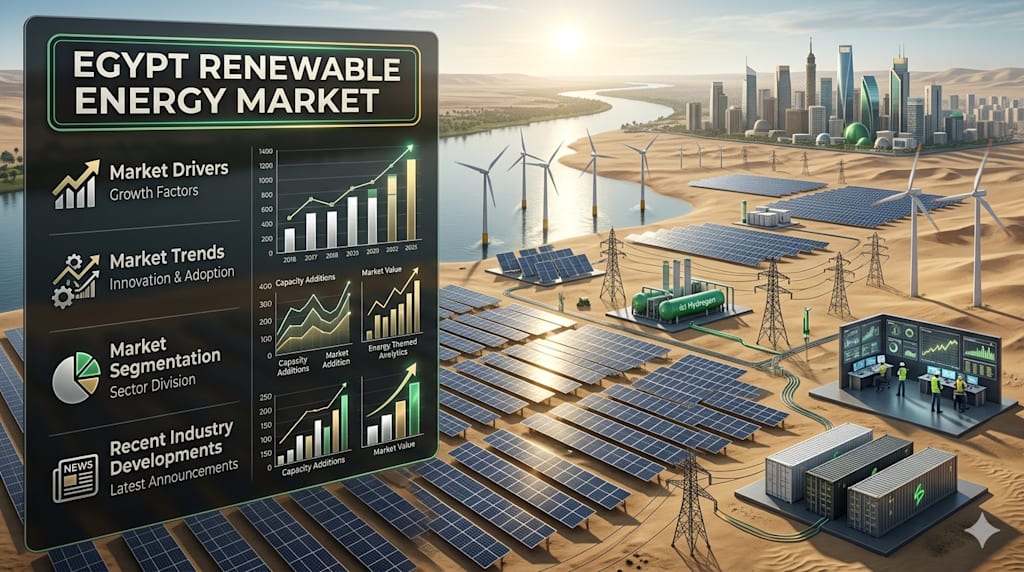
Market Overview
The renewable energy market in Egypt is witnessing remarkable growth, driven by ambitious government sustainability targets, increasing investments in solar and wind energy projects, and rising demand for clean energy solutions. Renewable energy plays a critical role in supporting the country's energy transition strategy, reducing dependence on fossil fuels, and strengthening long-term energy security.
The Egypt renewable energy market size reached USD 3,504.6 Million in 2025 and is projected to grow significantly, reaching approximately USD 5,051.8 Million by 2034. This reflects a compound annual growth rate (CAGR) of 3.94% during 2026–2034.
This growth is primarily driven by expanding solar and wind power capacity, favorable government policies, increasing foreign investments, and growing emphasis on sustainable energy generation.
As the energy sector continues to evolve, the market is becoming increasingly technology-driven, environmentally sustainable, and investment-oriented.
Analyze Market Potential with Expert Insights — Download the Sample
Key Drivers Fueling Market Growth
Strong Government Renewable Energy Programs
Egypt's renewable energy strategy and long-term sustainability goals are encouraging large-scale investments in solar farms, wind energy projects, and clean energy infrastructure. Government initiatives aimed at increasing the share of renewables in the national energy mix continue to support market expansion.
Rapid Expansion of Solar Energy Projects
The country's favorable climatic conditions and high solar irradiation levels are creating significant opportunities for solar power generation. Utility-scale solar parks, rooftop solar installations, and distributed energy systems are contributing substantially to renewable energy capacity growth.
Increasing Investments in Wind Energy Infrastructure
Growing investments in onshore and offshore wind projects are strengthening Egypt's renewable energy ecosystem. Strategic partnerships between government agencies, international investors, and energy developers are accelerating wind power deployment across key regions.
Role of Technology and Innovation
Advanced Solar Photovoltaic Technologies
Renewable energy developers are increasingly adopting high-efficiency solar panels, smart inverters, and advanced energy storage systems to improve power generation efficiency and grid reliability.
Smart Grid and Energy Management Solutions
The integration of smart grid technologies, digital monitoring platforms, and advanced energy management systems is enhancing operational efficiency and supporting the seamless integration of renewable energy sources into the national grid.
Energy Storage and Battery Innovations
Growing investments in battery storage technologies and hybrid energy systems are helping address intermittency challenges and improve the reliability of renewable power generation across the country.
Egypt Renewable Energy Industry Trends & Drivers
The market is being reshaped by increasing solar and wind power deployment, rising private sector participation, and growing investments in clean energy infrastructure. Energy developers are focusing on large-scale renewable projects to support Egypt's long-term sustainability objectives.
Additionally, the adoption of smart energy technologies, grid modernization initiatives, and energy storage solutions is positively influencing market growth. Renewable energy companies are expanding project pipelines, improving operational efficiencies, and strengthening technological capabilities to remain competitive.
The growing emphasis on carbon reduction, energy security, and sustainable economic development is further supporting the Egypt renewable energy industry outlook.
Egypt Renewable Energy Market Segmentation
Type Insights:
- Hydropower
- Wind Power
- Solar Power
- Bioenergy
- Others
End User Insights:
- Industrial
- Residential
- Commercial
Region Insights:
- Greater Cairo
- Alexandria
- Suez Canal
- Delta
- Others
Competitive Landscape
The Egypt renewable energy market is highly competitive, with the presence of renewable energy developers, utility companies, infrastructure providers, engineering firms, and international energy investors. Competition is driven by project scale, technological capabilities, operational efficiency, regulatory compliance, and sustainability performance.
Industry participants are increasingly investing in advanced solar technologies, wind power infrastructure, battery storage systems, and smart grid solutions to strengthen market position. Strategic partnerships, long-term power purchase agreements (PPAs), and infrastructure expansion projects are also contributing to market competitiveness.
Market Outlook
The Egypt renewable energy market is expected to witness substantial growth through 2034, supported by expanding clean energy capacity, increasing government support, rising private investments, and continuous technological advancements.
As the country continues to prioritize sustainable energy development and carbon reduction goals, renewable energy companies will need to focus on innovation, operational efficiency, and infrastructure modernization to remain competitive.
In the coming years, the Egypt renewable energy market will continue to evolve—becoming more technologically advanced, environmentally sustainable, investment-driven, and aligned with Egypt’s long-term energy transition, economic diversification, and climate sustainability objectives.
About the Creator
Jackleen Jackleen
Hi, I’m Jackleen Jackleen, a passionate content writer who loves creating clear, engaging, and value-driven content. I enjoy turning ideas into impactful stories that connect with readers.
Enjoyed the story? Support the Creator.
Subscribe for free to receive all their stories in your feed.
Comments
There are no comments for this story
Be the first to respond and start the conversation.