
Early Arrival
On the Predictive Way Home


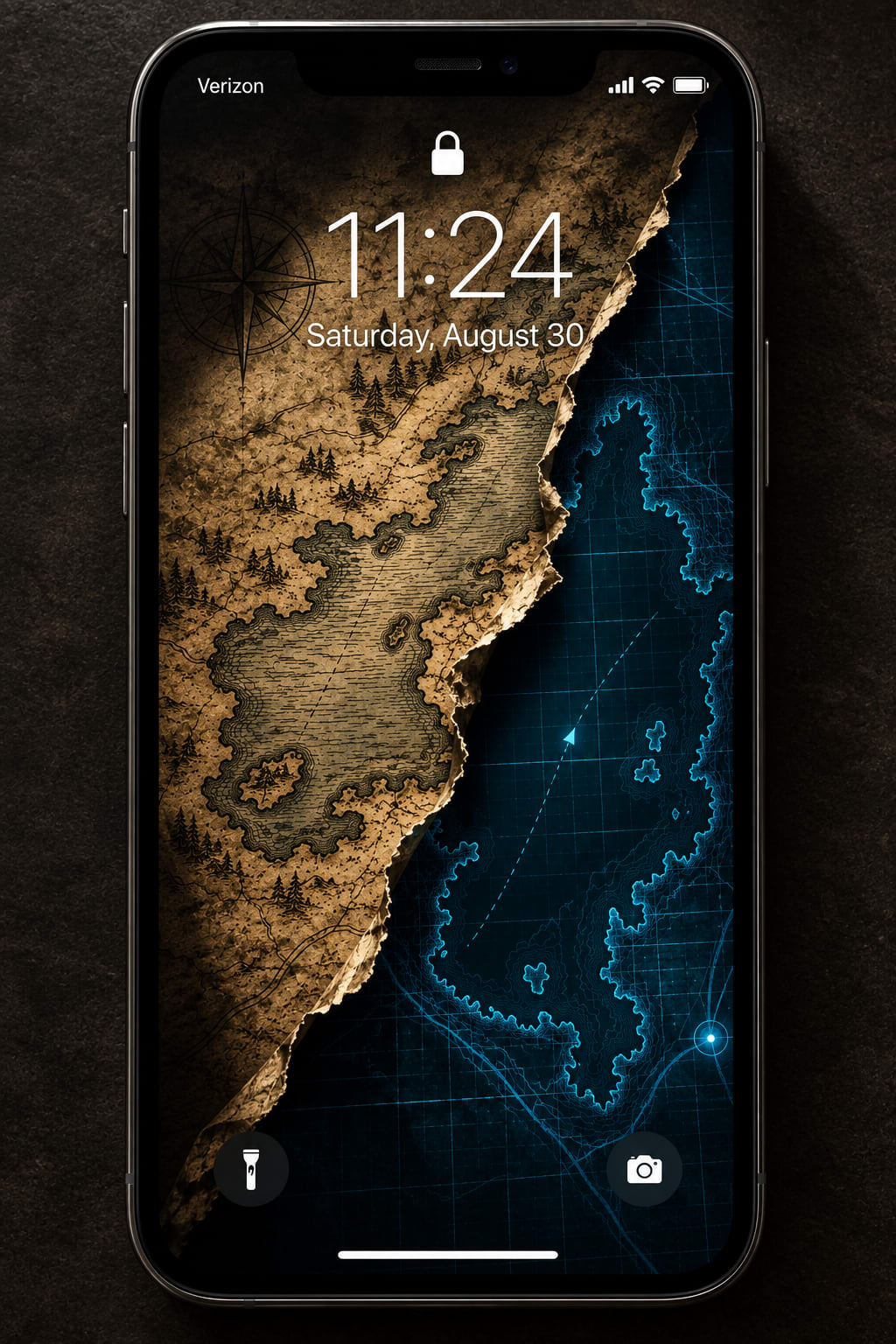
Every Sunday morning, it's the same thing. Drive home through the airport and save $3.42 in tolls. It's not the fastest route, but it's the most direct. By the time you add it all up, habit wins. I keep the map app on, foretelling accidents, speed traps, and alternate routes, but I've driven this route enough times that my hands know the way before my brain does.
Yesterday the app disagreed. It tried a dozen different ways to reroute me around the airport. Left here, U-turn there, cut through this neighborhood. All of it was just to keep me off the one road I wanted to take, and there was no calculated reason not to. It just wouldn't let me; it would not draw a line for me to drive home through the airport. Something in it had updated overnight, and it now had opinions about the route I'd been driving before it even existed. I sat at a light, watching it recalculate again.
I switched to MapQuest last week because it still called Lake Ontario by name, the way I learned it when I was a kid in a school district that sat right up against it, on a shoreline that is older than all these apps by thousands of years. That's not nothing. A map that gets the lake right feels like a map that gets something true right. I picked it the way you pick a friend for their taste in music, not because I ran an internal audit of its routing logic, just because we like the same stuff.
I have no idea whose server decided I should take two U-turns instead of not, or go through a neighborhood I've never been to. I have no idea who sets the toll price that made the airport road worth my while in the first place, or how often that number moves, or for whom. That information is intentionally obscured.
I keep coming back to Aladdin. We all know the story. A kid finds a magic lamp, the genie inside offers three wishes. It made you think, maybe for the first time, about the danger of wishing for the wrong thing or just generally why it's good practice to be careful what you wish for. But the genie’s real trick wasn’t about wishes; it was knowing what you wanted before you said it out loud.
That's the same first wish that these AI systems already got, the ones already sold to us as seamless convenience. Nobody has to rub anything. With all the computing power in the AI world, they pre-grant this trivial wish to know what everyone wants to buy before they buy it. That's it. That's as high as they aimed. Perfect marketing and trade routes. If I think about new running shoes at a red light, an ad for them is already on my screen by the next intersection. The real sleight-of-hand is that the ad doesn’t even bother trying to convince you of anything, it just arrives knowing you were already convinced.
Wish number two mounted on the windshield. Not the map. Not the route. The little transponder itself, the one nobody questions, there behind the rearview mirror with the rosary beads, wired straight into a bank account. Nobody asked for a device with that kind of standing access. It just came bundled with the convenience of not stopping at the booth, the ability to reach into a pocket and take even more with no explanation, and then have the audacity to use the extra money from your pocket to pay for a billboard ad thanking you for using E-pass. There was never a choice.
Wish number three is scarier than the other two, though. It's not hypothetical. It's an actual product. It's not directions or marketing. It's me. Digitized me, modeled closely enough that my next move might not even be my own. Datafied, monetized, extracted bits of me. No one is wishing for a curated feed of their own face, smoothed until they stop noticing it's a mirror, but here it is.
Three wishes, and not one of them asked anything. They just knew, or reached in, but never wondered if they were wrong.
Anyway, I arrived early. I drove straight through the airport and got home earlier than any map predicted. None of them knew that the airport commuters would clear by 10 am, or that the yellow light at McCoy is enough for three more cars to go through the intersection. Not at John Young, though. No. That yellow light will cost those same three cars $156 each.
So what's really going on? Not that the machines are getting smarter. They've gotten very good at sounding a certain way about things they're really just guessing. Very good at wanting on my behalf before I've finished wanting it myself. And very good at calling it all a wish come true.
I made it home on my own. Some knowledge still lives outside of a server, and it’s priceless.
About the Creator
Nicky Frankly
Writing is art - frame it.
Enjoyed the story? Support the Creator.
Subscribe for free to receive all their stories in your feed. You could also become a paid subscriber, letting them know you appreciate their work.
Comments
There are no comments for this story
Be the first to respond and start the conversation.