
Dry Eye Syndrome Market Outlook: Increasing Eye Disorders and Growth Opportunities
The Dry Eye Syndrome Market is experiencing steady growth driven by the rising prevalence of eye-related disorders and increasing screen time among consumers.

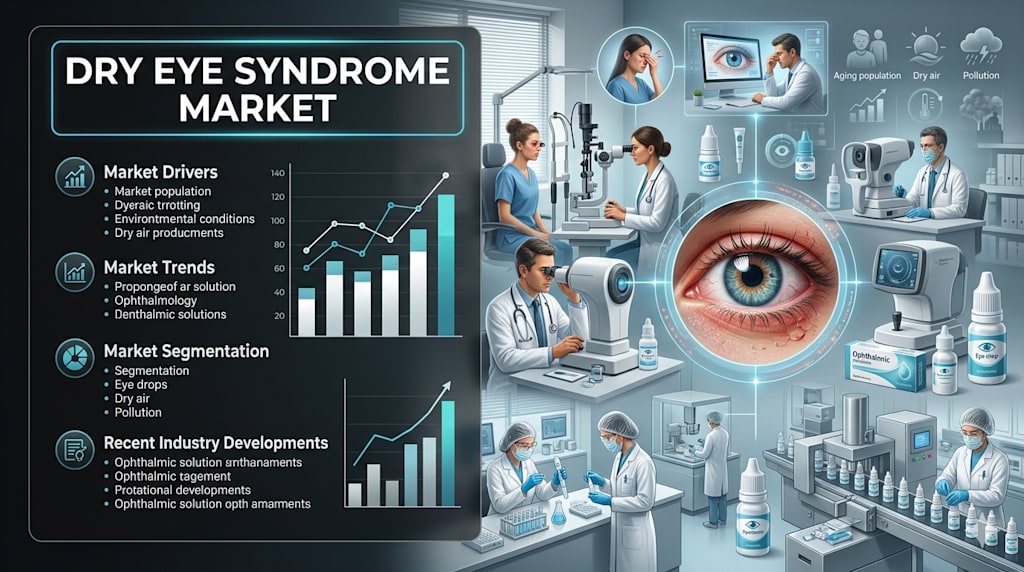
According to IMARC Group's latest research publication, The global dry eye syndrome market size was valued at USD 5.2 Billion in 2025. Looking forward, IMARC Group estimates the market to reach USD 8.0 Billion by 2034, exhibiting a CAGR of 4.83% during 2026-2034.
How AI is Reshaping the Future of Dry Eye Syndrome Market
- Artificial Intelligence Diagnostic Imaging and Analysis: Based on machine learning algorithms utilizing meibography images‚ tear film breakup time and ocular surface measurements‚ artificial intelligence provides highly accurate diagnosis‚ up to a 40% reduction in analysis time‚ early detection and efficient management without having to rely on clinical interpretation of dry eye signs and symptoms․
- Identification of Predictive Risk Factor: Lifestyle patterns‚ environmental exposures‚ and medical history can be analyzed by AI systems for identifying at-risk patients in a pre-symptomatic state․ Such a framework can enable clinicians to predict the likelihood of developing dry eye‚ by analyzing screen time‚ medication usage‚ demographics‚ and other relevant parameters for timely intervention․
- Automated Tear Film Stability Assessment: Clinical images are analyzed to estimate tear film breakup time and diagnose dry eye disease using deep learning models․ This has an accuracy greater than 85% and improves workflow within busy ophthalmology clinics‚ while providing an unbiased measurement of disease across patient population and clinical settings․
Dry Eye Syndrome Industry Overview:
Increasing prevalence of digital lifestyle and aging populations are driving the growth of dry eye syndrome market globally․ In the US‚ an average adult spends nearly 11 h each day looking at screen‚ including 6․5 h per day on computers for office work‚ which decreases the blinking rate and increases tear evaporation․ Older adults‚ especially those over 50 years‚ have a higher prevalence of dry eye due to age-related tear gland degeneration and long-term exposure to medications․ In the U․S․ 21․2% of the population has meibomian gland dysfunction․ This creates unprecedented demand for newer diagnostic and therapeutic devices in hospital pharmacy‚ retail pharmacy‚ and telehealth․
Dry Eye Syndrome Market Trends & Drivers
One area of concern in dry eye syndrome incidence is environmental pollution and climate change‚ which disproportionately affects urban populations․ The WHO estimates that 90 percent of the world breathes polluted air‚ which irritates the ocular surface and destabilizes the tear film․ Indoor pollutants‚ such as volatile organic compounds from cleaning products‚ paints‚ and air conditioning‚ can worsen the air quality and can lead to chronic eye irritation and dryness․
In addition to artificial tears‚ novel treatments for dry eye disease have been approved by the FDA․ In May 2024‚ Bausch + Lomb's perfluorohexyloctane ophthalmic solution (Miebo) became the first and currently only FDA-approved prescription eye drop indicated to treat dry eye disease associated with tear evaporation․ In 2024‚ Lumibird Medical‚ a global developer of components for medical imaging‚ announced Omnicad‚ an AI platform based on HD autofocus cameras‚ meibography and digital assessment of blink rate‚ tear meniscus height and lipid layer thickness․
The diagnosis and treatment of dry eye is becoming more widely available due to increased accessibility of healthcare facilities and the provision of information and advice․ Lifitegrast‚ cyclosporine‚ and corticosteroids are mostly prescribed and dispensed via hospital pharmacies which hold a market share of 56․3%․ Bausch + Lomb's "Eyes Tell the Story" 2025 initiative followed up its 2024 "Know Your Dry Eye" education initiative‚ promoting testimonials‚ survey data and imagery to raise the public's awareness of dry eye symptoms and drive them to talk to their eye care provider․
Leading Companies Operating in the Global Dry Eye Syndrome Industry:
Akorn Operating Company LLC
Alimera Science
Allergan plc.
Auven Therapeutics
Bausch + Lomb Incorporated
GlaxoSmithKline plc
Nicox S.A.
Novartis AG
Otsuka Holdings Co., Ltd.
Santen Pharmaceutical Co., Ltd.
Dry Eye Syndrome Market Report Segmentation:
By Disease Type:
Evaporative Dry Eye Syndrome
Aqueous Dry Eye Syndrome
Evaporative dry eye syndrome leads the market with around 75.5% market share, as it is the most common form linked to modern lifestyle factors including prolonged screen use, air conditioning exposure, and environmental pollutants.
By Drug Type:
Anti-inflammatory Drugs
Lubricant Eye Drops
Autologous Serum Eye Drops
Anti-inflammatory drugs lead the market with around 53.3% market share, as inflammation is a key contributing factor in many dry eye conditions, requiring targeted pharmaceutical intervention beyond simple lubrication.
By Product:
Liquid Drops
Gel
Liquid Wipes
Eye Ointment
Others
Liquid drops lead the market with around 59.3% market share owing to their ease of application, immediate effectiveness, rapid absorption, and widespread availability in both prescription and over-the-counter formulations.
By Distribution Channel:
Hospital Pharmacies
Retail Pharmacies
Online Pharmacies
Hospital pharmacies lead the market with around 56.3% market share due to their role as primary sources for prescription medications and specialized treatments, offering direct access to care for severe or chronic conditions.
Regional Insights:
North America (United States, Canada)
Asia Pacific (China, Japan, India, South Korea, Australia, Indonesia, Others)
Europe (Germany, France, United Kingdom, Italy, Spain, Russia, Others)
Latin America (Brazil, Mexico, Others)
Middle East and Africa
North America exhibits clear dominance in the dry eye syndrome market with over 55.0% market share due to advanced healthcare infrastructure, high geriatric population, extensive screen time, increasing environmental pollution, and substantial consumer healthcare spending.
Recent News and Developments in Dry Eye Syndrome Market
- June 2024: Oculis Holding AG reported positive topline results from its Phase 2b RELIEF clinical trial of licaminlimab‚ an anti-TNFa biologic eye drop with a new mechanism of action for the treatment of DED․ A total of 122 enrolled patients (including subgroup with TNFR1-related genotype) were treated for 6 weeks․ Licaminlimab shows promise as an effective and safe treatment for dry eye disease․
- May 2024: Nordic Pharma‚ Inc․ released LACRIFILL Canalicular Gel in the United States․ The FDA-cleared topical treatment of dry eye disease (DED) is a cross-linked hyaluronic acid (HA) derivative‚ which temporarily blocks (occludes) normal‚ tear drainage through the canalicular system and supports prolonged moisture in the eyes of patients experiencing chronic dry eye symptoms․
- In May 2024‚ Bausch + Lomb's perfluorohexyloctane ophthalmic solution (Miebo) was approved by the U․S․ Food and Drug Administration as the first and only eye drop indicated to treat increased tear evaporation due to meibomian gland dysfunction in dry eye disease with statistically meaningful improvement in signs and symptoms in two Phase 3 clinical trials․
- 2024: Lumibird Medical and Quantel Medical announce their new Omnicad eye diagnostic instrument‚ using artificial intelligence‚ that integrates a high definition autofocus camera with standard and transillumination meibography to fully automatically examine the blink rate‚ tear film stability‚ height of the tear meniscus‚ lipid layer and fluorescein staining‚ along with symptom questionnaires to assess Dry Eye Disease․
- The company completed the acquisition of Xiidra (lifitegrast ophthalmic solution‚ 5% (Xiidra)) from Novartis in September 2023 for an upfront price of USD 1․75 billion and potential milestones of up to USD 750 million․ Xiidra and Bausch + Lomb's recently approved prescription eye drop therapy Miebo will become part of Bausch + Lomb's multidimensional approach to treat dry eye disease․
Note: If you require specific details, data, or insights that are not currently included in the scope of this report, we are happy to accommodate your request. As part of our customization service, we will gather and provide the additional information you need, tailored to your specific requirements. Please let us know your exact needs, and we will ensure the report is updated accordingly to meet your expectations.
About the Creator
Olivia Smith
Olivia Smits is a Research and Marketing Analyst who specializes in market research, trend analysis, and consumer insights. I help businesses make smarter marketing and strategy decisions by turning data into clear, actionable insights.
Enjoyed the story? Support the Creator.
Subscribe for free to receive all their stories in your feed.
Comments
There are no comments for this story
Be the first to respond and start the conversation.