
Dry Beans Market Gains Momentum Through Sustainable Food Trends
The Dry Beans Market is experiencing strong growth driven by increasing consumer preference for affordable, nutritious, and plant-based protein sources.

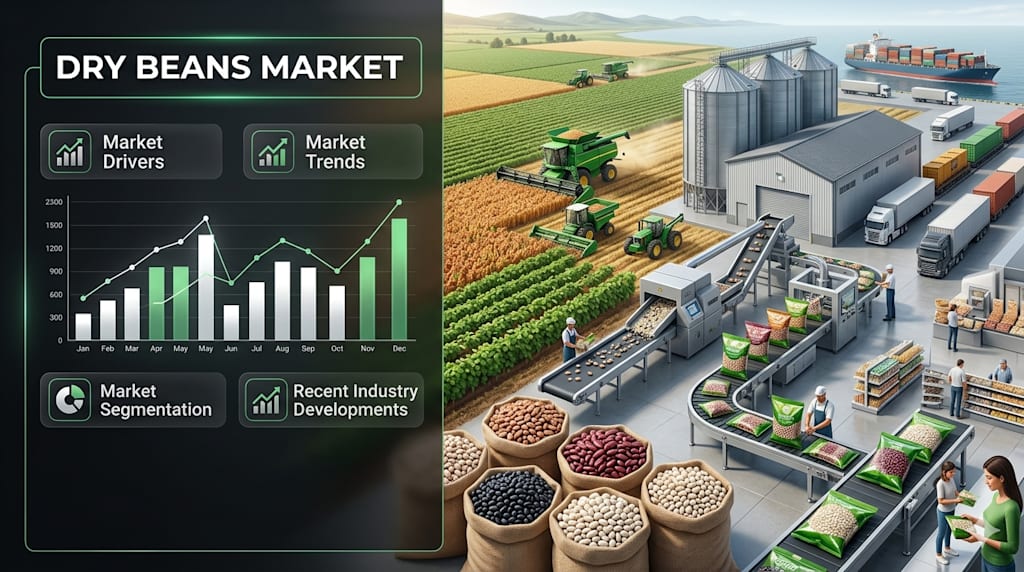
According to IMARC Group's latest research publication, The global dry beans market size was valued at USD 7.5 Billion in 2025. Looking forward, IMARC Group estimates the market to reach USD 10.4 Billion by 2034, exhibiting a CAGR of 3.54% from 2026-2034.
How AI is Reshaping the Future of Dry Beans Market
- Precision Crop Yield Prediction and Resource Optimization: AI models analyze soil conditions, weather patterns, and historical yield data to optimize water usage and fertilizer application for dry bean cultivation. Farmers utilizing AI-driven farm management systems report productivity improvements of up to 25%, reducing waste while maximizing harvest quality and volume across production regions.
- Supply Chain Demand Forecasting and Inventory Management: Machine learning algorithms track consumer preferences, seasonal trends, and distribution patterns to predict demand with remarkable accuracy. Companies implementing these systems have reduced excess inventory by approximately 30%, minimizing storage costs while ensuring consistent product availability across retail channels.
- Automated Quality Control and Defect Detection: Computer vision AI inspects dry beans during processing to identify discoloration, size inconsistencies, and foreign contaminants in real-time. Automated systems process beans at speeds 8x faster than manual inspection, ensuring only premium-grade products reach market while reducing labor-intensive quality assurance operations.

Dry Beans Industry Overview
Global dry beans market benefits from Asia Pacific's vast population of 4.6 billion people and established culinary traditions incorporating mung beans, chickpeas, and black beans into staple diets. India, a major consumer, leverages quick commerce platforms where 31 percent of urban Indians now purchase groceries online, expanding market accessibility. The United States produces significant volumes with exports valued at approximately USD 8.17 million annually, serving major markets including Mexico, South Korea, and Canada. Growing awareness of plant-based proteins and sustainable agriculture practices continues strengthening market fundamentals across producing and consuming regions.
Dry Beans Market Trends & Drivers
Surging Plant-Based Protein Demand and Dietary Shifts: Consumer preference for plant-based diets is accelerating as health awareness increases and environmental concerns about meat production grow. Dry beans, packed with protein, fiber, and essential nutrients, serve as affordable alternatives to animal-based proteins. Vegan and vegetarian populations continue expanding, with flexitarian diets gaining mainstream adoption. The trend is particularly strong among younger demographics seeking sustainable, nutrient-dense foods. Restaurants and food manufacturers increasingly feature bean-based dishes, capitalizing on this cultural shift toward plant-centric eating patterns.
Sustainable Farming Practices and Environmental Benefits: Dry beans require significantly less water, fertilizer, and pesticide compared to other protein crops, making them environmentally attractive. Nitrogen-fixing properties naturally improve soil health, reducing dependency on synthetic fertilizers. Farmers adopting sustainable rotation systems recognize beans as beneficial crops enhancing long-term soil productivity. Government support for sustainable agriculture initiatives strengthens farmer adoption rates. Eco-conscious consumers actively seek beans grown through environmentally responsible methods, driving demand for certified sustainable products.
Rising Convenience Product Innovation and Ready-to-Eat Solutions: Consumer lifestyles increasingly demand time-saving meal options, driving growth in canned, frozen, and pre-cooked bean products. Urban populations prioritize convenience without sacrificing nutrition, creating strong demand for packaged beans requiring minimal preparation. Bean-based snacks, dips, soups, and ready-to-eat meals expand availability beyond traditional formats. Retail innovation in single-serve packaging and microwaveable options caters to busy professionals and households. Market expansion of convenience-oriented bean products demonstrates strong consumer willingness to pay premiums for accessibility and time efficiency.
Dry Beans Market Segmentation
By Bean Type
- Pinto Beans: Largest segment with widespread popularity and versatility across cuisines; dominates market with creamy texture and mild flavor
- Black Beans: Significant segment popular in Latin American, Caribbean, and Asian cuisines
- Navy Beans: Traditional staple in soups, stews, and comfort food preparations
- Red Kidney Beans: Popular in chili and ethnic cuisine applications with distinctive flavor profile
- Great Northern Beans: Moderate share in soup-based and casual cooking applications
- Others: Includes specialty varieties such as chickpeas, lentils, and regional legumes
By Packaging Type
- Plastic Bags: Market leader offering cost-effectiveness, convenience, and extended shelf life preservation
- Cans: Premium segment with ready-to-eat convenience and extended storage capabilities
- Jars: Specialty packaging preferred by consumers seeking premium or organic bean products
- Others: Includes bulk containers and alternative sustainable packaging solutions
By Distribution Channel
- Supermarkets and Hypermarkets: Leading channel providing broad selection, convenience, and competitive pricing to mainstream consumers
- Specialty Stores: Growing segment catering to organic, ethnic, and health-conscious consumer segments
- Departmental Stores: Traditional retail format maintaining moderate market presence
- Convenience Stores: Emerging channel serving immediate purchase needs in urban areas
- Others: Includes food service suppliers, bulk retailers, and direct-to-consumer sales channels
By End Use
- Households: Dominant segment driven by home meal preparation, affordability, and dietary trends
- Restaurants and Hotels: Growing foodservice segment incorporating beans in diverse cuisines and plant-based menu options
- Flour Industry: Expanding segment utilizing beans for gluten-free and protein-enriched flour production
- Others: Includes animal feed, nutraceuticals, and industrial processing applications
By Region
- Asia Pacific: Dominates global market with vast population, established culinary traditions, and rapid urbanization
- North America: Significant segment with strong domestic consumption, robust exports, and health-conscious consumers
- Europe: Substantial market driven by sustainable farming adoption and plant-based dietary trends
- Latin America: Growing segment leveraging cultural significance and expanding middle class disposable incomes
- Middle East and Africa: Emerging market with foodservice sector growth and increasing health awareness
Leading Companies Operating in the Global Dry Beans Industry
- 21st Century Bean Processing LLC
- Kelley Bean Co.
- Hayes Food Products Inc.
- Goya Food Inc.
- Colin Ingredients
- Harmony House Foods, Inc.
- Eden Foods
- Ruchi Foods LLP
- Garlico Industries Ltd. (Garon Dehydrate Private Limited)
Recent News and Developments in Dry Beans Market
- December 2024: Tortilla, a leading UK fast-casual restaurant chain, partnered with Beyond Meat to launch the plant-based Beyond Steak Chimichurri Burrito. The menu innovation combines Beyond Steak, chimichurri mayo, and pinto beans, targeting flexitarians, vegetarians, and meat-conscious consumers.
- November 2024: Lakeside Foods completed the acquisition of Oregon-based Smith Frozen Foods, including production facilities in Weston and Milton-Freewater. The strategic acquisition expands Lakeside's frozen vegetable market presence while strengthening its product portfolio. The deal preserved a substantial portion of Smith's workforce, reflecting commitment to operational continuity in the frozen food sector supporting bean product processing.
- August 2024: Louis Dreyfus Company launched a dedicated global pulses commercialization business unit, aligning with strategic growth initiatives and sustainability objectives. The new unit focuses on major pulses including chickpeas, lentils, and beans, capitalizing on rising demand for plant-based proteins and environmental benefits. The unit leverages LDC's strong presence in production and consumption markets globally.
- April 2024: Integra Foods, a division of Australian Grain Export, commissioned a state-of-the-art faba bean protein facility in Dublin, South Australia.
- February 2024: AGT Foods Africa officially completed the acquisition of Pannar's dry bean seed business. The strategic move, following discussions initiated in March 2023, expands AGT's product offerings and strengthens its African market presence. The acquisition capitalizes on growing dry bean demand across the African continent, supporting regional agricultural development and food security initiatives.
Note: If you require specific details, data, or insights not currently included in the scope of this report, we are happy to accommodate your request. As part of our customization service, we will gather and provide the additional information you need, tailored to your specific requirements. Please let us know your exact needs, and we will ensure the report is updated accordingly to meet your expectations.
About the Creator
Michael Richard
Michael Richard is a Market Research Expert specializing in market intelligence, competitive analysis, and data-driven insights. He helps organizations understand trends and emerging opportunities through in-depth research.
Enjoyed the story? Support the Creator.
Subscribe for free to receive all their stories in your feed.
Comments
There are no comments for this story
Be the first to respond and start the conversation.