
Digital Health Market Set to Surpass US$ 1.39 Trillion by 2033 as AI, Telemedicine, and Wearable Technologies Transform Global Healthcare
From virtual consultations and AI-powered diagnostics to wearable health trackers and remote patient monitoring, digital health is reshaping the future of medicine worldwide.

The Digital Revolution Reshaping Healthcare
Healthcare is undergoing one of the most significant transformations in modern history. Driven by rapid technological innovation, increasing healthcare demands, and changing patient expectations, digital health has emerged as a cornerstone of the future medical ecosystem.
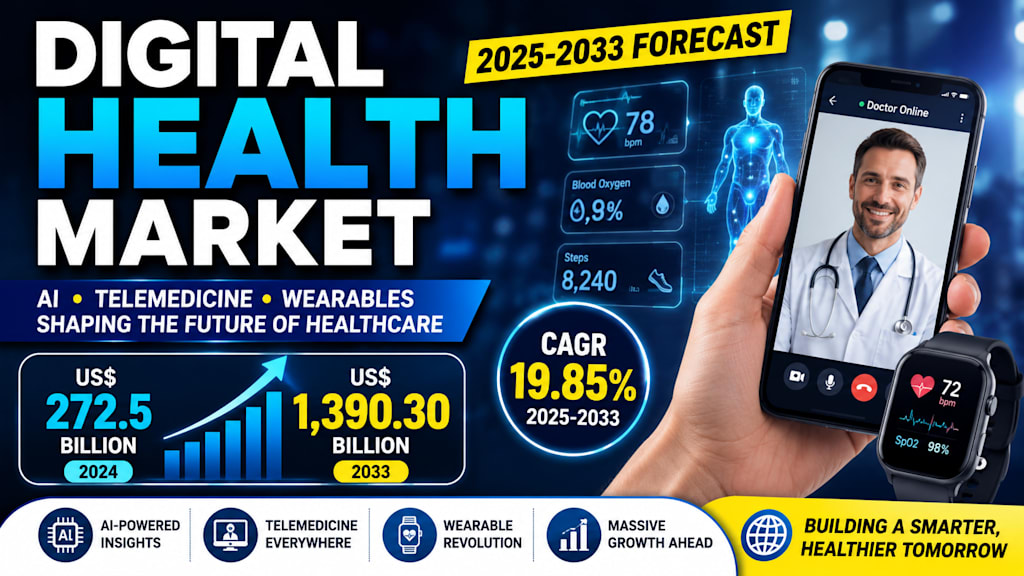
According to Renub Research, the Global Digital Health Market is projected to grow from US$ 272.5 billion in 2024 to US$ 1,390.30 billion by 2033, expanding at a remarkable CAGR of 19.85% during 2025–2033.
The rise of telemedicine, wearable health devices, artificial intelligence, healthcare analytics, and mobile health applications is fundamentally changing how healthcare services are delivered, monitored, and managed. Patients are increasingly embracing digital tools that provide convenience, accessibility, and personalized care while healthcare providers leverage advanced technologies to improve clinical outcomes and operational efficiency.
As healthcare systems worldwide face mounting pressure from aging populations and chronic disease burdens, digital health solutions are becoming indispensable in creating more connected, efficient, and patient-centric healthcare environments.
Why Digital Health Is Experiencing Explosive Growth
Several powerful factors are driving unprecedented growth across the digital health landscape.
The widespread adoption of smartphones and internet connectivity has enabled millions of people to access healthcare services directly from their homes. Mobile applications now allow users to schedule appointments, consult physicians, monitor chronic conditions, track medications, and access personalized health recommendations.
At the same time, healthcare providers are embracing digital technologies to streamline workflows, reduce costs, and improve patient engagement.
Artificial intelligence and machine learning technologies have further accelerated market growth by enabling predictive analytics, faster diagnostics, treatment optimization, and enhanced clinical decision-making.
These innovations are helping healthcare organizations transition from reactive treatment models toward proactive and preventive care approaches.
Mental Health and Women's Health Fuel Digital Innovation
One of the most significant developments in recent years has been the rapid expansion of digital solutions focused on mental health and women's health.
Growing awareness, reduced stigma, and increasing demand for accessible healthcare services have encouraged millions of consumers to adopt digital platforms designed specifically for these areas.
Mental health applications offering therapy sessions, mood tracking, mindfulness exercises, and behavioral support have become increasingly popular among users seeking confidential and convenient care options.
Similarly, women's health technologies are helping users manage fertility, pregnancy, menstrual health, menopause, and maternal care through personalized digital experiences.
Programs such as South Africa's MomConnect initiative have demonstrated how digital health can successfully reach underserved populations while improving maternal healthcare outcomes at scale.
As healthcare becomes increasingly personalized, these specialized digital solutions are expected to remain major contributors to market expansion.
Artificial Intelligence Is Revolutionizing Patient Care
Artificial intelligence is rapidly becoming one of the most influential technologies in healthcare.
AI-powered systems can analyze enormous volumes of medical data in seconds, helping clinicians identify diseases earlier and make more accurate diagnoses.
Machine learning algorithms are being used across numerous healthcare applications, including:
Medical imaging analysis
Drug discovery
Personalized treatment planning
Predictive risk assessment
Clinical decision support
Population health management
Healthcare organizations are increasingly partnering with technology companies to harness the full potential of AI-driven healthcare solutions.
These advancements not only improve patient outcomes but also help reduce administrative burdens and operational costs, making healthcare delivery more efficient than ever before.
Telemedicine Continues to Redefine Access to Care
Telemedicine remains one of the most transformative components of the digital health ecosystem.
The COVID-19 pandemic accelerated global acceptance of virtual healthcare services, demonstrating that high-quality care can often be delivered remotely.
Today, telemedicine platforms enable patients to consult healthcare professionals through video calls, messaging systems, and mobile applications without visiting physical clinics.
This accessibility is particularly valuable for individuals living in rural and underserved regions where healthcare infrastructure may be limited.
Remote care solutions are also improving chronic disease management by allowing healthcare providers to monitor patients continuously through connected devices and digital platforms.
Wearable technology, including smartwatches and fitness trackers, plays a vital role in this ecosystem by collecting real-time health data that supports proactive interventions and personalized treatment strategies.
Wearable Health Devices Are Creating a Connected Healthcare Ecosystem
Wearable healthcare technology has evolved from simple fitness trackers into sophisticated health-monitoring tools.
Modern devices can monitor:
Heart rate
Blood oxygen levels
Sleep quality
Physical activity
Stress indicators
Blood glucose levels
Cardiac rhythms
These devices generate valuable health insights that help both patients and healthcare professionals make informed decisions.
The growing popularity of wearable technology reflects a broader shift toward preventive healthcare and patient empowerment.
Consumers increasingly want greater control over their health, and wearable devices provide the real-time information necessary to support healthier lifestyle choices and early disease detection.
As sensor technologies continue to improve, wearable health devices are expected to become even more integrated into everyday healthcare management.
Challenges Facing the Digital Health Industry
Despite its tremendous growth potential, the digital health market faces several important challenges.
Data Privacy and Cybersecurity
Digital health platforms collect and store vast amounts of sensitive patient information.
As healthcare systems become more interconnected, cybersecurity threats continue to increase. Data breaches, ransomware attacks, and unauthorized access can undermine patient trust and create significant legal and financial consequences.
Healthcare organizations must invest heavily in cybersecurity infrastructure, encryption technologies, and regulatory compliance measures to safeguard patient data.
Regulatory Complexity
The regulatory landscape for digital health remains highly fragmented across countries and regions.
Companies must comply with various healthcare regulations, privacy laws, and medical device standards before launching products in different markets.
These compliance requirements can increase development costs and slow innovation, particularly for startups and emerging healthcare technology providers.
United States Leads Global Digital Health Adoption
The United States remains one of the most advanced digital health markets globally.
The country's growing burden of chronic diseases has created substantial demand for digital healthcare solutions.
Conditions such as diabetes, cardiovascular disease, and cancer require ongoing monitoring and management, making digital health technologies particularly valuable.
Healthcare providers across the United States continue to invest heavily in telehealth platforms, AI-powered diagnostics, electronic health records, and remote patient monitoring systems to improve outcomes while controlling healthcare expenditures.
The combination of advanced technological infrastructure, strong investment activity, and supportive innovation ecosystems positions the United States as a key growth engine for the global digital health industry.
India Emerging as a Global Digital Health Powerhouse
India's digital health market is expanding rapidly due to increasing internet penetration, smartphone adoption, and government-led healthcare initiatives.
The success of the CoWIN platform demonstrated India's ability to deploy large-scale digital healthcare solutions effectively.
With a significant portion of the population residing in rural areas, digital health technologies are helping bridge critical healthcare accessibility gaps.
Telemedicine services, mobile health applications, and remote monitoring platforms are enabling millions of Indians to access healthcare services that were previously unavailable or difficult to obtain.
As digital infrastructure continues to improve nationwide, India is expected to become one of the fastest-growing digital health markets over the coming decade.
10 Recent Developments by Leading Digital Health Companies
1. Apple Inc.
Expanded health monitoring capabilities across wearable devices, enhancing cardiovascular and wellness tracking features.
2. Google
Continued investments in AI-powered healthcare solutions and advanced medical data analytics platforms.
3. Cisco Systems, Inc.
Strengthened secure healthcare connectivity infrastructure supporting telehealth expansion.
4. Epic Systems Corporation
Enhanced interoperability features across electronic health record systems.
5. Hims & Hers Health, Inc.
Expanded virtual healthcare services and personalized treatment offerings.
6. Telefónica S.A.
Increased investment in connected healthcare and remote patient monitoring initiatives.
7. AirStrip Technologies
Advanced mobile clinical surveillance solutions for healthcare providers.
8. SoftServe
Expanded AI and cloud-based healthcare transformation services.
9. QSI Management, LLC
Focused on strengthening healthcare data management and analytics capabilities.
10. Computer Programs and Systems, Inc.
Enhanced healthcare IT solutions supporting provider efficiency and patient engagement.
Final Thoughts
Digital health is no longer a futuristic concept—it is rapidly becoming the foundation of modern healthcare delivery. From artificial intelligence and telemedicine to wearable devices and remote patient monitoring, technology is creating a healthcare system that is more accessible, efficient, and personalized than ever before.
With the global market forecast to reach US$ 1.39 trillion by 2033, digital health represents one of the most transformative opportunities across the healthcare industry. Organizations that successfully integrate innovative digital solutions while addressing privacy, security, and regulatory challenges will be best positioned to shape the future of healthcare worldwide.
As governments, healthcare providers, technology companies, and patients increasingly embrace digital transformation, the next decade promises unprecedented innovation and improved health outcomes on a global scale.
About the Creator
Enjoyed the story? Support the Creator.
Subscribe for free to receive all their stories in your feed.
Comments
There are no comments for this story
Be the first to respond and start the conversation.