
Dental Insurance Market Set to Reach US$ 428.32 Billion by 2033 as Preventive Care and Oral Health Awareness Drive Global Demand
Rising treatment costs, employer-sponsored coverage, and growing awareness of oral health are transforming the dental insurance industry worldwide

For decades, dental care has often been treated as a secondary component of healthcare. However, changing consumer attitudes, rising treatment expenses, and growing awareness of the connection between oral health and overall well-being are reshaping the landscape. Around the world, millions of individuals are increasingly seeking dental insurance to reduce out-of-pocket costs and gain access to preventive and specialized dental services.
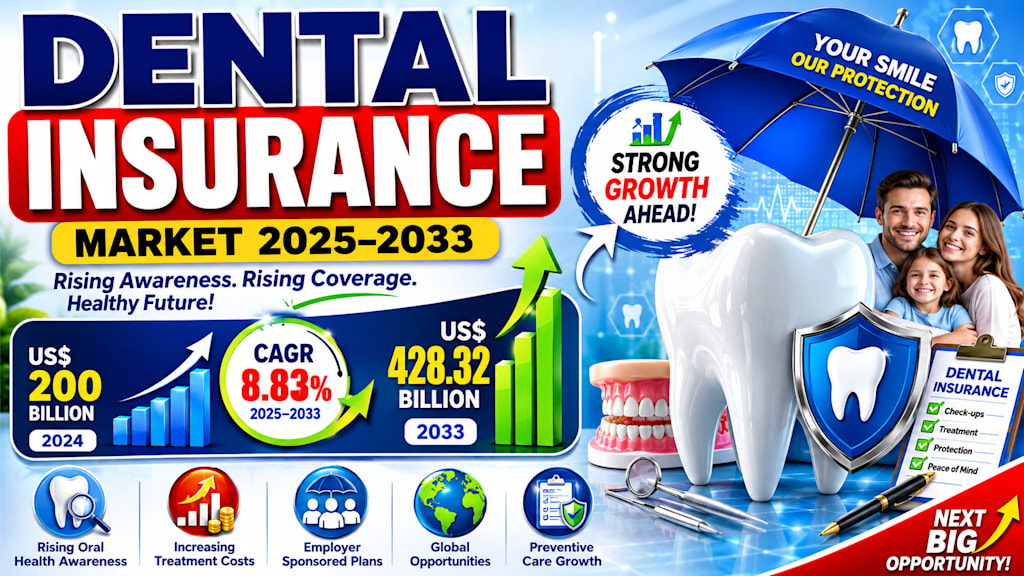
According to Renub Research, the Dental Insurance Market was valued at US$ 200 Billion in 2024 and is projected to reach US$ 428.32 Billion by 2033, expanding at a CAGR of 8.83% during 2025–2033. The market’s strong trajectory reflects growing demand for affordable dental care solutions, expanding employer-sponsored insurance programs, and increasing recognition of oral health as a critical component of overall wellness.
As healthcare systems continue evolving toward preventive care models, dental insurance is becoming an essential financial and healthcare planning tool for families, employers, and individuals worldwide.
Why Dental Insurance Is Becoming More Important Than Ever
Dental insurance serves as a financial safety net that helps cover routine and advanced dental treatments. Most plans include preventive services such as examinations, cleanings, and diagnostic procedures while also providing partial coverage for more expensive treatments including fillings, crowns, root canals, and orthodontics.
The increasing adoption of dental insurance stems from a simple reality: dental treatment costs are rising rapidly across many countries. Procedures that once seemed affordable can now create significant financial burdens, especially for households without insurance coverage.
At the same time, healthcare professionals continue emphasizing the connection between oral health and chronic diseases. Research increasingly links poor oral hygiene to conditions such as cardiovascular disease, diabetes, respiratory illnesses, and pregnancy complications. As awareness grows, preventive dental visits are becoming a priority rather than an afterthought.
This shift in perception is helping insurers attract new policyholders who recognize that investing in preventive care today can reduce costly health complications tomorrow.
Growing Oral Health Awareness Fuels Market Expansion
One of the most influential drivers behind dental insurance growth is increased public awareness of oral health.
Globally, oral diseases affect billions of people. Untreated tooth decay remains one of the most common health conditions worldwide, impacting quality of life, productivity, and long-term health outcomes.
Public health campaigns, educational initiatives, and healthcare organizations have intensified efforts to educate consumers about the importance of maintaining healthy teeth and gums. Events such as World Oral Health Day continue encouraging individuals to adopt preventive dental habits and schedule regular checkups.
As consumers become more proactive about maintaining oral health, demand for insurance plans that facilitate affordable access to dental services continues to increase.
The result is a growing market where prevention is increasingly valued over treatment, creating long-term opportunities for insurers and healthcare providers alike.
Rising Dental Treatment Costs Create Strong Demand
Another significant factor driving market growth is the escalating cost of dental procedures.
Advanced dental treatments such as implants, orthodontic procedures, cosmetic dentistry, and oral surgeries can cost thousands of dollars. Even basic services like fillings, x-rays, and routine cleanings contribute to substantial annual healthcare expenses.
For many individuals, paying entirely out-of-pocket is no longer practical. Dental insurance provides financial predictability by spreading costs through monthly or annual premiums while reducing unexpected treatment expenses.
This affordability factor is becoming particularly important in countries where dental care receives limited public funding and patients bear a significant portion of treatment costs themselves.
As treatment costs continue climbing globally, more consumers are expected to view dental insurance as a necessary investment rather than an optional expense.
Employer-Sponsored Plans Continue to Strengthen Adoption
Corporate employers play a critical role in expanding dental insurance coverage.
In countries such as the United States, Canada, the United Kingdom, and many European nations, dental insurance is increasingly included within employee benefits packages. Organizations recognize that comprehensive healthcare benefits help attract talent, improve employee satisfaction, and support workforce productivity.
Group dental insurance plans typically offer lower premiums and broader coverage compared to individual policies. This affordability encourages higher enrollment rates among employees and their families.
As companies continue investing in employee wellness programs, employer-sponsored dental coverage is expected to remain a major growth engine for the industry.
Challenges Limiting Wider Adoption
Despite impressive growth prospects, the dental insurance market faces several obstacles.
Limited Coverage and High Out-of-Pocket Costs
Many dental insurance policies include annual maximum limits, waiting periods, exclusions, and partial reimbursements for major procedures.
Consequently, policyholders may still face substantial out-of-pocket expenses despite maintaining insurance coverage. This can create dissatisfaction among consumers who expect more comprehensive financial protection.
Differences in coverage structures between providers also make policy comparisons challenging, often leading to confusion during plan selection.
Low Insurance Penetration in Developing Markets
While developed nations enjoy relatively mature dental insurance ecosystems, many emerging economies remain significantly underinsured.
Limited awareness, affordability concerns, and low trust in insurance providers contribute to slow adoption rates. In several countries, dental care is still largely financed through direct payments at the point of service.
However, these underpenetrated markets also represent substantial future opportunities. As incomes rise and healthcare literacy improves, insurers have significant room for expansion.
PPO Plans Lead Market Preference
Among available coverage options, Preferred Provider Organization (PPO) plans remain the most popular.
PPO plans provide policyholders with access to extensive provider networks while allowing flexibility to seek care outside the network when necessary. Although out-of-network services generally involve higher costs, consumers appreciate the freedom of choice these plans offer.
Employers also favor PPO structures because they balance affordability, accessibility, and provider flexibility.
The combination of convenience and comprehensive coverage continues making PPO plans a dominant segment within the global dental insurance market.
Preventive Insurance Gains Momentum
Preventive dental insurance is emerging as one of the industry's fastest-growing segments.
These plans emphasize routine examinations, cleanings, fluoride treatments, and diagnostic screenings designed to identify oral health issues before they become serious.
Healthcare systems increasingly recognize that prevention is more cost-effective than treatment. Regular dental visits help reduce the need for expensive procedures while improving long-term health outcomes.
Families with children, young professionals, and health-conscious consumers are particularly attracted to preventive-focused insurance plans that support proactive oral care.
Adults Remain the Largest Consumer Segment
Adults continue to represent the largest demographic group within the dental insurance market.
This population experiences a higher incidence of dental conditions including cavities, gum disease, tooth loss, and restorative treatment requirements.
Adults are also more likely to require costly procedures such as implants, crowns, bridges, and root canals. As a result, comprehensive insurance coverage becomes increasingly valuable.
Furthermore, many retirees lose employer-sponsored benefits and turn to private insurance solutions to maintain access to affordable dental care.
The growing awareness of links between oral health and chronic disease management further supports continued adoption among adult consumers.
United States Maintains Market Leadership
The United States remains the world's largest dental insurance market.
Several factors contribute to this leadership position, including high dental treatment costs, extensive employer-sponsored coverage programs, and a well-established private insurance industry.
Millions of Americans receive dental benefits through workplace plans, while insurers offer a wide range of individual and family policies.
Despite strong market maturity, challenges persist. Coverage disparities among low-income populations and retirees continue creating opportunities for innovation and policy improvements.
Insurance providers are increasingly incorporating digital tools, value-based care models, and advanced analytics to improve patient experiences and treatment outcomes.
Emerging Opportunities in India
India represents one of the most promising growth markets for dental insurance globally.
The country's large population, expanding middle class, increasing healthcare awareness, and rising disposable incomes create favorable conditions for market expansion.
Historically, dental expenses in India have been paid directly by patients. However, changing consumer preferences and growing awareness of preventive care are encouraging demand for insurance solutions.
Insurers are gradually introducing standalone dental products and dental riders within broader health insurance packages.
The rapid growth of digital insurance platforms, telehealth services, and healthcare awareness campaigns is expected to accelerate adoption across both urban and semi-urban populations.
As access improves, India could become one of the fastest-growing dental insurance markets during the forecast period.
Digital Innovation Is Reshaping the Industry
Technology is transforming how dental insurance providers operate.
Artificial intelligence, digital claims processing, teleconsultation services, mobile applications, and automated provider networks are helping insurers improve efficiency and customer experiences.
Digital tools enable faster claims approvals, better treatment transparency, and enhanced communication between providers, insurers, and patients.
These innovations not only improve operational efficiency but also increase trust and satisfaction among policyholders.
As healthcare digitization accelerates worldwide, technology-driven solutions are expected to become a defining competitive advantage within the dental insurance industry.
10 Recent Company Developments Shaping the Dental Insurance Market
1. MetLife
Introduced the MetLife SpotLite on Oral HealthSM program to help members identify high-quality dental providers through a value-based assessment model.
2. AXA Global Healthcare
Launched a comprehensive digital healthcare platform integrating insurance management, virtual consultations, and wellness monitoring.
3. Overjet
Established the Dental Clarity Network (DCN) to improve collaboration between insurers and dental providers through AI-powered technologies.
4. Star Health Insurance
Partnered with Toothlens to introduce India's first cashless Dental OPD insurance solution.
5. Toothlens
Expanded access to affordable dental care through innovative insurance integration and digital dental service platforms.
6. Bupa Arabia
Launched enhanced mobile app capabilities allowing policyholders to customize healthcare coverage and hospital room preferences digitally.
7. Cigna
Continued expanding digital member engagement tools and preventive care-focused dental coverage offerings.
8. Allianz SE
Strengthened global health insurance portfolios through broader dental coverage integration and customer-centric insurance services.
9. UnitedHealthcare
Enhanced provider network accessibility and digital claims management solutions for dental policyholders.
10. Aflac
Expanded supplemental dental insurance offerings focused on affordability and preventive care utilization.
Final Thoughts
The dental insurance market is entering a period of significant transformation. Rising treatment costs, growing oral health awareness, employer-sponsored benefits, and digital innovation are collectively driving unprecedented demand across developed and emerging economies.
With the market projected to grow from US$ 200 Billion in 2024 to US$ 428.32 Billion by 2033, insurers, healthcare providers, employers, and policymakers have a unique opportunity to expand access to affordable dental care while improving public health outcomes.
As preventive healthcare gains momentum and consumers prioritize long-term wellness, dental insurance is poised to become an increasingly essential component of healthcare planning worldwide. The companies that successfully combine affordability, accessibility, and technology-driven experiences will likely emerge as the leaders of this rapidly expanding global market.
About the Creator
Enjoyed the story? Support the Creator.
Subscribe for free to receive all their stories in your feed.
Comments
There are no comments for this story
Be the first to respond and start the conversation.