
Data Preparation Market Trends: AI-Driven Automation, Self-Service Analytics & Industry Forecast to 2034
How augmented data management, AI-driven insights, and workflow automation are streamlining data preparation and reducing manual intervention in analytics pipelines

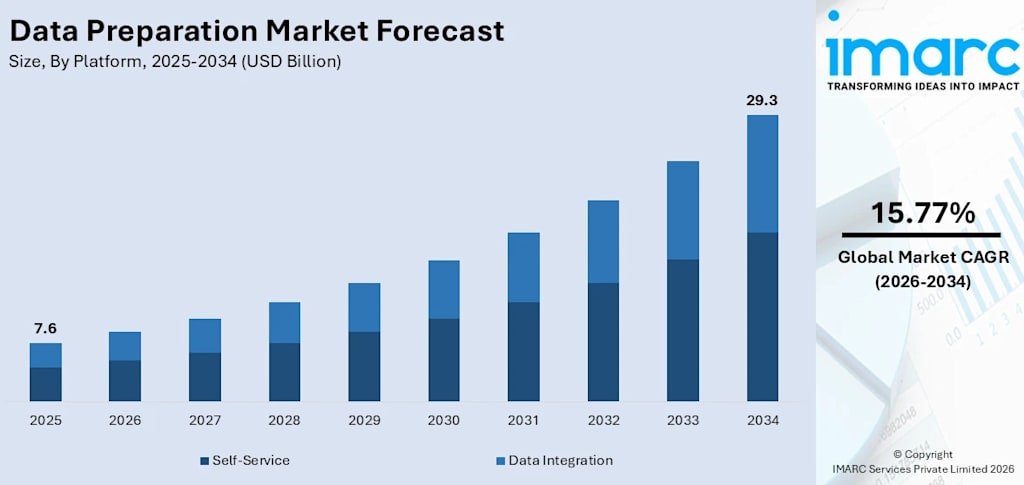
The rapid influx of big data, the necessity for real-time analytics, and the widespread adoption of artificial intelligence are fueling the global demand for efficient data preparation solutions. According to IMARC Group’s latest data, The global data preparation market size was valued at USD 7.6 Billion in 2025. Looking forward, IMARC Group estimates the market to reach USD 29.3 Billion by 2034, exhibiting a CAGR of 15.77% from 2026-2034.
Data preparation has evolved into a critical pillar for enterprise intelligence, moving far beyond simple data cleaning to become a multi-billion-dollar infrastructure necessity. The modern market is characterized by a shift toward self-service platforms, which currently hold a 54.5% share, as organizations empower non-technical users to handle complex integration flows. With global data creation projected to hit 147 Zettabytes, the pressure to transform raw, unstructured information into "AI-ready" assets has never been higher.
Data Preparation Market Growth Drivers:
- Exponential Surge in Global Data Volumes
The sheer scale of information generated daily is a primary catalyst for market expansion. In recent years, data creation reached approximately 64 Zettabytes and is climbing toward 150 Zettabytes as social media and IoT devices proliferate. Organizations now manage thousands of Terabytes daily, making manual processing impossible. This explosion forces companies to invest in automated preparation tools to prevent "data swamps." Consequently, the demand for robust ingestion and curation tools has spiked, as businesses realize that the value of their big data investments depends entirely on the cleanliness and structure of the underlying information.
- Mandatory Requirement for AI and Machine Learning Readiness
As generative AI moves from experimental phases to enterprise-wide deployment, the demand for "AI-ready" data has become non-negotiable. Roughly 57% of organizations currently report that their data isn't mature enough for AI applications, creating a massive vacuum for preparation services. High-quality training sets are essential to prevent model bias and "hallucinations." Industry leaders are now allocating significant capital toward data quality and labeling frameworks to ensure their AI models deliver accurate, actionable insights. This alignment between AI strategy and data preparation is a fundamental driver for long-term technological investment across global sectors.
Request a Free Sample of the "Data Preparation Market" Research Report
- Dominance of Self-Service and Data Democratization
Modern business units no longer want to wait weeks for IT departments to deliver processed datasets. The rise of self-service platforms, which account for over half of the current market, allows business analysts to prepare data independently. This "democratization" speeds up decision-making cycles and reduces the burden on technical teams. By using intuitive, no-code interfaces, employees in marketing, finance, and HR can now perform complex data blending and cleaning. This shift toward user-friendly tools ensures that data preparation is integrated into daily operations rather than being treated as a niche technical task.
Data Preparation Market Trends:
- Integration of Generative AI for Automated Metadata Management
A defining trend is the use of Large Language Models (LLMs) to automate the most tedious parts of the data pipeline. About 71% of organizations are now planning to invest in data management technologies that embed generative AI features. These tools allow data engineers to describe required transformations in natural language, which the system then converts into code and documentation. This "augmented" approach reduces human error and significantly accelerates the "time-to-insight." By automating metadata tagging and schema generation, companies can manage massive data fabrics with fewer resources while maintaining high accuracy.
- Shift Toward Lakehouse Architectures and Unified Platforms
The industry is moving away from fragmented data silos toward "lakehouse" architectures that combine the flexibility of data lakes with the performance of traditional warehouses. Major cloud providers and vendors are aligning around this unified model to simplify the data lifecycle. This trend addresses the pain points of managing 5 to 7 specialized tools, which often leads to "stack complexity" and rising costs. By consolidating preparation, storage, and analytics into a single platform, enterprises achieve better query performance and a lower total cost of ownership, making high-speed data processing accessible to a broader range of companies.
- Heightened Focus on Data Governance and Compliance
Regulatory pressures and the rise of "sovereign data" requirements are forcing a shift toward on-premises and hybrid deployment models, which currently represent a combined majority of the market. Industries like BFSI and healthcare, dealing with sensitive records, are prioritizing data preparation tools that offer built-in governance and "traceability." For instance, the SEC’s focus on market integrity and the need for 100% accurate financial reporting are driving firms to implement rigorous data quality frameworks. Ensuring data fitness at scale is no longer just a technical goal but a legal and ethical necessity for modern enterprises.
Recent News and Developments in Data Preparation Market
- April 2026: Data Storage Corporation (DTST) reported record net income following the strategic divestiture of its cloud unit, signaling a shift in capital toward high-growth technology sectors like AI-enabled vertical SaaS and GPU infrastructure.
- January 2026: Precisely’s latest Data Integrity Trends Report highlighted that 64% of organizations now cite data quality as their top technical barrier, leading to a surge in specialized data cleansing and preparation software investments.
- December 2025: Major cloud providers including AWS and Microsoft Azure announced enhanced "Lakehouse" integration features, facilitating smoother data preparation flows for enterprises migrating complex workloads to unified cloud environments.
Note: If you require specific details, data, or insights that are not currently included in the scope of this report, we are happy to accommodate your request. As part of our customization service, we will gather and provide the additional information you need, tailored to your specific requirements. Please let us know your exact needs, and we will ensure the report is updated accordingly to meet your expectations.
About the Creator
Andrew Sullivan
Hello, I’m Andrew Sullivan. I have over 9+ years of experience as a market research specialist.
Enjoyed the story? Support the Creator.
Subscribe for free to receive all their stories in your feed.
Comments
There are no comments for this story
Be the first to respond and start the conversation.