
Dark Chocolate Market Grows as Health-Conscious Consumers Embrace Premium Indulgence
Rising wellness awareness, ethical sourcing trends, and demand for luxury confectionery are transforming dark chocolate into a global lifestyle product.

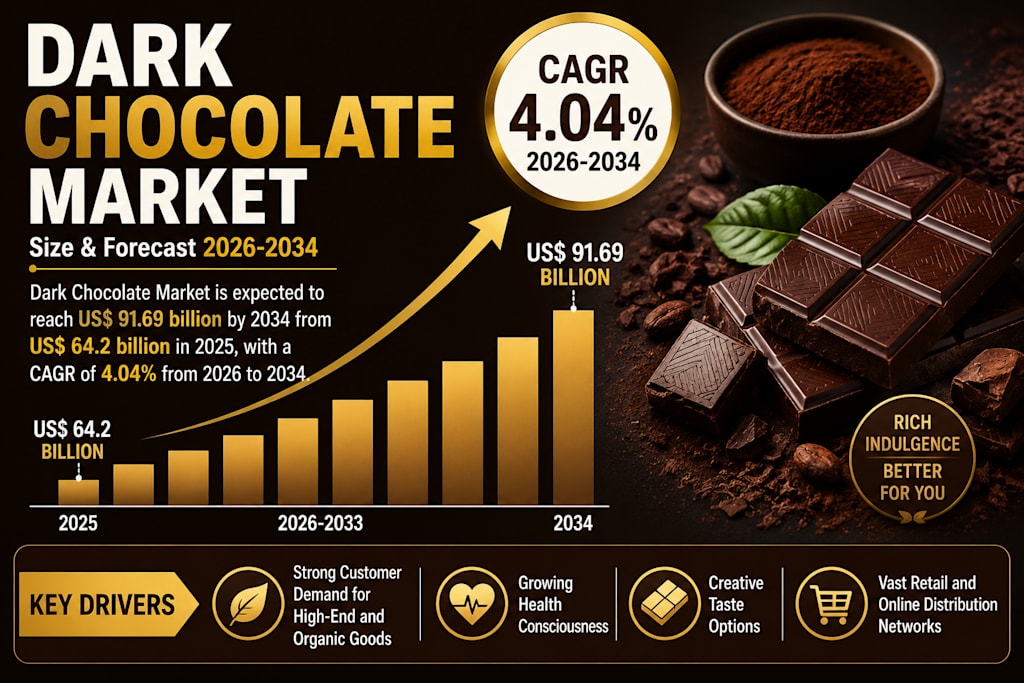
Dark chocolate is no longer viewed as just a sweet indulgence. Around the world, consumers are increasingly embracing it as a premium lifestyle product associated with wellness, sophistication, and ethical consumption. From health-conscious millennials to luxury-focused shoppers, demand for dark chocolate is expanding rapidly as people seek richer flavors, cleaner ingredients, and functional food benefits.
According to Renub Research, the Dark Chocolate Market is expected to grow from US$ 64.2 billion in 2025 to US$ 91.69 billion by 2034, registering a CAGR of 4.04% from 2026 to 2034. The market’s expansion is being driven by strong consumer demand for premium and organic products, growing awareness of health benefits, continuous flavor innovation, and the increasing reach of retail and e-commerce distribution networks.
What was once considered a niche category within confectionery has now become a major global market segment. Consumers increasingly view dark chocolate as a balance between indulgence and wellness, and manufacturers are responding with premium formulations, ethical sourcing strategies, and innovative flavor combinations designed to stand out in a competitive marketplace.
Dark chocolate is becoming a health-oriented indulgence
One of the biggest factors driving the market is rising consumer awareness of dark chocolate’s potential health benefits. Unlike milk chocolate, dark chocolate contains a higher percentage of cocoa solids, which are rich in antioxidants and flavonoids. These compounds are often associated with cardiovascular support, improved blood circulation, anti-inflammatory properties, and cognitive health benefits.
As consumers become more focused on nutrition and wellness, dark chocolate is increasingly positioned as a “better-for-you” indulgence. Health-conscious buyers are looking for snacks that deliver both enjoyment and functional benefits, and dark chocolate fits naturally into that category. Products with higher cocoa content and fewer additives are especially popular among fitness enthusiasts, professionals, and older consumers who prioritize healthier eating habits.
The clean-label movement is also strengthening demand. Consumers increasingly prefer products with recognizable ingredients and minimal processing. Dark chocolate’s naturally rich cocoa profile allows brands to market products with fewer artificial additives while emphasizing purity and authenticity. This combination of indulgence and perceived health value has significantly expanded the category’s appeal beyond traditional confectionery buyers.
Premiumization is reshaping the chocolate industry
The dark chocolate market has benefited enormously from the global premiumization trend. Consumers increasingly associate dark chocolate with sophistication, craftsmanship, and luxury. This perception allows manufacturers to introduce premium products featuring single-origin cocoa, artisanal production methods, fair-trade certifications, and exotic flavor combinations.
Flavor innovation has become one of the industry’s strongest competitive tools. Companies are launching dark chocolate varieties infused with sea salt, chili, coffee, nuts, fruits, herbs, spices, and other gourmet ingredients designed to create unique taste experiences. Limited-edition collections, elegant packaging, and gift-oriented product designs further strengthen dark chocolate’s premium image.
The rise of artisanal and craft chocolate brands has also contributed to this transformation. Smaller premium chocolatiers often focus on bean-to-bar production, ethical sourcing, and storytelling around cocoa origins. Consumers are increasingly willing to pay higher prices for products that deliver exclusivity, quality, and sustainability credentials.
This premium positioning is especially attractive among millennials and Gen Z consumers, who tend to value experiences, authenticity, and ethical production practices. Dark chocolate’s ability to combine luxury with wellness gives it a unique advantage within the broader confectionery market.
Sustainability and ethical sourcing are becoming essential
Sustainability is now one of the defining themes shaping the dark chocolate industry. Consumers increasingly expect transparency regarding cocoa sourcing, labor conditions, and environmental practices. Ethical sourcing and fair compensation for cocoa farmers are no longer niche concerns. They are becoming central purchasing considerations for many buyers.
Manufacturers are responding by expanding fair-trade certifications, organic production methods, and sustainable sourcing programs. Single-origin chocolates have become especially popular because they allow brands to highlight traceability and regional cocoa characteristics while building stronger emotional connections with consumers.
Environmental awareness is also influencing packaging choices, supply chain management, and production strategies. Companies that demonstrate strong commitments to sustainability are often able to build stronger brand loyalty, particularly in developed markets where environmentally conscious purchasing behavior continues to rise.
E-commerce is helping brands reach new consumers
The growth of e-commerce has significantly expanded the dark chocolate market by giving consumers access to premium and niche brands that may not be available in local retail stores. Online platforms allow manufacturers to market directly to consumers through subscription services, limited-edition products, seasonal collections, and personalized gifting options.
Social media marketing has further strengthened online growth by helping brands educate consumers about cocoa content, flavor profiles, sourcing practices, and wellness benefits. High-quality visuals, influencer partnerships, and storytelling campaigns have become especially important in building premium brand identities.
Globalization and expanding international trade have also helped dark chocolate brands enter emerging markets where rising disposable incomes and changing lifestyles are increasing demand for premium confectionery products. Improved cold-chain logistics and modern packaging technologies ensure product quality during international distribution, making global expansion more feasible than ever before.
The industry still faces major challenges
Despite strong growth opportunities, the dark chocolate market faces several important obstacles. One of the most significant is cocoa price volatility. Cocoa production is heavily concentrated in regions vulnerable to climate change, political instability, and supply chain disruptions, particularly in West Africa. These risks can cause sudden fluctuations in raw material prices, directly affecting production costs and profitability.
Climate-related challenges such as droughts, changing rainfall patterns, and crop diseases are becoming increasingly important concerns for the global cocoa industry. Manufacturers must invest in sustainable sourcing programs, supplier diversification, and long-term supply agreements to reduce exposure to these risks.
Intense competition also remains a major challenge. The market includes global confectionery giants, regional brands, luxury chocolatiers, and emerging artisanal producers. Companies must continuously innovate through flavors, packaging, branding, and ethical positioning to maintain consumer interest.
At the same time, premium ingredients and ethical certifications often increase retail prices. While affluent consumers may accept higher prices, price-sensitive buyers in emerging markets may still prefer lower-cost confectionery alternatives. Balancing affordability with premium quality remains an ongoing challenge for manufacturers seeking broader market penetration.
Regional markets are evolving differently
The United States remains one of the largest and most mature dark chocolate markets globally. American consumers increasingly associate dark chocolate with wellness and premium indulgence, driving strong demand for high-cocoa-content products, organic offerings, and ethically sourced varieties. E-commerce and specialty retail channels continue playing important roles in expanding product accessibility and consumer engagement.
Germany is another highly developed market where consumers place strong emphasis on quality, sustainability, and flavor intensity. German buyers are particularly receptive to single-origin chocolates, fair-trade certifications, and artisanal products featuring unique inclusions and premium packaging.
India represents one of the fastest-growing opportunities in the industry. Traditionally dominated by milk chocolate, the Indian confectionery market is shifting as urban consumers become more health-conscious and open to premium products. Millennials and Gen Z buyers are especially interested in dark chocolate’s wellness image, innovative flavors, and global appeal.
The UAE market is characterized by strong purchasing power and demand for luxury confectionery products. Consumers there often view dark chocolate as both a sophisticated treat and a premium gifting option. International brands, elegant packaging, and high-quality ingredients play major roles in purchasing decisions.
Recent product launches reflect growing innovation
Recent developments across the industry highlight the growing pace of innovation in dark chocolate products. In May 2025, HU introduced wrapped Dark Chocolate Bites in flavors such as Creamy Coconut, Cashew Butter + Pure Vanilla Bean, and Hazelnut Butter, reflecting increasing demand for premium snacking experiences.
In November 2024, Canadian brand Awake Chocolate launched a Dark Chocolate Variety Pack featuring Salted Almond Dark Chocolate and Salted Caramel Dark Chocolate flavors. These launches demonstrate the industry’s focus on flavor diversification and premium positioning.
Cargill also expanded its NatureFresh Professional portfolio in March 2024 by introducing block chocolates, chocolate chips, and cocoa powder products in dark, milk, and white varieties. Meanwhile, Nestlé introduced a 70% dark chocolate version under its KitKat brand, signaling that even mainstream confectionery companies are increasingly investing in the premium dark chocolate category.
Dark chocolate is becoming a lifestyle category
The modern dark chocolate market is evolving beyond traditional confectionery. Consumers increasingly see dark chocolate as part of broader lifestyle choices connected to wellness, sustainability, sophistication, and ethical consumption. This shift is allowing manufacturers to expand into functional foods, gifting categories, premium retail, and even adjacent sectors such as cosmetics and pharmaceuticals.
The market segmentation itself highlights the industry’s diversification. Products ranging from 70% cocoa to 90% cocoa cater to different consumer preferences and wellness goals. Applications now extend beyond confectionery into functional food and beverages, pharmaceuticals, and beauty-related products, creating additional growth opportunities for manufacturers.
As global consumer preferences continue shifting toward premium, experience-driven, and health-oriented products, dark chocolate appears well positioned for sustained long-term growth.
Final Thoughts
The dark chocolate market is entering a period of steady expansion fueled by changing consumer lifestyles, growing wellness awareness, and increasing demand for premium indulgence. What once served mainly as a luxury confectionery product is now evolving into a symbol of health-conscious sophistication and ethical consumption.
With Renub Research forecasting the market to reach US$ 91.69 billion by 2034, dark chocolate is expected to remain one of the most dynamic categories within the global confectionery industry. Companies that successfully combine premium quality, sustainability, flavor innovation, and strong brand storytelling are likely to gain the greatest competitive advantage in this rapidly evolving market.
About the Creator
Enjoyed the story? Support the Creator.
Subscribe for free to receive all their stories in your feed.
Comments
There are no comments for this story
Be the first to respond and start the conversation.