
Dark Chocolate Market Gains Momentum as Health-Conscious Consumers Embrace Premium Indulgence
Growing awareness of wellness benefits, rising demand for premium products, and innovation in flavors and ethical sourcing are driving the global dark chocolate industry toward sustained growth.

Dark chocolate has undergone a remarkable transformation over the past decade. Once viewed primarily as a niche alternative to traditional milk chocolate, it has evolved into one of the fastest-growing segments within the global confectionery industry. Today, consumers increasingly see dark chocolate not only as an indulgent treat but also as a product associated with wellness, premium quality, and ethical consumption.
This shift in perception has helped dark chocolate move beyond its traditional role as a confectionery product. Health-conscious consumers, fitness enthusiasts, and premium food buyers are increasingly choosing dark chocolate for its rich cocoa content, complex flavor profile, and potential health benefits.
At the same time, manufacturers continue to innovate through unique flavor combinations, sustainable sourcing practices, organic certifications, and premium product positioning. As a result, dark chocolate has established itself as a category that successfully bridges indulgence and wellness.
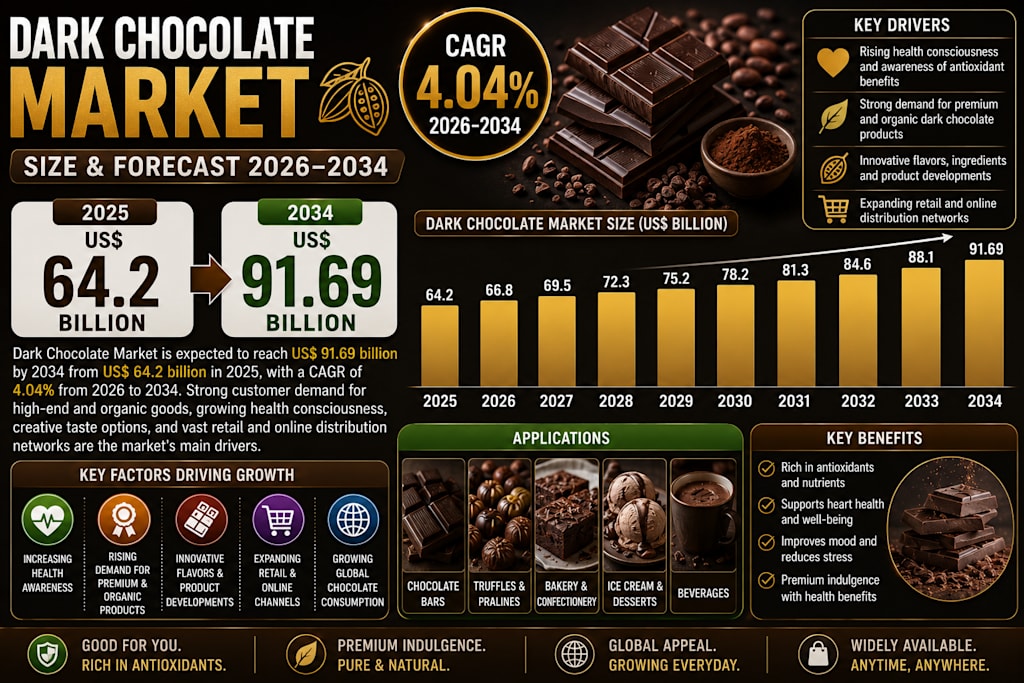
According to Renub Research, the Global Dark Chocolate Market is projected to grow from US$64.2 billion in 2025 to US$91.69 billion by 2034, expanding at a compound annual growth rate (CAGR) of 4.04% between 2026 and 2034. Rising health awareness, premiumization trends, expanding retail channels, and increasing demand for ethically sourced products are expected to support this steady growth trajectory.
Dark Chocolate Is No Longer Just a Sweet Treat
The growing popularity of dark chocolate reflects broader changes in consumer behavior.
Modern consumers increasingly seek foods that deliver both enjoyment and perceived nutritional value. Unlike traditional milk chocolate, dark chocolate contains a higher concentration of cocoa solids and generally less sugar, making it attractive to individuals pursuing healthier lifestyles.
This higher cocoa content contributes to dark chocolate's distinctive flavor profile, characterized by richer, more intense, and less sweet taste experiences.
Consumers are becoming more adventurous in their food choices, and dark chocolate's sophisticated flavor complexity aligns well with these evolving preferences.
As a result, dark chocolate has become a staple product not only for confectionery lovers but also for wellness-focused consumers seeking mindful indulgence.
Health Awareness Continues to Drive Demand
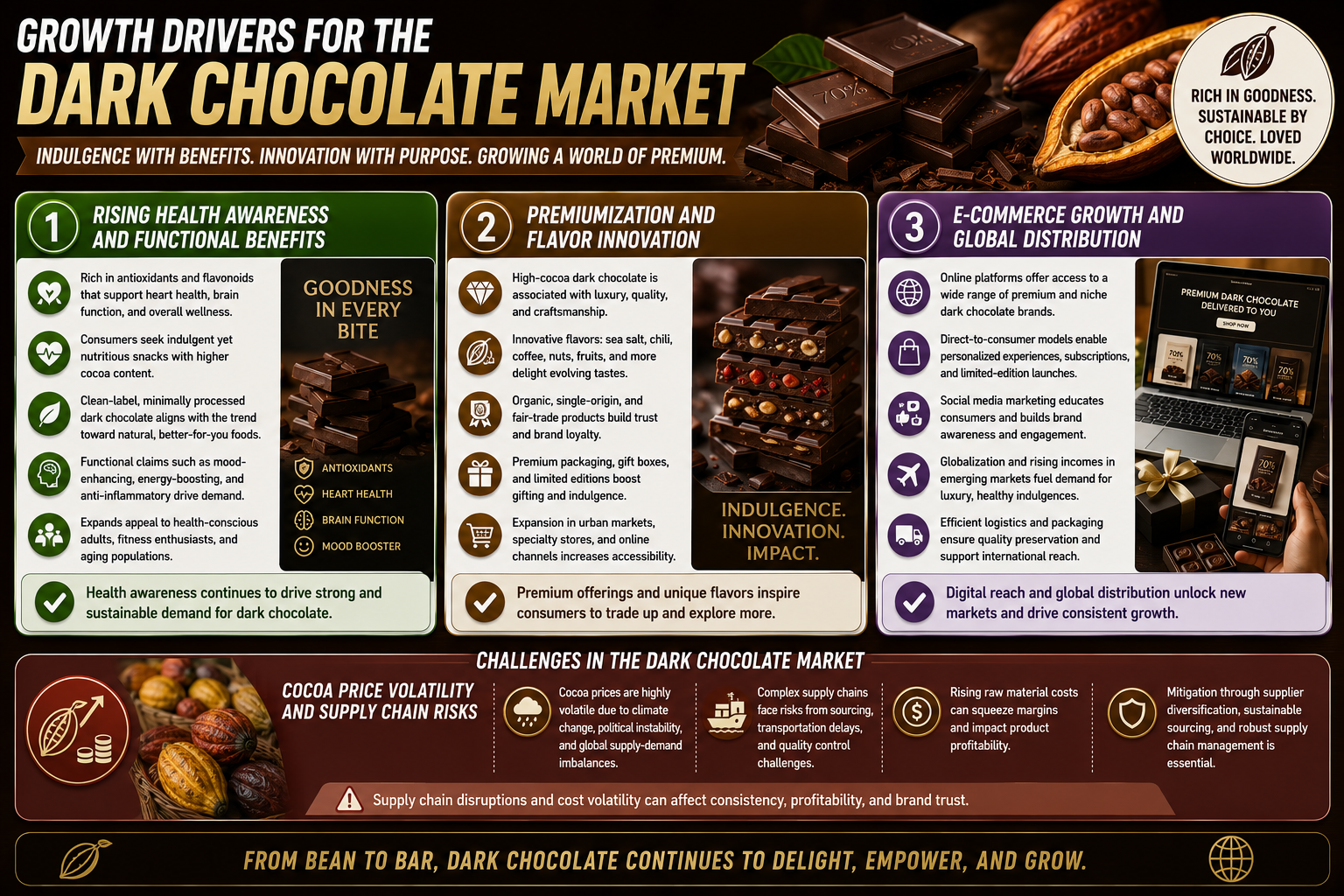
One of the strongest growth drivers within the dark chocolate market is increasing awareness of its potential health benefits.
Dark chocolate is widely recognized for containing antioxidants and flavonoids, compounds often associated with cardiovascular health, reduced inflammation, and improved circulation.
While consumers still enjoy dark chocolate as a dessert or snack, many now view it as a more balanced alternative to traditional sugary treats.
The growing popularity of functional foods has further strengthened this trend. Consumers increasingly seek products that contribute to overall well-being while satisfying cravings.
Manufacturers frequently highlight cocoa content, natural ingredients, and nutritional benefits as part of their marketing strategies.
As wellness-focused purchasing behavior continues expanding globally, dark chocolate remains well-positioned to benefit from this shift.
Premiumization Is Transforming the Industry
Premiumization has become one of the most important forces shaping the dark chocolate market.
Consumers increasingly associate dark chocolate with luxury, craftsmanship, and superior quality. This perception has enabled manufacturers to introduce premium product lines featuring high cocoa concentrations, sophisticated flavor profiles, and artisan production methods.
Premium dark chocolate products often emphasize exclusivity, authenticity, and exceptional ingredient quality.
Consumers are increasingly willing to pay higher prices for products that deliver unique experiences and align with their personal values.
This trend has encouraged brands to invest heavily in product differentiation, packaging innovation, and storytelling around sourcing and craftsmanship.
As demand for premium food experiences grows, dark chocolate continues to strengthen its position within the luxury confectionery segment.
Single-Origin Chocolates Gain Popularity
One of the most notable developments within the premium chocolate market is the growing popularity of single-origin products.
These chocolates are produced using cocoa beans sourced from a specific geographic region, allowing manufacturers to highlight unique flavor characteristics influenced by local growing conditions.
Much like specialty coffee and fine wine, single-origin dark chocolate appeals to consumers interested in authenticity, traceability, and distinctive taste experiences.
Manufacturers increasingly promote information about cocoa origins, farming practices, and regional flavor profiles to attract discerning buyers.
This trend supports higher price points while encouraging greater appreciation for cocoa quality and craftsmanship.
Ethical Sourcing Influences Purchasing Decisions
Sustainability and ethical sourcing have become critical considerations within the dark chocolate industry.
Consumers increasingly want assurance that the products they purchase are produced responsibly and support fair treatment of cocoa farmers.
As awareness of environmental and social issues within cocoa-producing regions grows, demand for fair-trade, organic, and ethically certified products continues increasing.
Manufacturers are responding by investing in transparent supply chains, sustainable farming programs, and partnerships with cocoa-growing communities.
Ethical sourcing not only enhances brand reputation but also strengthens consumer trust and loyalty.
Companies that successfully demonstrate social responsibility are increasingly gaining competitive advantages in the marketplace.
Flavor Innovation Keeps Consumers Engaged
Innovation remains one of the most exciting aspects of the dark chocolate market.
Manufacturers continuously introduce new flavor combinations designed to appeal to adventurous consumers seeking novel experiences.
Traditional dark chocolate products are now joined by varieties infused with sea salt, chili peppers, coffee, citrus fruits, berries, nuts, spices, herbs, and floral ingredients.
These creative combinations help brands differentiate themselves while attracting consumers interested in premium and gourmet products.
Limited-edition releases and seasonal collections further generate excitement and encourage repeat purchases.
As consumer preferences become increasingly sophisticated, flavor innovation is expected to remain a major growth driver.
Organic Products Continue to Expand
The growing popularity of organic food products has created significant opportunities within the dark chocolate market.
Consumers increasingly seek products made without synthetic pesticides, chemical fertilizers, or artificial additives.
Organic dark chocolate aligns well with broader clean-label trends that emphasize natural ingredients and transparent production methods.
Many health-conscious consumers view organic certification as an indicator of quality, sustainability, and environmental responsibility.
Manufacturers continue expanding their organic product portfolios to meet rising demand and strengthen their premium positioning.
As organic food consumption grows globally, this segment is expected to contribute significantly to market expansion.
E-Commerce Expands Market Reach
Digital commerce has transformed how consumers discover and purchase dark chocolate products.
Online retail platforms provide access to premium, imported, artisanal, and specialty brands that may not be widely available through traditional retail channels.
Direct-to-consumer strategies allow manufacturers to build stronger relationships with customers while offering personalized experiences, subscription services, and exclusive product launches.
Social media platforms also play an important role in educating consumers about cocoa content, flavor profiles, sourcing practices, and product benefits.
The combination of e-commerce and digital marketing continues to expand consumer awareness and support industry growth.
Premium Packaging Enhances Brand Value
Packaging has become an increasingly important element within the dark chocolate industry.
Consumers often associate elegant packaging with quality, luxury, and gift-worthiness.
Manufacturers invest heavily in premium materials, minimalist aesthetics, sustainable packaging solutions, and sophisticated branding to reinforce product positioning.
Dark chocolate is frequently purchased as a gift, making visual presentation particularly important.
Attractive packaging not only influences purchasing decisions but also enhances perceived value and supports premium pricing strategies.
As competition intensifies, packaging innovation remains a valuable tool for brand differentiation.
Functional Food Applications Create New Opportunities
Dark chocolate is increasingly being incorporated into broader functional food and beverage applications.
Manufacturers are exploring formulations that combine dark chocolate with ingredients such as protein, probiotics, vitamins, minerals, and plant-based superfoods.
These products target consumers seeking convenient ways to combine indulgence with wellness benefits.
The functional food segment represents a promising growth opportunity as consumers continue prioritizing health-conscious lifestyles.
Dark chocolate's positive health associations make it a natural candidate for innovation within this category.
Cocoa Price Volatility Remains a Major Challenge
Despite positive market prospects, the dark chocolate industry faces several important challenges.
One of the most significant concerns involves cocoa price volatility.
Cocoa production is concentrated in a limited number of geographic regions, making supply vulnerable to weather events, climate change, political instability, and market fluctuations.
Unexpected disruptions can significantly increase raw material costs, affecting profitability for manufacturers.
Maintaining stable supply chains while ensuring access to high-quality cocoa remains an ongoing priority throughout the industry.
Companies increasingly invest in long-term sourcing relationships and sustainability initiatives to reduce these risks.
Competition Continues to Intensify
The dark chocolate market is becoming increasingly competitive.
Established multinational confectionery companies compete alongside artisanal producers, specialty brands, and emerging premium manufacturers.
This crowded marketplace requires continuous innovation, strong branding, and effective marketing strategies.
Consumers have more choices than ever before, making differentiation essential for long-term success.
Companies must balance quality, sustainability, affordability, and innovation while maintaining profitability.
Successfully navigating this competitive environment remains one of the industry's most significant challenges.
The United States Remains a Leading Market
The United States continues to represent one of the largest dark chocolate markets globally.
American consumers increasingly embrace dark chocolate as a premium and health-oriented alternative to traditional confectionery products.
High awareness of nutritional benefits, combined with strong demand for organic and ethically sourced products, continues driving market growth.
Premium offerings, artisanal brands, and innovative flavor combinations are particularly popular among affluent and health-conscious consumers.
The expansion of online retail and specialty food stores further supports accessibility and product variety throughout the country.
Germany Leads European Demand
Germany remains one of Europe's most mature and sophisticated dark chocolate markets.
Consumers place strong emphasis on quality, sustainability, cocoa content, and ethical sourcing practices.
Premium products, organic certifications, and single-origin offerings enjoy widespread popularity.
The country's well-developed retail infrastructure and appreciation for high-quality confectionery continue supporting market growth.
Innovation and sustainability remain central themes shaping consumer purchasing behavior throughout Germany.
India Emerges as a Fast-Growing Opportunity
India's dark chocolate market is experiencing rapid expansion driven by urbanization, rising incomes, and changing consumer preferences.
Younger consumers increasingly associate dark chocolate with sophistication, wellness, and premium lifestyles.
Marketing campaigns highlighting health benefits and premium experiences have helped broaden consumer awareness.
The growth of modern retail formats and e-commerce platforms has significantly improved product accessibility.
Although price sensitivity remains a factor, demand for premium and health-oriented chocolate products continues rising steadily.
UAE Benefits from Luxury and Wellness Trends
The United Arab Emirates represents an attractive market for premium dark chocolate products.
Consumers demonstrate strong purchasing power and a growing preference for luxury confectionery items.
Dark chocolate is often associated with gifting, premium lifestyles, and wellness-oriented consumption.
Demand for imported brands, high-cocoa-content products, and ethically sourced chocolates continues increasing across the region.
The country's multicultural population and vibrant retail environment further support market development.
Final Thoughts
The global dark chocolate market continues evolving from a traditional confectionery category into a sophisticated industry centered around wellness, sustainability, premium experiences, and ethical consumption.
Driven by growing health awareness, flavor innovation, organic product demand, and expanding digital distribution channels, dark chocolate has successfully positioned itself as both an indulgence and a lifestyle choice.
With the market expected to grow from US$64.2 billion in 2025 to US$91.69 billion by 2034, manufacturers and investors have substantial opportunities to capitalize on changing consumer preferences and premiumization trends.
While challenges related to cocoa supply, pricing volatility, and competition remain significant, ongoing innovation and strong consumer demand continue supporting long-term growth.
As consumers increasingly seek products that combine taste, quality, and purpose, dark chocolate is poised to remain one of the most dynamic and resilient segments within the global confectionery industry.
About the Creator
Enjoyed the story? Support the Creator.
Subscribe for free to receive all their stories in your feed.
Comments
There are no comments for this story
Be the first to respond and start the conversation.