
Dairy Alternatives Are Redefining the Future of Nutrition, Sustainability, and Consumer Choice
Rising Health Awareness, Plant-Based Innovation, and Demand for Sustainable Foods Are Driving Global Dairy Alternative Market Growth

The global food industry is undergoing a major transformation as consumers increasingly seek healthier, more sustainable, and more diverse dietary options. Among the most significant shifts is the growing popularity of dairy alternatives, a category that has expanded far beyond its traditional niche status to become a mainstream component of modern nutrition.
Once primarily consumed by individuals with lactose intolerance or dairy allergies, plant-based dairy alternatives are now attracting a broad audience that includes health-conscious consumers, vegans, flexitarians, athletes, and environmentally aware shoppers. From oat milk in coffee shops to plant-based yogurts in supermarkets and dairy-free cheeses in restaurants, alternative dairy products have become a visible part of everyday life across many regions of the world.
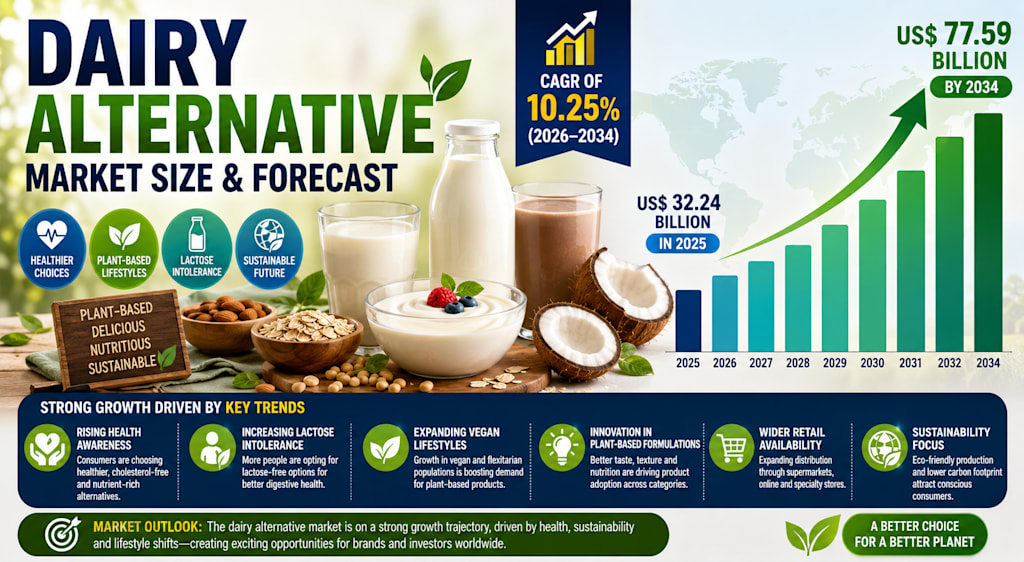
According to Renub Research, the Dairy Alternative Market is projected to grow from US$ 32.24 billion in 2025 to US$ 77.59 billion by 2034, expanding at an impressive CAGR of 10.25% between 2026 and 2034. Rising health awareness, increasing cases of lactose intolerance, growing vegan lifestyles, and continuous innovation in plant-based formulations are among the major factors driving this growth. Improved taste, broader retail availability, and sustainability concerns are also contributing to expanding consumer adoption globally.
As food manufacturers continue introducing new products and ingredients, dairy alternatives are becoming one of the fastest-growing categories in the global food and beverage industry.
Understanding the Growing Appeal of Dairy Alternatives
Dairy alternatives are plant-based products designed to replace traditional dairy items such as milk, yogurt, cheese, creamers, and ice cream.
These products are typically produced from ingredients including almonds, oats, soybeans, coconuts, rice, peas, seeds, and emerging grains such as quinoa. Unlike conventional dairy products, many dairy alternatives are naturally lactose-free, cholesterol-free, and lower in saturated fat.
Consumers choose dairy alternatives for various reasons. Some seek relief from lactose intolerance or milk allergies, while others are motivated by ethical concerns related to animal welfare. Environmental sustainability has also become an increasingly important factor, with many consumers viewing plant-based products as a way to reduce their ecological footprint.
Advancements in food science have significantly improved the taste, texture, nutritional profile, and functionality of dairy alternatives. As a result, these products are now widely accepted by mainstream consumers rather than being limited to specialty dietary groups.
Health and Wellness Trends Are Accelerating Growth
One of the strongest drivers behind the dairy alternative market is the growing emphasis on health and wellness.
Modern consumers are paying closer attention to nutrition labels and seeking products that align with healthier lifestyles. Concerns regarding obesity, cardiovascular health, digestive wellness, and overall nutrition are encouraging consumers to explore alternatives to traditional dairy products.
Plant-based beverages fortified with protein, vitamins, calcium, and essential minerals are particularly attractive to health-conscious consumers. Many shoppers now view dairy alternatives not merely as substitutes but as functional nutritional products that support broader wellness goals.
Manufacturers are responding by introducing products with reduced sugar content, enhanced protein levels, and added micronutrients that address specific consumer needs.
As awareness regarding nutrition continues increasing, demand for functional plant-based beverages is expected to remain a key growth driver throughout the forecast period.
High-Protein Plant-Based Products Are Gaining Popularity
Consumer demand for protein-rich foods has become one of the most influential trends within the food and beverage industry.
Today’s consumers increasingly seek products that support active lifestyles, fitness goals, and balanced nutrition without relying on animal-based ingredients.
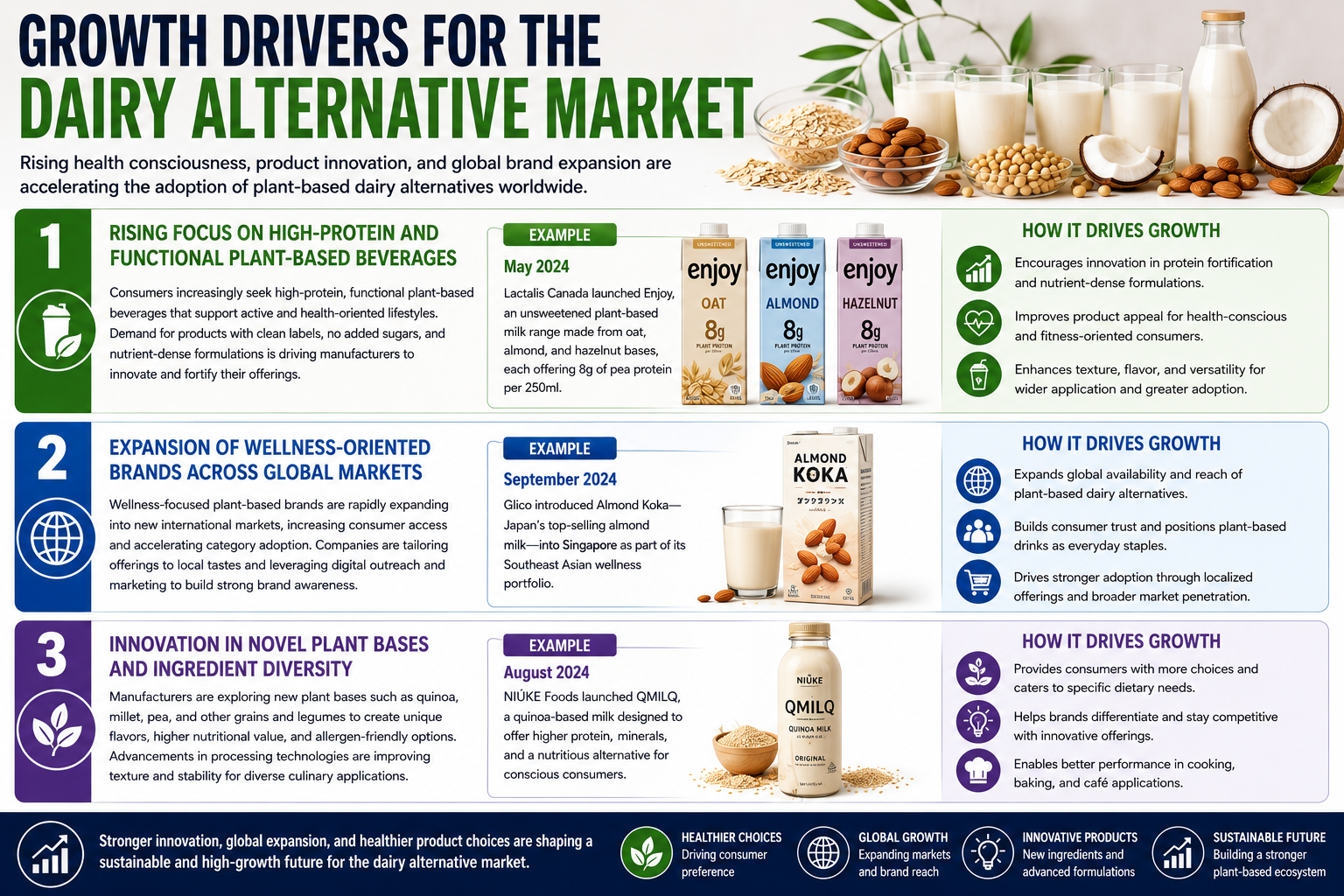
A notable example occurred in May 2024 when Lactalis Canada introduced its Enjoy line of unsweetened plant-based milk beverages. The range includes oat, almond, and hazelnut formulations, each fortified with eight grams of pea protein per 250-milliliter serving. The launch highlighted the growing importance of protein enrichment within the dairy alternative category.
As manufacturers continue improving nutritional profiles, high-protein dairy alternatives are expected to attract an even broader consumer base.
Global Expansion of Wellness Brands Is Driving Adoption
The rapid international expansion of wellness-focused food brands is also contributing significantly to market growth.
As consumer interest in plant-based nutrition spreads beyond traditional markets, manufacturers are introducing products tailored to local tastes and preferences.
Companies are increasingly investing in product localization, digital marketing, and consumer education campaigns to increase awareness and adoption.
This trend became particularly evident in September 2024 when Glico expanded its popular Almond Koka almond milk brand into Singapore as part of its broader Southeast Asian wellness strategy. The move demonstrated how plant-based products are gaining traction in diverse geographic markets beyond North America and Europe.
The growing international presence of wellness-oriented brands is helping transform dairy alternatives from niche products into global dietary staples.
Innovation in New Plant Bases Is Expanding Consumer Choice
Innovation remains one of the most important factors supporting the long-term growth of the dairy alternative market.
While soy, almond, oat, and coconut products continue to dominate sales, manufacturers are increasingly exploring alternative ingredients that offer unique nutritional benefits and flavor profiles.
Emerging plant bases such as quinoa, peas, chickpeas, hemp, flaxseed, and various legumes are gaining attention among consumers seeking greater variety.
In August 2024, NIÚKE Foods introduced QMILQ, a quinoa-based milk alternative designed to provide higher protein content and enhanced mineral nutrition. This launch reflected growing industry interest in expanding beyond traditional ingredient sources.
Such innovations allow companies to differentiate themselves while addressing specific dietary needs and consumer preferences.
Sustainability Is Strengthening Market Demand
Environmental concerns have become a major factor influencing food purchasing decisions worldwide.
Consumers increasingly consider the environmental impact of food production when selecting products. Compared with conventional dairy farming, many plant-based alternatives require fewer natural resources and generate lower greenhouse gas emissions.
This perception has strengthened demand among environmentally conscious consumers seeking sustainable dietary choices.
Food manufacturers are also embracing sustainability through eco-friendly packaging, responsible ingredient sourcing, and transparent supply chain practices.
As governments, businesses, and consumers place greater emphasis on environmental responsibility, sustainability will continue supporting long-term market growth.
Oat Milk Continues to Gain Momentum
Among all dairy alternatives, oat milk has emerged as one of the fastest-growing categories globally.
Its naturally creamy texture, mild flavor, and excellent performance in coffee beverages have made it particularly popular among consumers and foodservice operators.
Baristas frequently prefer oat milk because it froths effectively and complements coffee without overpowering flavor profiles.
Oat-based beverages also benefit from strong sustainability credentials and broad consumer acceptance.
As cafés, restaurants, and retailers continue expanding plant-based offerings, oat milk is expected to remain one of the industry's strongest growth segments.
Plant-Based Yogurts and Cheeses Continue Evolving
While milk alternatives dominate the category, plant-based yogurts and cheeses are experiencing significant growth as well.
Advances in fermentation technology, ingredient blending, and protein formulation have improved product quality considerably.
Manufacturers are increasingly capable of replicating the texture, flavor, and functionality associated with traditional dairy products.
Consumers now have access to dairy-free yogurts made from almonds, coconuts, oats, and soybeans, while plant-based cheese alternatives continue expanding across retail and foodservice channels.
As product quality improves, adoption rates are expected to increase further.
United States Leads Market Development
The United States remains one of the world's most influential dairy alternative markets.
Strong consumer demand for lactose-free products, clean-label foods, and environmentally conscious nutrition has supported widespread adoption.
The country's extensive café culture has also contributed to the popularity of oat and almond milk beverages.
Manufacturers continue investing heavily in product innovation, protein fortification, and specialty formulations designed for coffee, smoothies, and sports nutrition applications.
Although competition is intense, the United States continues setting many of the trends that shape the global dairy alternative industry.
Germany Maintains Strong European Growth
Germany represents one of Europe's most important dairy alternative markets.
Strong environmental values, increasing awareness of lactose intolerance, and a rapidly expanding vegan population continue driving demand.
German consumers show particular preference for oat-based beverages due to their sustainability profile and mild taste.
Retailers throughout the country offer extensive plant-based selections, including dairy-free milk, yogurt, cheese, desserts, and creamers.
The country's strong commitment to sustainability ensures continued market expansion despite ongoing competition from traditional dairy products.
China Represents a Major Growth Opportunity
China is emerging as one of the most promising markets for dairy alternatives.
High rates of lactose intolerance, rapid urbanization, rising disposable incomes, and growing exposure to international food trends are supporting demand.
Younger consumers increasingly view plant-based beverages as healthier and more modern dietary choices.
The expansion of café culture, tea-based beverage chains, and e-commerce platforms has also increased product visibility and accessibility.
As awareness continues spreading beyond major urban centers, China is expected to become an increasingly important contributor to global market growth.
Saudi Arabia Embraces New Dietary Trends
Saudi Arabia is witnessing growing demand for dairy alternatives as health awareness increases and consumers become more exposed to global food trends.
Urban populations are increasingly adopting almond, oat, and soy beverages as part of healthier lifestyles.
Government initiatives promoting public health, combined with rising disposable incomes, are creating favorable conditions for market expansion.
Although traditional dairy products remain culturally important, younger consumers are demonstrating strong interest in plant-based nutrition.
Challenges Continue to Affect Market Growth
Despite impressive growth prospects, several challenges remain.
One major obstacle involves production costs.
Dairy alternatives often require specialized ingredients, fortification processes, and advanced manufacturing technologies, which can result in higher retail prices than conventional dairy products. These pricing differences may limit adoption in cost-sensitive markets.
Another challenge involves sensory performance.
Although product quality has improved significantly, some dairy alternatives still struggle to fully replicate the taste, creaminess, and functionality of traditional dairy products. Certain applications, including cheese production and specialty cooking, continue presenting technical challenges for manufacturers.
Ongoing innovation will be essential for overcoming these limitations.
Final Thoughts
The dairy alternative market is experiencing unprecedented growth as consumers increasingly prioritize health, sustainability, nutrition, and dietary flexibility.
According to Renub Research, the Dairy Alternative Market is projected to grow from US$ 32.24 billion in 2025 to US$ 77.59 billion by 2034, highlighting the remarkable momentum behind plant-based food innovation.
Advancements in ingredient technology, protein fortification, product diversification, and global brand expansion are transforming dairy alternatives into mainstream dietary choices across multiple regions.
As consumers continue seeking nutritious, environmentally responsible, and versatile food options, dairy alternatives are poised to play an increasingly important role in the future of global nutrition.
The shift toward plant-based living is no longer a niche movement—it is becoming a defining force in the evolution of the modern food industry.
About the Creator
Enjoyed the story? Support the Creator.
Subscribe for free to receive all their stories in your feed.
Comments
There are no comments for this story
Be the first to respond and start the conversation.