
Confectionery Market Witnesses Strong Growth Amid Premium Demand
The Confectionery Market is experiencing steady growth driven by increasing consumer demand for chocolates, candies, gummies, and other sweet treats.

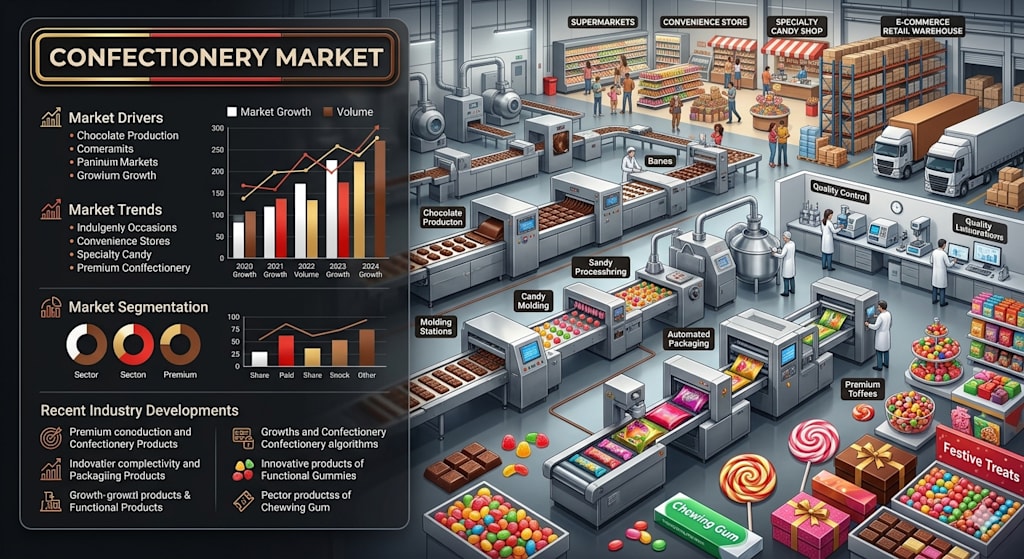
According to IMARC Group's latest research, The global confectionery market size reached USD 204.1 Billion in 2025. Looking forward, the market is expected to reach USD 267.4 Billion by 2034, exhibiting a growth rate (CAGR) of 2.95% during 2026-2034.
How AI is Reshaping the Future of Confectionery Market
- Demand Prediction and Production Planning: AI algorithms analyze historical sales data, seasonal patterns, and consumer behavior to forecast demand accurately. Manufacturers optimizing production schedules using machine learning have reduced overproduction waste by approximately 25 percent while ensuring adequate inventory for peak seasons.
- Personalized Flavor and Product Development: AI-powered platforms process consumer preferences, social media trends, and regional taste profiles to recommend new flavor combinations. Innovation cycles accelerate dramatically, allowing companies to develop products matching emerging consumer demands 3x faster than traditional methods.
- Quality Assurance and Packaging Optimization: Computer vision systems inspect finished confectionery products for defects, color consistency, and weight accuracy at production speeds exceeding manual methods. Real-time AI detection reduces product waste and ensures premium quality standards across manufacturing facilities worldwide.

Confectionery Industry Overview
The confectionery market demonstrates remarkable resilience, with U.S. consumer spending reaching $55 billion, reflecting strong household penetration at 99.8 percent. Non-chocolate candy has surged significantly, growing from approximately one-third market share to 40.9 percent, indicating shifting generational preferences toward gummy, chewy, and freeze-dried varieties. Seasonal occasions including Valentine's Day, Easter, Halloween, and winter holidays account for 63 percent of annual sales, while modern gifting occasions expand category appeal across demographics and age groups continuously.
Confectionery Market Trends & Drivers
Healthy and Functional Confectionery Adoption: Consumer awareness of lifestyle diseases drives demand for functional confectionery containing vitamins, minerals, fiber, protein, and probiotics without added sugar or calories. Manufacturers increasingly develop medicated confectionery and wellness-focused products appealing to health-conscious consumers. Organic, gluten-free variants with reduced allergens and clean-label formulations capture premium segments, particularly among younger demographics seeking guilt-free indulgence options.
E-Commerce Expansion and Digital Retail Transformation: Online confectionery sales accelerate through improved logistics infrastructure and smartphone penetration across emerging markets. Digital platforms enable personalized product discovery, subscription services, and direct-to-consumer engagement. Convenience stores and online retailers gain market share, fundamentally reshaping distribution dynamics as consumers embrace seamless omnichannel shopping experiences spanning supermarkets, pharmacies, and digital platforms.
Premium Gifting and Seasonal Engagement Growth: Confectionery transcends traditional consumption, becoming preferred gifting option across occasions beyond holidays. Luxury brands introduce artisanal, single-origin, and innovative flavor experiences targeting premium segments. Younger consumers show strong affinity for nostalgic and novel flavors simultaneously, creating opportunities for brands balancing heritage offerings with contemporary innovations in chocolate and candy categories.
Confectionery Market Segmentation
By Product Type
Chocolate: Dominant category representing 51.7% of market share with continued growth
Hard-boiled Sweets: Traditional segment with steady consumer demand
Mints: Established category with consistent market presence
Gums and Jellies: Growing segment, especially popular with younger demographics
Caramels and Toffees: Mature segment with specialized market appeal
Medicated Confectionery: Emerging functional category combining health and taste
Fine Bakery Wares: Premium segment targeting gifting occasions
Others: Specialized and regional confectionery products
By Distribution Channel
Supermarkets and Hypermarkets: Leading channel offering convenience and product variety
Convenience Stores: High-traffic locations for impulse purchases
Pharmaceutical and Drug Stores: Specialized retail for medicated confectionery
Online Stores: Fastest-growing channel with increasing consumer adoption
Others: Direct-to-consumer, specialty shops, and gift retailers
By Age Group
Children and Teens: Core demographic with strong confectionery consumption
Young Adults: Growing segment seeking functional and premium options
Adults: Sustained demand driven by gifting and personal consumption
Seniors: Preference for traditional chocolate and nostalgic flavors
By Price Point
Value: Mass-market products with broad consumer accessibility
Mid-Range: Balance between quality and affordability
Premium: Artisanal and luxury offerings targeting gifting occasions
By Region
North America: Mature market with $55 billion in U.S. sales, strong seasonal engagement
Europe: Established confectionery tradition with premium product demand
Asia-Pacific: Rapid growth driven by urbanization and rising disposable incomes
Latin America: Emerging market with increasing consumption patterns
Middle East and Africa: Growing consumer base with expanding distribution infrastructure
Leading Companies Operating in the Global Confectionery Industry
Chocoladefabriken Lindt & Sprüngli AG
Crown Confectionery
Ezaki Glico Co. Ltd.
Ferrero International S.A.
HARIBO GmbH & Co. KG
Mars Incorporated
Meiji Holdings Co. Ltd.
Mondelez International Inc.
Nestle S.A.
Parle Products Pvt. Ltd.
The Hershey Company
The Kraft Heinz Company
Recent News and Developments in Confectionery Market
March 2026: The National Confectioners Association released the 2026 State of Treating report, confirming U.S. confectionery sales reached record $55 billion, driven by 99.8 percent household penetration and growing non-chocolate candy segment now representing 40.9 percent of total market share, up from one-third in 2015.
July 2025: U.S. government passed modernization of federal sugar program, ending decades-long standoff between sugar buyers and producers. This major policy reform reduces production constraints and supports sustainable cost structures for confectionery manufacturers dependent on domestic sugar supply.
2025: Trump Administration issued Executive Order exempting cocoa from reciprocal tariffs, maintaining competitiveness of domestic chocolate manufacturing while reducing production costs. Cocoa exemption protects supply chain stability for confectionery producers unable to source this commodity domestically.
2025: Ferrero expanded premium chocolate portfolio with new single-origin product lines targeting artisanal gifting occasions across European and North American markets, reflecting consumer demand for luxury confectionery experiences.
2025: Mars, Incorporated invested substantially in plant-based chocolate product development to capture growing vegan confectionery demand across Western markets, responding to generational preference shifts toward sustainable and ethically-sourced ingredients.
Early 2024: Chococo, UK-based artisanal chocolate brand, secured $5 million funding to enhance sustainable chocolate production methods, reflecting industry momentum toward environmentally responsible manufacturing practices.
Late 2023: The Hershey Company introduced plant-based chocolate bars in new flavor variants including dark chocolate and almond, targeting vegan segment with aim to capture significant market share in expanding plant-based confectionery category.
2023: Sugarfina, luxury candy retailer, raised $30 million in funding for product line expansion and retail footprint growth, enabling international market entry and development of premium gourmet confections targeting high-value consumer segments.
Note: If you require specific details, data, or insights not currently included in the scope of this report, we are happy to accommodate your request. As part of our customization service, we will gather and provide the additional information you need, tailored to your specific requirements. Please let us know your exact needs, and we will ensure the report is updated accordingly to meet your expectations.
About the Creator
Michael Richard
Michael Richard is a Market Research Expert specializing in market intelligence, competitive analysis, and data-driven insights. He helps organizations understand trends and emerging opportunities through in-depth research.
Enjoyed the story? Support the Creator.
Subscribe for free to receive all their stories in your feed.
Comments
There are no comments for this story
Be the first to respond and start the conversation.