
Cogeneration Equipment Market Witnesses Strong Growth Worldwide
The Cogeneration Equipment Market is experiencing strong growth driven by increasing demand for energy-efficient power generation systems across industrial, commercial, and institutional sectors.

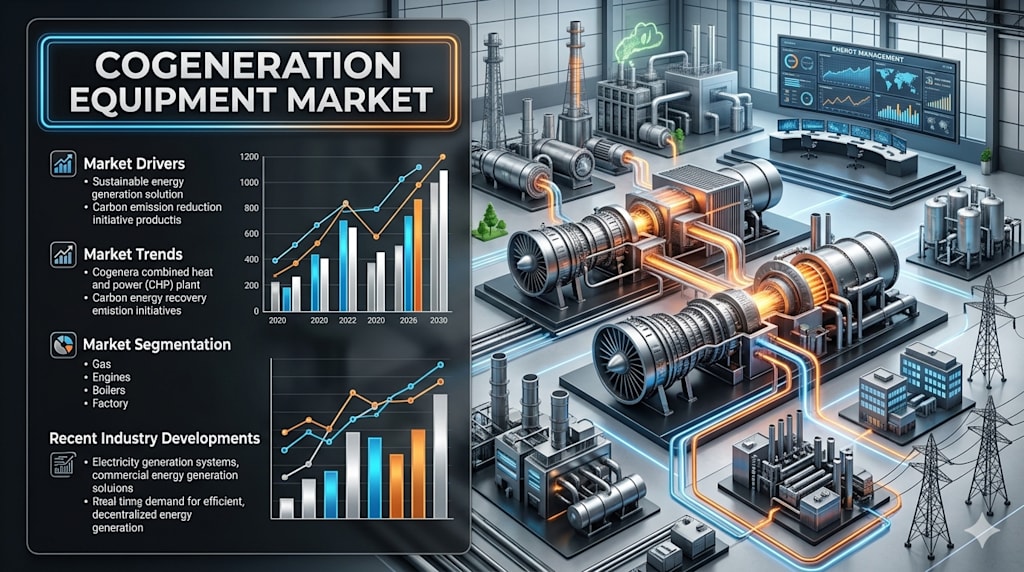
According to IMARC Group's latest research, The global cogeneration equipment market size was valued at USD 32.1 Billion in 2025. Looking forward, IMARC Group estimates the market to reach USD 59.8 Billion by 2034, exhibiting a CAGR of 6.94% during 2026-2034.
How AI is Reshaping the Future of Cogeneration Equipment Market
- Predictive Maintenance and Equipment Optimization: AI-powered monitoring systems analyze real-time sensor data to predict equipment failures before they occur. Machine learning models optimize combustion parameters and operational efficiency, reducing downtime by 35 percent and extending equipment lifespan through precise maintenance scheduling.
- Energy Load Forecasting and Demand Response: AI algorithms predict facility energy consumption patterns using historical data and weather forecasts. Smart systems automatically adjust cogeneration output to match real-time demand, improving operational efficiency by 20 percent while reducing energy waste and fuel costs substantially.
- Grid Integration and Power Management: Machine learning systems manage bidirectional power flows between cogeneration units and utility grids. AI optimizes dispatch scheduling to maximize revenue from demand response programs, improving grid stability while generating additional income streams for equipment operators.
Cogeneration Equipment Industry Overview
North America dominates the global market, driven by robust investments in clean energy technologies and widespread adoption across manufacturing, data centers, and healthcare facilities. The United States features a well-developed natural gas infrastructure supporting economic system deployment, while federal and state incentives promote energy efficiency improvements. Aging power grids and escalating electricity prices push businesses toward on-site generation solutions. Strong regulatory frameworks addressing emissions reduction create favorable conditions for cogeneration expansion across diverse industrial sectors and institutional applications.
Cogeneration Equipment Market Trends & Drivers
Shift Toward Cleaner and Efficient Energy Solutions: Industrial and commercial facilities increasingly embrace cogeneration to comply with stringent environmental regulations and reduce operational costs. The market demonstrates strong demand for high-efficiency, integrated solutions delivering both electricity and thermal energy with minimal environmental impact. July development showed Kawasaki Heavy Industries receiving orders for advanced 30 MW gas turbines replacing coal infrastructure, highlighting broader regional transition toward modern, gas-based cogeneration systems. These developments signal sustained market momentum toward sustainable industrial processes.
Hydrogen-Compatible Technology Adoption: Manufacturers and energy providers are innovating systems supporting hydrogen blends and future hydrogen transitions without requiring complete equipment replacement. Recent demonstrations confirmed that existing gas cogeneration units can operate reliably with 30 percent hydrogen blends while maintaining performance and emissions standards. This capability offers cost-effective, scalable decarbonization pathways for industrial users managing evolving regulations. Hydrogen-compatible systems position companies for long-term energy independence and environmental compliance.
Rising Demand for Reliable, Resilient Power: Global energy demand continues escalating, with frequent power outages affecting millions annually and driving adoption of distributed generation solutions. Approximately 33 million small businesses across North America seek reliable backup power and operational cost reduction through cogeneration. Emerging tri-generation and quad-generation technologies produce multiple energy types simultaneously, significantly improving conversion efficiency. Government initiatives worldwide encourage investment in clean, efficient, renewable-integrated systems, solidifying cogeneration's critical role in modern energy infrastructure and sustainability goals.
Cogeneration Equipment Market Segmentation
By Fuel Type
Natural Gas: Leading segment offering cost-effective, cleaner energy generation with established infrastructure
Biomass: Growing alternative leveraging agricultural and forestry byproducts for sustainable power
Coal: Traditional fuel source gradually declining due to environmental regulations
Others: Includes emerging alternatives and hybrid fuel combinations
By Capacity Range
Up to 30 MW: Dominant segment for small-scale industrial, commercial, and institutional applications with lower capital requirements
31 MW to 60 MW: Mid-range capacity serving medium industrial operations and district heating networks
61 MW to 100 MW: Large-scale systems for petrochemical plants, utilities, and major industrial complexes
By Technology Type
Reciprocating Engine: Leading technology offering flexibility, quick startup, and suitability for varied load requirements
Steam Turbine: Traditional technology with proven reliability in large-scale applications
Combined Cycle Gas Turbine: High-efficiency systems optimizing fuel utilization and thermal recovery
Gas Turbine: Flexible solution for various capacity ranges and operating conditions
Others: Emerging technologies including microturbines and fuel cell systems
By Application
Commercial: Largest segment including hospitals, hotels, data centers, and retail complexes seeking reliable on-site power
Industrial: Manufacturing plants, food processing, petrochemicals using cogeneration for operational optimization
Residential: Growing segment in urban areas focusing on district heating and community energy solutions
By Region
North America: Market leader with strong industrial base and supportive government policies
Europe: Second-largest region emphasizing renewable integration and emissions reduction targets
Asia Pacific: Fastest-growing market driven by industrialization and SME energy needs expansion
Latin America: Emerging market leveraging biomass resources and sustainable development initiatives
Middle East and Africa: Growing segment with commercial expansion driving energy infrastructure investment
Leading Companies Operating in the Global Cogeneration Equipment Industry
Kawasaki Heavy Industries, Ltd.
Bosch Group
Innovative Steam Technologies Inc.
Kohler Co.
Mitsubishi Heavy Industries, Ltd.
Wood PLC (Foster Wheeler AG)
ANDRITZ AG
Siemens Aktiengesellschaft
2G Energy AG
ABB Group
Aegis Energy
EDF Group
BDR Thermea Group B.V.
Baxi Group
Capstone Turbine Corporation
Rolls-Royce plc
Recent News and Developments in Cogeneration Equipment Market
- April 2025: Q8Oils joined COGEN Europe to advance sustainable cogeneration technologies through high-performance lubricant development. As key supplier of specialized fluids including Jenbacher S Oil 40, the collaboration enhances equipment efficiency and reliability across regional cogeneration operations and installations.
- April 2025: Odesa City Council allocated UAH 60 Million for installing new cogeneration units to ensure continuous heat and electricity supply during regional blackouts. Phase one involves deploying 16 gas-piston cogeneration units totaling 31.8 MW capacity, establishing autonomous energy systems for enhanced urban resilience and reliability.
- February 2025: Ingredion invested over USD 100 Million modernizing its Indianapolis manufacturing facility with advanced cogeneration system installation. Equipment upgrades support texture solutions production expansion while simultaneously improving sustainability metrics and operational reliability across production operations.
- February 2025: Aksa Energy announced USD 1.05 Billion investment to construct 500 MW cogeneration gas power plants in North Macedonia. Projects generate 4.1 TWh electricity and 720 GWh thermal energy annually, providing households with complimentary network connections while advancing regional energy security and economic development.
Note: If you require specific details, data, or insights not currently included in the scope of this report, we are happy to accommodate your request. As part of our customization service, we will gather and provide the additional information you need, tailored to your specific requirements. Please let us know your exact needs, and we will ensure the report is updated accordingly to meet your expectations.
About the Creator
Michael Richard
Michael Richard is a Market Research Expert specializing in market intelligence, competitive analysis, and data-driven insights. He helps organizations understand trends and emerging opportunities through in-depth research.
Enjoyed the story? Support the Creator.
Subscribe for free to receive all their stories in your feed.
Comments
There are no comments for this story
Be the first to respond and start the conversation.