
Coffee Bean Market Outlook 2026–2034: How Specialty Coffee and Global Café Culture Are Brewing New Growth Opportunities
Rising coffee consumption, growing demand for premium specialty coffee, and expanding café culture are driving steady growth across the global coffee bean industry.

Coffee has evolved far beyond being a simple morning beverage. Today, it is deeply woven into daily routines, social interactions, workplace culture, and consumer lifestyles across the globe. From bustling cafés in metropolitan cities to home brewing enthusiasts exploring single-origin beans, coffee has become one of the world's most consumed and culturally significant beverages.
As consumer preferences shift toward premium experiences, sustainability, and specialty products, the global coffee industry is undergoing a major transformation. Coffee lovers are becoming more knowledgeable about bean origins, roasting techniques, brewing methods, and flavor profiles, creating new opportunities throughout the coffee value chain.
At the same time, urbanization, rising disposable incomes, expanding café networks, and increasing adoption of Western-style coffee consumption patterns in emerging economies continue fueling demand worldwide.
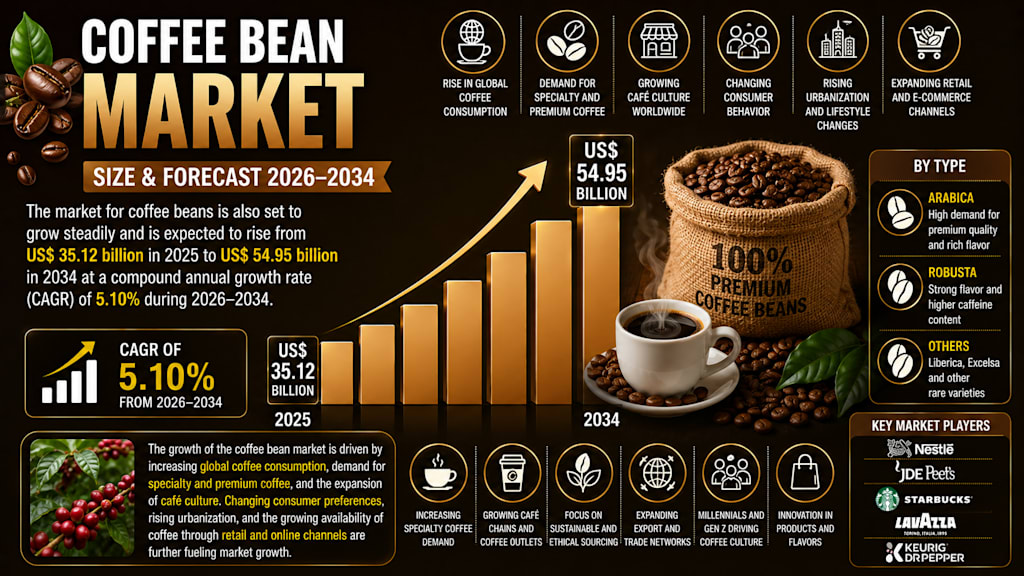
According to Renub Research, the global Coffee Bean Market is projected to grow from US$ 35.12 billion in 2025 to US$ 54.95 billion by 2034, registering a compound annual growth rate (CAGR) of 5.10% between 2026 and 2034. Rising global coffee consumption, growing demand for specialty coffee, premiumization trends, and expanding café culture are among the key factors supporting market growth.
As consumer tastes continue evolving and global coffee culture expands, the coffee bean industry is expected to remain one of the most dynamic segments within the food and beverage sector.
Understanding the Coffee Bean Industry
Coffee beans are the seeds found inside the fruit of the coffee plant, commonly known as coffee cherries. After harvesting, these cherries undergo processing, drying, roasting, and grinding before ultimately being brewed into coffee.
Two primary coffee species dominate global production: Arabica and Robusta.
Arabica coffee is widely appreciated for its smooth flavor, mild acidity, and complex aroma. It is generally considered the premium segment of the coffee market and accounts for the majority of specialty coffee production.
Robusta coffee, by contrast, contains higher caffeine levels and offers a stronger, more intense flavor profile. It is commonly used in espresso blends, instant coffee products, and commercial coffee applications.
The quality, flavor, and aroma of coffee are influenced by numerous factors, including altitude, climate, soil conditions, harvesting methods, and roasting techniques.
As consumers become increasingly sophisticated in their coffee preferences, demand for high-quality beans continues rising across global markets.
Rising Global Coffee Consumption Is Driving Market Growth
One of the strongest drivers of the coffee bean market is the steady increase in global coffee consumption.
Coffee has become an essential part of everyday life for millions of consumers worldwide. Busy urban lifestyles, changing work patterns, and growing demand for convenient beverages continue supporting increased coffee consumption across both developed and emerging markets.
Young consumers, in particular, are embracing coffee as part of modern lifestyle culture. Social media, digital marketing, and café experiences have helped introduce new generations to specialty coffee products and premium beverage options.
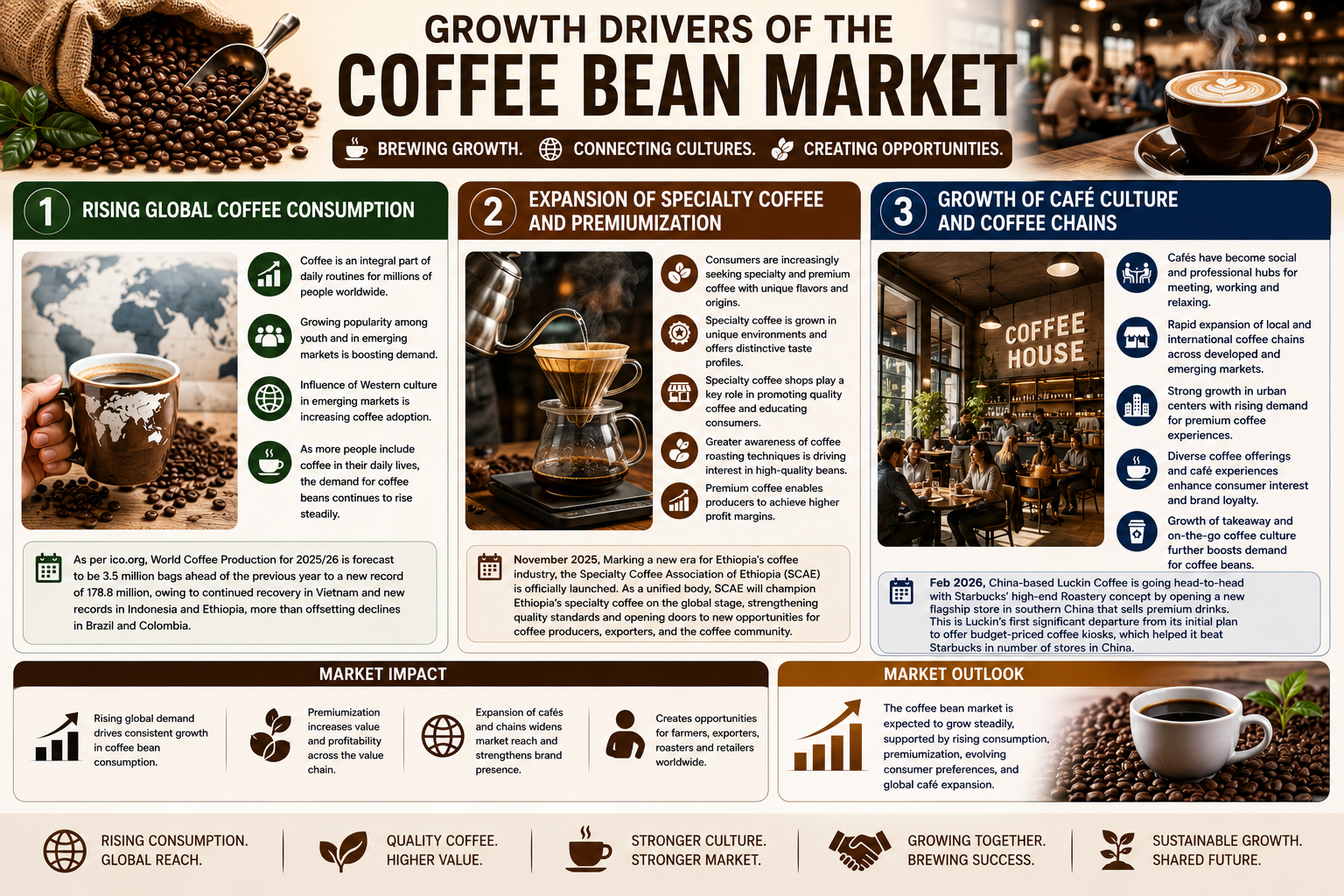
According to international coffee industry estimates, global coffee production for 2025–2026 is expected to reach a record 178.8 million bags, reflecting strong demand across worldwide markets. Continued recovery in major producing countries such as Vietnam, Indonesia, and Ethiopia is helping support growing consumption trends.
Emerging economies are also contributing significantly to market growth as rising incomes and urbanization encourage broader adoption of coffee-drinking habits.
As coffee becomes increasingly integrated into daily routines worldwide, demand for coffee beans is expected to remain robust throughout the forecast period.
Specialty Coffee Is Transforming Consumer Preferences
The specialty coffee movement has become one of the most influential trends shaping the modern coffee industry.
Consumers are increasingly seeking premium products that offer distinctive flavors, traceable origins, and unique brewing experiences. Specialty coffee typically originates from carefully managed farms, often located in specific geographic regions known for producing exceptional beans.
Coffee enthusiasts today pay close attention to factors such as origin, altitude, processing methods, and roasting profiles. This growing appreciation for quality has created significant opportunities for specialty coffee producers and retailers.
Specialty coffee shops have played a major role in educating consumers and promoting premium coffee experiences. Baristas, tasting events, and advanced brewing methods have helped transform coffee consumption into a more experiential and personalized activity.
In November 2025, the Specialty Coffee Association of Ethiopia was officially launched to strengthen quality standards and enhance opportunities for Ethiopian specialty coffee producers in international markets.
As consumer awareness continues growing, specialty coffee is expected to remain one of the fastest-growing segments within the global coffee industry.
Café Culture Continues Expanding Worldwide
The expansion of café culture has become another major catalyst for coffee bean market growth.
Modern cafés have evolved into social hubs where people meet friends, conduct business, study, and relax. Coffee shops increasingly serve as community gathering spaces that extend beyond their traditional role as beverage providers.
International coffee chains and independent cafés alike continue expanding their presence across developed and emerging economies. Urban consumers increasingly view café visits as lifestyle experiences rather than simple beverage purchases.
This trend is particularly evident among younger demographics, who value premium coffee experiences, comfortable environments, and social engagement.
The rise of remote work and flexible employment arrangements has further increased café traffic, as many professionals use coffee shops as alternative workspaces.
In February 2026, China's Luckin Coffee expanded its premium strategy by launching a flagship store focused on high-end coffee experiences, signaling increasing competition within the specialty coffee sector.
As café culture continues spreading globally, demand for high-quality coffee beans is expected to rise accordingly.
Premiumization Is Creating New Revenue Opportunities
Consumers are increasingly willing to pay higher prices for products that offer superior quality, sustainability, and authenticity.
This premiumization trend has become a powerful force within the coffee market. Single-origin coffees, organic products, direct-trade beans, and limited-edition specialty offerings are attracting growing consumer interest.
Premium coffee products often emphasize unique flavor characteristics, ethical sourcing practices, and environmental sustainability.
Coffee brands are leveraging storytelling and transparency to connect with consumers seeking meaningful purchasing experiences. Information regarding farm origin, production methods, and farmer partnerships has become increasingly important.
Premiumization benefits producers by enabling higher profit margins while encouraging investments in quality improvement and sustainable agricultural practices.
As consumers continue prioritizing quality over quantity, premium coffee categories are expected to experience sustained growth.
Sustainability Is Becoming a Key Purchasing Factor
Environmental and social responsibility are increasingly influencing coffee purchasing decisions.
Consumers are paying greater attention to issues such as fair trade certification, organic farming, biodiversity conservation, and responsible sourcing practices.
Coffee companies are responding by implementing sustainability initiatives designed to reduce environmental impact and support farming communities.
Many specialty coffee brands emphasize transparency throughout the supply chain, providing consumers with greater confidence regarding product origins and production standards.
Certification programs and sustainable farming practices have become important differentiators in competitive markets.
The European Union, one of the world's largest coffee-consuming regions, has demonstrated particularly strong demand for sustainably produced and certified coffee products. Consumer awareness regarding environmental responsibility continues shaping purchasing behavior across the region.
As sustainability concerns become increasingly important worldwide, coffee companies that prioritize responsible practices are likely to gain competitive advantages.
Brazil Continues Leading Global Arabica Production
Brazil remains the world's largest producer of Arabica coffee beans and plays a critical role in the global coffee supply chain.
The country's favorable climate, extensive agricultural resources, and advanced farming techniques enable large-scale production while maintaining high quality standards.
Brazilian Arabica coffee is widely appreciated for its smooth flavor profile and balanced acidity. These characteristics make it highly desirable among roasters and consumers worldwide.
The country continues investing in agricultural innovation and climate resilience measures designed to protect coffee production from environmental challenges.
According to Cecafé, Brazil's largest coffee importer purchased approximately 5.4 million sixty-kilogram sacks of coffee in 2025, highlighting the country's continued importance within global trade networks.
Despite challenges related to weather variability, Brazil remains the dominant force within global Arabica production.
Vietnam Strengthens Its Position in Robusta Production
Vietnam has established itself as the world's leading producer of Robusta coffee.
Approximately 97 percent of the country's coffee production consists of Robusta varieties, which are valued for their strong flavor and high caffeine content.
Government support, favorable climatic conditions, and efficient agricultural systems have enabled Vietnam to become a key supplier within global coffee markets.
Vietnamese coffee plays an especially important role in instant coffee manufacturing and commercial blending applications.
In August 2024, the country's total coffee exports were estimated at approximately 25 million sixty-kilogram bags, demonstrating its significant contribution to global supply.
As demand for Robusta coffee continues growing, Vietnam is expected to maintain its leadership position within this segment.
Challenges Facing the Coffee Bean Market
Despite strong growth prospects, the coffee bean industry faces several significant challenges.
Climate change remains one of the most pressing concerns. Coffee plants are highly sensitive to environmental conditions, and changes in temperature, rainfall patterns, and extreme weather events can significantly affect crop yields and quality.
Rising temperatures, droughts, frost events, pests, and plant diseases are creating increasing uncertainty for producers worldwide.
These environmental pressures can disrupt supply chains and contribute to fluctuations in coffee availability and pricing.
Maintaining long-term production stability will require continued investment in climate adaptation strategies, agricultural innovation, and sustainable farming practices.
Price Volatility Creates Market Uncertainty
Coffee prices are subject to significant fluctuations driven by supply-demand dynamics, weather conditions, geopolitical developments, and economic factors.
Changes in production levels among major exporting countries can quickly influence global pricing structures.
Currency fluctuations, transportation costs, and trade policies further contribute to market uncertainty.
For producers, unpredictable pricing can create financial challenges and complicate long-term planning. For buyers and roasters, price volatility may affect profitability and procurement strategies.
Maintaining supply chain resilience and improving market transparency will remain important priorities for industry stakeholders moving forward.
Regional Market Insights
The European Union remains one of the largest coffee-consuming regions in the world, supported by strong coffee culture, high per-capita consumption, and growing demand for premium and sustainable products. Countries such as Germany, Italy, France, and the Netherlands continue driving regional consumption.
The United States represents one of the largest coffee import markets globally. Growing demand for roast-and-ground coffee, specialty beverages, and convenient coffee solutions continues supporting market expansion. More than 170 million sixty-kilogram bags of roast-and-ground coffee were consumed globally in 2024, highlighting the scale of demand.
Brazil remains the leading exporter of coffee beans worldwide. According to Cecafé, the country exported more than 40 million coffee bags during 2025, reinforcing its critical role within global supply chains.
Indonesia is increasingly expanding exports of roast-and-ground coffee products as producers move toward higher-value offerings and specialty coffee categories. Unique regional varieties such as Sumatra and Java coffee continue attracting international demand.
Competitive Landscape
Competition within the global coffee bean market remains intense as companies focus on product innovation, sustainability, premiumization, and consumer engagement.
Major industry participants include Starbucks, Nescafé, The Kraft Heinz Company, Luckin Coffee, J.M. Smucker, Coca-Cola, Dutch Bros, Keurig Dr Pepper, and JDE Peet's N.V.
These organizations continue investing in specialty coffee offerings, digital ordering platforms, sustainability initiatives, and international expansion strategies to strengthen their competitive positions.
As consumer preferences evolve, innovation and brand differentiation are expected to remain critical success factors across the coffee industry.
Final Thoughts
The global coffee bean market continues to benefit from powerful long-term trends, including rising consumption, expanding café culture, growing interest in specialty coffee, and increasing demand for premium products. Coffee has evolved from a simple beverage into a lifestyle product that reflects consumer preferences for quality, authenticity, and experience.
At the same time, sustainability, ethical sourcing, and environmental responsibility are becoming increasingly important factors influencing purchasing decisions across global markets.
With the market projected to grow from US$ 35.12 billion in 2025 to US$ 54.95 billion by 2034, the coffee bean industry is poised for steady expansion. As consumers continue exploring new flavors, brewing methods, and premium coffee experiences, coffee beans will remain at the heart of one of the world's most vibrant and influential food and beverage markets.
About the Creator
Enjoyed the story? Support the Creator.
Subscribe for free to receive all their stories in your feed.
Comments
There are no comments for this story
Be the first to respond and start the conversation.