
Cloud Computing Market Enters a New Era of Demand
Businesses are rethinking infrastructure as digital workloads outgrow traditional systems.

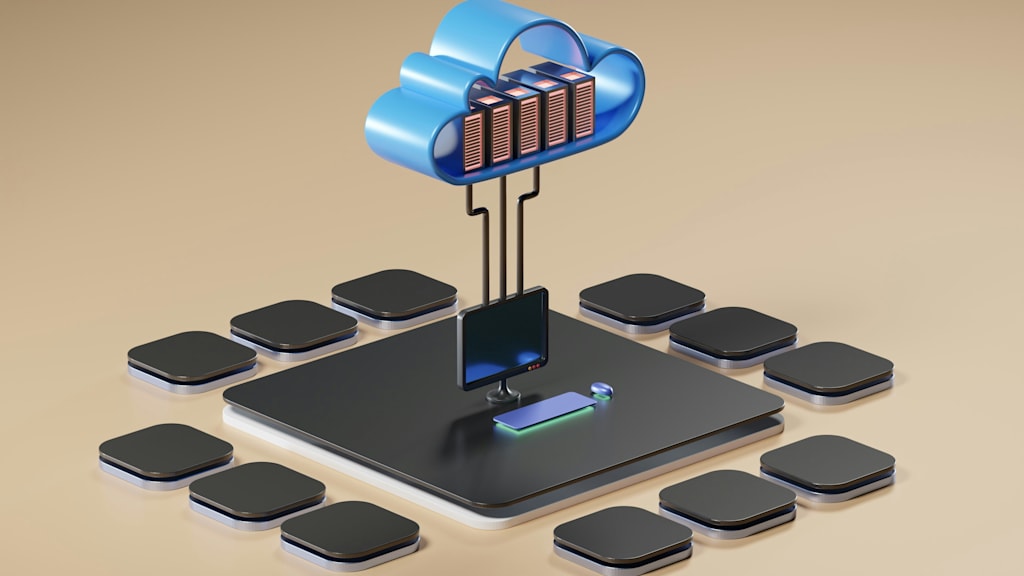
The cloud computing market has moved well past its early reputation as a cost-cutting tool for IT departments. It's now the backbone of how companies build products, store data, and serve customers in real time. From small startups running entirely on remote servers to multinational banks shifting core operations off-premise, the shift toward cloud-first infrastructure has become less of a trend and more of a baseline expectation. What's changing now is the scale and sophistication of that demand, as artificial intelligence, edge computing, and hybrid work models push organizations to rethink how they store and process information.
Anyone tracking this space closely can get your free sample report to see how analysts are breaking down growth across regions and service categories.
Why Enterprises Are Accelerating Migration
A decade ago, moving to the cloud was often framed as a long-term project, something companies approached cautiously and rolled out in phases. That caution has largely disappeared. Enterprises now treat cloud infrastructure as a competitive necessity rather than an optional upgrade. Retailers use cloud-based platforms to manage inventory across hundreds of locations in real time. Healthcare providers rely on cloud systems to securely share patient records between facilities without delay. Even traditional manufacturing firms have started running predictive maintenance software hosted entirely off-site, reducing downtime and equipment failure.
This urgency is partly a response to the pandemic-era lessons many businesses haven't forgotten. Companies that had already invested in flexible, remote-capable infrastructure adapted faster when in-person operations became impossible. That experience reshaped how leadership teams think about resilience, and cloud adoption became a risk-management decision as much as a technology one.
Where the Real Growth Is Happening
Not all cloud spending looks the same. While large public cloud providers continue to dominate headlines, much of the recent expansion is happening in more specialized areas: industry-specific cloud platforms, AI-integrated services, and hybrid setups that blend private and public infrastructure. Financial institutions, for instance, are increasingly adopting hybrid models that let them keep sensitive data on private servers while running customer-facing applications in the public cloud.
According to recent industry analysis, the broader cloud computing market is expanding as organizations across finance, retail, and logistics increase their reliance on scalable digital infrastructure to support everything from data analytics to customer service automation. This pattern shows up clearly in how companies are restructuring their IT budgets, shifting spending away from physical hardware and toward subscription-based cloud services that can scale up or down depending on demand.
A Real-World Example: Streaming and On-Demand Services
One of the clearest illustrations of cloud-driven transformation is the streaming industry. Major platforms handle enormous spikes in viewership, particularly during high-profile releases or live events, without those services breaking down. That kind of elasticity isn't possible with traditional, fixed-capacity servers. It depends on cloud infrastructure that can automatically allocate more computing power when demand surges, then scale back down once traffic returns to normal. This same model has since been adopted by e-commerce platforms during major sales events, gaming companies launching new titles, and even government agencies managing high-traffic public services.
The Role of AI and Edge Computing
Artificial intelligence has added another layer of complexity to cloud strategy. Training and running AI models requires significant computing power, and many organizations don't have the infrastructure to handle that in-house. Cloud providers have responded by building specialized services for AI workloads, making advanced computing accessible to companies that couldn't otherwise afford to build it themselves.
At the same time, edge computing is emerging as a complementary force rather than a competitor to centralized cloud systems. Industries like autonomous vehicles, industrial automation, and remote healthcare monitoring need to process data closer to where it's generated, reducing latency in situations where milliseconds matter. The result is a more layered approach to infrastructure, where cloud and edge systems work together rather than one replacing the other.
Looking Ahead
What started as a shift toward remote storage has evolved into a fundamental rethinking of how digital infrastructure supports everyday business operations. As AI workloads grow, hybrid models mature, and industries continue customizing their cloud strategies, the next phase of this transformation will likely be defined less by adoption and more by optimization. Companies that already moved to the cloud will spend the coming years refining how they use it, and that refinement may end up shaping the technology landscape just as much as the original migration did.
About the Creator
Hazel Williams
Building, learning, and growing every day.
Enjoyed the story? Support the Creator.
Subscribe for free to receive all their stories in your feed.
Comments
There are no comments for this story
Be the first to respond and start the conversation.