
China’s Baby Food Market Is Booming: Why Parents Are Driving a $36 Billion Nutrition Revolution
Rising incomes, growing health awareness, and demand for premium nutrition are transforming China's baby food industry faster than ever before.

For modern parents, feeding a child is about much more than satisfying hunger. Nutrition during infancy is increasingly viewed as the foundation for lifelong health, cognitive development, and overall well-being. As a result, parents around the world are becoming more selective about what goes into their children's diets.
Nowhere is this trend more evident than in China.
Over the past decade, China's baby food industry has undergone a dramatic transformation fueled by rising household incomes, urbanization, stricter food safety standards, and growing awareness of infant nutrition. Parents are increasingly seeking premium, scientifically formulated, and nutritionally balanced products that support healthy growth and development.
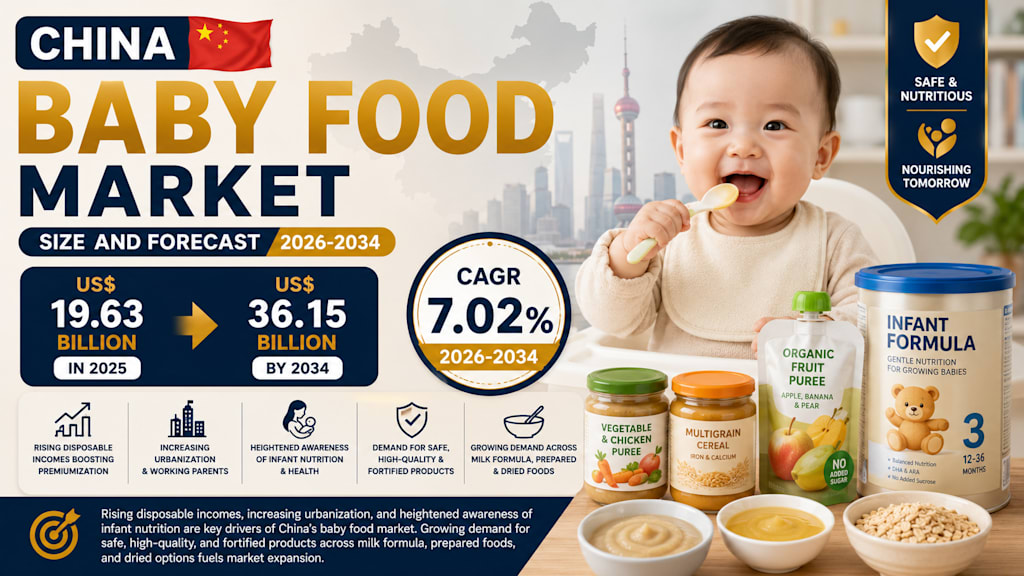
According to Renub Research, the China Baby Food Market is expected to grow from US$19.63 billion in 2025 to US$36.15 billion by 2034, expanding at a compound annual growth rate (CAGR) of 7.02% between 2026 and 2034. This impressive growth reflects the increasing importance Chinese families place on infant health and nutrition.
As consumer expectations continue to evolve, the country's baby food industry is entering a new era defined by quality, innovation, safety, and convenience.
Why Infant Nutrition Has Become a Top Priority
Today's Chinese parents are more informed than previous generations.
Access to nutritional research, healthcare guidance, parenting communities, and digital information platforms has significantly increased awareness of the importance of early childhood nutrition. Parents understand that the first few years of life play a critical role in physical growth, brain development, immune function, and long-term health outcomes.
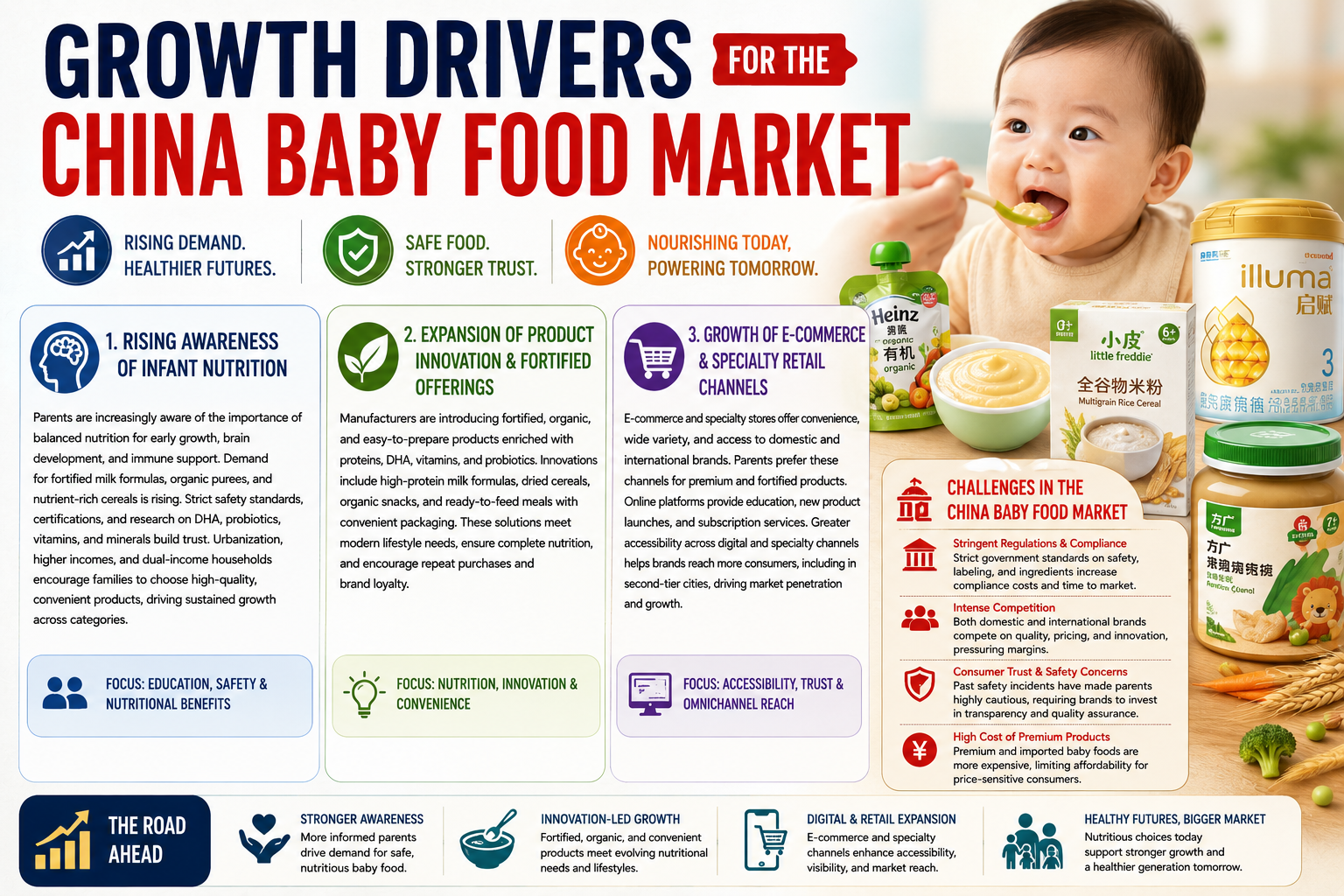
This growing awareness has fueled demand for products enriched with essential nutrients such as proteins, vitamins, minerals, probiotics, DHA, and other developmental support ingredients.
Rather than simply choosing the most affordable option, many families now prioritize nutritional value, ingredient quality, and scientific backing when purchasing baby food products.
The result is a rapidly expanding market for premium and fortified nutrition solutions designed specifically for infants and young children.
Rising Incomes Are Fueling Premium Product Demand
China's economic growth has played a major role in shaping consumer behavior across numerous industries, and baby food is no exception.
As disposable incomes continue to rise, parents are increasingly willing to invest in premium products that promise enhanced nutrition, superior quality, and greater safety assurances.
For many families, especially in urban areas, baby food is viewed as an essential investment rather than an area where costs should be minimized. This mindset has encouraged strong demand for imported brands, organic products, specialized formulas, and scientifically formulated nutrition solutions.
Parents are actively seeking products that support specific developmental needs, including immune health, digestive wellness, cognitive development, and allergy management.
This willingness to spend more on infant nutrition is helping drive growth across multiple product categories within the market.
Product Innovation Is Transforming the Industry
Innovation has become one of the most important competitive advantages in China's baby food market.
Manufacturers are continuously introducing new products designed to meet evolving parental expectations. Today's offerings extend far beyond traditional baby cereals and formulas.
Companies are developing fortified milk formulas, nutrient-rich prepared meals, organic snacks, allergen-friendly foods, and stage-specific nutrition solutions tailored to different phases of childhood development.
Many products now include enhanced nutritional profiles featuring probiotics, DHA, proteins, vitamins, minerals, and other functional ingredients that support healthy growth.
Packaging innovation is also playing a significant role. Single-serving containers, resealable pouches, and ready-to-feed options are increasingly popular among busy parents seeking convenience without sacrificing nutritional quality.
As competition intensifies, innovation remains essential for brands looking to build trust and maintain consumer loyalty.
E-Commerce Is Reshaping How Parents Shop
China's digital economy has revolutionized consumer purchasing habits, and the baby food sector is one of the biggest beneficiaries.
Online shopping platforms have become a preferred channel for many parents due to their convenience, product variety, and access to detailed information.
E-commerce enables families to compare products, read reviews, verify certifications, and access both domestic and international brands from virtually anywhere in the country.
This accessibility is especially important in second-tier and emerging cities, where physical retail options may be more limited.
In addition to product availability, online platforms provide educational resources, parenting content, subscription services, and personalized recommendations that enhance the customer experience.
Manufacturers are increasingly leveraging digital channels to launch new products, build brand awareness, and engage directly with consumers.
The continued growth of e-commerce is expected to remain a major catalyst for market expansion in the years ahead.
Milk Formula Remains the Largest Market Segment
Among all categories within China's baby food industry, milk formula continues to dominate.
Parents place enormous importance on formula quality, particularly given the critical role it plays in infant nutrition. Products fortified with DHA, probiotics, vitamins, minerals, and proteins are especially popular among caregivers seeking comprehensive nutritional support.
The market includes both domestic and international brands, with purchasing decisions often influenced by safety certifications, scientific research, ingredient transparency, and brand reputation.
Specialized formulas designed for infants with digestive sensitivities, allergies, or specific nutritional requirements are creating additional growth opportunities.
Stringent government regulations have also strengthened consumer confidence by ensuring higher safety and quality standards across the category.
As awareness of infant health continues to grow, milk formula is expected to remain the industry's largest and most competitive segment.
Prepared Baby Foods Are Gaining Popularity
Prepared baby food products are experiencing strong growth as modern lifestyles become increasingly fast-paced.
Urban parents often face time constraints due to demanding work schedules and household responsibilities. Ready-to-eat meals, purees, cereals, and snacks offer a convenient solution while ensuring infants receive balanced nutrition.
Manufacturers have responded by introducing organic, fortified, and allergen-free prepared foods designed to meet parental expectations for quality and safety.
Packaging improvements have further enhanced convenience. Single-serve portions, portable containers, and resealable pouches make feeding easier both at home and while traveling.
As convenience continues to influence purchasing decisions, prepared baby foods are expected to play an increasingly important role within the overall market.
Dried Baby Foods Continue to Serve a Vital Role
While innovation drives many segments of the market, dried baby foods remain a trusted choice among Chinese families.
Products such as cereals, powdered foods, and dehydrated snacks offer practical advantages including longer shelf life, easy storage, and simple preparation.
Manufacturers are enhancing these products by incorporating proteins, vitamins, probiotics, and other nutrients that support healthy development.
Many imported dried food products are also perceived as premium offerings, attracting parents seeking internationally recognized quality standards.
The combination of convenience, nutritional value, and reliability continues to support strong demand within this category.
Specialized Baby Food Stores Are Building Consumer Trust
While e-commerce continues to expand, specialized baby food stores remain an important part of China's retail landscape.
These stores provide curated product selections, nutritional guidance, and personalized recommendations that many parents value when making purchasing decisions.
Consumers often perceive specialty retailers as more trustworthy sources for premium and imported products. In addition, these stores frequently offer educational resources that help parents navigate complex nutritional choices.
Many specialty outlets collaborate directly with leading domestic and international brands, ensuring access to high-quality products that may not be widely available elsewhere.
Loyalty programs, subscription services, and personalized consultations further strengthen customer relationships and encourage repeat purchases.
Regulatory Standards Continue to Shape the Market
China maintains some of the world's strictest regulations regarding infant nutrition products.
Food safety standards, labeling requirements, quality certifications, and product testing procedures are designed to protect consumers and maintain confidence in the marketplace.
While these regulations create challenges for manufacturers, they also contribute to higher overall product quality and stronger consumer trust.
Compliance often requires significant investment in research, quality assurance, documentation, and supply chain management. Imported products must also navigate extensive regulatory scrutiny before reaching consumers.
For companies capable of meeting these standards, strict regulation can become a competitive advantage by reinforcing credibility and reliability.
Competition Is Intensifying Across the Industry
Despite strong growth prospects, the China baby food market remains highly competitive.
Domestic manufacturers compete directly with multinational brands, each seeking to capture market share through innovation, quality, branding, and pricing strategies.
Price sensitivity remains an important consideration, particularly outside major metropolitan areas. While premium products continue to gain popularity, many families still seek affordable options that provide reliable nutrition.
Manufacturers must balance quality, safety, innovation, and affordability while maintaining profitability.
Continuous product development and consumer education have become essential tools for standing out in an increasingly crowded marketplace.
Recent Innovations Highlight Future Opportunities
Recent product launches demonstrate how rapidly the industry is evolving.
In June 2025, Nestlé's Gerber brand introduced China's first HMO-fortified infant cereal containing 2'-FL, designed to support immunity and complementary feeding. The product became available through both online platforms and specialty baby stores following regulatory approval.
Earlier, in November 2023, Wyeth Nutrition launched its illuma HMO growing-up formula featuring two human milk oligosaccharides. The product was developed to support immune health and overall nutrition among preschool-aged children.
These developments reflect a broader industry focus on science-based nutrition and advanced formulations designed to address specific developmental needs.
Final Thoughts
China's baby food market is undergoing a remarkable transformation driven by rising incomes, growing nutritional awareness, digital retail expansion, and continuous product innovation.
With the market projected to reach US$36.15 billion by 2034, opportunities abound for manufacturers that can deliver safe, scientifically formulated, and convenient nutrition solutions for modern families.
Today's parents are more informed, selective, and health-conscious than ever before. They are actively seeking products that support their children's growth, development, and long-term well-being.
As consumer expectations continue to rise, companies that prioritize quality, transparency, innovation, and trust will be best positioned to succeed in one of the world's most dynamic baby nutrition markets.
The future of China's baby food industry isn't simply about feeding children—it's about helping build healthier generations from the very beginning.
About the Creator
Enjoyed the story? Support the Creator.
Subscribe for free to receive all their stories in your feed.
Comments
There are no comments for this story
Be the first to respond and start the conversation.