
China Ice Cream Market Outlook 2026–2034: How Premium Flavors and Changing Consumer Lifestyles Are Driving Growth
Rising disposable incomes, growing demand for premium ice cream, expanding retail networks, and evolving consumer preferences are transforming China's ice cream industry.

China's food and beverage industry has experienced remarkable transformation over the past decade, driven by rising incomes, urbanization, changing lifestyles, and increasing exposure to global consumer trends. Among the sectors benefiting from these changes, the ice cream market has emerged as one of the most dynamic and rapidly evolving segments.
Once considered primarily a seasonal treat, ice cream has become an increasingly popular year-round indulgence for Chinese consumers. Growing demand for premium products, innovative flavors, healthier alternatives, and unique dessert experiences is reshaping the market. Younger generations, in particular, are driving demand for high-quality and visually appealing ice cream products that combine taste, creativity, and lifestyle appeal.
At the same time, expanding retail infrastructure, food delivery platforms, and e-commerce channels have made ice cream more accessible than ever before, allowing brands to reach consumers across both major cities and emerging urban markets.
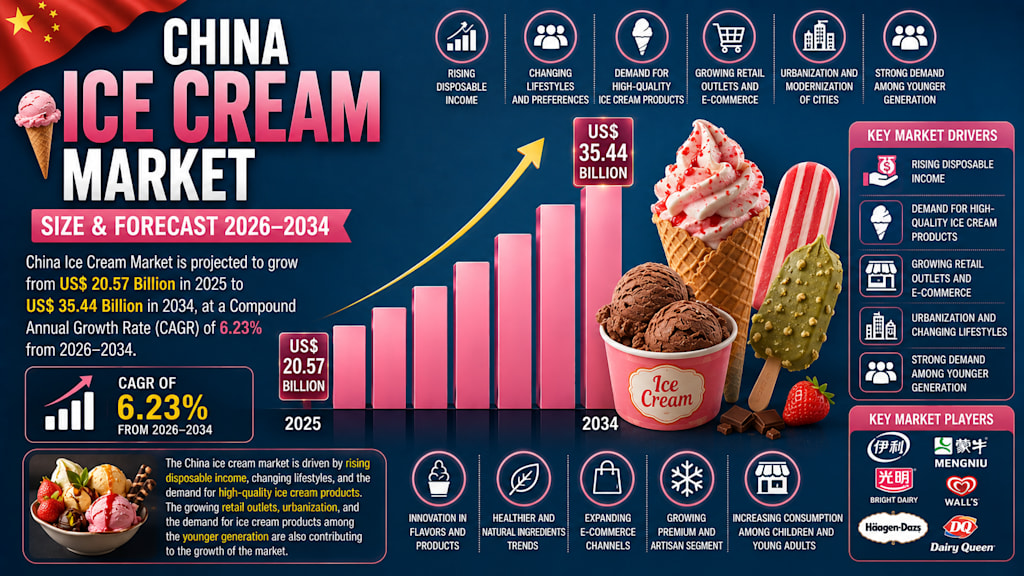
According to Renub Research, the China Ice Cream Market is projected to grow from US$ 20.57 billion in 2025 to US$ 35.44 billion by 2034, registering a compound annual growth rate (CAGR) of 6.23% between 2026 and 2034. Rising disposable incomes, urbanization, premiumization trends, and growing demand among younger consumers are among the key factors supporting market expansion.
As consumer tastes continue evolving and demand for innovative frozen desserts increases, China's ice cream industry is expected to experience sustained growth throughout the forecast period.
Understanding China's Evolving Ice Cream Industry
Ice cream is a frozen dessert traditionally produced from milk, cream, sugar, and flavoring ingredients. The production process involves mixing ingredients, freezing them while churning, and creating the smooth texture that consumers enjoy.
Over the years, the category has expanded significantly beyond traditional offerings. Modern ice cream products now include low-fat varieties, plant-based alternatives, dairy-free formulations, premium artisanal products, and functional dessert options.
Chinese consumers increasingly seek products that offer more than simple refreshment. Today's buyers are attracted to distinctive flavors, attractive presentation, premium ingredients, and memorable experiences.
Popular flavors in China often combine global influences with local preferences. Traditional flavors such as vanilla and chocolate remain popular, while regionally inspired options such as matcha, red bean, lychee, green tea, and mango continue gaining traction.
The combination of culinary innovation and changing consumer behavior is helping transform ice cream into a lifestyle-oriented product category rather than merely a seasonal dessert.
Rising Disposable Income Is Fueling Consumer Spending
One of the strongest drivers of China's ice cream market is the country's expanding middle class and rising disposable income levels.
As living standards continue improving, consumers are becoming more willing to spend on premium food and beverage products that offer enhanced quality and unique experiences. Ice cream has benefited significantly from this shift.
Urban consumers increasingly view premium desserts as affordable indulgences that contribute to personal enjoyment and lifestyle satisfaction.
Younger consumers, particularly Millennials and Generation Z, are leading this trend. These demographics often prioritize product quality, innovation, and brand image when making purchasing decisions.
Growing purchasing power has also encouraged experimentation with imported brands, premium products, and artisanal offerings that were previously considered niche categories.
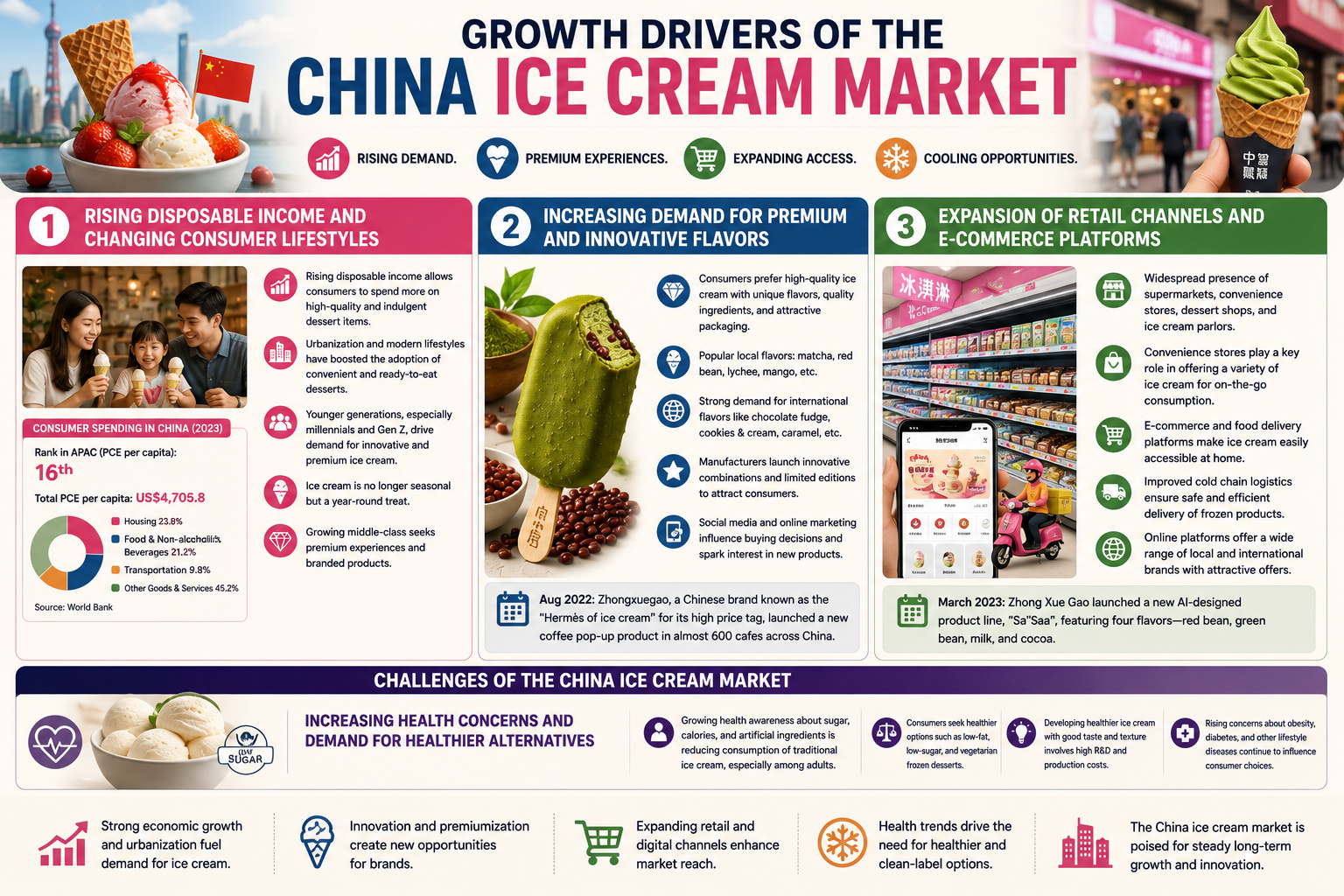
According to consumer expenditure data, China recorded per capita consumer spending of approximately US$4,705.8 in 2023, reflecting the continued growth of household purchasing power across the country.
As incomes continue rising, demand for premium frozen desserts is expected to strengthen further.
Premium and Innovative Flavors Are Reshaping Demand
One of the most significant trends influencing the Chinese ice cream market is the growing preference for premium and innovative flavor experiences.
Consumers are increasingly moving beyond traditional offerings and seeking products that provide novelty, exclusivity, and superior taste.
Local flavors inspired by Chinese culinary traditions have become particularly popular. Matcha, red bean, lychee, mango, taro, green tea, and various fruit-based combinations are attracting strong consumer interest.
At the same time, international flavors such as chocolate fudge, cookies and cream, caramel, and cheesecake continue gaining popularity.
Manufacturers are actively introducing limited-edition products, seasonal flavors, and creative combinations to maintain consumer engagement and generate excitement around new launches.
In August 2022, premium Chinese ice cream brand Zhongxuegao, often referred to as the "Hermès of ice cream," expanded into the coffee sector by launching a coffee pop-up initiative across hundreds of cafés in China. The move demonstrated how premium dessert brands are increasingly seeking innovative ways to connect with consumers.
As consumers continue seeking differentiated experiences, flavor innovation is expected to remain a major growth driver.
Retail Expansion Is Improving Product Accessibility
The rapid development of China's retail infrastructure has played a crucial role in expanding the ice cream market.
Supermarkets, hypermarkets, convenience stores, specialty dessert shops, and ice cream parlors now provide consumers with extensive access to frozen dessert products across urban and semi-urban areas.
Convenience stores have become particularly important distribution channels because they support impulse purchases and cater to consumers seeking quick, on-the-go snack options.
At the same time, cold-chain logistics have improved significantly, ensuring product quality and enabling broader geographic distribution.
The expansion of retail networks has helped both domestic and international brands increase market penetration while enhancing consumer convenience.
As retail infrastructure continues developing, product availability is expected to improve further throughout China's rapidly growing urban centers.
E-Commerce and Food Delivery Are Transforming Sales
Digital commerce has become an increasingly important component of China's ice cream industry.
Consumers are embracing online shopping platforms and food delivery services that allow them to purchase frozen desserts from the comfort of their homes.
Major e-commerce platforms offer access to both local and international brands, while promotional campaigns, discounts, and personalized recommendations encourage consumer engagement.
Food delivery services have proven particularly effective in urban areas, where convenience and speed are highly valued.
The integration of advanced cold-chain logistics has enabled reliable delivery of frozen products, helping online channels become viable alternatives to traditional retail outlets.
In March 2023, Zhongxuegao launched an AI-designed ice cream product line known as "Sa'Saa," featuring flavors such as red bean, green bean, milk, and cocoa. The launch highlighted the growing intersection between technology, innovation, and consumer product development within China's food industry.
As digital consumption continues growing, online channels are expected to contribute increasingly to overall market expansion.
Impulse Ice Cream Is Becoming a Key Growth Segment
Impulse ice cream products represent one of the most important segments within China's frozen dessert market.
These products include individual servings such as bars, cones, sticks, and cups that are typically consumed immediately after purchase.
Urban lifestyles and busy daily schedules have contributed significantly to demand for convenient snack options that require no preparation.
Students, office workers, commuters, and young consumers frequently purchase impulse ice cream through convenience stores, vending machines, and retail outlets.
Manufacturers continue investing in attractive packaging, competitive pricing, and innovative flavors to strengthen impulse buying behavior.
As China's urban population continues expanding, impulse ice cream is expected to remain one of the strongest-performing product categories.
Artisanal Ice Cream Is Gaining Popularity
China's growing appetite for premium food experiences has contributed to the rapid rise of artisanal ice cream.
Unlike mass-produced products, artisanal ice cream typically emphasizes natural ingredients, handcrafted production methods, unique flavor combinations, and superior quality.
Specialty dessert boutiques and artisanal ice cream shops have become increasingly common in major cities such as Shanghai and Beijing.
Consumers are often willing to pay higher prices for products that deliver authenticity, craftsmanship, and premium ingredients.
Social media has amplified this trend by encouraging consumers to share visually appealing food experiences online.
As disposable incomes rise and consumer preferences become increasingly sophisticated, artisanal ice cream is expected to become an increasingly important segment of the Chinese market.
Chocolate Ice Cream Remains a Consumer Favorite
While innovation continues driving market development, traditional favorites remain highly important.
Chocolate ice cream continues to rank among the most popular flavors in China, appealing to consumers across multiple age groups.
Manufacturers have expanded offerings by introducing premium variations such as dark chocolate, chocolate fudge, chocolate chip, and cocoa-rich specialty products.
The growing influence of Western food culture has further strengthened demand for chocolate-based desserts and confectionery products.
Chocolate ice cream is widely available through supermarkets, convenience stores, dessert shops, and online retail channels, contributing to its continued popularity.
As consumers seek indulgent dessert experiences, chocolate ice cream is expected to remain one of the strongest-performing flavor categories in the market.
Young Consumers Are Driving Industry Innovation
Young adults have become one of the most influential consumer groups within China's ice cream market.
This demographic is highly responsive to social media trends, digital marketing campaigns, and international food influences.
Brands increasingly target younger consumers through limited-edition products, creative packaging designs, influencer partnerships, and experiential marketing initiatives.
For many young consumers, ice cream serves not only as a dessert but also as a social and lifestyle product.
Online ordering platforms, digital engagement, and mobile commerce have further increased accessibility for younger audiences.
As younger generations continue shaping consumer trends, their preferences are expected to remain central to product development and marketing strategies throughout the industry.
Health-Conscious Consumers Are Creating New Challenges
Despite strong growth prospects, health concerns present an important challenge for traditional ice cream manufacturers.
Many consumers are becoming increasingly aware of issues related to sugar consumption, calorie intake, obesity, and diabetes.
This growing awareness has encouraged demand for healthier alternatives, including low-sugar, low-fat, dairy-free, and plant-based frozen desserts.
Manufacturers are investing in research and development to create products that offer improved nutritional profiles without sacrificing taste and texture.
However, developing healthier products often requires significant investment and technical expertise.
Successfully balancing indulgence with wellness will remain an important priority for industry participants moving forward.
Competition Continues Intensifying
China's ice cream market is highly competitive, with domestic brands, international manufacturers, and emerging premium players all competing for consumer attention.
Frequent product launches, aggressive marketing campaigns, and rapid innovation characterize the competitive landscape.
Price competition remains particularly intense within mass-market segments, while premium categories increasingly focus on differentiation through quality, branding, and consumer experience.
Established companies benefit from strong distribution networks and brand recognition, making it challenging for smaller firms to gain market share.
As competition continues increasing, innovation, product quality, and brand positioning will remain critical success factors.
Regional Market Insights
Shanghai remains one of China's most advanced ice cream markets due to its high disposable incomes, sophisticated consumer base, and strong demand for premium products. Specialty ice cream stores, artisanal brands, and innovative dessert concepts continue thriving throughout the city.
Beijing continues experiencing strong growth driven by affluent consumers, modern retail infrastructure, and growing interest in premium and innovative flavors. Social media trends and premium product positioning remain particularly influential within the capital.
Fujian benefits from strong tourism activity, favorable climate conditions, and rising consumer spending. Demand for fruit-based and innovative ice cream products continues increasing throughout the province.
Tianjin is witnessing steady expansion due to urbanization, retail development, and growing consumer interest in premium frozen desserts. Increased availability of international brands and modern retail channels continues supporting market growth.
Competitive Landscape
The China ice cream market features a mix of domestic and international companies competing across mass-market and premium segments.
Major industry participants include Meiji Co., Ltd., General Mills, Yili Group, Unilever Group, Mondelez International, and Nestlé S.A.
These companies continue investing in flavor innovation, premium product development, digital marketing, and distribution expansion to strengthen their market positions.
Strategic product launches, technology integration, and investments in healthier alternatives are expected to remain key competitive strategies over the coming years.
Final Thoughts
China's ice cream market is undergoing a significant transformation driven by rising disposable incomes, changing lifestyles, evolving consumer tastes, and increasing demand for premium experiences. What was once primarily a seasonal dessert category has become a year-round industry supported by innovation, convenience, and consumer engagement.
Premium flavors, artisanal offerings, digital commerce, and expanding retail infrastructure continue creating new growth opportunities throughout the market. At the same time, health-conscious consumption patterns are encouraging manufacturers to develop more diverse product portfolios that balance indulgence with wellness.
With the market projected to grow from US$ 20.57 billion in 2025 to US$ 35.44 billion by 2034, China's ice cream industry is well positioned for sustained expansion. As consumer preferences continue evolving and innovation accelerates, ice cream will remain one of the most dynamic and competitive segments within China's food and beverage sector.
About the Creator
Enjoyed the story? Support the Creator.
Subscribe for free to receive all their stories in your feed.
Comments
There are no comments for this story
Be the first to respond and start the conversation.