
China Baby Food Market 2026–2034: Nutrition, Safety, and Innovation Drive Rapid Growth
Rising incomes, urban lifestyles, and strong demand for fortified, high-quality infant nutrition are reshaping China’s baby food industry.

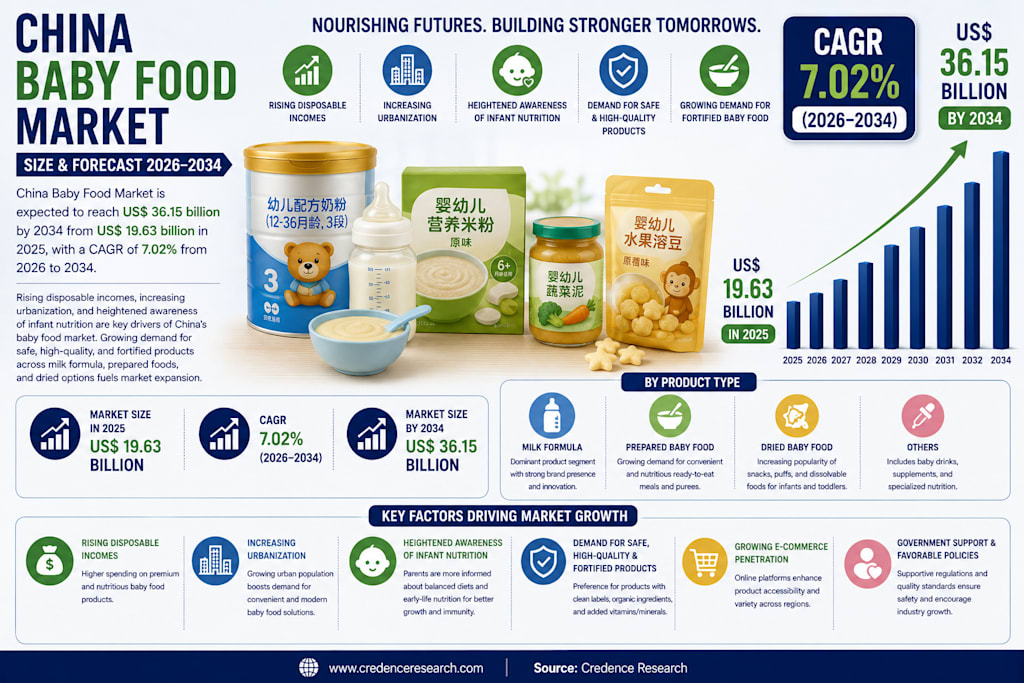
China Baby Food Market: A Growing Focus on Early Nutrition
China’s baby food market is experiencing strong growth as parents place increasing importance on infant nutrition, safety, and product quality. According to Renub Research, the China Baby Food Market is projected to grow from US$ 19.63 billion in 2025 to US$ 36.15 billion by 2034, expanding at a CAGR of 7.02% from 2026 to 2034.
This rapid expansion reflects a broader shift in consumer priorities. Parents today are more informed, more selective, and more willing to invest in premium nutrition products that support their child’s growth and development.
What Defines the Baby Food Market in China
Baby food includes specially formulated products designed for infants and toddlers, typically up to three years of age. These products include milk formula, purees, cereals, dried foods, and fortified snacks.
They provide essential nutrients such as:
- Proteins for growth
- Vitamins and minerals for development
- Healthy fats for brain function
- Probiotics for immune support
Convenience and safety are key considerations for caregivers, especially in urban areas where busy lifestyles demand ready-to-feed or easy-to-prepare options.
Key Growth Drivers Fueling the Market
Rising Awareness of Infant Nutrition
One of the strongest drivers of the China baby food market is the increasing awareness of proper infant nutrition. Parents are now more focused on providing balanced diets that support early development and long-term health.
This has led to growing demand for:
- Fortified milk formulas
- Organic baby food
- Nutrient-rich cereals
Functional snacks with added vitamins and probiotics
Clear labeling, certifications, and adherence to strict food safety standards are also boosting consumer trust, encouraging parents to choose branded and premium products.
Product Innovation and Fortified Offerings
Innovation is playing a central role in market growth. Manufacturers are introducing advanced formulations enriched with nutrients such as DHA, proteins, vitamins, and probiotics.
Popular innovations include:
- Ready-to-feed meals
- Single-serve packaging
- Organic and allergen-free options
- Stage-based nutrition products
These innovations not only improve convenience but also address specific nutritional needs, helping brands build strong customer loyalty.
Expansion of E-Commerce and Specialty Retail
The rapid growth of e-commerce platforms is transforming how baby food products are distributed in China. Online channels offer convenience, wider product selection, and access to both domestic and international brands.
Specialty baby stores also play a crucial role by providing curated product selections and expert guidance. Together, these channels enhance accessibility and build consumer confidence, especially for premium and imported products.
Market Segments Driving Demand
Milk Formula: The Largest Segment
Milk formula remains the most dominant segment in China’s baby food market. Parents prioritize safety, nutritional value, and brand reputation when selecting formula products.
Demand is particularly strong for formulas fortified with:
- DHA for brain development
- Probiotics for digestion
- Vitamins and minerals for overall health
Specialized formulas for infants with specific needs—such as sensitive digestion—are also gaining popularity.
Prepared Baby Food: Convenience for Urban Families
Prepared baby food, including purees and ready-to-eat meals, is growing rapidly due to its convenience. Urban parents, especially working professionals, prefer products that save time while ensuring balanced nutrition.
Innovations in packaging, such as resealable pouches and single-serve portions, further enhance usability.
Dried Baby Food: Long Shelf Life and Practicality
Dried baby food products, such as cereals and powders, remain popular due to their long shelf life and ease of storage.
These products are often fortified with essential nutrients, making them a reliable option for introducing complementary feeding.
Regional Insights: Key Chinese Markets
Beijing: Quality and Safety First
In Beijing, parents prioritize high-quality, safe, and nutritionally balanced products. Organic and additive-free options are particularly popular among urban families.
Shanghai: Premium and Global Preferences
Shanghai’s market is highly influenced by international trends. Consumers prefer premium, innovative products with clean ingredient lists and advanced nutritional formulations.
Jiangsu: Balanced Growth Across Segments
Jiangsu represents a mix of urban and rural demand, with consumers seeking both premium and affordable options. Reliability, safety, and balanced nutrition remain key purchasing factors.
Challenges Facing the Market
Stringent Regulations and Compliance
China’s strict food safety regulations require manufacturers to meet high standards for quality, labeling, and certification. While these regulations build consumer trust, they also increase operational costs and complexity.
Intense Competition and Price Sensitivity
The market is highly competitive, with numerous domestic and international brands competing for market share. Price sensitivity, particularly in smaller cities, can impact profit margins and purchasing decisions.
Companies must balance affordability with quality while continuously innovating to stay competitive.
Competitive Landscape
Key players in the China baby food market include China Feihe Limited, China Mengniu Dairy Company Limited, Health and Happiness International Holdings Limited, Yashili International Holdings Ltd, China Modern Dairy Holdings Limited, and The a2 Milk Company.
These companies are focusing on:
- Product innovation
- Nutritional research
- Expansion of e-commerce channels
- Strengthening brand trust
Final Thoughts
The China baby food market is evolving into a high-growth, innovation-driven industry. With projections reaching US$ 36.15 billion by 2034, the market reflects strong demand for safe, nutritious, and convenient products.
The future of this market will be shaped by continued advancements in nutrition science, digital retail expansion, and growing consumer awareness.
As parents increasingly prioritize health and quality for their children, the baby food industry in China is set to play a critical role in shaping the next generation’s well-being—making it one of the most important and rapidly growing segments in the global food market.
About the Creator
Enjoyed the story? Support the Creator.
Subscribe for free to receive all their stories in your feed.
Comments
There are no comments for this story
Be the first to respond and start the conversation.