
Cargo Handling Equipment Market Size Is Nearing $37.5 Billion
How port modernization, electrification, and automation are reshaping a $23 billion global industry.
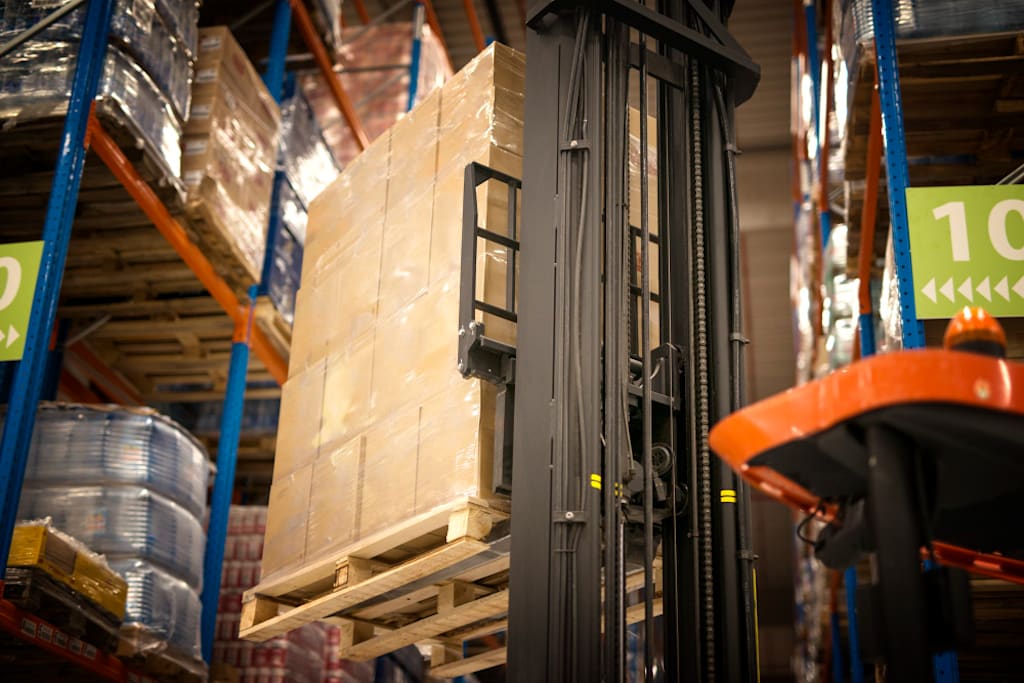
The Machines That Move Everything — and the Billions Behind Them
Every container ship that docks at the Port of Shanghai carries, on average, more than 20,000 steel boxes stacked nine stories high. Getting those boxes off the vessel, sorted, and dispatched within hours is not a feat of human effort — it is a feat of machinery. The global cargo handling equipment market, valued at $23.3 billion in 2025, is the invisible infrastructure making modern trade possible. Few outside the logistics industry grasp how large, how technically complex, and how rapidly evolving this market has become. Detailed segment and regional breakdowns are available in this cargo handling equipment industry overview.
The numbers tell part of the story. The market is projected to reach $37.5 billion by 2035, growing at a compound annual rate of 4.9%. That pace is deliberate, not explosive — it reflects committed capital expenditure tied to port modernization programs and e-commerce fulfillment expansion across major trade corridors, not speculative enthusiasm. Terminal operators don't replace fleets on a whim. When they do upgrade, the sums involved are enormous.
Asia Pacific Anchors, but the Race Is Global
Asia Pacific holds 40.8% of global market share, valued at $9.5 billion. The region's dominance is structural, not temporary. China, Japan, South Korea, and India are all running active port infrastructure investment programs that require continuous equipment procurement. The sheer throughput volumes at container hubs like Ningbo, Busan, and Singapore make equipment refresh cycles faster and procurement volumes higher than anywhere else on earth.
But the story isn't exclusively Asian. Europe's cargo handling market is being shaped by IMO emissions compliance requirements and EU port sustainability directives that are converting diesel equipment fleets to electric alternatives on defined timelines. Northern European ports — particularly in Germany, the Netherlands, and Belgium — are leading terminal automation adoption. In North America, US Gulf and West Coast terminals are running large-scale automation investments driven by green port compliance mandates. Every region is moving, just at different speeds and under different regulatory pressures.
Forklifts Still Reign, But Not for Long
Forklifts command 35.7% of the equipment type segment. That dominance makes sense — they operate across ports, warehouses, manufacturing floors, and retail distribution centers, making them the most versatile and frequently replaced asset in any cargo handling fleet. Internal combustion engine variants still hold 45.6% of propulsion share. But that lead is under measurable pressure.
According to SAE Mobilus research, battery-electric port cargo handling equipment achieved NOx emissions reductions of 76% to 99% compared to conventional equipment. That kind of performance data removes a key objection for port operators evaluating electrification. It means zero-tailpipe solutions now meet operational intensity requirements — not as a compromise, but as a peer alternative. In October 2025, Toyota Industries Corporation, the world's largest forklift manufacturer, announced a strategic investment in Advanced Charging Technologies to accelerate next-generation energy and charging solutions for electric material handling equipment. That move signals where the industry is heading.
Konecranes has been even more explicit. In November 2025, the company launched a high-capacity electric reach stacker providing up to 16 hours of operation per charge, with one-to-three-hour fast recharging and faster handling speeds than diesel equivalents. Diesel's grip on this market is loosening in real time.
What the Cargo Handling Equipment Market Share Numbers Reveal About Demand
Manufacturing accounts for 28.9% of end-use industry demand — the single largest buyer segment. This reflects a simple operational reality: manufacturing facilities run multi-shift operations that demand constant movement of raw materials and finished goods. Equipment utilization is relentless, and replacement cycles are shorter than in other industries.
Logistics is the fastest-scaling segment. As e-commerce fulfillment networks multiply globally, third-party logistics operators and fulfillment centers require diverse equipment fleets — from automated guided vehicles for sortation to high-reach forklifts for vertical storage. Medium duty equipment leads load capacity preferences at 35.4%, confirming that most procurement decisions cluster around versatile mid-range assets rather than specialized heavy configurations.
The Autonomous Horizon
Digital twin technology is changing how port operators manage equipment performance and maintenance schedules. By creating real-time virtual replicas of physical equipment, terminals can predict failure points, optimize maintenance windows, and reduce unplanned downtime. This transforms cargo handling equipment from a depreciating physical asset into an ongoing data source. Autonomous guided vehicles, once confined to pilot programs, are moving into commercial deployment at mega container terminals where 24/7 throughput requirements favor unmanned systems over labor-intensive alternatives.
The next decade will not simply see more of the same equipment purchased in larger quantities. It will see an industry restructuring around electrification mandates, autonomous operations, and data-driven terminal management — where the machines that move the world's goods are also generating the intelligence that tells operators how to move them better.
About the Creator
Mark K. Belton
I’m Mark K. Belton, 26 years old, currently working as a Digital Marketing Intern. I have a strong interest in digital marketing and have been developing my skills in SEO, social media marketing, content creation, and online campaign
Enjoyed the story? Support the Creator.
Subscribe for free to receive all their stories in your feed.
Comments
There are no comments for this story
Be the first to respond and start the conversation.